
Compound interest, often hailed as the “eighth wonder of the world” by Albert Einstein, is a fundamental concept in personal finance and investing that can dramatically accelerate wealth accumulation over time. Unlike simple interest, which is calculated only on the principal amount, compound interest is calculated on the initial principal and also on all the accumulated interest from previous periods. This reinvestment of earnings creates a snowball effect, causing your money to grow at an increasingly faster rate. Understanding which investment vehicles offer compound interest is crucial for anyone looking to build a robust financial future.
In essence, compound interest allows your money to earn money on its money. It transforms modest savings into substantial sums and can make the difference between a comfortable retirement and a struggling one. While the concept might seem complex at first glance, its practical application is straightforward: the longer your money is invested, and the more frequently it compounds, the greater the returns. This article will delve into various investment avenues that harness the power of compound interest, providing a roadmap for individuals seeking to maximize their financial growth.
Understanding the Power of Compound Interest
At its core, compound interest is about earning returns not just on your initial investment, but also on the interest that investment has already accrued. It’s a dynamic process where your earnings themselves begin to earn. This exponential growth model is what differentiates long-term wealth building from short-term gains.
The Mechanics of Compounding
The basic formula for compound interest is $A = P(1 + r/n)^{nt}$, where:
-
$A$ = the future value of the investment/loan, including interest
-
$P$ = the principal investment amount (the initial deposit or loan amount)
-
$r$ = the annual interest rate (as a decimal)
-
$n$ = the number of times that interest is compounded per year
-
$t$ = the number of years the money is invested or borrowed for
This formula illustrates that the frequency of compounding ($n$) plays a significant role. Interest compounded daily or monthly will typically result in higher returns than interest compounded annually, given the same interest rate and time horizon, because the interest starts earning interest sooner.
Why Compound Interest is a Game-Changer for Wealth Accumulation
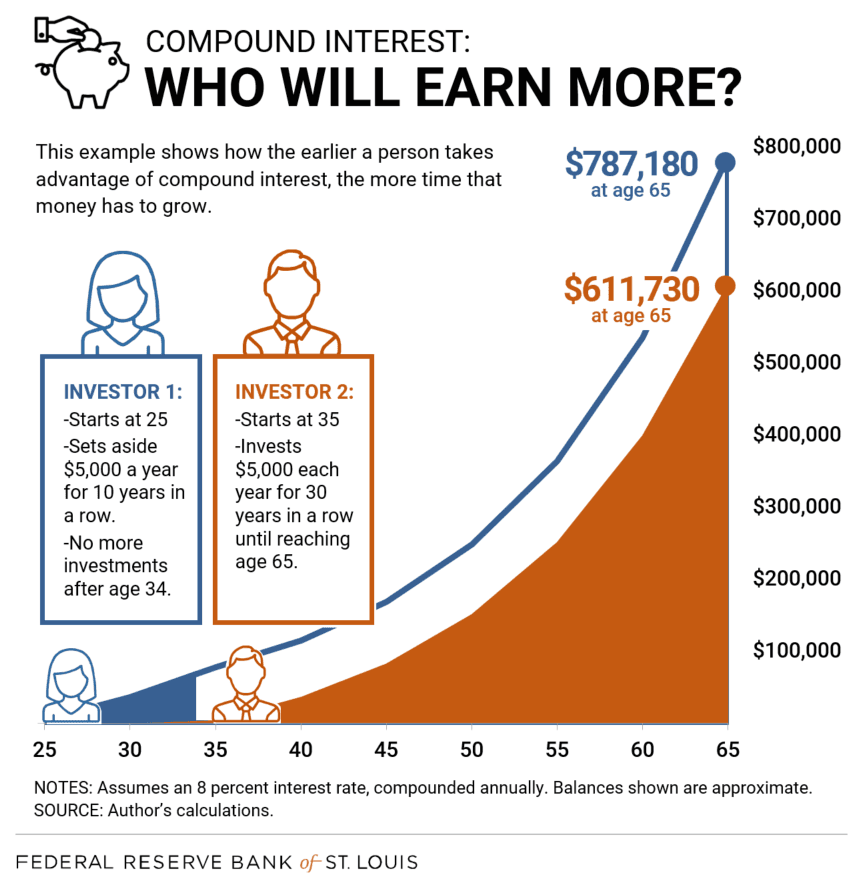
The true magic of compound interest lies in its ability to generate significant returns over extended periods, even from relatively small initial investments. For young investors, starting early allows the power of compounding to work its magic for decades, potentially leading to millions by retirement. Even for those starting later, consistent contributions combined with compounding can still build substantial wealth. It rewards patience and discipline, turning time into a valuable asset. The longer your money is exposed to compounding, the more pronounced the snowball effect becomes, demonstrating that consistency and time are often more critical than the initial sum invested.
Simple Interest vs. Compound Interest: A Crucial Distinction
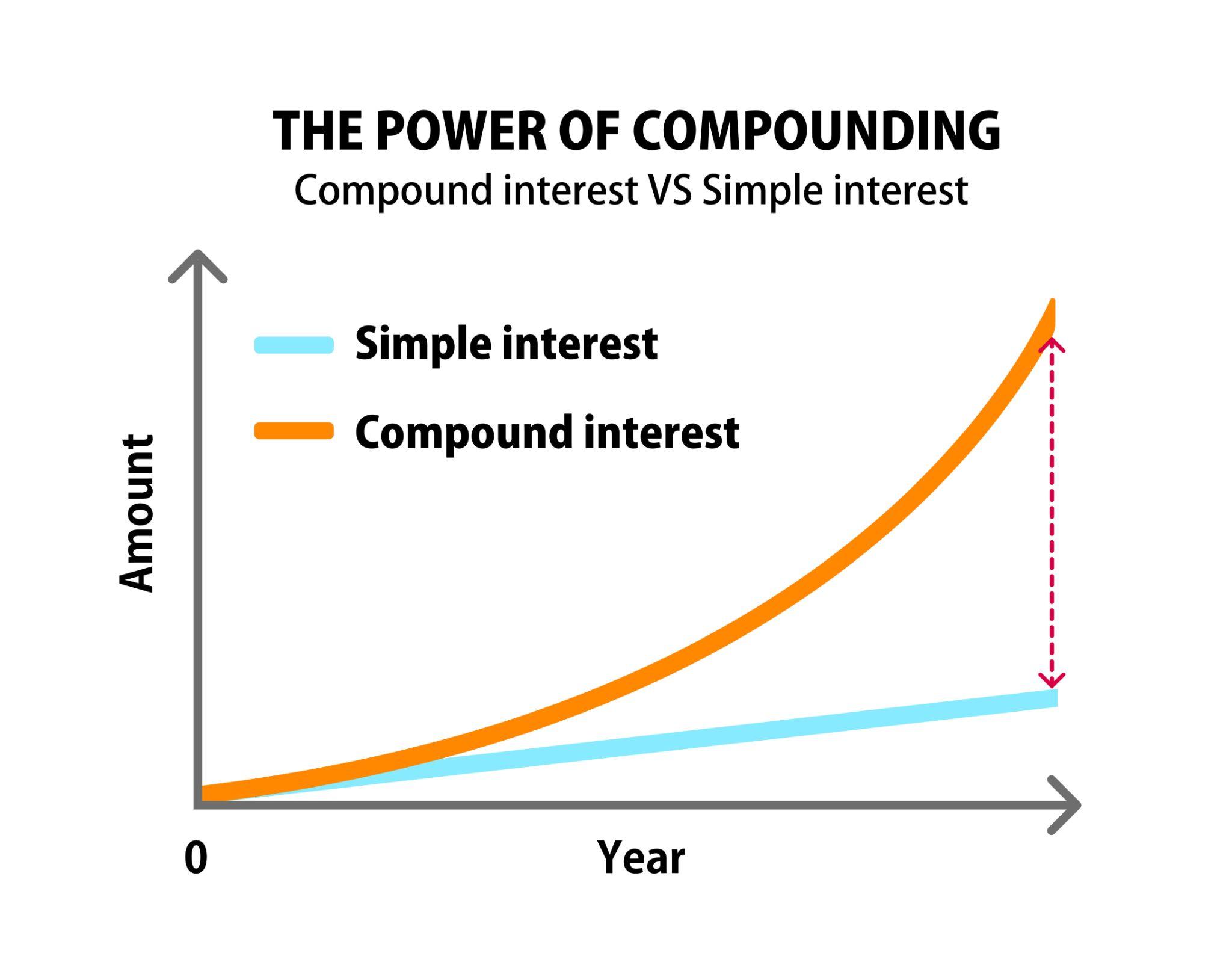
The difference between simple and compound interest is fundamental to understanding long-term investing. Simple interest is calculated solely on the principal amount of a loan or deposit. For example, if you invest $1,000 at a 5% simple interest rate for 10 years, you’d earn $50 per year, totaling $500 in interest over the decade, bringing your total to $1,500.
Compound interest, however, would yield a much higher return. With the same $1,000 at 5% interest compounded annually for 10 years, your balance would grow to approximately $1,628.89. The additional $128.89 comes from the interest earned on the previous year’s interest. This seemingly small difference early on grows exponentially over time, highlighting why investors almost always prefer compound interest.
Traditional Investment Vehicles with Compounding Returns
Many common investment products are designed to leverage compound interest, making them foundational components of any diversified portfolio. These vehicles offer varying levels of risk and return, but all share the common thread of allowing your earnings to generate further earnings.
Savings Accounts and Certificates of Deposit (CDs)
While not high-growth investments, traditional savings accounts and money market accounts typically offer compound interest, usually compounded daily or monthly and paid out periodically. Similarly, Certificates of Deposit (CDs) lock in your money for a fixed term at a specific interest rate, and the interest earned also compounds. These are low-risk options suitable for short-to-medium term savings or emergency funds, though their interest rates often just keep pace with, or slightly lag, inflation. For example, a CD with a 2% annual interest rate compounded monthly will yield slightly more than one compounded annually.
Bonds and Fixed-Income Securities
Bonds are essentially loans made to governments or corporations, which pay interest to the bondholder. While many bonds pay simple interest regularly (known as coupon payments), the reinvestment of these coupon payments effectively introduces compounding. If an investor takes the interest payments received from a bond and uses them to purchase additional bonds or other interest-bearing assets, they are actively compounding their returns. Zero-coupon bonds are a direct example of compounding, as they are bought at a discount and mature at face value, with the “interest” implicitly compounding over the bond’s life.
Dividend-Paying Stocks and Reinvestment Plans
Stocks that pay regular dividends can be powerful vehicles for compound interest, especially when those dividends are reinvested. Many companies offer Dividend Reinvestment Plans (DRIPs), which automatically use cash dividends to purchase additional shares or fractional shares of the same stock. Over time, these additional shares generate even more dividends, which in turn buy more shares, creating a robust compounding effect that can significantly boost total returns. This strategy allows investors to benefit from both capital appreciation of the stock and the compounding of their dividend income.
Mutual Funds and Exchange-Traded Funds (ETFs)
Mutual funds and ETFs offer diversified exposure to various assets, including stocks, bonds, and other securities. When these funds hold dividend-paying stocks or interest-paying bonds, the income generated is often reinvested back into the fund, purchasing more shares. This internal reinvestment means that the fund’s net asset value (NAV) grows, and your existing shares gain value, effectively compounding your returns without requiring active intervention on your part. Many growth-oriented funds focus on capital appreciation, but even they benefit from the compounding effect of successful investments within the fund’s portfolio.
Retirement Accounts: Supercharging Compounding for the Long Term
Retirement accounts are specifically designed to maximize the power of compound interest over several decades, often with significant tax advantages that further amplify growth. These accounts are perhaps the most potent tools for long-term wealth building, primarily due to their extended time horizons.
401(k)s and Employer-Sponsored Plans
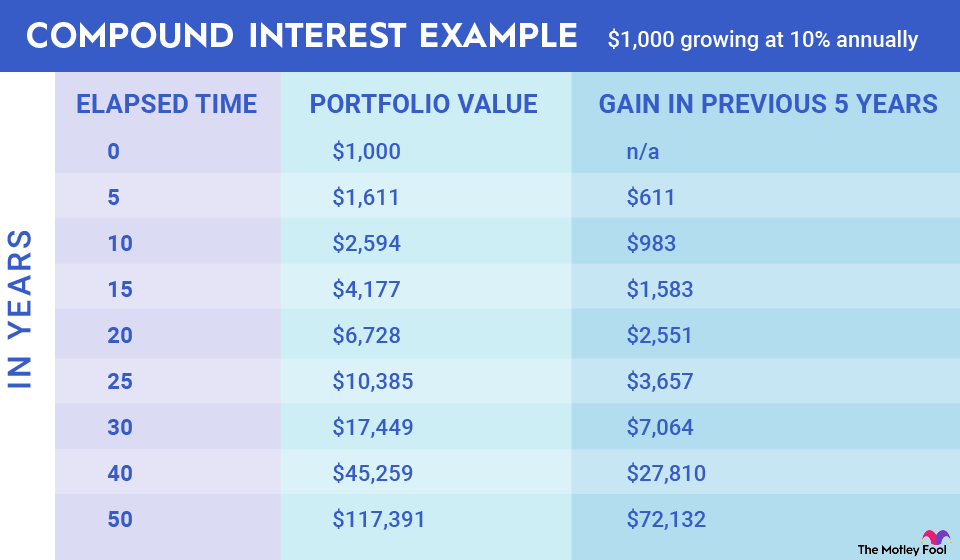
Employer-sponsored plans like 401(k)s, 403(b)s, and 457 plans are prime examples of investments that thrive on compound interest. Contributions are typically made pre-tax (in traditional versions), reducing current taxable income, and the investments grow tax-deferred until retirement. This means all earnings — dividends, interest, and capital gains — compound without being eroded by annual taxes, allowing for truly explosive growth over 30 or 40 years. Employer matching contributions further boost the principal, giving compounding an even larger base to work from.
Individual Retirement Accounts (IRAs): Traditional and Roth
IRAs provide individuals with a personal retirement savings vehicle, independent of their employer. Traditional IRAs offer tax-deductible contributions and tax-deferred growth, similar to a traditional 401(k). Roth IRAs, on the other hand, feature after-tax contributions but allow qualified withdrawals in retirement to be completely tax-free. Both account types allow investments within them (e.g., stocks, bonds, mutual funds) to compound tax-advantaged, making them incredibly effective for long-term wealth accumulation. The choice between Traditional and Roth often depends on an individual’s current versus anticipated future tax bracket.
Health Savings Accounts (HSAs) with Investment Options
Often overlooked, Health Savings Accounts (HSAs) are one of the most powerful savings vehicles due to their “triple tax advantage”: contributions are tax-deductible, investments grow tax-free, and qualified withdrawals are also tax-free. For those with high-deductible health plans, an HSA can be used not just for current medical expenses but also as an investment account. Many HSAs offer investment options similar to those found in 401(k)s, allowing funds to compound significantly over time, becoming a substantial financial resource for future healthcare costs in retirement, or even for non-medical expenses after age 65 (though taxed then).
Real Estate and Alternative Investments with Compounding Potential
While direct compound interest might seem less obvious in these categories, their growth mechanisms fundamentally rely on a similar principle of reinvestment or value appreciation over time.
Rental Properties and Appreciation
Investing in rental properties leverages compounding in several ways. Rental income, if reinvested (e.g., used to pay down the mortgage faster, fund improvements, or acquire additional properties), creates a compounding effect. Property value appreciation, while not a direct interest payment, acts like compounding. As the property value increases, so does your equity, and future appreciation builds on this higher base. Furthermore, mortgage principal paydown by tenants (often called “equity build-up”) also works similarly to compounding, increasing your net worth over time without further active investment from your personal funds.
Real Estate Investment Trusts (REITs)
REITs are companies that own, operate, or finance income-producing real estate. They trade on stock exchanges like regular stocks and are legally required to distribute at least 90% of their taxable income to shareholders annually, usually in the form of dividends. When these dividends are reinvested, they buy more REIT shares, which then generate more dividends, creating a powerful compounding cycle akin to dividend-paying stocks. REITs offer a way to invest in real estate without the complexities of direct property ownership, while still benefiting from compounding.
Peer-to-Peer Lending and Crowdfunding (with caution)
Platforms for peer-to-peer (P2P) lending allow individuals to lend money directly to other individuals or small businesses, often at higher interest rates than traditional savings accounts. Similarly, real estate crowdfunding allows investors to pool money for property projects. The interest or returns generated from these investments can be reinvested into new loans or projects, creating a compounding effect. However, these investments carry higher risks, including default risk, and should be approached with thorough due diligence and as a smaller portion of a diversified portfolio.
Strategies to Maximize the Impact of Compound Interest
Understanding what investments compound is only half the battle; knowing how to optimize their growth is equally vital. Strategic decisions can significantly amplify the effects of compound interest over your investing journey.
Start Early, Invest Consistently
The single most influential factor in maximizing compound interest is time. The earlier you begin investing, the more years your money has to grow and compound. Even small, consistent contributions made early in life can outpace larger, later contributions due to the sheer power of time and compounding. Regular, automated investments (e.g., through dollar-cost averaging) ensure you’re always putting money to work and benefiting from market fluctuations.
Reinvest Your Earnings
To fully harness compounding, it’s critical to reinvest any dividends, interest payments, or capital gains received. Whether it’s through a DRIP for stocks, automatically reinvesting mutual fund distributions, or using bond coupon payments to buy more bonds, keeping your earnings within the investment ecosystem is paramount. Every dollar reinvested becomes part of your new principal, ready to earn its own returns.
Understand the Role of Interest Rate and Time Horizon
While time is king, the interest rate also plays a crucial role. A higher interest rate, everything else being equal, will lead to faster compounding. Balancing the desire for higher returns with an acceptable level of risk is key. Additionally, having a clear understanding of your investment horizon (how long you plan to invest) helps in selecting appropriate assets. Long-term goals benefit most from aggressive compounding, while short-term goals may require more conservative, but still compounding, options.
Minimize Fees and Taxes
Fees and taxes are silent wealth destroyers that can significantly dampen the effects of compounding. High management fees on mutual funds, excessive trading commissions, or frequent taxable events can erode returns. Opt for low-cost index funds or ETFs, utilize tax-advantaged accounts like 401(k)s and IRAs, and be mindful of capital gains taxes to ensure more of your money remains invested and compounding.
The “Rule of 72” for Estimating Doubling Time
A simple mental shortcut, the Rule of 72, can quickly estimate how long it will take for an investment to double at a given annual rate of return. You simply divide 72 by the annual interest rate. For example, an investment earning 6% annually will approximately double in 12 years ($72 / 6 = 12$). This rule highlights the dramatic impact of even slightly higher rates over longer periods and underscores the importance of compounding.
Conclusion: Harnessing the Eighth Wonder of the World
Compound interest is not merely a financial concept; it is a profound principle that underpins virtually all successful long-term wealth creation. From the modest returns of a savings account to the robust growth within a diversified retirement portfolio, the ability of money to generate more money is a force that every investor should seek to understand and leverage. By starting early, investing consistently, reinvesting earnings, and making informed choices about investment vehicles and fees, anyone can harness this “eighth wonder” to build substantial financial security and achieve their long-term financial aspirations. The journey to financial independence is often a marathon, not a sprint, and compound interest is the engine that propels you steadily towards the finish line.
aViewFromTheCave is a participant in the Amazon Services LLC Associates Program, an affiliate advertising program designed to provide a means for sites to earn advertising fees by advertising and linking to Amazon.com. Amazon, the Amazon logo, AmazonSupply, and the AmazonSupply logo are trademarks of Amazon.com, Inc. or its affiliates. As an Amazon Associate we earn affiliate commissions from qualifying purchases.