
Quincy Jones. The name itself evokes a pantheon of musical brilliance. A producer, composer, arranger, and bandleader, Jones has been a seismic force in the music industry for over six decades. His collaborations with legends like Michael Jackson, Ray Charles, and Frank Sinatra have produced some of the most iconic sounds of the 20th and 21st centuries. Given his monumental influence, a natural question arises for aspiring musicians, curious music lovers, and even those interested in the mechanics of creative genius: what instrument did Quincy Jones play? While the answer isn’t as simple as pointing to a single guitar or piano, understanding his primary instrumental focus reveals a deeper insight into his multifaceted talent and the strategic choices that shaped his legendary career.

This exploration will delve into Quincy Jones’s instrumental prowess, but also connect it to the broader themes of Brand (understanding mastery and how it’s perceived), Tech (how instrumental skill translates to technological innovation in music production), and Money (the financial implications of diverse skill sets and strategic career development).
The Trumpet: The Foundation of a Musical Empire
At the core of Quincy Jones’s instrumental identity lies the trumpet. From his early days in the vibrant jazz scene of Seattle and later in New York City, the trumpet was his voice, his primary tool for expression. It was the instrument through which he honed his improvisational skills, developed his melodic sensibilities, and learned the intricate language of jazz.
Jones’s proficiency on the trumpet was not merely that of a competent player; he possessed a keen ear, a natural talent for improvisation, and an understanding of harmony and rhythm that set him apart. This foundational mastery on a demanding instrument like the trumpet provided him with a unique perspective. Unlike a producer who might come solely from a technical background or a composer who might primarily work with notation, Jones experienced music from the inside out, directly through the act of playing.
Developing a Masterful Brand Through Instrumental Skill
The trumpet wasn’t just an instrument for Jones; it became an integral part of his personal brand as a musician. In the competitive jazz world of the 1950s, being a virtuosic instrumentalist was a significant differentiator. His ability to navigate complex solos, imbue melodies with emotion, and engage in dynamic improvisational dialogues with other musicians built his reputation. This early instrumental success paved the way for his transition into arranging and bandleading, as audiences and fellow musicians recognized his innate musical understanding.
His trumpet playing informed his approach to composition and arrangement. He understood the physical limitations and expressive capabilities of brass instruments, which naturally translated into how he wrote parts for them in his arrangements. This deep, practical knowledge allowed him to create music that was not only harmonically rich and rhythmically innovative but also playable and evocative for the musicians performing it. This instrumental grounding solidified his brand as a musician who truly understood music at its deepest level.
Beyond the Trumpet: A Multifaceted Musical Mind
While the trumpet was his primary instrument, Quincy Jones’s genius extends far beyond its valves and bell. His career is a testament to the power of embracing a diverse range of musical skills, a concept that resonates strongly with modern approaches to personal branding and career development.
The Piano: A Composer’s Essential Tool
While not his primary performance instrument, the piano played a crucial role in Quincy Jones’s compositional and arranging process. The piano is the universal language of music theory and composition for many. Its visual layout of keys provides a tangible representation of scales, chords, and progressions, making it an indispensable tool for crafting complex musical structures.
Jones would have undoubtedly used the piano to:
- Sketch out Melodies and Harmonies: Laying down initial musical ideas, exploring chord voicings, and developing melodic lines.
- Arrange Complex Orchestrations: Experimenting with different instrumental combinations and textures, a vital skill for his large-scale orchestral arrangements.
- Understand Harmonic Relationships: Visualizing the relationships between chords and melodies, crucial for his sophisticated harmonic language.
His ability to move between the improvisational immediacy of the trumpet and the analytical clarity of the piano highlights a remarkable cognitive flexibility. This dual instrumental understanding allowed him to approach music from both an intuitive and a structured perspective, a rare and powerful combination.
Embracing the Full Spectrum of Musical Expression
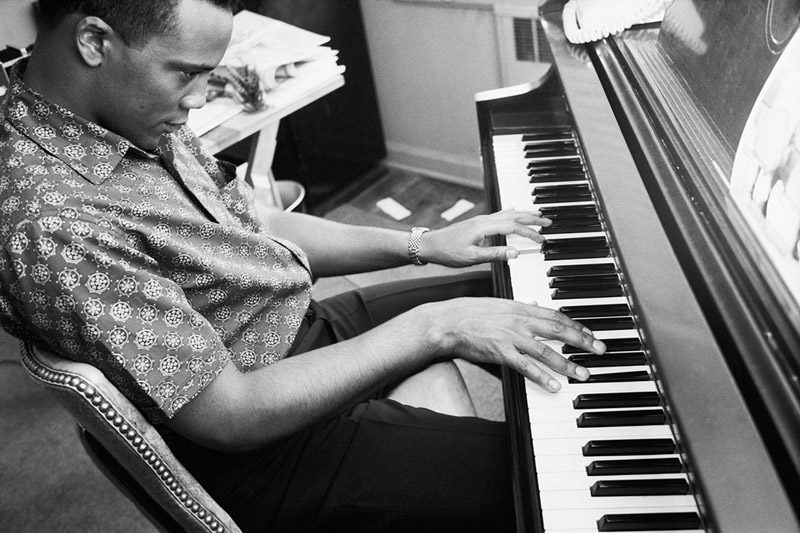
Quincy Jones’s journey illustrates that mastery in one area can be a springboard to expertise in many. He didn’t limit himself to being just a trumpet player. He leveraged his foundational skills to excel in:
- Arranging: Transcribing his musical ideas and the ideas of others into cohesive, orchestrated pieces for various ensembles. This required a deep understanding of each instrument’s capabilities and how they interact.
- Producing: Guiding artists and shaping the sonic landscape of recordings. This role demands an even broader understanding of musical elements, from performance to engineering to artistic vision.
- Composing: Creating original musical works across genres.
This expansive approach to his musical career mirrors the modern understanding of personal branding where individuals are encouraged to cultivate a diverse skill set, becoming adaptable and multi-talented in their respective fields. Jones’s story teaches us that true mastery often lies not in singular specialization, but in the intelligent integration of multiple competencies.
The Tech and Financial Edge: How Instrumental Mastery Fuels Innovation and Income
Quincy Jones’s instrumental background and his subsequent embrace of evolving musical technologies have significant implications for the domains of Tech and Money.
Tech: From Analog to Digital, An Intuitive Maestro
In the pre-digital age, understanding instrumental nuances was paramount for recording engineers and producers. Quincy Jones, with his deep knowledge of how instruments truly sound and perform, could communicate his vision with precision. He understood the sonic characteristics of a trumpet under different miking techniques, the feel of a rhythm section playing a specific groove, and the emotional impact of certain harmonic choices.
As music technology advanced, from multi-track recording to synthesizers and digital audio workstations (DAWs), Jones was not a hesitant observer. His intuitive grasp of musicality, honed by years of playing, allowed him to embrace these new tools effectively. He wasn’t just learning a new software; he was applying his fundamental musical understanding to a new medium.
- Understanding Sonic Textures: His ear, trained to discern subtle differences in instrumental tone, translated into an ability to manipulate and blend sounds using early electronic instruments and studio effects.
- Rhythmic Precision: His innate sense of rhythm, developed through countless hours of playing jazz, allowed him to program drum machines and sequences with a human feel.
- Arrangement in a Digital Age: The principles of orchestration and arrangement remained, but the tools to achieve them became digital. Jones adapted, using technology to realize complex sonic visions that might have been impossible in the past.
This ability to adapt to technological shifts is a crucial lesson for anyone in the modern workforce. Staying ahead in fields like AI Tools, Software Development, and Gadget Reviews requires not just technical proficiency but also a foundational understanding of the underlying principles the technology aims to enhance. Jones’s career demonstrates how deep domain knowledge can empower individuals to navigate and even lead technological advancements.
Money: The Financial Rewards of Versatility and Vision
Quincy Jones’s career trajectory is a masterclass in financial strategy built upon a foundation of undeniable talent and intelligent adaptation. His ability to move from instrumentalist to arranger, composer, and ultimately a globally recognized producer generated significant online income and long-term wealth.
- Diversified Income Streams: By mastering multiple facets of the music industry, Jones created diverse revenue streams. His earnings came from royalties as a composer and arranger, performance fees (in his earlier years), production fees, and later, from lucrative endorsement deals and his own ventures.
- The Value of Expertise: The business finance of the music industry rewards those who can deliver exceptional results. Jones’s consistent ability to produce hit records, create timeless arrangements, and guide artists to success made him invaluable. This high demand translated directly into significant financial compensation.
- Strategic Partnerships and Brand Building: His corporate identity and personal branding as a producer were meticulously cultivated. He understood the power of association, partnering with major labels and artists. This strategic approach maximized his reach and, consequently, his financial returns. His reputation for delivering excellence also allowed him to command premium fees for his services.
- Investing in Future Talent: Beyond his personal earnings, Jones has also been a mentor and investor in emerging talent, recognizing that nurturing future creative output is a long-term financial strategy for the industry as a whole.
In essence, Quincy Jones’s financial success is not just a byproduct of talent; it’s a testament to a career built on continuous learning, strategic diversification, and the relentless pursuit of excellence. His story provides invaluable lessons for Personal Finance and Side Hustles, illustrating that building a robust financial future often involves cultivating a broad skill set and understanding how to monetize that expertise in an evolving market.

Conclusion: The Enduring Legacy of a Multifaceted Maestro
So, what instrument did Quincy Jones play? The answer is both specific and expansive. Primarily, it was the trumpet, the instrument that forged his early musical identity and provided the bedrock of his understanding. However, his journey is a powerful reminder that true genius rarely operates in a vacuum. His mastery extended to the piano, serving as a crucial tool for composition and arrangement.
More profoundly, Quincy Jones’s career is a compelling case study in how instrumental proficiency, combined with a strategic mindset, can lead to unparalleled success across Brand, Tech, and Money. His deep understanding of music, honed by playing, enabled him to innovate with new technologies and to build a financial empire. For anyone seeking to understand musical mastery, effective personal branding, or the intersection of creativity and commerce, Quincy Jones’s story, rooted in the soulful sound of his trumpet and blossoming into a global phenomenon, offers an enduring and inspiring blueprint. His legacy is not just in the notes he played, but in the entire symphony he orchestrated.
aViewFromTheCave is a participant in the Amazon Services LLC Associates Program, an affiliate advertising program designed to provide a means for sites to earn advertising fees by advertising and linking to Amazon.com. Amazon, the Amazon logo, AmazonSupply, and the AmazonSupply logo are trademarks of Amazon.com, Inc. or its affiliates. As an Amazon Associate we earn affiliate commissions from qualifying purchases.