
Understanding the intricate neural architecture that underpins anxiety has been a profound challenge for neuroscience. For centuries, the inner workings of the human brain remained a mystery, but modern technological advancements have revolutionized our ability to peer into its complex processes, revealing the specific regions, circuits, and chemicals involved in generating anxious states. From advanced imaging to sophisticated neuromodulation, technology is not just observing but actively intervening in the brain’s anxiety pathways. This exploration delves into how technology is unraveling the neurological roots of anxiety and offering innovative solutions.
Mapping the Anxious Brain: The Role of Neuroimaging and Data
The journey to understand what in the brain causes anxiety began in earnest with the advent of sophisticated neuroimaging techniques. These technologies allow researchers to visualize brain activity, structure, and connectivity, providing unprecedented insights into the neural correlates of anxiety disorders.
Functional MRI (fMRI) and PET Scans: Visualizing Neural Activity
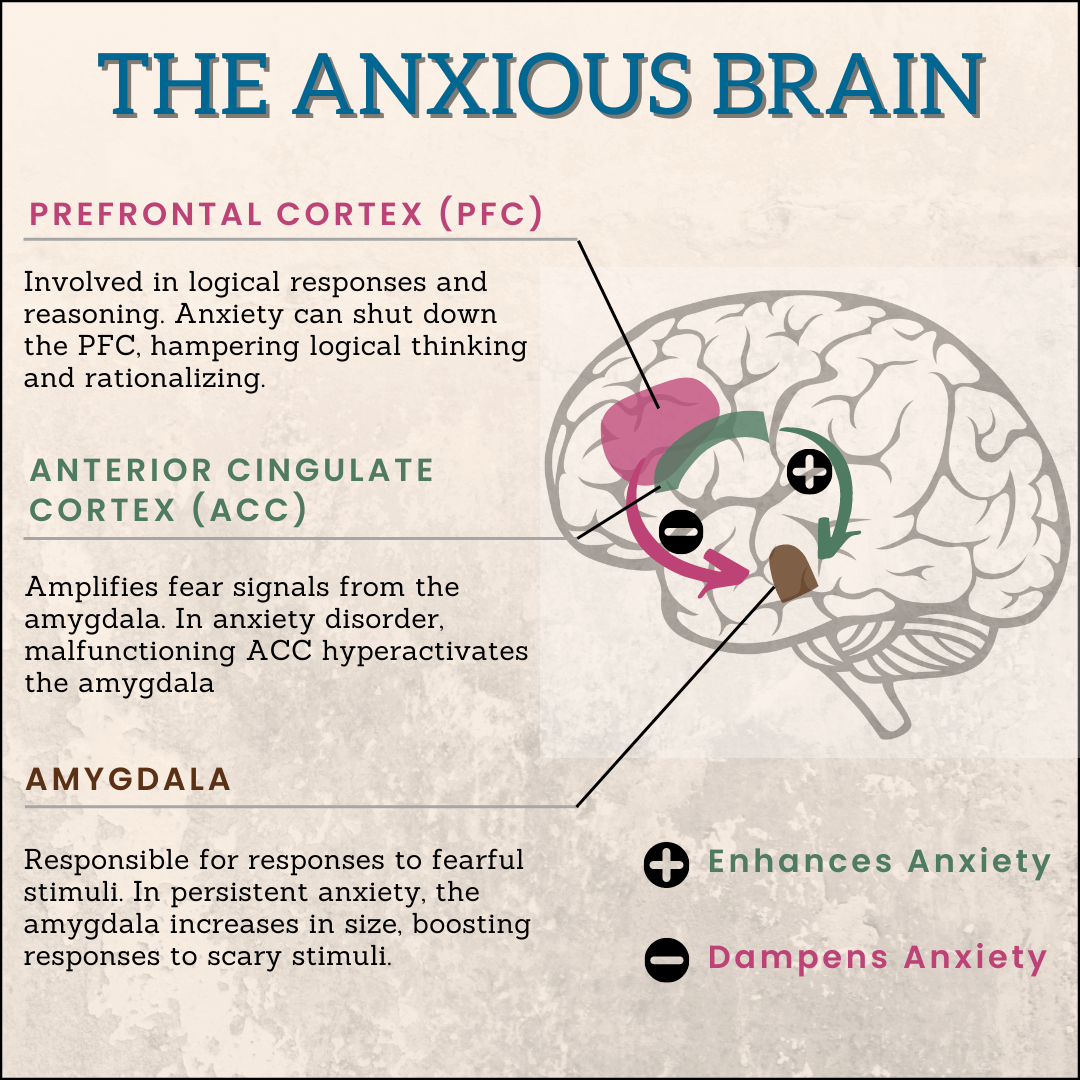
Functional Magnetic Resonance Imaging (fMRI) has been instrumental in identifying brain regions that show altered activity in individuals experiencing anxiety. By detecting changes in blood flow and oxygenation, fMRI can pinpoint areas that become hyperactive or underactive during anxious states. A key player consistently highlighted by fMRI is the amygdala, often referred to as the brain’s “fear center.” In anxious individuals, the amygdala frequently exhibits heightened activity, especially when processing perceived threats.
Beyond the amygdala, fMRI studies reveal an intricate network. The prefrontal cortex (PFC), responsible for executive functions like decision-making, emotional regulation, and planning, often shows reduced activity or altered connectivity with the amygdala. This imbalance can impair the PFC’s ability to “downregulate” the amygdala’s fear responses. The hippocampus, crucial for memory formation and contextualizing fear, also plays a role, with some studies suggesting structural or functional changes in anxiety disorders. Positron Emission Tomography (PET) scans, which use radioactive tracers to visualize metabolic processes in the brain, complement fMRI by offering insights into neurotransmitter systems, such as serotonin and dopamine, which are widely implicated in mood and anxiety regulation. These imaging modalities provide objective, high-resolution maps of neural activity, laying the foundation for targeted technological interventions.
Electroencephalography (EEG) and QEEG: Electrical Signatures of Distress
While fMRI and PET offer spatial resolution, Electroencephalography (EEG) provides unparalleled temporal resolution, capturing the brain’s electrical activity in milliseconds. By placing electrodes on the scalp, EEG measures brainwaves—oscillating electrical voltages that reflect the synchronous activity of millions of neurons. Specific brainwave patterns (e.g., alpha, beta, theta, delta) are associated with different states of consciousness and mental processes.
In the context of anxiety, EEG research has identified distinct “electrical signatures.” For instance, an increase in high-frequency beta waves in certain frontal regions or alterations in alpha asymmetry can correlate with anxious arousal and worry. Quantitative EEG (QEEG), a more advanced application, employs sophisticated algorithms to process raw EEG data, comparing an individual’s brainwave patterns against normative databases. This allows for the identification of subtle deviations and dysfunctional patterns associated with anxiety disorders. QEEG, therefore, not only serves as a diagnostic tool but also informs neurofeedback protocols, where individuals learn to consciously modulate their brainwave activity—a direct technological intervention based on real-time neural data.
Leveraging Big Data and AI for Predictive Models
The sheer volume of neuroimaging data generated by fMRI, PET, and EEG studies, coupled with genetic and clinical information, has necessitated the use of big data analytics and artificial intelligence (AI). Machine learning algorithms can analyze vast datasets to identify complex patterns and biomarkers that might be imperceptible to the human eye. AI can process thousands of brain scans, genetic profiles, and behavioral assessments to predict an individual’s susceptibility to anxiety disorders or their likely response to specific treatments.
For example, AI models can detect subtle connectivity anomalies within the brain’s default mode network (DMN) or salience network that are characteristic of generalized anxiety disorder. This goes beyond individual snapshots, moving towards population-level insights and personalized medicine. By integrating diverse data sources, AI is transforming our understanding from simply identifying “what” in the brain causes anxiety to predicting “who” might be vulnerable and “how” best to intervene, ushering in an era of precision mental health.
Technological Interventions: Modulating Brain Circuits
Beyond understanding, technology is providing increasingly sophisticated tools to directly modulate brain activity, offering novel therapeutic avenues for anxiety.
Neurofeedback and Biofeedback: Self-Regulation via Real-time Data
Neurofeedback, an advanced form of biofeedback, is a direct application of EEG technology. It trains individuals to alter their brainwave patterns in real-time. Electrodes on the scalp monitor specific brainwave frequencies, and this data is fed back to the individual via visual or auditory cues. For example, if a person’s brain produces too many high-frequency beta waves associated with anxiety, the neurofeedback system might reward the production of calming alpha waves. Through repeated sessions, individuals learn to consciously shift their brain activity towards healthier patterns, thereby reducing anxiety symptoms. This non-invasive technology empowers individuals to take an active role in regulating their neural processes. Similarly, biofeedback uses sensors to provide real-time information about physiological responses (heart rate, skin conductance, muscle tension), allowing individuals to learn to control these anxiety-related bodily functions.
Transcranial Magnetic Stimulation (TMS) and Deep Brain Stimulation (DBS): Targeted Neuromodulation
For more severe or treatment-resistant anxiety disorders, advanced neurostimulation technologies offer targeted interventions. Transcranial Magnetic Stimulation (TMS) is a non-invasive technique that uses magnetic fields to induce electrical currents in specific brain regions. By delivering repetitive magnetic pulses to areas like the prefrontal cortex—often underactive in anxiety—TMS can modulate neural activity, enhancing communication within anxiety-regulating circuits. It’s particularly promising for generalized anxiety disorder and panic disorder.
Deep Brain Stimulation (DBS), while more invasive, represents a significant technological leap. It involves surgically implanting electrodes into specific deep brain structures, such as the bed nucleus of the stria terminalis (BNST) or the subgenual anterior cingulate cortex, which are profoundly involved in fear and anxiety. A pacemaker-like device then delivers continuous electrical impulses to these areas, altering neural circuit activity. While still largely experimental for anxiety, DBS holds potential for intractable cases, demonstrating technology’s capacity to directly modify the brain’s fundamental operations.

Digital Therapeutics and AI-Powered CBT Platforms
The digital age has brought forth a new wave of accessible, technology-driven interventions. Digital therapeutics are evidence-based software programs designed to prevent, manage, or treat a medical disorder. For anxiety, this often takes the form of mobile apps or web platforms that deliver structured psychological interventions, most commonly Cognitive Behavioral Therapy (CBT). These platforms can provide guided meditations, psychoeducational content, journaling prompts, and exposure exercises, all designed to retrain anxious thought patterns and behaviors.
AI plays a crucial role here, personalizing the therapeutic journey. AI algorithms can analyze user input (e.g., mood ratings, journal entries) to adapt the pace and content of the program, suggest relevant exercises, or provide automated feedback. Some platforms even incorporate AI chatbots that mimic therapeutic conversations, offering support and guidance when a human therapist is unavailable. These scalable, cost-effective solutions democratize access to evidence-based anxiety management, leveraging technology to directly influence the brain’s cognitive and emotional processing pathways.
Wearable Technology and Continuous Monitoring
The ubiquity of smart devices has opened new frontiers in understanding and managing anxiety outside the clinical setting. Wearable technology provides continuous, passive monitoring of physiological markers related to stress and anxiety.
Biometric Sensors for Real-time Stress Detection
Modern wearables—smartwatches, fitness trackers, and specialized neuro-wearables—are equipped with an array of biometric sensors. These sensors can continuously track heart rate variability (HRV), skin conductance (electrodermal activity), body temperature, sleep patterns, and even subtle changes in voice tone. Fluctuations in these parameters often precede or accompany anxious states. For instance, a sudden drop in HRV, indicating reduced parasympathetic nervous system activity, can be a reliable predictor of increased stress or anxiety. Skin conductance changes reflect sympathetic nervous system arousal, a hallmark of fight-or-flight responses.
By collecting this continuous stream of data, these devices offer a window into an individual’s physiological state throughout the day, providing insights into their unique anxiety triggers and responses. This real-time data is invaluable for both self-awareness and clinical monitoring.
Predictive Analytics and Early Warning Systems
The true power of wearable technology in anxiety management lies in its integration with advanced analytics. AI algorithms can analyze continuous biometric data, learning an individual’s baseline physiological patterns and identifying deviations that signal escalating stress or impending anxiety attacks. For example, a combination of elevated heart rate, reduced HRV, and fragmented sleep, when analyzed over time, can serve as an early warning system.
These predictive analytics can then trigger proactive interventions. A smartwatch might deliver a gentle haptic vibration and prompt the user to engage in a mindfulness exercise, a deep breathing technique, or even suggest taking a break from a stressful task. By providing just-in-time support, wearables aim to interrupt the anxiety spiral before it intensifies, offering a continuous, personalized, and technology-driven defense against the brain’s anxious responses.
The Future Landscape: AI, BCI, and Personalized Neurotechnology
The trajectory of technological innovation promises even more profound insights and interventions regarding anxiety. The future will likely see a fusion of AI, advanced neuroimaging, and direct brain interfaces, leading to highly personalized and precise anxiety management strategies.
Precision Psychiatry through AI and Genomics
The convergence of AI, genomic sequencing, and advanced neuroimaging will usher in an era of precision psychiatry. AI will integrate an individual’s genetic predispositions, neurobiological markers (from fMRI, QEEG), lifestyle factors, and clinical history to create highly personalized risk profiles and treatment plans for anxiety. This could involve predicting an individual’s response to specific medications, psychotherapy modalities, or neurotechnological interventions with unprecedented accuracy. For example, AI might determine that a specific genetic variant predicts a better response to a particular TMS protocol, while another individual with a different neural connectivity pattern might benefit more from neurofeedback combined with an AI-driven CBT app. This move towards personalized medicine aims to optimize outcomes by tailoring interventions to each brain’s unique anxiety blueprint.
Brain-Computer Interfaces (BCI) for Enhanced Control and Therapy
Brain-Computer Interfaces (BCI) represent the cutting edge of neurotechnology, offering a direct communication pathway between the brain and an external device. While currently focused on motor prosthetics and communication for paralyzed individuals, the future potential of BCIs for anxiety is immense. Non-invasive BCIs could evolve to provide more nuanced and real-time neurofeedback, allowing individuals to exert finer control over anxiety-related brainwave patterns or even emotional states. Invasive BCIs, perhaps through micro-electrode arrays, could offer ultra-precise, real-time modulation of specific neural circuits involved in fear and worry, going beyond the capabilities of current DBS by adapting stimulation based on immediate neural feedback. The goal would be to give individuals unprecedented, direct control over their brain’s emotional regulation systems, effectively short-circuiting anxious responses at their source.
Virtual and Augmented Reality for Exposure and Skill Building
Virtual Reality (VR) and Augmented Reality (AR) are already proving their worth in anxiety therapy, particularly for phobias and social anxiety, by creating controlled, immersive environments for exposure therapy. The future will see these technologies become even more sophisticated, offering hyper-realistic simulations tailored to individual triggers. AI will power adaptive VR scenarios, dynamically adjusting the intensity and nature of exposure based on real-time biometric and neural feedback (e.g., from integrated EEG headsets).
Beyond exposure, VR/AR will become powerful platforms for skill building. Imagine practicing social interactions in a realistic virtual environment where an AI therapist provides real-time feedback on non-verbal cues and communication strategies, directly training the brain’s social cognition pathways. Mindfulness and relaxation exercises could be delivered in infinitely customizable, serene virtual landscapes. These immersive digital worlds provide a safe, adaptable space for individuals to confront fears, practice coping mechanisms, and rewire anxious brain responses, making therapy more engaging and effective through advanced technological immersion.
In conclusion, the question “what in the brain causes anxiety” is being answered with ever-increasing clarity thanks to a continuous stream of technological breakthroughs. From diagnostic imaging that maps neural dysfunction to direct neuromodulation tools and pervasive digital therapeutics, technology is not merely observing but actively shaping our understanding and management of anxiety, driving us towards a future of more precise, personalized, and effective mental health solutions.
aViewFromTheCave is a participant in the Amazon Services LLC Associates Program, an affiliate advertising program designed to provide a means for sites to earn advertising fees by advertising and linking to Amazon.com. Amazon, the Amazon logo, AmazonSupply, and the AmazonSupply logo are trademarks of Amazon.com, Inc. or its affiliates. As an Amazon Associate we earn affiliate commissions from qualifying purchases.