
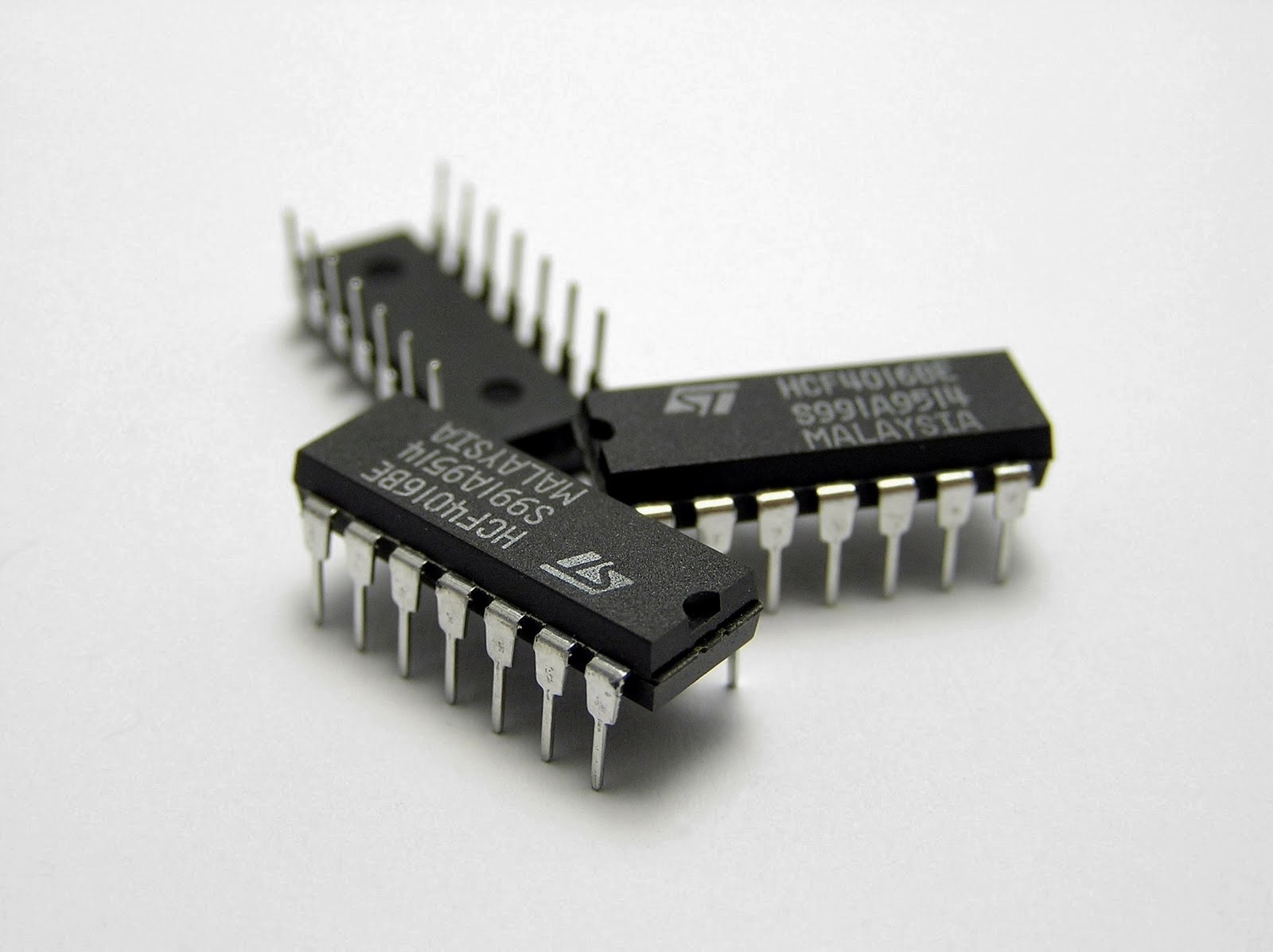
In an era defined by rapid technological advancement, few components have played as pivotal a role as the integrated circuit, or IC. Often invisible, nestled deep within our smartphones, laptops, cars, and countless other devices, ICs are the miniature brains that power the digital world. From the simplest calculators to the most complex supercomputers, these tiny chips are the bedrock upon which modern innovation is built. Understanding what an IC is, how it works, and its profound impact is essential for anyone seeking to grasp the fundamental mechanics of contemporary technology. This article will delve into the world of integrated circuits, exploring their origins, intricate design, diverse applications, and the exciting future they promise.
The Genesis and Evolution of Integrated Circuits
The story of the integrated circuit is a testament to human ingenuity and the relentless pursuit of efficiency and miniaturization. Before ICs, electronic devices were built using discrete components like individual transistors, resistors, and capacitors, soldered together on circuit boards. This method was bulky, prone to failure, and expensive, severely limiting the complexity and portability of electronic systems.
From Transistors to Miniaturization
The true precursor to the IC was the invention of the transistor at Bell Labs in 1947 by John Bardeen, Walter Brattain, and William Shockley. Transistors, solid-state devices capable of amplifying or switching electronic signals, revolutionized electronics by offering a more reliable, smaller, and power-efficient alternative to vacuum tubes. However, even with transistors, circuits remained large and cumbersome, hindering further progress in computing and consumer electronics.
The conceptual breakthrough for the integrated circuit came independently from two brilliant engineers in the late 1950s. Jack Kilby at Texas Instruments, in 1958, successfully demonstrated the first working integrated circuit by fabricating multiple components on a single piece of germanium. His prototype included a transistor, resistors, and capacitors, connected by wires on the same semiconductor substrate. A few months later, in 1959, Robert Noyce at Fairchild Semiconductor developed a more practical and manufacturable version using silicon and introducing the idea of creating interconnections directly on the chip, rather than using separate wires. Noyce’s planar process proved to be the more scalable approach, laying the foundation for mass production. This dual invention marked the dawn of the microelectronics era, a revolution that would reshape every aspect of human life.
Key Milestones in IC Development
The journey of the IC from a laboratory curiosity to a ubiquitous component has been marked by continuous innovation and adherence to Moore’s Law, an observation by Intel co-founder Gordon Moore in 1965 predicting that the number of transistors on a microchip would double approximately every two years. This prediction has largely held true for decades, driving exponential growth in computing power and shrinking costs.
Early ICs, known as Small-Scale Integration (SSI), contained only a handful of transistors. As manufacturing processes improved, Medium-Scale Integration (MSI) circuits emerged in the late 1960s with hundreds of transistors, enabling more complex functions like counters and registers. The 1970s saw the advent of Large-Scale Integration (LSI), packing thousands of transistors onto a single chip, giving rise to microprocessors like the Intel 4004, which powered early personal computers. The subsequent decades brought Very Large-Scale Integration (VLSI) with millions of transistors, making modern computers and complex embedded systems possible, and later Ultra Large-Scale Integration (ULSI) with billions. Each milestone unlocked new possibilities, from personal computers and the internet to mobile phones and artificial intelligence, showcasing the transformative power of ever-increasing transistor density.
Anatomy of an IC: How They Work
Despite their incredibly small size and complex functionality, all integrated circuits share fundamental principles in their operation and manufacturing. They are essentially miniature, intricate networks of electronic components interconnected on a single semiconductor substrate, typically silicon.
Core Components: Transistors, Resistors, Capacitors
At the heart of every IC are billions of transistors, acting as microscopic switches that control the flow of electricity. These are predominantly MOSFETs (Metal-Oxide-Semiconductor Field-Effect Transistors) due to their low power consumption and small size. When a voltage is applied to the gate of a MOSFET, it creates an electric field that allows current to flow between its source and drain terminals, effectively turning it “on” or “off.” This binary switching capability is the basis of all digital logic.
In addition to transistors, ICs incorporate other essential passive components:
- Resistors: Control current flow and drop voltage. On an IC, resistors are often formed by simply doping a region of silicon to a specific resistivity.
- Capacitors: Store electrical energy and are used for filtering, timing, and coupling signals. They are typically created by layering conductive and insulating materials.
- Diodes: Allow current to flow in only one direction, used for rectification and protection.
These components are meticulously arranged and interconnected to perform complex functions, from basic logic gates (AND, OR, NOT) to entire microprocessors.
Manufacturing Process: From Wafer to Chip
The creation of an IC is one of the most sophisticated manufacturing processes on Earth, typically involving hundreds of steps performed in highly sterile cleanrooms. It begins with a wafer, a thin slice of highly purified semiconductor material, usually monocrystalline silicon.
- Photolithography: This is the core technique for patterning. A layer of light-sensitive material (photoresist) is applied to the wafer. A mask, containing the circuit design, is then used to expose specific areas of the photoresist to UV light. The exposed or unexposed photoresist is then removed, revealing the underlying silicon.
- Etching: Chemical or plasma etching processes are used to selectively remove material from the exposed silicon, creating the desired patterns, trenches, or holes.
- Doping: Impurity atoms (dopants like boron or phosphorus) are introduced into specific regions of the silicon through processes like ion implantation. Doping alters the conductivity of the silicon, creating P-type and N-type semiconductor regions essential for transistor operation.
- Deposition: Thin films of various materials (e.g., silicon dioxide for insulation, polysilicon for gates, metals like copper for interconnects) are deposited onto the wafer using techniques like Chemical Vapor Deposition (CVD) or Physical Vapor Deposition (PVD).
- Interconnection: Multiple layers of metal interconnects are fabricated on top of the active components, separated by insulating layers. These tiny wires, often just a few nanometers wide, connect the billions of transistors and other components into a functional circuit.
This entire process is repeated layer by layer, sometimes over a dozen times, to build up the intricate three-dimensional structure of the IC.
Packaging and Interconnects
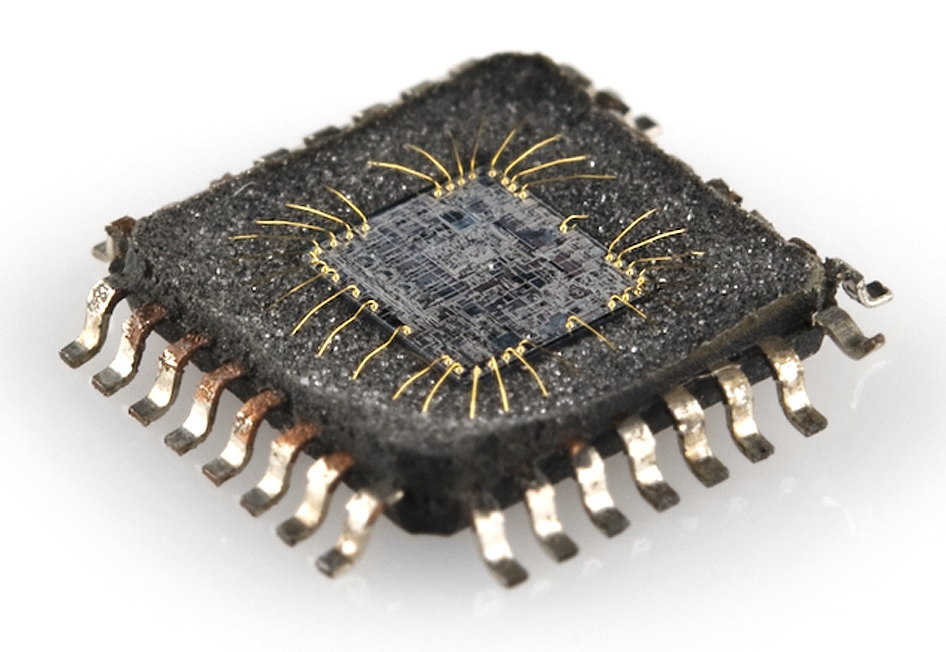
Once the circuit is fabricated on the wafer, individual chips (dies) are cut from the wafer. Each die is then mounted onto a package, which serves several crucial purposes:
- Protection: Shields the delicate silicon die from physical damage and environmental factors.
- Electrical Connection: Provides an interface for the chip to connect to a larger circuit board (PCB) via pins, balls, or leads. These connections allow power to be supplied to the IC and signals to flow in and out.
- Heat Dissipation: Helps conduct heat away from the chip, which is critical for performance and longevity, especially in high-power ICs.
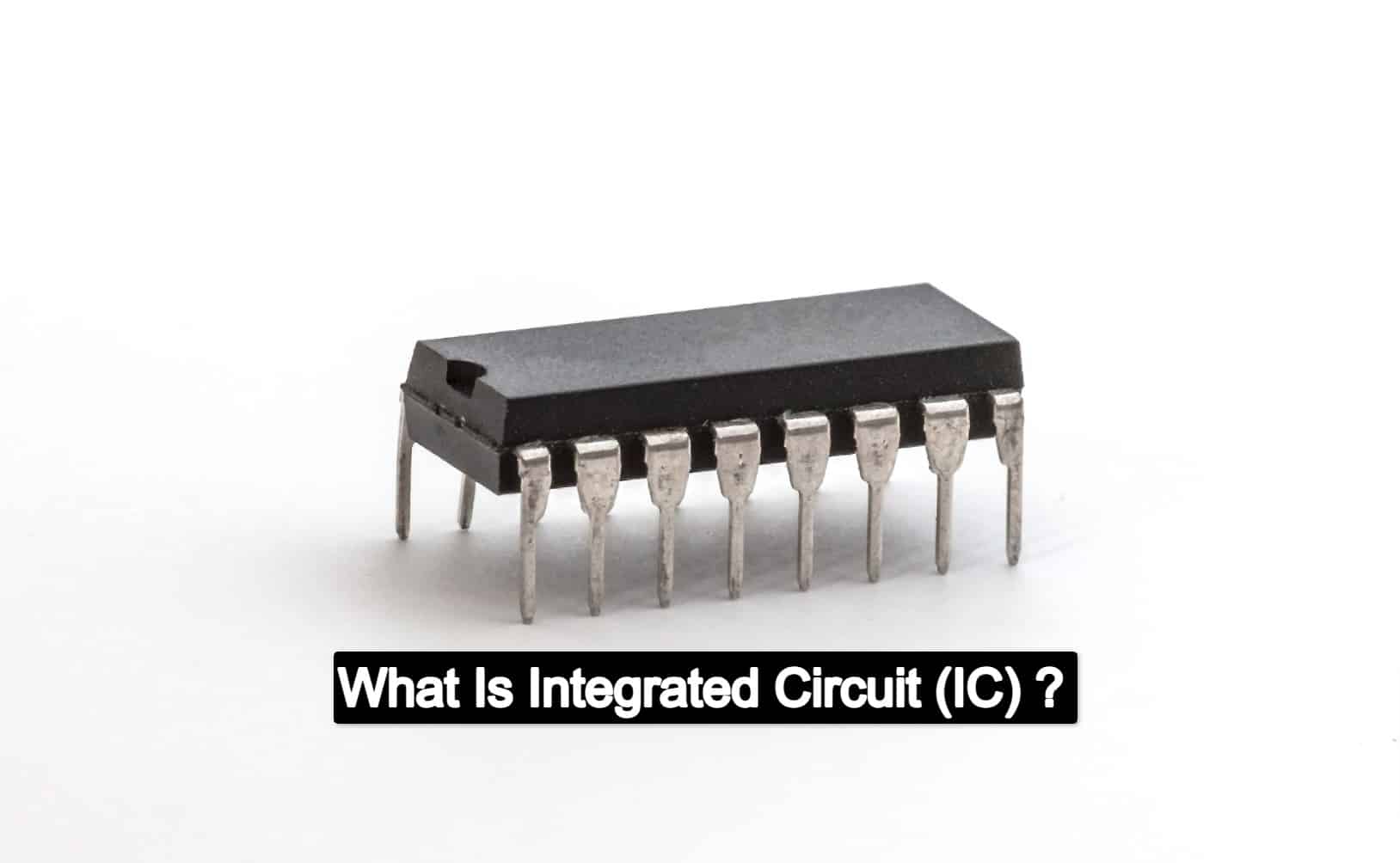
Common package types include Dual In-line Packages (DIPs), Ball Grid Arrays (BGAs), and Quad Flat Packages (QFPs). The choice of packaging depends on the chip’s complexity, power requirements, and the application it’s intended for. The final packaged IC is then ready to be integrated into electronic products.
Diverse Applications and Types of ICs
The versatility of integrated circuits is immense, allowing them to perform a vast array of functions across virtually every technological domain. While all ICs share the common foundation of semiconductor technology, they are specialized into different types to meet specific needs.
Digital vs. Analog ICs
One fundamental classification is based on the type of signals they process:
- Digital ICs: These circuits operate with discrete voltage levels, representing binary data (0s and 1s). They are the workhorses of computing, processing information in a digital format. Examples include microprocessors, memory chips, logic gates, and digital signal processors (DSPs). They are highly resistant to noise and can store and manipulate vast amounts of data.
- Analog ICs: These circuits process continuous, varying voltage signals. They are used to interface with the real world, where most physical phenomena (like sound, light, temperature) are analog. Examples include operational amplifiers (op-amps), voltage regulators, audio amplifiers, and radio frequency (RF) circuits. Analog ICs often require high precision and low noise characteristics.
- Mixed-Signal ICs: Many modern applications require both digital and analog processing. Mixed-signal ICs combine both types of circuits on a single chip, facilitating the conversion between analog and digital signals (e.g., Analog-to-Digital Converters (ADCs) and Digital-to-Analog Converters (DACs)) and handling functions that bridge both domains.
Microprocessors, Microcontrollers, and Memory Chips
These are some of the most common and critical types of digital ICs:
- Microprocessors (CPUs): The “brain” of a computer, responsible for executing instructions, performing calculations, and managing the overall flow of data. Modern CPUs are incredibly complex VLSI chips containing billions of transistors.
- Microcontrollers (MCUs): Essentially “computers on a chip,” MCUs integrate a CPU, memory (RAM and ROM), and various peripherals (like timers, ADCs, and communication interfaces) onto a single IC. They are designed for embedded applications where specific tasks need to be performed, such as in washing machines, remote controls, or IoT devices.
- Memory Chips: Store data and program instructions.
- RAM (Random Access Memory): Volatile memory used for temporary storage of data and programs currently being used. It’s fast but loses its contents when power is off. (e.g., DRAM, SRAM).
- ROM (Read-Only Memory): Non-volatile memory that retains its data even without power, used for storing firmware or boot instructions. (e.g., EEPROM, Flash memory).
Specialized ICs: ASICs, FPGAs, and SoCs
Beyond general-purpose ICs, highly specialized chips cater to specific application requirements:
- Application-Specific Integrated Circuits (ASICs): Custom-designed ICs optimized for a particular function or application. They offer high performance, low power consumption, and reduced cost for high-volume products (e.g., chips in a specific smartphone model, cryptocurrency miners). However, their development cost is high.
- Field-Programmable Gate Arrays (FPGAs): Reconfigurable digital ICs that allow users to program their logic gates and interconnections after manufacturing. FPGAs offer flexibility and faster time-to-market compared to ASICs, making them suitable for prototyping, low-volume production, and applications where design changes might be needed (e.g., signal processing, telecommunications).
- System-on-a-Chip (SoC): Integrates nearly all the components of a computer or other electronic system onto a single IC. This typically includes a CPU, GPU, memory, peripherals, and sometimes modems. SoCs are crucial for compact, power-efficient devices like smartphones, tablets, and smart home devices. They represent the pinnacle of IC integration, enabling entire systems to be miniaturized into a single package.
The Impact and Future of IC Technology
The integrated circuit has been the primary engine driving the technological revolution of the past six decades, profoundly impacting every facet of modern life. Its journey is far from over, with ongoing research pushing the boundaries of what’s possible.
Driving Innovation Across Industries
The widespread adoption and continuous improvement of ICs have fueled innovation across countless industries:
- Information Technology: The foundation of personal computers, servers, the internet, and cloud computing.
- Telecommunications: Enabling mobile phones, wireless communication, and global connectivity.
- Consumer Electronics: Powering everything from smart TVs and digital cameras to wearables and gaming consoles.
- Automotive: Crucial for engine control units, infotainment systems, advanced driver-assistance systems (ADAS), and electric vehicle management.
- Healthcare: Found in medical imaging equipment, diagnostic tools, patient monitoring systems, and implantable devices.
- Aerospace and Defense: Essential for navigation systems, communication, radar, and control systems in aircraft and spacecraft.
- Industrial Automation: Robotics, factory control systems, and smart manufacturing rely heavily on embedded ICs.
Without the relentless progress in IC technology, the digital age as we know it would simply not exist.
Challenges and Opportunities: Miniaturization Limits, AI Integration, and Quantum Computing
As ICs approach the atomic scale, traditional silicon-based manufacturing faces increasing physical limitations. The heat generated by billions of transistors packed tightly together, the quantum effects that start to appear at nanoscale, and the immense cost of fabricating new, smaller nodes are significant challenges.
However, these challenges are also giving rise to new opportunities:
- Beyond Silicon: Research into alternative materials like gallium nitride (GaN) and silicon carbide (SiC) for power electronics, or 2D materials like graphene, promises breakthroughs in performance and efficiency.
- Advanced Packaging: Instead of solely focusing on shrinking transistors, “chiplets” and 3D stacking technologies are emerging. These approaches integrate multiple smaller, specialized dies (chiplets) into a single package, offering new ways to achieve higher performance and functionality without relying solely on monolithic integration.
- AI Accelerators: The rise of Artificial Intelligence and Machine Learning has spurred the development of specialized ICs designed for parallel processing, like GPUs and Tensor Processing Units (TPUs), which are optimized for AI workloads.
- Quantum Computing: While still in its nascent stages, quantum computing represents a paradigm shift. Quantum ICs, which leverage quantum-mechanical phenomena, could solve problems intractable for classical computers, potentially revolutionizing fields like medicine, materials science, and cryptography.
The Road Ahead: Neuromorphic Computing and Beyond
Looking further into the future, the evolution of ICs is poised to continue on several exciting fronts. Neuromorphic computing, inspired by the structure and function of the human brain, aims to create ICs that can process information in a fundamentally different, more energy-efficient way, particularly suited for AI and machine learning tasks. These chips could integrate memory and processing on the same silicon, overcoming the “von Neumann bottleneck” of traditional architectures.
The convergence of biotechnology with microelectronics, the integration of photonics (light-based computing) into silicon, and the exploration of exotic materials all point towards a future where integrated circuits continue to push the boundaries of what’s technologically feasible. As these tiny marvels become ever more powerful and ubiquitous, they will undoubtedly continue to shape our world in ways we can only begin to imagine, driving the next wave of innovation and progress.
In conclusion, the integrated circuit, often hidden from plain sight, is the unsung hero of the digital age. From its humble beginnings as a few transistors on a chip to the complex systems-on-a-chip that power our lives today, the IC stands as a testament to engineering brilliance and a promise of an even more interconnected and intelligent future.
aViewFromTheCave is a participant in the Amazon Services LLC Associates Program, an affiliate advertising program designed to provide a means for sites to earn advertising fees by advertising and linking to Amazon.com. Amazon, the Amazon logo, AmazonSupply, and the AmazonSupply logo are trademarks of Amazon.com, Inc. or its affiliates. As an Amazon Associate we earn affiliate commissions from qualifying purchases.