
In the globalized world of finance and commerce, the question “what holiday is today in Germany?” is rarely asked out of mere curiosity. For investors, payroll managers, and business owners, the answer dictates the flow of capital, the liquidity of the markets, and the operational costs of one of the world’s most powerful economies. Germany’s approach to public holidays (Feiertage) is a complex tapestry of federal mandates and state-specific traditions that creates a unique financial landscape.
Understanding this calendar is not just about knowing when offices are closed; it is about navigating the fiscal implications of a system where a single day can halt the DAX (the German stock index) or trigger significant shifts in consumer spending and labor costs.

The Fiscal Landscape of German Public Holidays
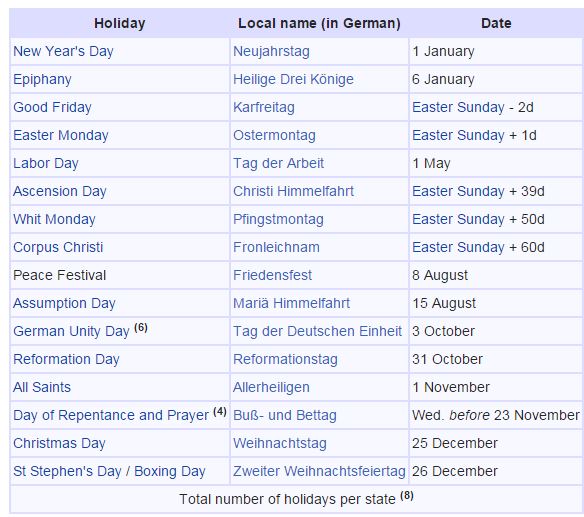
Germany’s federal structure means that the “economic cost” of a holiday is often localized. While there are nine national holidays—such as New Year’s Day, Good Friday, and the Day of German Unity—many others are determined by the individual 16 federal states (Bundesländer). This creates a staggered financial impact across the country.
State-Specific Holidays and Regional Commerce
The southern states, particularly Bavaria and Baden-Württemberg, celebrate more religious holidays than the northern states. From a financial perspective, this creates regional “dark zones” for business. If a company headquartered in Hamburg is trying to close a deal with a partner in Munich on Allerheiligen (All Saints’ Day), they will find the southern financial hubs silent. For a business, this requires strategic cash flow management to ensure that regional shutdowns do not disrupt national supply chains or payment processing.
The Financial Weight of the “Quiet Days”
Germany also designates certain holidays as Stille Tage (Quiet Days), where specific commercial activities are restricted. While these are often viewed through a cultural lens, the financial reality involves lost revenue for the entertainment and hospitality sectors. Understanding the nuances of these days is vital for revenue forecasting, particularly for businesses that rely on high-volume weekend trade.
Banking and Market Liquidity: Navigating the DAX and SEPA Closures
For those in the world of high-finance and day trading, the German holiday calendar is a primary variable in risk management. The Frankfurt Stock Exchange, the heart of the Eurozone’s financial system, does not always follow the same holiday schedule as the local bakeries.
The TARGET2 System and International Transactions
One of the most critical financial aspects of German holidays is the status of the TARGET2 system—the real-time gross settlement system owned and operated by the Eurosystem. Even if a specific holiday is only celebrated in parts of Germany, if it is a TARGET2 closing day, SEPA transfers and large-scale interbank payments will not settle. This can lead to a “liquidity crunch” for small businesses that haven’t planned their payroll or vendor payments around these dead zones. Knowing “what holiday is today” is the difference between a successful transaction and a defaulted payment.
Stock Market Volatility and Trading Volumes
The DAX and the Euro Stoxx 50 are heavily influenced by German public holidays. On days when Germany observes a holiday but the US or Asian markets are open, trading volumes typically drop significantly. This lower liquidity can lead to higher volatility. Professional investors often adjust their algorithmic trading parameters on German holidays to account for wider bid-ask spreads. For the individual investor, these days represent a time of “market thinning,” where price movements might not accurately reflect the underlying value of assets due to the absence of institutional German buyers.
The Productivity Paradox: Assessing the Macroeconomic Cost of a “Feiertag”
Economists have long debated the exact cost of a public holiday to the German Gross Domestic Product (GDP). With an economy so heavily reliant on manufacturing and industrial exports, a single day of idle machinery can seem like a fiscal disaster. However, the reality is more nuanced.

Calculating the Loss per Working Day
Estimates from the German Economic Institute (IW) suggest that a single working day in Germany is worth roughly 0.1% of the annual GDP. In a country with a GDP of over $4 trillion, a single holiday can theoretically represent a “loss” of billions of euros in production. However, this calculation assumes that the lost work is never recovered. In the industrial sector, many companies compensate for holidays by increasing production intensity in the days leading up to or following the break, effectively neutralizing the long-term financial hit.
The Boost to the Consumer Economy
While the manufacturing sector may see a temporary dip, the retail (e-commerce), domestic tourism, and hospitality sectors often see a massive influx of capital during holidays. Long weekends act as a stimulus for the “leisure economy.” For businesses in the financial sector, this represents a shift in capital allocation—money moves from industrial investment and B2B transactions into B2C spending. Analyzing these shifts allows financial planners to predict seasonal peaks in credit card processing fees and retail banking activity.
Strategic Payroll and Labor Finance: Managing the Premium
In Germany, the financial burden of a holiday is felt most acutely by employers through the lens of labor law and payroll accounting. Unlike some other jurisdictions, German law is very protective of employee rights regarding public holidays.
The Cost of Holiday Surcharges
For businesses that must remain operational—such as hospitals, transport, and certain energy providers—the financial cost of a holiday is significantly higher than a standard workday. Employees are often entitled to a “holiday surcharge” (Feiertagszuschlag), which can be up to 125% or even 150% of their base salary. Crucially for the employee’s personal finance, these surcharges are often tax-free within certain limits, but for the employer, they represent a substantial increase in overhead.
Social Security and Insurance Contributions
Managing the financial backend of a German company involves calculating how these holiday premiums interact with social security contributions. Because the German social system is so integrated with payroll, a month with multiple holidays requires more complex accounting. Business finance tools must be calibrated to handle the specificities of the German Entgeltfortzahlungsgesetz (Continued Remuneration Act), which ensures that employees are paid for holidays as if they had worked, preventing any dip in their personal income but requiring careful cash-reserve planning from the company.
Maximizing “Brückentage”: Financial Planning for Business Efficiency
One of the most unique aspects of the German professional culture is the Brückentag (Bridge Day). When a holiday falls on a Thursday or Tuesday, many employees take the intervening day off to create a four-day weekend. From a money-management perspective, this is a critical period for operational efficiency.
Operational Cost-Cutting vs. Revenue Loss
Many German companies, particularly in the Mittelstand (small-to-medium enterprises), choose to implement “company holidays” during these bridge periods. Financially, this is often a strategic move to save on operational costs—heating, electricity, and administrative overhead—during a period when productivity would likely be low anyway. By consolidating time off into these bridge days, companies can streamline their annual leave liabilities, ensuring that the workforce is at full capacity during high-output periods.
Impact on the Service and Digital Economy
For the online income and digital service sectors, Brückentage represent a shift in user behavior. Financial tools and fintech apps often see a spike in usage as individuals use the extra time to manage their personal finances, trade stocks, or look into side hustles. For those looking to generate online income in the German market, these “bridge days” are the optimal time to launch targeted financial products or content, as the “cost of attention” is lower and the audience is more engaged with their personal financial health.
Conclusion: The Currency of Time
In Germany, a holiday is more than a break from work; it is a significant financial event. Whether it is the closing of the DAX, the surge in consumer spending, the complexity of payroll surcharges, or the strategic management of bridge days, the German calendar dictates the rhythm of the European economy.
For the professional navigating this space, asking “what holiday is today in Germany?” is the first step in a broader financial strategy. By understanding the regional nuances, market closures, and labor costs associated with these days, one can transform a potential disruption into a planned fiscal advantage. In the world of money, time is the ultimate currency, and in Germany, how that time is spent—or not spent—is a multi-billion euro equation.
aViewFromTheCave is a participant in the Amazon Services LLC Associates Program, an affiliate advertising program designed to provide a means for sites to earn advertising fees by advertising and linking to Amazon.com. Amazon, the Amazon logo, AmazonSupply, and the AmazonSupply logo are trademarks of Amazon.com, Inc. or its affiliates. As an Amazon Associate we earn affiliate commissions from qualifying purchases.