
For over three decades, The Simpsons has occupied a unique space in the cultural zeitgeist. While ostensibly a satirical take on the American middle-class lifestyle, the show has earned an uncanny reputation for “predicting” the future. While some dismiss these instances as mere coincidences born from a long-running production, a closer look through a technological lens reveals something more profound. The writers of The Simpsons—many of whom hold advanced degrees in mathematics and science—frequently extrapolated existing R&D trends into the realm of satire, often landing remarkably close to the innovations that define our modern digital age.
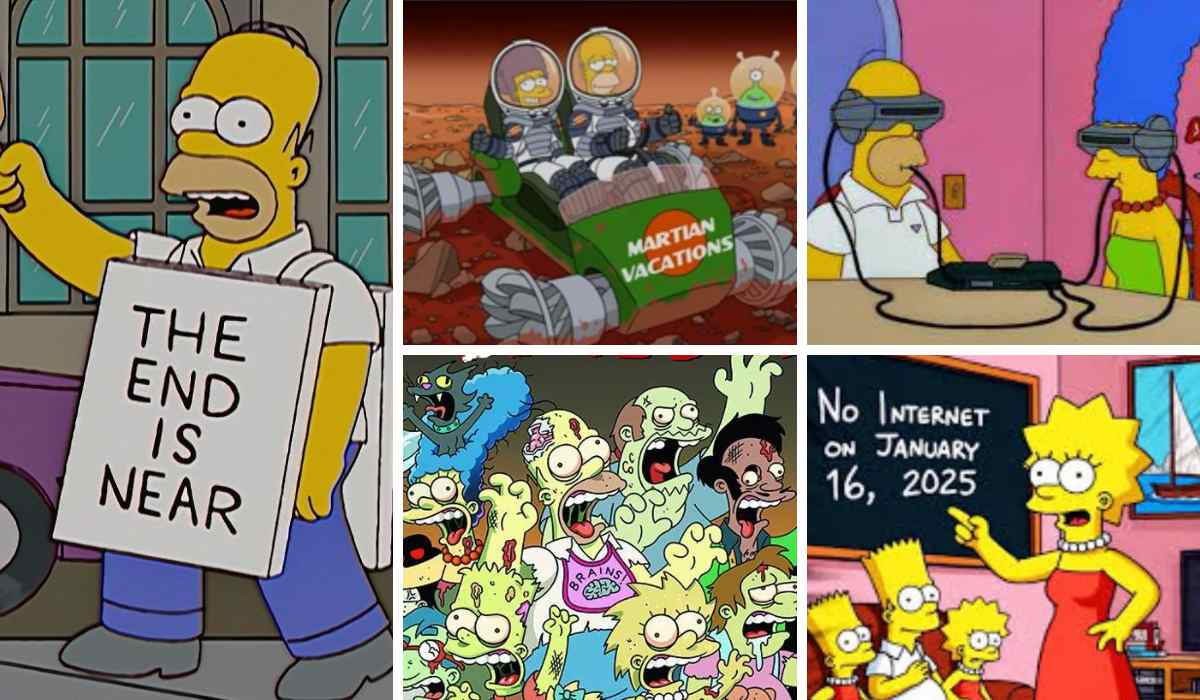
In the world of technology, what was once a punchline in Springfield has frequently become a protocol in Silicon Valley. From the miniaturization of hardware to the complexities of artificial intelligence, the show has served as an accidental roadmap for the 21st century.
The Evolution of Personal Hardware and Wearables
Long before the “Apple Watch” or “Oculus Rift” were household names, The Simpsons was exploring the social and functional implications of wearable technology. These predictions were not merely about the existence of the gadgets, but about how they would fail, succeed, and eventually integrate into the human experience.
From Wristwatches to Smartwatches: The “Lisa’s Wedding” Legacy
In the 1995 episode “Lisa’s Wedding,” viewers were introduced to a futuristic world set in 2010. One of the standout gadgets was a wristwatch that functioned as a communication device. At the time, the idea of a wearable that could transmit voice and data was the stuff of Dick Tracy comics.
Fast forward to the release of the first Apple Watch in 2015, and the reality caught up with the fiction. The show predicted the shift from analog timekeeping to multi-functional digital hubs. More importantly, it highlighted the technical hurdle of “voice-to-text” and remote communication via the wrist—features that are now standard in the IoT (Internet of Things) ecosystem. The accuracy here lies in the understanding that as components shrink, the wrist becomes the most logical real estate for secondary digital interfaces.
The Prophetic Vision of Virtual Reality and Immersive Haptics
Virtual reality (VR) has seen several “false starts” in the tech industry, but The Simpsons accurately depicted its current trajectory toward total immersion. In several episodes, characters are seen wearing bulky headsets that transport them to digital environments, ranging from virtual gardening to combat simulations.
What the show predicted correctly was not just the visual aspect of VR, but the development of haptic feedback. In the episode “Friends and Family” (2016), the show explored the concept of “Virtual Reality” as a way to replace physical presence—a theme that became eerily relevant during the global shift toward remote work and the “Metaverse” concept championed by companies like Meta. The show’s depiction of VR emphasizes the isolation and the “uncanny valley” effect that developers are still struggling to overcome today.
Communication and the Digitization of Human Interaction
The way we communicate has undergone a radical transformation since 1989. The Simpsons sat at the intersection of the analog and digital revolutions, often mocking the early, clunky attempts at “new media” that eventually became our daily reality.
Video Telephony: Predicting the Era of Zoom and FaceTime
In the same “Lisa’s Wedding” episode, a futuristic Lisa is seen chatting with Marge via a “Picture Phone.” While AT&T had attempted to market the “Picturephone” as early as the 1964 World’s Fair, it remained a commercial failure for decades due to bandwidth limitations.
The Simpsons correctly identified that video telephony would not become a reality until the infrastructure (high-speed internet and mobile data) caught up with the hardware. Today, FaceTime, Zoom, and Microsoft Teams are not just tools but essential infrastructure for the global economy. The show’s prediction focused on the “mundanity” of the tech—showing that video calls wouldn’t be reserved for sci-fi space missions, but for everyday, often tedious, family check-ins.
Autocorrect and the Struggle of Early Natural Language Processing
One of the most famous tech-related “Simpsons” predictions involves the Apple Newton. In the 1994 episode “Lisa on Ice,” a character tries to write “Beat up Martin” on his digital memo pad, only for the device to translate it to “Eat up Martha.”
This was a direct jab at the Apple Newton’s notoriously poor handwriting recognition. However, it also served as an early critique of algorithmic interpretation of human language. This “prediction” laid the groundwork for the modern frustrations with autocorrect and the broader challenges of Natural Language Processing (NLP). It highlighted a fundamental truth in tech: as we move toward more intuitive interfaces, the margin for algorithmic error becomes a significant friction point in user experience (UX).
The Rise of Artificial Intelligence and Automation

If there is one area where The Simpsons has been particularly visionary, it is in the automation of labor and the rise of autonomous systems. The show often uses the Springfield Nuclear Power Plant as a testing ground for experimental (and often disastrous) technology.
Robotics in the Workforce: From Nuclear Plants to Everyday Labor
In several episodes, Mr. Burns attempts to replace his human workforce with robots to maximize efficiency and minimize liability. While portrayed as a villainous trope, this mirrors the very real industrial shift toward automation.
From Amazon’s automated warehouses to the deployment of “Cobots” (collaborative robots) in manufacturing, the show predicted the tension between human labor and mechanical efficiency. It also touched on the maintenance and “edge case” failures that occur when AI systems encounter unpredictable human behavior. The “prediction” here isn’t just the existence of robots, but the economic and social friction caused by the transition to an automated economy.
Generative AI and the Future of Creativity
In more recent years, The Simpsons has delved into the world of algorithms that can mimic human creativity and personality. Whether it’s an AI that generates TV scripts or software that can replicate a person’s voice, the show has tapped into the current anxiety surrounding Generative AI and Large Language Models (LLMs).
Tools like ChatGPT and Midjourney have made the “sci-fi” concept of machine-generated content a reality. The Simpsons predicted the ethical quandaries of this tech: Who owns the copyright? Can a machine truly replicate the “soul” of a creator? By satirizing these concepts years before the launch of GPT-4, the show positioned itself as a critique of the “move fast and break things” ethos of the AI industry.
The Ethics of Emerging Tech: Privacy, Surveillance, and Big Data
Technology is never just about the hardware; it’s about the data that flows through it. The Simpsons has frequently explored how tech can be used for surveillance, often predicting the ways in which private and public entities would eventually monitor the populace.
Mass Surveillance and the NSA “Prediction”
In The Simpsons Movie (2007), a scene depicts the NSA monitoring the conversations of every American simultaneously. While this was a joke about government overreach, it preceded the 2013 Edward Snowden revelations regarding the PRISM program and global mass surveillance.
The tech predicted here was the capability for “Big Data” analytics—the idea that a centralized system could process trillions of data points to identify patterns. In the modern tech landscape, this has evolved into “predictive policing” and the targeted advertising algorithms used by social media giants. The show captured the transition from a world where privacy was the default to one where data extraction is the primary business model of the internet.
The Gamification of Social Credit and Digital Reputation
While often attributed to Black Mirror, The Simpsons touched on the concept of digital reputation and social credit early on. In various episodes, the show explores how public opinion, facilitated by digital platforms, can instantly elevate or destroy an individual.
This is a direct precursor to the “social credit” systems currently being trialed in various forms globally, as well as the “cancel culture” facilitated by real-time social media algorithms. The show predicted a world where our digital footprint—tracked by our gadgets—would eventually dictate our real-world access to services, credit, and community.
The Feedback Loop: How Media Predictions Shape Tech Innovation
Why does The Simpsons seem to get it right so often? In the tech world, this is known as a feedback loop. Engineers and developers who grew up watching the show are often influenced by the gadgets they saw on screen.
Science Fiction as a Roadmap for Silicon Valley
Many of the world’s leading tech innovators have cited science fiction and satirical media as their primary inspiration. When a developer at a tech giant works on a “smartwatch,” they are subconsciously or consciously solving the problems presented in the media they consumed as children.
The Simpsons didn’t just predict the future; it helped socialize the idea of the future. By making futuristic tech seem familiar—even if the context was a joke—the show lowered the barrier for consumer acceptance. If Homer Simpson can use a video phone, then the average consumer feels empowered to do the same.

Conclusion: The Intersection of Satire and Technological Reality
The “predictions” of The Simpsons are a testament to the power of keen observation. By looking at the trajectory of technology and the persistent flaws of human nature, the show’s writers managed to foresee the digital landscape of 2024 and beyond.
As we move toward an era of even greater integration—where AI, wearables, and the IoT become indistinguishable from our physical reality—we should perhaps look less at the show’s gadgets and more at its social critiques. The ultimate “prediction” of The Simpsons isn’t that a specific watch or robot will exist; it’s that no matter how advanced our technology becomes, it will always be subject to the same human follies, glitches, and comedic mishaps that make Springfield so relatable. In the tech industry, where optimism often borders on delusion, The Simpsons provides a necessary, prophetic reality check.
aViewFromTheCave is a participant in the Amazon Services LLC Associates Program, an affiliate advertising program designed to provide a means for sites to earn advertising fees by advertising and linking to Amazon.com. Amazon, the Amazon logo, AmazonSupply, and the AmazonSupply logo are trademarks of Amazon.com, Inc. or its affiliates. As an Amazon Associate we earn affiliate commissions from qualifying purchases.