
When discussing the intersection of governance and personal finance, few topics spark as much debate as the economic trajectory of the Black community during the administration of Donald Trump. From a “Money” niche perspective—focusing on personal finance, investing, business finance, and institutional wealth—it is essential to move beyond the headlines and examine the specific legislative and regulatory shifts that targeted financial growth. This analysis focuses on the fiscal mechanisms, capital incentives, and labor market trends that defined this era, providing a comprehensive look at the financial outcomes for Black Americans between 2017 and 2021.
The Mechanics of Opportunity Zones and Urban Investment
One of the most significant financial pillars of the Trump administration’s strategy was the creation of “Opportunity Zones” through the Tax Cuts and Jobs Act of 2017. Designed to spur long-term private sector investment in distressed communities, this policy aimed to shift the focus from government subsidies to private capital.
Incentivizing Long-Term Capital in Underserved Markets
Opportunity Zones were structured as a tax incentive for investors to reinvest their unrealized capital gains into dedicated “Qualified Opportunity Funds.” For the Black community, which is disproportionately represented in many of the 8,760 designated census tracts, this represented a potential influx of billions in development capital. The financial logic was simple: by deferring or eliminating capital gains taxes for investors who held their assets in these zones for five to ten years, the government could direct “dry powder” (uninvested cash) into real estate, infrastructure, and local businesses that had long been ignored by traditional venture capital.
From a business finance perspective, this created a new asset class. For Black entrepreneurs located within these zones, it theoretically lowered the barrier to entry for securing equity partners. Rather than relying solely on high-interest loans, businesses could pitch to Opportunity Funds looking for long-term growth and tax mitigation.
Evaluating the Reach of the Tax Cuts and Jobs Act
Beyond the specific “zones,” the broader Tax Cuts and Jobs Act (TCJA) impacted Black households through changes in the standard deduction and child tax credits. For the average Black family, the doubling of the standard deduction simplified the filing process and provided immediate liquidity. While critics argued that the bulk of the corporate tax cuts benefited shareholders rather than employees, the administration argued that the resulting “repatriation” of overseas capital and the reduction in the corporate rate from 35% to 21% catalyzed a competitive labor market, which is often the precursor to wage growth for minority demographics.
Strengthening the Financial Foundations of HBCUs
Historically Black Colleges and Universities (HBCUs) have long served as the primary engines of economic mobility for the Black middle class. During the Trump administration, the focus shifted toward institutional financial stability, ensuring these organizations could continue to produce high-earning graduates and maintain their own endowments.
The FUTURE Act and Permanent Funding Streams
One of the most consequential financial milestones was the signing of the Fostering Undergraduate Talent by Unlocking Resources for Education (FUTURE) Act. Prior to this, HBCUs were required to lobby Congress annually for a significant portion of their federal funding, creating a state of perpetual financial uncertainty. By making $255 million in annual funding permanent, the administration provided these institutions with a “predictable balance sheet.”
In the world of institutional finance, predictability is gold. With guaranteed federal revenue streams, HBCUs could more effectively plan long-term capital projects, improve their credit ratings for bond issuance, and invest in high-demand degree programs like data science and financial engineering. This stability directly impacted the “Personal Finance” of students by ensuring that tuition remained relatively stable and that the value of their degree—their primary financial asset—remained high.
Impact on Institutional Wealth and Student Financial Aid
Furthermore, the administration oversaw the cancellation of more than $300 million in debt for several HBCUs affected by natural disasters, specifically through the HBCU Capital Financing Program. From a business finance standpoint, this was a massive debt-to-equity shift that allowed these institutions to redirect funds from debt servicing toward student scholarships and campus infrastructure. By strengthening the “Brand” and the “Bank” of the HBCU system, the administration contributed to the long-term wealth-building capacity of Black graduates who enter the workforce with less debt and better career prospects.
Labor Market Trends and Small Business Growth
To understand “what was done” for the Black community from a money perspective, one must look at the macro-level indicators of income and entrepreneurship. Prior to the global disruptions of 2020, the economic data showed a period of tightening labor markets and expanding business ownership.
Historical Lows in Unemployment Rates
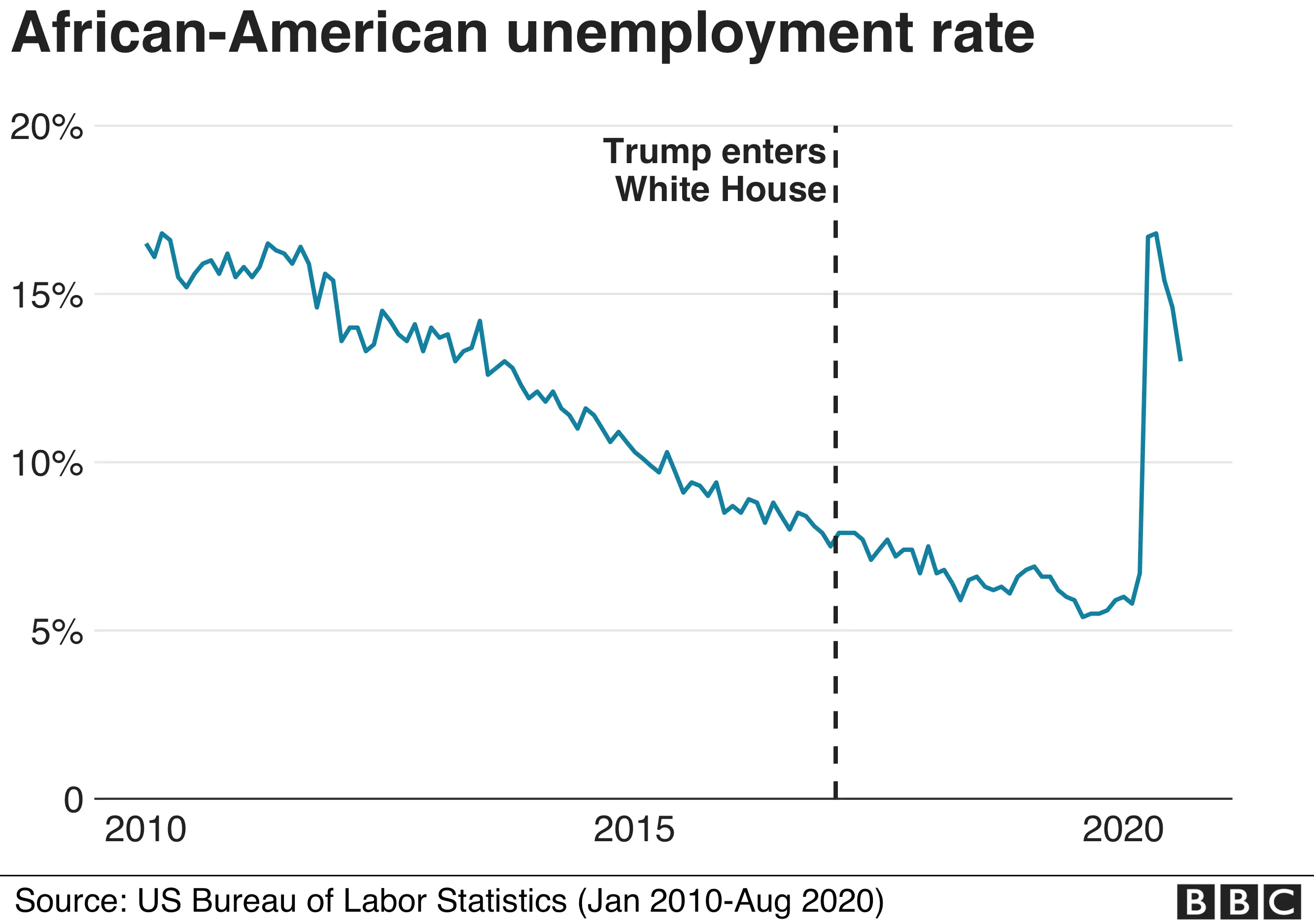
In 2019, the Black unemployment rate reached a record low of 5.4%. While unemployment is often viewed through a social lens, it is fundamentally a personal finance metric. Lower unemployment increases “labor leverage,” allowing workers to negotiate for higher wages, better benefits, and employer-sponsored retirement accounts (401ks). During this period, we saw a narrowing of the wage gap in certain sectors, as companies were forced to compete for a limited pool of talent.
For the Black community, this period of low unemployment served as a crucial window for “wealth catch-up.” It allowed for the establishment of emergency funds, the initiation of brokerage accounts, and a general move toward financial stability that is only possible when household income is steady and rising.
Access to Capital for Black Entrepreneurs
The administration also focused on the Minority Business Development Agency (MBDA) and the Small Business Administration (SBA). In 2018 and 2019, the SBA reported significant increases in lending to minority-owned firms. By reducing the regulatory burden—specifically through the “two-for-one” rule (removing two regulations for every new one added)—the administration aimed to lower the “cost of doing business.”
For a Black-owned startup, these regulatory costs often represent a higher percentage of total revenue compared to larger corporations. By easing these constraints and encouraging community banks to lend more aggressively under the umbrella of a deregulated financial environment, the administration sought to foster a “Main Street” boom. This period saw a rise in the number of Black-owned firms, contributing to the “Online Income” and “Side Hustle” economy that has now become a staple of modern Black financial life.
Criminal Justice Reform as an Economic Catalyst
While often categorized as a social or legal issue, the First Step Act was, at its core, a significant piece of economic legislation. For the Black community, the financial impact of the justice system is a major hurdle to wealth accumulation.
The First Step Act’s Role in Workforce Re-entry
The First Step Act aimed to reduce recidivism and reform sentencing, which directly addresses the “human capital” aspect of the economy. When an individual is incarcerated, they are not only removed from the labor force, but they also represent a net financial loss for their family. By facilitating earlier release for non-violent offenders and focusing on rehabilitation, the act helped reintegrate thousands of Black men and women into the workforce.
From a business finance perspective, this expanded the pool of available labor during a period of labor shortages. More importantly, from a personal finance perspective, it allowed these individuals to become earners, taxpayers, and consumers again. Re-entry programs funded through the act focused on vocational training, which is a direct investment in the “earning power” of the community.
Reducing the Financial Burden of Recidivism
The financial cost of the “revolving door” of the justice system is astronomical. Legal fees, commissary costs, and the loss of generational wealth due to the absence of a primary earner have historically devastated Black household balance sheets. By addressing the systemic issues of over-sentencing, the First Step Act provided a pathway for families to stop the “wealth drain.” This allows for the redirection of funds into homeownership, education, and small business investment—the three pillars of Black economic advancement.
In conclusion, when analyzing “what Trump did for Black people” through the lens of money and finance, a picture emerges of a policy suite focused on capital incentives, institutional stability, and labor market deregulation. While the long-term efficacy of Opportunity Zones continues to be debated by economists, the immediate fiscal impacts of HBCU funding, record-low unemployment, and criminal justice reform created a unique period of financial activity. For the Black community, these policies represented a shift toward leveraging private markets and institutional permanence to drive personal and collective wealth.
aViewFromTheCave is a participant in the Amazon Services LLC Associates Program, an affiliate advertising program designed to provide a means for sites to earn advertising fees by advertising and linking to Amazon.com. Amazon, the Amazon logo, AmazonSupply, and the AmazonSupply logo are trademarks of Amazon.com, Inc. or its affiliates. As an Amazon Associate we earn affiliate commissions from qualifying purchases.