
The Dow Jones Industrial Average (DJIA) is more than just a collection of numbers on a screen; it is a pulse check for the American economy and a symbol of global financial health. For over a century, investors, policymakers, and the general public have looked to “the Dow” as the definitive barometer of market sentiment. When the index reaches a new all-time high, it captures headlines and sparks debates among financial analysts. But what exactly is the highest the Dow Jones has ever been, and more importantly, what does that peak represent for the average investor?
As of mid-2024, the Dow Jones Industrial Average achieved a historic milestone by surging past the 40,000 mark for the first time in its history. This peak represents a remarkable recovery and growth trajectory following years of global economic volatility, inflationary pressures, and shifting monetary policies. To understand the significance of this peak, we must look beyond the number and examine the mechanics, the history, and the future implications of a record-breaking stock market.
Decoding the Record-Breaking Performance of the Dow Jones Industrial Average
The Dow Jones Industrial Average is a price-weighted index that tracks 30 large, publicly owned companies trading on the New York Stock Exchange (NYSE) and the Nasdaq. Unlike the S&P 500, which is market-cap weighted, the Dow is influenced more heavily by the share prices of its constituent companies. This unique structure means that when high-priced stocks move, the entire index moves with them.
Understanding the Composition of the Dow
The “Industrial” in the name is largely a legacy term. While it once focused on heavy industry, today’s Dow is a diversified mix of technology, healthcare, financial services, and consumer goods. Companies like Microsoft, Goldman Sachs, UnitedHealth Group, and Apple are the engines that drive the index to new heights. To reach the highest level ever, these blue-chip giants had to demonstrate consistent earnings growth and operational resilience. The recent push to record highs was largely driven by a handful of high-performing sectors that offset laggards in the energy or traditional retail space.
The Significance of All-Time Highs in Market Cycles
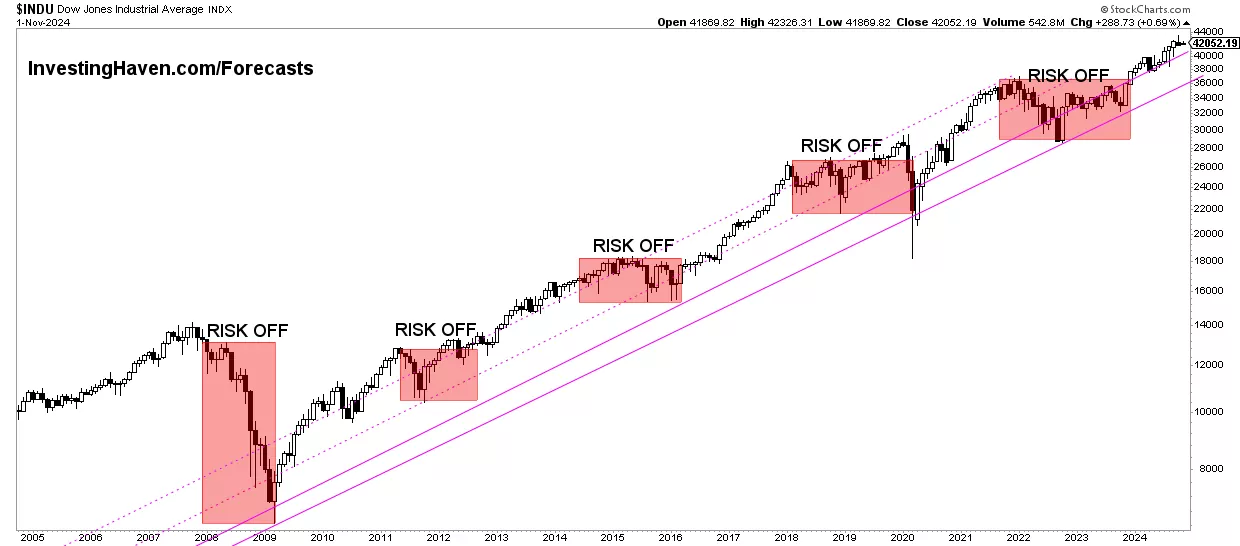
In the world of personal finance and investing, an “All-Time High” (ATH) is a psychological and technical milestone. Technically, an ATH confirms a primary bull market trend. Psychologically, it can be a double-edged sword. For some, it is a sign of economic strength and an invitation to invest. For others, it triggers a “fear of heights,” leading to concerns that the market is overvalued and due for a correction. Historically, however, the Dow has spent a significant amount of time within 5% of its record highs, suggesting that strength often begets more strength.
Historical Milestones: The Journey to the Current Peak
The journey of the Dow Jones to its highest point ever is a story of human innovation and economic expansion. When Charles Dow created the index in 1896, it stood at just 40.94 points. It took 76 years for the index to close above 1,000 (1972). The acceleration from that point forward has been exponential, reflecting the rapid digitization of the economy and the globalization of trade.
From 10,000 to 40,000: A Brief Timeline
The Dow first crossed the 10,000 mark in 1999 during the dot-com boom. It took nearly 18 years to double to 20,000, a feat accomplished in early 2017. The move from 20,000 to 30,000 happened even faster, occurring in late 2020 despite the global pandemic. The most recent climb to the 40,000 threshold was perhaps the most challenging, as the market had to navigate the highest inflation seen in 40 years and a rapid series of interest rate hikes by the Federal Reserve. Each of these “big round numbers” serves as a benchmark for how far the collective value of American enterprise has come.
Key Catalysts Behind the Latest Surge
The push to the highest Dow Jones levels ever was not an accident. It was fueled by several converging factors. First, corporate earnings remained surprisingly robust. Despite fears of a recession, major American corporations managed to maintain profit margins through productivity gains and price adjustments. Second, the “AI Revolution” provided a massive boost to tech-related Dow components, as investors bet on the transformative power of artificial intelligence. Lastly, the resilience of the American consumer, supported by a strong labor market, kept the wheels of the economy turning even as borrowing costs rose.
Economic Drivers and Market Sentiment Fueling New Highs
Market levels are not determined in a vacuum. They are the result of complex interactions between government policy, economic data, and investor psychology. To understand why the Dow reached its current peak, we must look at the macro-environmental factors that provided the necessary tailwinds.
Interest Rates and Federal Reserve Policy
The Federal Reserve is perhaps the most influential entity in the financial world. For much of the journey toward the Dow’s record highs, investors were focused on the “pivot”—the moment the Fed would stop raising interest rates and begin cutting them. Lower interest rates generally lead to higher stock valuations because they reduce the cost of borrowing for companies and make the future cash flows of those companies more valuable today. The anticipation of a more “dovish” (accommodating) central bank played a massive role in propelling the index to its highest levels.
Corporate Earnings and the Resilience of Blue-Chip Stocks
While sentiment moves markets in the short term, earnings move them in the long term. The 30 companies in the Dow are often referred to as “blue chips” because they are established, financially sound, and capable of weathering economic storms. During the most recent ascent to record highs, companies like JPMorgan Chase and Caterpillar reported record or near-record profits. This fundamental strength provided a solid floor for the index, allowing it to climb even when geopolitical tensions or economic reports caused temporary dips.
Strategies for Investing When the Market is at an All-Time High
One of the most common questions in personal finance is: “Should I buy when the market is at an all-time high?” It is a counter-intuitive concept for many who are taught to “buy low and sell high.” However, waiting for a market crash can be a costly mistake, as the market can stay “high” and continue to set new records for years.
The Risks of Market Timing
Market timing is the attempt to predict future market price movements to decide when to buy or sell. Data consistently shows that the average investor fails at this. By waiting for the Dow to drop from its highest levels, an investor may miss out on significant gains. Between 1926 and 2023, the market was within 5% of its all-time high about 30% of the time. If you only invested when the market was “low,” you would have spent decades on the sidelines watching your purchasing power erode due to inflation.
Dollar-Cost Averaging vs. Lump-Sum Investing
For those nervous about the Dow being at its highest point, two main strategies exist. Lump-sum investing involves putting all your available capital into the market at once. Historically, this wins out about 66% of the time because the market trends upward. However, for those concerned about a potential pullback, Dollar-Cost Averaging (DCA) is a powerful psychological and financial tool. By investing a fixed amount of money at regular intervals (e.g., $500 every month), you buy more shares when prices are low and fewer when prices are high. This mitigates the risk of “buying the top” and ensures you remain invested regardless of whether the Dow is at 30,000 or 45,000.

Conclusion: The Long-Term Outlook for the Dow
The highest Dow Jones ever recorded is a testament to the enduring growth of the American economy and the companies that power it. While the 40,000+ level is a significant achievement, history suggests it is merely a waypoint on a much longer journey. The index has survived world wars, depressions, pandemics, and technological upheavals, always eventually finding its way to new heights.
For the disciplined investor, the current peak should be viewed not as a reason for fear, but as a confirmation of the power of compounding and long-term participation in the equity markets. Wealth is rarely built by timing the exact peaks and valleys of the Dow Jones Industrial Average; rather, it is built by staying the course, diversifying one’s portfolio, and understanding that today’s “all-time high” is often tomorrow’s “undervalued entry point.” As we look toward the future, the question isn’t just “how high can the Dow go?” but rather “how can you position your personal finances to benefit from the growth yet to come?”
aViewFromTheCave is a participant in the Amazon Services LLC Associates Program, an affiliate advertising program designed to provide a means for sites to earn advertising fees by advertising and linking to Amazon.com. Amazon, the Amazon logo, AmazonSupply, and the AmazonSupply logo are trademarks of Amazon.com, Inc. or its affiliates. As an Amazon Associate we earn affiliate commissions from qualifying purchases.