
One of the most significant components of a robust financial plan is the pension. For decades, individuals contribute to these schemes with the primary goal of securing a comfortable retirement. However, a critical question often remains overlooked until late in the planning process: what happens to that accumulated wealth if you pass away before exhausting the funds?
Understanding the mechanics of pension inheritance is not merely a matter of morbid curiosity; it is a vital aspect of estate planning and wealth preservation. Unlike many other assets, pensions are often treated uniquely by tax authorities, potentially offering a tax-efficient way to pass wealth down to the next generation. To manage this effectively, one must understand the distinction between pension types, the tax rules governing death benefits, and the administrative steps required to ensure your wishes are honored.

Understanding the Different Types of Pension Schemes
The fate of your pension depends heavily on the specific type of scheme you hold. In the landscape of personal finance, pensions are generally categorized into two main groups: Defined Contribution (DC) and Defined Benefit (DB). Each handles death benefits in fundamentally different ways.
Defined Contribution (DC) Pensions
Defined Contribution pensions—which include personal pensions, SIPP (Self-Invested Personal Pensions), and most modern workplace schemes—are essentially “pots” of money invested in the markets. The value of the pension is determined by the contributions made and the performance of those investments.
If you die with a DC pension, the remaining balance in the pot is typically available to your beneficiaries. This is the most flexible form of pension inheritance, as the money can often be passed on as a lump sum, moved into an inherited drawdown account, or used to purchase an annuity for the beneficiary. Because these funds are held within a trust, they usually fall outside of your legal estate, meaning they are often exempt from Inheritance Tax (IHT).
Defined Benefit (DB) Pensions
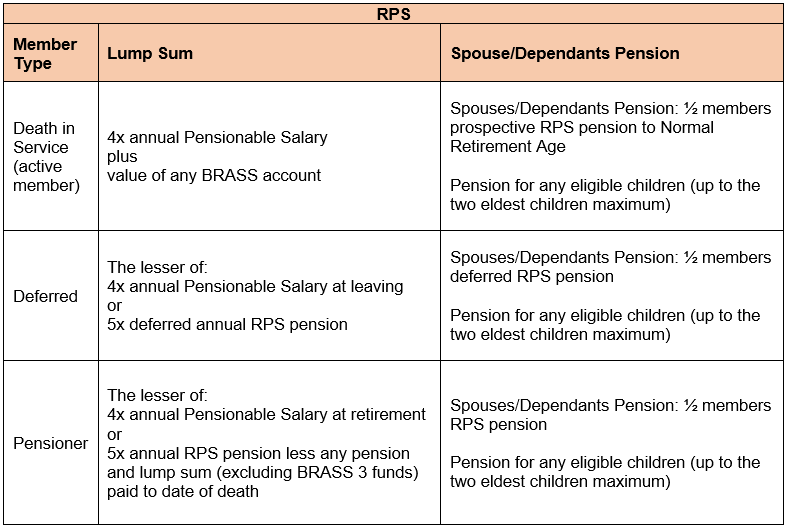
Often referred to as “final salary” or “career average” schemes, Defined Benefit pensions provide a guaranteed income for life. Unlike DC schemes, there is no “pot” of cash to be handed over. Instead, the scheme’s rules dictate what happens upon the member’s death.
Usually, if you die before retirement, the scheme may pay out a “death in service” lump sum, often a multiple of your salary. If you die after retirement, the scheme typically provides a “survivor’s pension,” which pays a percentage of your original income (often 50% to 66%) to a qualifying beneficiary, such as a spouse, civil partner, or dependent child. Once these named beneficiaries pass away, the payments generally cease, and there is no residual value to pass further down the family line.
The State Pension
The State Pension is the most rigid of all. In most modern systems, the State Pension is an individual entitlement that cannot be passed on in its entirety. However, depending on when you reached state pension age and your marital status, a surviving spouse or civil partner may be able to inherit a portion of your payments or see an increase in their own State Pension based on your contribution record. It is important to note that this is rarely a direct transfer of wealth but rather a statutory adjustment.
The Tax Implications: The “Age 75” Rule
In many jurisdictions, particularly in the UK and similar financial systems, the taxation of inherited pensions hinges on a specific milestone: the age of 75. This age acts as a “tax cliff” that determines whether your heirs receive your pension tax-free or subject to income tax.
Death Before the Age of 75
If a pension holder passes away before their 75th birthday, the benefits can usually be passed on to beneficiaries completely tax-free. This applies whether the money is taken as a lump sum or kept within a pension wrapper (drawdown). For the beneficiary, this is one of the most efficient transfers of wealth possible. However, there is a caveat: the funds must usually be designated to the beneficiary within a two-year window of the provider being notified of the death. If this window is missed, tax charges may apply.
Death At or After the Age of 75
Once the pension holder reaches age 75, the tax treatment shifts. Any pension funds inherited from someone who died aged 75 or older will be treated as income for the beneficiary. When the beneficiary withdraws money from the inherited pot, it is added to their other income for that tax year and taxed at their marginal rate (e.g., 20%, 40%, or 45%).
From a strategic standpoint, this makes “inherited drawdown” a popular choice. Instead of taking a large lump sum and potentially being pushed into a higher tax bracket, the beneficiary can leave the money invested and withdraw smaller amounts over several years to manage their tax liability.
Pensions and Inheritance Tax (IHT)
One of the greatest advantages of a pension is that it is typically held “under trust” by the pension provider. Because the funds are not technically part of your legal estate, they are generally not subject to the standard 40% Inheritance Tax that applies to property, savings, and other investments. This makes the pension a primary tool for those looking to mitigate IHT while providing for their heirs.
Distribution Options for Beneficiaries
When a pension holder dies, the beneficiaries are often presented with several choices on how to receive the funds. The “best” choice depends on the beneficiary’s age, financial needs, and current tax position.
Lump Sum Payments
A lump sum is the simplest option. The pension provider pays out the entire remaining value of the pot directly to the beneficiary’s bank account. If the deceased was under 75, this is usually tax-free. While this provides immediate liquidity, it removes the money from the tax-sheltered “pension wrapper,” meaning any future growth on that money will be subject to capital gains or income tax.
Inherited Drawdown
Inherited (or Beneficiary) Drawdown allows the heir to keep the funds within a pension environment. The money remains invested, allowing for potential tax-free growth. The beneficiary can take income from the pot whenever they need it. This is often the most sophisticated choice for wealth preservation, as it allows the beneficiary to control their tax exposure and keep the funds protected from IHT for the next generation.
Beneficiary Annuities
For those who prefer security over flexibility, a beneficiary annuity uses the inherited pension pot to purchase a guaranteed income for the rest of the beneficiary’s life. This protects the heir against the risk of the money running out, though it lacks the flexibility to take large sums of cash for emergencies or major purchases.
Essential Steps for Effective Pension Estate Planning
Despite the tax advantages, pension inheritance is not automatic. Unlike a house or a bank account, a pension is not usually governed by your Will. Because the pension is held in trust, the pension trustees have the final say over who receives the benefits, though they are legally bound to consider your wishes.
The Importance of the “Expression of Wishes” Form
To ensure your pension goes to the right people, you must complete an “Expression of Wishes” or “Nomination of Beneficiaries” form with your pension provider. This document tells the trustees whom you would like to inherit your funds. If this form is out of date—for example, if it still names an ex-spouse—the trustees may be forced to follow those instructions, leading to unintended consequences and family disputes.
Consolidating “Lost” Pensions
Over a career, many individuals accumulate multiple pension pots from different employers. It is estimated that billions of dollars/pounds sit in “unclaimed” pensions because the holders have lost track of them. For your heirs, tracing these pensions after your death can be an administrative nightmare. Consolidating your pensions into a single, manageable scheme not only makes investment management easier but also ensures that your beneficiaries have a clear roadmap of your assets.
Reviewing the “Lifetime Allowance” and New Regulations
Financial regulations are subject to constant change. Recent shifts in many regions have seen the removal or alteration of “Lifetime Allowances”—caps on how much you can save in a pension without facing extra charges. Staying informed about these changes is crucial, as they can significantly impact how much of your pension can be passed on tax-free. Consulting with a financial advisor is often the most effective way to navigate these complexities, ensuring that your pension remains a tax-efficient legacy rather than a tax burden for your loved ones.
Conclusion
A pension is more than just a retirement fund; it is a powerful multi-generational financial tool. By understanding the nuances between Defined Contribution and Defined Benefit schemes, staying mindful of the age 75 tax threshold, and ensuring all beneficiary nominations are current, you can provide your heirs with a significant financial advantage. In the realm of personal finance, few things are as rewarding as knowing that your years of disciplined saving will provide security and opportunity for those you leave behind. Planning for the end of your pension’s life is, in many ways, just as important as planning for the beginning of your retirement.
aViewFromTheCave is a participant in the Amazon Services LLC Associates Program, an affiliate advertising program designed to provide a means for sites to earn advertising fees by advertising and linking to Amazon.com. Amazon, the Amazon logo, AmazonSupply, and the AmazonSupply logo are trademarks of Amazon.com, Inc. or its affiliates. As an Amazon Associate we earn affiliate commissions from qualifying purchases.