
The seemingly simple question of what happens when acids and bases are mixed unlocks a world of fundamental chemical principles that underpin a vast array of technological advancements. Far from being confined to the hallowed halls of chemistry labs, these reactions are the silent engines driving innovations in everything from semiconductor manufacturing to advanced material design and the very digital infrastructure we rely on daily. Understanding the intricate dance between acids and bases is not just an academic pursuit; it’s a cornerstone for comprehending and developing cutting-edge technologies.
This interaction, known as neutralization, is a cornerstone of chemical science, but its implications extend far beyond theoretical knowledge. In the realm of technology, precise control over these reactions is paramount. Whether it’s etching intricate circuits onto silicon wafers or synthesizing novel polymers for high-performance applications, the predictable and often dramatic changes that occur when acids and bases combine are harnessed for specific, engineered outcomes. This article will delve into the core phenomena of acid-base reactions and, more importantly, illuminate their critical role and application within various technological domains.
The Fundamental Chemistry: Neutralization and Its Byproducts
At its heart, the reaction between an acid and a base is a process of neutralization. This occurs when the characteristic properties of both substances are diminished or eliminated, typically resulting in the formation of a salt and water. To truly appreciate its technological relevance, we must first understand the underlying chemical mechanisms.
The Proton Exchange: The Core of Neutralization
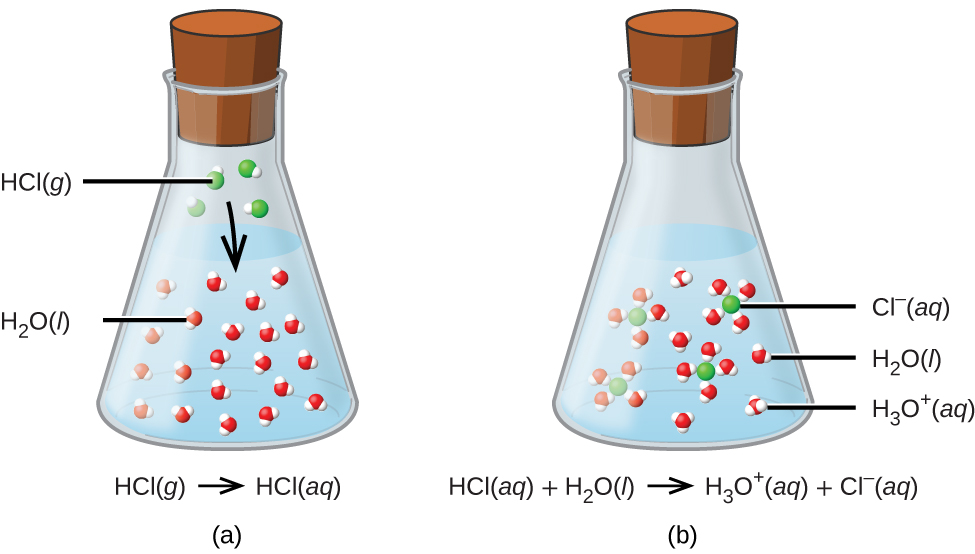
Acids, by definition, are substances that donate protons (H⁺ ions) when dissolved in water. Bases, conversely, are substances that accept protons or, in aqueous solutions, often produce hydroxide ions (OH⁻). When an acid and a base are brought together, the proton-donating ability of the acid meets the proton-accepting or hydroxide-producing ability of the base. The net result is a transfer of protons from the acid to the base. This proton exchange effectively neutralizes the acidic and basic properties.
For instance, consider the reaction between hydrochloric acid (HCl), a strong acid, and sodium hydroxide (NaOH), a strong base:
HCl (aq) + NaOH (aq) → NaCl (aq) + H₂O (l)
Here, HCl dissociates into H⁺ and Cl⁻ ions, while NaOH dissociates into Na⁺ and OH⁻ ions. The H⁺ ions from HCl readily combine with the OH⁻ ions from NaOH to form water (H₂O). The remaining ions, Na⁺ and Cl⁻, are spectator ions that do not directly participate in the neutralization but instead form sodium chloride (NaCl), a salt. This salt, when dissolved, consists of its constituent ions, Na⁺ and Cl⁻. The formation of neutral water molecules and a salt signifies the completion of the neutralization process.
Exothermic Reactions and Energy Release
A crucial aspect of acid-base neutralization that holds significant technological importance is its exothermic nature. The formation of stable water molecules from highly reactive H⁺ and OH⁻ ions releases energy in the form of heat. The magnitude of this heat release, known as the enthalpy of neutralization, is generally quite significant, especially when strong acids react with strong bases.
This release of heat can be both a benefit and a challenge in technological applications. In some cases, controlled heat generation is precisely what is desired for a process. In others, meticulous thermal management is required to prevent overheating and potential damage to sensitive equipment or materials. The degree of exothermicity varies depending on the strengths of the acid and base involved. The reaction between a strong acid and a strong base typically releases more energy than the reaction involving weak acids or bases, as their dissociation is not as complete, and the formation of water from less dissociated ions is less energetically favorable.
The pH Scale: Tracking the Transformation
The pH scale serves as a logarithmic measure of the acidity or basicity of an aqueous solution. Pure water has a neutral pH of 7. Solutions with a pH less than 7 are acidic, while those with a pH greater than 7 are alkaline or basic. The neutralization reaction fundamentally alters the pH of the solution.
As an acid and base react, the concentration of free H⁺ ions decreases (due to their reaction with OH⁻), and the concentration of OH⁻ ions also decreases (due to their reaction with H⁺). This leads to a gradual shift in pH towards neutrality. If stoichiometric amounts of a strong acid and a strong base are mixed, the resulting solution will have a pH of approximately 7. If one reactant is in excess, the final pH will reflect the nature of that excess reactant. For example, if there’s more acid than base, the solution will remain acidic (pH < 7), and if there's more base, it will be alkaline (pH > 7). Monitoring and controlling pH is a critical parameter in many technological processes that rely on acid-base chemistry.
Applications in Microelectronics and Semiconductor Manufacturing
The fabrication of microelectronic components, the building blocks of our digital world, relies heavily on precisely controlled chemical reactions, and acid-base chemistry plays a pivotal role. The miniaturization and complexity of integrated circuits demand incredibly precise etching and cleaning processes, often involving the delicate manipulation of acids and bases.
Photolithography: The Art of Pattern Transfer
Photolithography is a fundamental process used to create patterns on semiconductor wafers. This involves selectively removing or depositing material in specific areas to form the intricate circuitry of microchips. Acids and bases are indispensable in several stages of this process.
Etching: After a photosensitive material (photoresist) is exposed to light through a mask, the unwanted photoresist is removed. This is often achieved using either acidic or basic developers. For example, some photoresists are designed to be dissolved by alkaline developers, effectively washing away the unexposed areas. Subsequently, in the etching step, the exposed areas of the underlying material (like silicon dioxide or silicon nitride) are selectively removed. This etching can be performed using wet etching, which employs strong acids or mixtures of acids to dissolve the target material. The precise control over the concentration of acids and the reaction time dictates the depth and shape of the etched features, ensuring the creation of nanoscale circuits.
Cleaning and Surface Preparation: Before and after various process steps, semiconductor wafers must be meticulously cleaned to remove any contaminants that could disrupt the functionality of the final chip. Acidic and basic cleaning solutions, often referred to as “Piranha etch” (a mixture of sulfuric acid and hydrogen peroxide) or SC-1/SC-2 solutions (containing ammonia, hydrogen peroxide, and hydrochloric acid/water respectively), are employed. These formulations are carefully designed to remove organic residues, metallic impurities, and other unwanted substances without damaging the delicate semiconductor substrate. The controlled neutralization and subsequent rinsing are critical to achieving the ultra-clean surfaces required for high-performance electronics.
Chemical Mechanical Planarization (CMP)

CMP is a critical process in semiconductor manufacturing that smooths and planarizes the surface of semiconductor wafers. This involves a combination of chemical reactions and mechanical abrasion. The chemical slurry used in CMP often contains abrasive particles suspended in a solution that may be acidic or alkaline, depending on the material being polished. The controlled interaction of the slurry with the wafer surface, where acid-base chemistry can influence the surface reactivity and the rate of material removal, is essential for achieving the extremely flat surfaces required for subsequent lithography steps.
Advancements in Materials Science and Polymer Synthesis
The ability to create novel materials with specific properties is a driving force behind technological innovation. Acid-base chemistry is a foundational tool in materials science, enabling the synthesis and manipulation of a wide range of substances, from advanced polymers to nanoscale structures.
Polymerization Reactions: Building Long Chains
Many polymerization reactions, the process of forming long molecular chains from smaller repeating units (monomers), are catalyzed or initiated by acids or bases.
Acid-Catalyzed Polymerization: For example, the polymerization of alkenes, such as the formation of polyethylene from ethylene, can be initiated by strong acids. The acid protonates the alkene, creating a carbocation intermediate that can then react with other alkene molecules, propagating the chain growth.
Base-Catalyzed Polymerization: Conversely, certain monomers, like epoxides, can be polymerized using base catalysts. Hydroxide ions or alkoxide ions can attack the epoxide ring, initiating a chain reaction that leads to the formation of polyethers. The controlled addition of monomers and the careful management of the catalyst concentration are crucial for controlling the molecular weight and properties of the resulting polymer. This enables the creation of polymers with tailored characteristics for applications ranging from durable coatings and adhesives to flexible electronics and biocompatible medical devices.
Nanomaterial Synthesis and Functionalization
The precise control over size, shape, and surface chemistry is paramount in the field of nanomaterials, which hold immense promise for applications in catalysis, sensors, drug delivery, and advanced electronics. Acid-base chemistry is instrumental in the synthesis and modification of these nanoscale structures.
Precipitation and Sol-Gel Processes: Many metal oxide nanoparticles, for instance, are synthesized through precipitation or sol-gel methods where pH plays a critical role. By carefully controlling the pH of a solution containing metal precursors, researchers can induce controlled precipitation or hydrolysis, leading to the formation of desired nanoparticles with controlled size and morphology. Similarly, in the sol-gel process, acid or base catalysts are used to hydrolyze and condense metal alkoxide precursors to form a gel, which can then be processed into various nanostructured materials.
Surface Functionalization: The surface properties of nanoparticles significantly influence their behavior and applications. Acids and bases are commonly used to functionalize the surfaces of nanomaterials, attaching specific chemical groups that impart desired properties like solubility, reactivity, or the ability to bind to target molecules. For example, a basic solution might be used to deprotonate surface hydroxyl groups on metal oxide nanoparticles, making them more amenable to binding with acidic molecules.
Implications in Industrial Processes and Environmental Technology
Beyond specialized fields like microelectronics and materials science, acid-base reactions are fundamental to a broad spectrum of industrial processes and are increasingly vital in environmental remediation and management.
pH Control in Industrial Manufacturing
Maintaining precise pH levels is critical across numerous manufacturing sectors. In the food and beverage industry, pH affects taste, preservation, and texture. In the textile industry, pH control is essential for dyeing and finishing processes. Pharmaceutical manufacturing relies heavily on controlled pH for drug synthesis, purification, and formulation to ensure efficacy and stability. In each of these instances, the controlled addition of acids or bases is used to adjust and maintain the desired pH range, ensuring product quality and process efficiency.
Wastewater Treatment and Neutralization
A significant environmental application of acid-base neutralization is in the treatment of industrial wastewater. Many industrial processes generate effluents that are either highly acidic or alkaline. Discharging such untreated wastewater into the environment can cause significant ecological damage. Therefore, before discharge, these effluents must be neutralized.
Typically, acidic wastewater is treated by adding a base (like lime or sodium hydroxide), and alkaline wastewater is treated by adding an acid (like sulfuric acid or hydrochloric acid). The goal is to bring the pH of the treated water to a neutral range, typically between 6 and 9, which is safe for the environment. This process not only prevents pollution but also often facilitates the removal of dissolved heavy metals, which tend to precipitate out of solution at or near neutral pH.

Catalysis in Chemical Synthesis
Acids and bases serve as crucial catalysts in a vast number of organic and inorganic chemical synthesis reactions. Catalysts accelerate reaction rates without being consumed in the process.
Acid Catalysis: Many esterification reactions, the formation of esters from carboxylic acids and alcohols, are acid-catalyzed. This is a fundamental reaction in the synthesis of solvents, plasticizers, and fragrances. Dehydration reactions, where water is removed from a molecule, are also often promoted by acid catalysts.
Base Catalysis: Aldol condensations, important for forming carbon-carbon bonds, are often base-catalyzed. This is a foundational reaction in the synthesis of complex organic molecules, including pharmaceuticals and natural products. Base catalysts are also frequently used in transesterification reactions, which are crucial in the production of biofuels like biodiesel.
In conclusion, the simple act of mixing acids and bases triggers a cascade of chemical events – proton exchange, heat release, and pH alteration – that are far from elementary in their impact. In the context of technology, these fundamental principles are not just observed but actively harnessed and meticulously controlled. From the microscopic etchings on a silicon chip that power our digital lives, to the complex polymers that form the backbone of advanced materials, and the essential processes that safeguard our environment, the interplay of acids and bases is a pervasive and indispensable force. A deep understanding of these reactions is therefore not just a matter of chemical literacy, but a critical requirement for anyone seeking to innovate and advance within the technological landscape.
aViewFromTheCave is a participant in the Amazon Services LLC Associates Program, an affiliate advertising program designed to provide a means for sites to earn advertising fees by advertising and linking to Amazon.com. Amazon, the Amazon logo, AmazonSupply, and the AmazonSupply logo are trademarks of Amazon.com, Inc. or its affiliates. As an Amazon Associate we earn affiliate commissions from qualifying purchases.