
The seemingly simple act of two air masses colliding is a fundamental driver of weather phenomena, a complex dance governed by physics and thermodynamics. While meteorologists have long studied these interactions through observation and modeling, the advancement of technology has revolutionized our ability to understand, predict, and even influence these atmospheric encounters. From sophisticated sensor networks and satellite imagery to cutting-edge computational fluid dynamics and AI-driven forecasting, technology is at the forefront of deciphering the intricate processes that unfold when air masses of differing temperatures, densities, and moisture content converge.

This article will delve into the technological underpinnings that allow us to comprehend the dynamics of air mass convergence, exploring how data acquisition, processing, and sophisticated analytical tools translate atmospheric science into actionable insights. We will examine the evolution of these technologies and their ongoing impact on our ability to forecast weather, mitigate its impacts, and even explore its potential for harnessing clean energy.
The Digital Senses of the Atmosphere: Data Acquisition and Observation
The foundation of understanding air mass interactions lies in our ability to accurately measure the state of the atmosphere. Historically, this was a painstaking process relying on weather balloons, ground stations, and manual observations. Today, a vast and interconnected technological infrastructure provides a continuous, high-resolution stream of atmospheric data.
Remote Sensing: Eyes in the Sky and on the Ground
Satellite technology has been a game-changer in atmospheric observation. Geosynchronous satellites, positioned to observe the same point on Earth continuously, provide a real-time view of cloud formations, storm systems, and the movement of air masses across continents and oceans. Polar-orbiting satellites, on the other hand, offer detailed imagery of the entire globe over a period of days, capturing variations in temperature, humidity, and wind speed at different altitudes. Instruments like radiometers measure infrared radiation emitted by the Earth and its atmosphere, allowing scientists to infer temperature profiles, while microwave sounders can penetrate clouds to detect water vapor content.
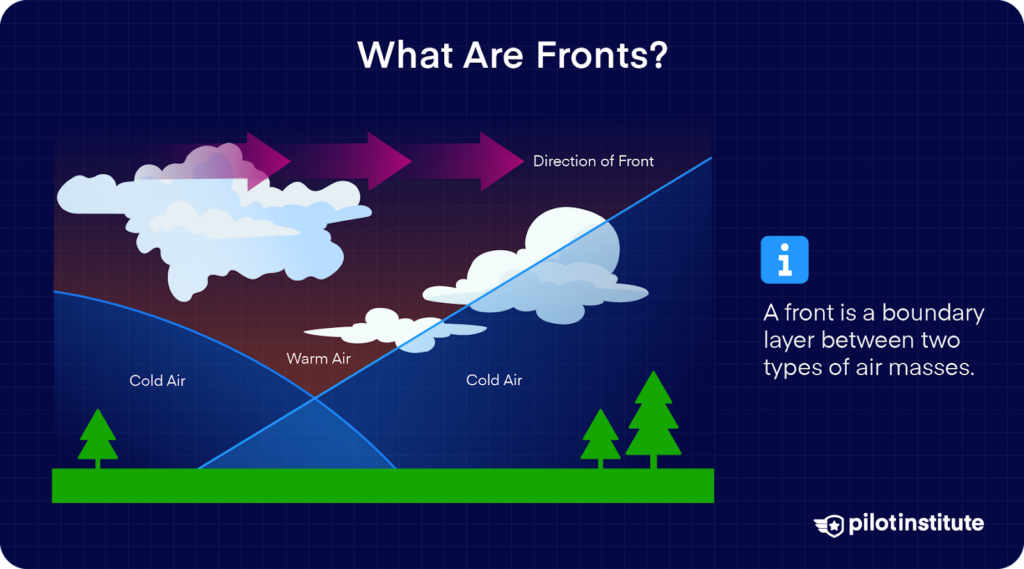
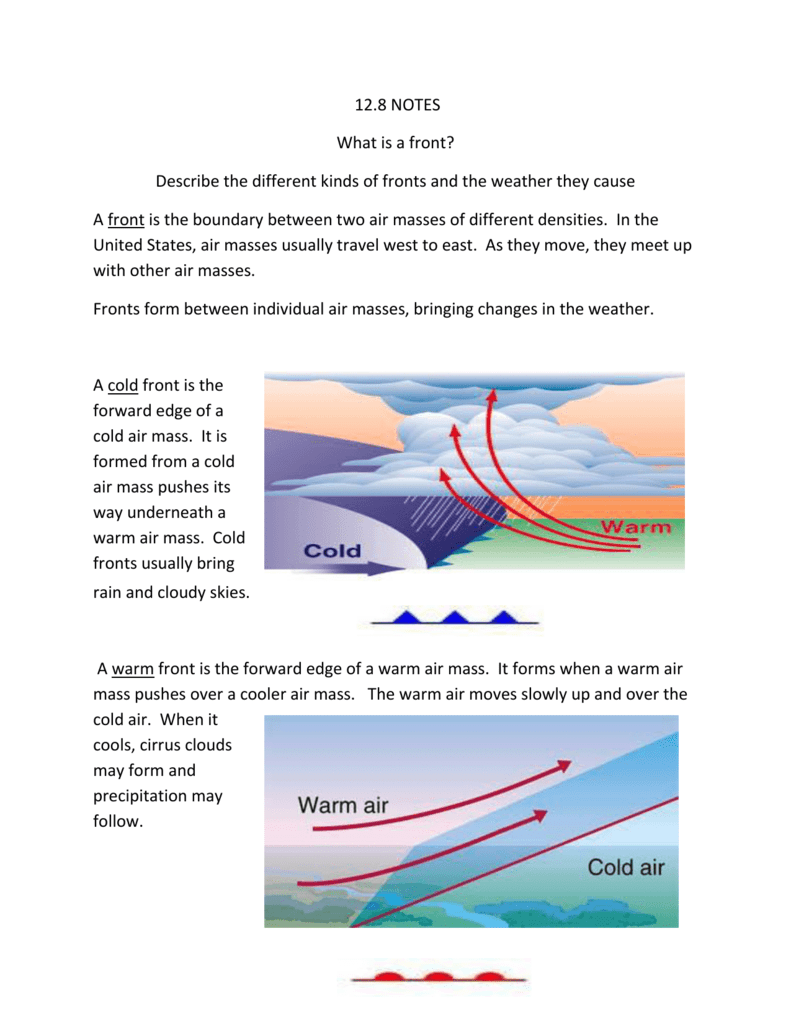
On the ground, a dense network of automated weather stations, often integrated with the Internet of Things (IoT), collects a wide array of data including temperature, barometric pressure, wind speed and direction, and precipitation. Doppler radar, a crucial tool for weather forecasting, utilizes the Doppler effect to detect the motion of precipitation particles. This allows meteorologists to discern the direction and speed of winds within storms, identify rotational patterns indicative of severe weather like tornadoes, and track the movement of fronts formed by converging air masses. Advanced radar systems can now provide three-dimensional scans of the atmosphere, offering unprecedented detail about the structure of weather systems.
In-Situ Sensing: Probing the Atmosphere Directly
While remote sensing provides a broad overview, in-situ measurements are vital for ground-truthing and obtaining precise data at specific locations. Modern weather balloons, also known as radiosondes, are equipped with sophisticated sensors that transmit real-time data on temperature, humidity, pressure, and wind as they ascend through the atmosphere. These provide invaluable vertical profiles of atmospheric conditions. For more localized and continuous measurements, research aircraft equipped with specialized instrumentation fly through developing weather systems, gathering data that is critical for understanding the microphysics of cloud formation and precipitation processes associated with air mass boundaries. Autonomous drones are also emerging as a cost-effective and agile platform for collecting atmospheric data in challenging or remote environments.
Decoding the Dynamics: Computational Modeling and Simulation
The sheer volume of data generated by these observational technologies would be overwhelming without powerful computational tools to process and interpret it. Numerical Weather Prediction (NWP) models are sophisticated computer programs that use mathematical equations representing the laws of physics and fluid dynamics to simulate the behavior of the atmosphere.
The Architecture of Forecasting: From Equations to Predictions
At their core, NWP models divide the atmosphere into a three-dimensional grid. At each grid point, the current state of the atmosphere – temperature, pressure, wind, humidity – is known or estimated. The models then use a system of differential equations to calculate how these variables will change over time, step by step. These calculations are incredibly computationally intensive, requiring supercomputers with massive processing power. The resolution of these models, meaning the size of the grid cells, directly impacts their accuracy. Higher resolution models can capture smaller-scale phenomena, like localized thunderstorms that can form along frontal boundaries, but they also require significantly more computational resources.
The process begins with data assimilation, where observational data from satellites, radar, weather stations, and other sources are fed into the model to create the most accurate possible representation of the current atmospheric state – the “initial conditions.” This is a critical step, as even small errors in the initial conditions can propagate and lead to significant forecast divergence over time. Once the initial conditions are established, the model “runs” forward in time, simulating the evolution of weather patterns. The output of these models provides forecasts for temperature, precipitation, wind, and other meteorological variables, often presented in graphical formats like weather maps and charts.
The Power of Parallelism and High-Performance Computing
The complexity of atmospheric simulations necessitates the use of High-Performance Computing (HPC) clusters. These are vast networks of interconnected processors that can perform calculations in parallel, dramatically speeding up the simulation process. Advancements in parallel processing architectures, such as Graphics Processing Units (GPUs), are increasingly being integrated into HPC systems, offering even greater computational efficiency for weather modeling. This allows for higher resolution models, more complex physical parameterizations (representations of processes that are too small to be resolved by the grid, such as cloud microphysics), and longer forecast ranges. The continuous refinement of NWP models, driven by technological advancements in computing power and algorithm development, is key to improving our understanding and prediction of air mass interactions.
The Intelligence Augmentation: Artificial Intelligence and Machine Learning in Meteorology
While NWP models have been the backbone of weather forecasting for decades, the integration of Artificial Intelligence (AI) and Machine Learning (ML) is ushering in a new era of meteorological insights and predictive capabilities. AI/ML excels at identifying complex patterns and relationships within vast datasets that might be missed by traditional algorithms.
Pattern Recognition and Anomaly Detection
AI/ML algorithms can be trained on historical weather data, including satellite imagery, radar scans, and model outputs, to recognize subtle precursors to significant weather events. For instance, ML models can identify specific visual cues in satellite imagery that often precede the formation of severe thunderstorms or the intensification of hurricanes. Similarly, by analyzing radar signatures, AI can detect anomalies that indicate the development of hazardous phenomena like hail or microbursts, often earlier than traditional methods. This ability to sift through enormous datasets and flag potential issues is invaluable for rapid warnings and improved situational awareness when air masses interact.
Enhancing Forecast Accuracy and Nowcasting
Machine learning is increasingly being used to improve the accuracy of NWP models. Techniques like deep learning can be employed to correct systematic biases in model outputs or to downscale global model predictions to provide more localized and accurate forecasts. Furthermore, AI is revolutionizing “nowcasting” – very short-term forecasting (typically 0-6 hours). ML models can analyze real-time radar and satellite data to predict the precise movement and evolution of precipitation and storms with high spatial and temporal resolution, providing critical information for immediate decision-making, especially in rapidly changing weather scenarios driven by air mass convergence.
Towards Predictive Analytics and Climate Modeling
Beyond immediate weather, AI is playing a crucial role in climate modeling. By analyzing long-term climate datasets, AI can help identify trends, understand the drivers of climate change, and improve projections of future climate scenarios. This includes understanding how changes in atmospheric circulation patterns, influenced by converging air masses, might impact global weather systems. The synergy between traditional NWP and AI/ML promises a future where our understanding and prediction of atmospheric phenomena, including the complex dance of air masses, are more sophisticated and precise than ever before.
In conclusion, the question of “what happens when two air masses meet” is no longer solely within the realm of textbook meteorology. It is a dynamic field empowered by relentless technological innovation. From the digital eyes of satellites and radar to the sophisticated computational brains of supercomputers and AI algorithms, technology provides the tools to observe, simulate, and predict these crucial atmospheric interactions. As these technologies continue to evolve, our ability to forecast weather, understand climate change, and ultimately live more safely and effectively in our dynamic atmosphere will be profoundly enhanced.
aViewFromTheCave is a participant in the Amazon Services LLC Associates Program, an affiliate advertising program designed to provide a means for sites to earn advertising fees by advertising and linking to Amazon.com. Amazon, the Amazon logo, AmazonSupply, and the AmazonSupply logo are trademarks of Amazon.com, Inc. or its affiliates. As an Amazon Associate we earn affiliate commissions from qualifying purchases.