
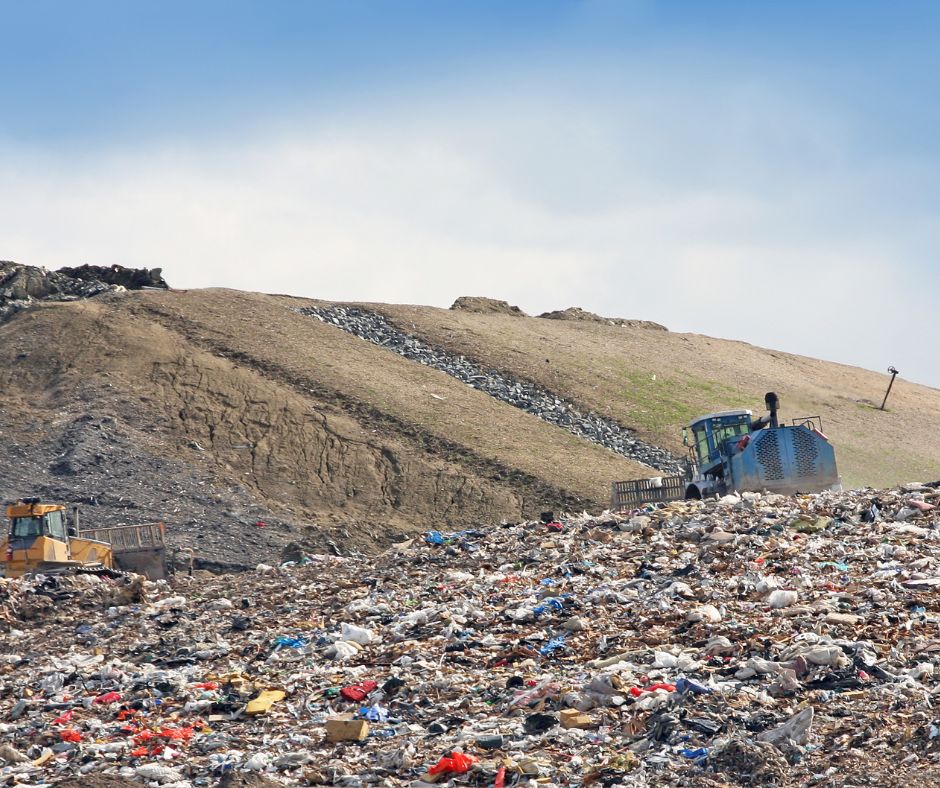
The global waste crisis is no longer a distant theoretical threat; it is a pressing logistical and environmental reality. As urban populations swell and consumption patterns intensify, the traditional “dig and dump” model of waste management is hitting a physical wall. When landfills reach their capacity, the consequences extend far beyond the smell or the sight of overflowing mounds. It signals a systemic failure of local infrastructure. However, in the tech sector, this crisis is being viewed through a different lens: an opportunity for a radical digital and mechanical transformation.

The transition from “full landfills” to “smart resource management” is being driven by a suite of cutting-edge technologies. From Artificial Intelligence (AI) and the Internet of Things (IoT) to advanced molecular recycling and Waste-to-Energy (WtE) systems, the tech industry is providing the tools to ensure that a full landfill is not the end of the road, but the beginning of a circular, tech-enabled economy.
The Digital Nervous System: IoT and Predictive Analytics in Waste Management
When a landfill reaches its limit, the immediate challenge for a city is the sudden disruption of its logistics chain. Traditionally, waste management has been a “dumb” industry, relying on static schedules and manual inspections. Technology is changing this by implementing a digital nervous system across the entire waste lifecycle.
Real-Time Capacity Monitoring and Sensor Integration
The first line of defense when landfills are nearing capacity is the deployment of IoT-enabled sensors. These devices, installed within dumpsters, compactors, and at landfill sites, provide real-time data on fill levels and volume density. By utilizing ultrasonic sensors and cellular connectivity, municipalities can monitor exactly how much space is left across their entire infrastructure. This prevents the “overflow crisis” where waste is dumped at the gates of a full facility because the logistics team lacked real-time visibility.
Predictive Analytics for Urban Planning
Beyond simple monitoring, big data and predictive analytics allow city planners to forecast exactly when a landfill will reach its terminal point. By analyzing seasonal consumption trends, population growth data, and recycling rates, AI algorithms can create “digital twins” of a city’s waste ecosystem. These simulations allow tech-forward governments to pilot diversion programs or invest in new processing facilities years before the physical space runs out, moving from reactive crisis management to proactive infrastructure engineering.
Artificial Intelligence and the Revolution of Resource Recovery
A full landfill is often the result of “mixed waste”—the inability to efficiently separate recyclables from actual trash at scale. When the bins are full, the priority shifts to maximum recovery. This is where Artificial Intelligence and computer vision are revolutionizing Materials Recovery Facilities (MRFs).
Computer Vision and Deep Learning in Sorting
The bottleneck of traditional recycling is the human element; manual sorting is slow, dangerous, and prone to error. High-speed cameras powered by deep learning algorithms can now identify thousands of different types of materials—ranging from specific polymer types in plastics to different grades of cardboard—in milliseconds. These systems are trained on massive datasets, allowing them to distinguish between a crumpled soda can and a piece of metallic film, ensuring that only true non-recyclables reach the landfill.
Robotic Sorting Arms and Precision Automation
Once an AI identifies a material, robotic sorting arms equipped with vacuum grippers or high-speed actuators take over. These robots can perform up to 80 “picks” per minute, far exceeding human capability. When landfills are full, these robots act as the ultimate gatekeepers, ensuring that every gram of commercially viable material is diverted back into the supply chain. By increasing the purity of recycled bales through tech-driven precision, the economic value of waste increases, providing the financial incentive to keep materials out of the ground.
Advanced Thermal Technologies: Waste-to-Energy (WtE) Systems
When physical space for burial is exhausted, the tech industry turns to the transformation of matter. Modern Waste-to-Energy (WtE) plants are a far cry from the incinerators of the past. They are highly sophisticated chemical processing plants that convert non-recyclable waste into electricity, heat, or synthetic fuels.
Plasma Gasification and Molecular Breakdown
One of the most potent technologies in the fight against landfill saturation is plasma gasification. Unlike traditional combustion, plasma gasification uses an electric arc to create temperatures exceeding 5,000 degrees Celsius. This process breaks down waste at the molecular level, turning organic matter into “syngas” (synthetic gas) and inorganic matter into a glass-like slag that can be used in construction. This technology effectively “erases” the volume of waste that would otherwise require acres of land, turning a liability into a high-energy asset.
Carbon Capture and Smart Emission Control
A significant hurdle for WtE tech has been the environmental impact of emissions. However, the latest generation of plants integrates advanced Carbon Capture and Storage (CCS) technology. IoT sensors within the smokestacks monitor chemical outputs in real-time, automatically adjusting the chemical scrubbers to neutralize pollutants. This “clean-tech” approach allows WtE facilities to be located closer to urban centers, reducing the carbon footprint of transporting waste to distant, overfilled landfills.
The Rise of the Circular Economy through Blockchain and Traceability
When landfills are full, we are forced to confront the reality that waste is simply “misplaced resources.” To prevent future overflows, technology is being used to track the entire lifecycle of a product, ensuring it never becomes “trash” in the first place. This is the foundation of the Circular Economy, powered by distributed ledger technology.
Digital Product Passports and Blockchain
Blockchain technology offers an immutable record of a product’s journey from manufacture to disposal. “Digital Product Passports” (DPPs) are becoming a tech standard, where a QR code or RFID tag on a product contains data about its material composition and disassembly instructions. When a product reaches the end of its life, a recycler can scan the tag to know exactly how to process it. This level of data transparency ensures that materials are funneled back into production cycles rather than being sent to a landfill that has no room for them.
Tokenizing Waste: Incentivizing Disposal via Fintech
In many regions, the “full landfill” problem is exacerbated by illegal dumping. Fintech solutions are emerging that “tokenize” waste. Using mobile apps and blockchain-verified drop-off points, consumers and businesses can receive digital tokens or micro-payments for properly disposing of high-value waste like electronics or specialized plastics. By turning waste disposal into a digital financial transaction, technology creates a decentralized incentive structure that keeps the pressure off municipal landfills.
Biotech and Material Science: Engineering the End of Waste
Finally, the tech sector is looking at the composition of the waste itself. If the landfill is full, perhaps the solution is to ensure that what we throw away doesn’t stay there for long. The intersection of biotechnology and material science is creating a new class of “self-disappearing” waste.
Enzyme-Based Plastic Degradation
Tech startups are currently engineering specialized enzymes that can “eat” PET plastics in a matter of days rather than centuries. These bio-reactors can be deployed at landfill sites to process existing stockpiles, effectively “mining” the landfill to create new space. This biological technology turns a static landfill into an active, shrinking pile of resources, providing a tech-driven solution to the space crisis.
Bio-Compostable Electronics and Circuits
As electronic waste (e-waste) becomes the fastest-growing waste stream, tech hardware companies are experimenting with transient electronics. These are circuits printed with degradable materials that can dissolve in specific solutions or compost naturally over time. By engineering products that are designed to disappear at the hardware level, the tech industry is addressing the “full landfill” problem at the source—the design phase.

Conclusion: A Tech-Driven Paradigm Shift
The moment a landfill reaches capacity is a critical inflection point. While it represents an environmental challenge, it also serves as a catalyst for technological adoption. We are moving away from an era of “waste management” and into an era of “intelligent resource recovery.”
Through the integration of IoT for logistics, AI for sorting, plasma physics for energy conversion, and blockchain for lifecycle transparency, technology is providing a comprehensive roadmap for a world without landfills. The “full” sign on a landfill gate is no longer a signal of defeat; it is a signal to upgrade our systems, optimize our data, and re-engineer the very definition of waste through the power of modern technology.
aViewFromTheCave is a participant in the Amazon Services LLC Associates Program, an affiliate advertising program designed to provide a means for sites to earn advertising fees by advertising and linking to Amazon.com. Amazon, the Amazon logo, AmazonSupply, and the AmazonSupply logo are trademarks of Amazon.com, Inc. or its affiliates. As an Amazon Associate we earn affiliate commissions from qualifying purchases.