
In our increasingly hyper-connected world, the humble electrical outlet is the unsung hero of our digital existence. It is the bridge between the massive energy grid and the delicate silicon chips that power our professional and personal lives. However, when that bridge fails—a phenomenon commonly referred to as an “outlet getting blown”—the consequences extend far beyond a simple loss of power. For the tech-savvy professional, a blown outlet represents a critical failure in hardware infrastructure that can lead to catastrophic data loss, hardware degradation, and significant downtime.

Understanding what happens during an electrical failure is essential for anyone managing a home office, a gaming rig, or a suite of smart home devices. This article explores the technical mechanics of a blown outlet, the ripple effects on high-end hardware, and the sophisticated tech solutions available to mitigate these risks.
The Anatomy of a Blown Outlet: Hardware Failure in the Modern Infrastructure
To understand the “blown” outlet, we must first look at it through the lens of electrical engineering and hardware safety. An outlet doesn’t simply “die”; it usually fails due to a specific technical anomaly that triggers a safety protocol or causes physical damage to the internal wiring.
Short Circuits and Overcurrent Events
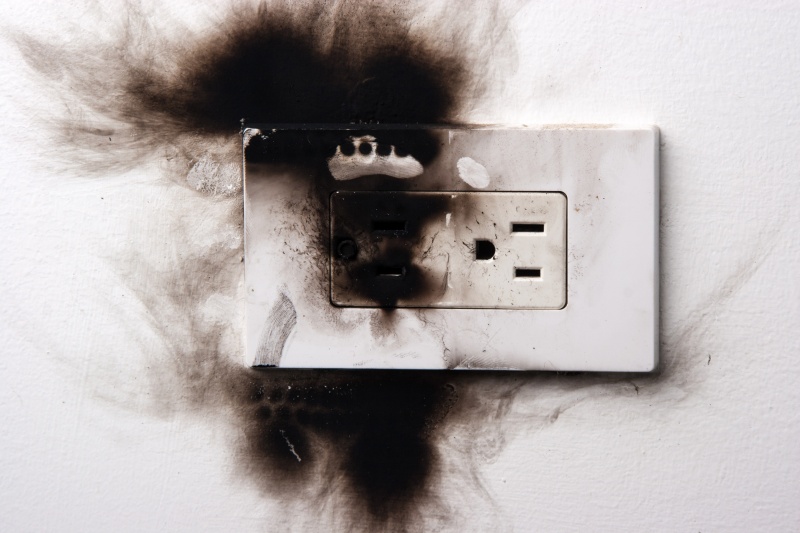
A “blown” outlet is frequently the result of a short circuit. This occurs when a hot wire touches a neutral or ground wire, causing an immediate and massive surge of current that exceeds the circuit’s capacity. In a modern tech environment, this is often caused by frayed cables on high-draw devices or internal faults within a power supply unit (PSU). When this happens, the sudden heat can melt plastic components, char the terminal connections, and render the outlet useless.
The Role of GFCI and AFCI Technology
Modern tech-heavy environments rely on Ground Fault Circuit Interrupters (GFCI) and Arc Fault Circuit Interrupters (AFCI). These are not just simple sockets; they are sophisticated safety computers. A GFCI monitors the balance of electrical current moving through a circuit. If it detects a leakage—perhaps through a damaged laptop charger or a liquid spill—it “trips” or blows the circuit in milliseconds. Understanding that a blown outlet is often a successful intervention by a safety device is the first step in diagnosing a larger hardware issue.
Thermal Degradation of Internal Contacts
Not all blown outlets happen with a bang. Sometimes, it is a slow “burn.” Overloading an outlet with multiple high-performance PCs, monitors, and peripherals can cause the internal brass contacts to expand and contract repeatedly. Over time, this creates “pitting” and loose connections, leading to high resistance. This resistance generates heat, which eventually oxidizes the metal until the outlet can no longer conduct electricity—effectively “blowing” the connection through thermal failure.
The Domino Effect: How Electrical Failures Threaten Your Tech Gadgets
When an outlet fails, the primary concern for any technophile isn’t the $15 socket replacement; it’s the thousands of dollars in hardware connected to it. The moment an outlet “blows,” a sequence of electrical events occurs that can bypass standard internal protections.
Voltage Spikes and Motherboard Sensitivity
Most modern electronics, from M-series MacBooks to high-end NVIDIA GPUs, operate on very low internal voltages. A blown outlet often involves a momentary surge before the breaker trips or the fuse blows. This “spike” can travel through a power adapter and hit the motherboard’s Voltage Regulator Modules (VRMs). If the spike is high enough, it can punch through the insulating layers of a microprocessor, leading to “silent” hardware failure where the device appears to work but suffers from frequent crashes or reduced lifespan.
Data Corruption and SSD Vulnerability
The most immediate threat of a blown outlet is the sudden loss of power during a write operation. Solid State Drives (SSDs) and NVMe storage are significantly more robust than old-school Hard Disk Drives (HDDs), but they are not immune to “bit rot” or file system corruption during a hard power-off. When the outlet fails, the drive may not have enough residual power in its capacitors to complete the current data mapping table update. This can lead to a “bricked” drive or a corrupted OS partition that requires a complete reinstallation.
The Myth of the Integrated Fuse
Many users assume that their gadget’s “brick” or internal power supply will act as a sacrificial lamb. While high-quality PSUs (like those with 80 Plus Gold or Titanium ratings) have Movs (Metal Oxide Varistors) designed to take the hit, they are not infallible. A major outlet failure can jump the gap in a cheap surge protector or overwhelm a low-quality power brick, sending high-voltage AC directly into DC-sensitive components.
Mitigation and Smart Power Solutions: Safeguarding Your Tech
In the world of technology, “hope” is not a strategy. Protecting your digital ecosystem from a blown outlet requires a multi-layered approach involving hardware redundancy and smart monitoring.
Intelligent Surge Protectors vs. Basic Power Strips
The first line of defense is often misunderstood. A basic power strip provides extra outlets but zero protection. An intelligent surge protector, however, is rated in Joules. For a tech setup, a minimum of 2,000 Joules is recommended. More importantly, advanced protectors now feature “auto-shutdown” tech. When the internal protection components (MOVs) are exhausted from absorbing smaller spikes, the device permanently cuts power to the outlets, ensuring that an unprotected “blown” state never reaches your gear.
Uninterruptible Power Supplies (UPS): The Gold Standard
For any professional workstation or server, a UPS is non-negotiable. A UPS does more than provide battery backup; it acts as a power conditioner. It sits between the outlet and your tech, “cleaning” the incoming electricity and leveling out minor sags and surges. If the outlet blows, the UPS switches to battery power in less than 10 milliseconds—faster than the capacitors in your PC can drain—allowing for a graceful shutdown or continued operation while you investigate the fault.
IoT-Enabled Circuit Monitoring
The “Smart Home” revolution has brought sophisticated diagnostic tools to the average consumer. Smart plugs and energy-monitoring hubs allow users to track the “draw” on a specific outlet via a smartphone app. If an outlet is nearing its thermal limit or showing erratic voltage patterns (precursors to a “blown” state), the system can send a push notification or automatically kill the power. This proactive tech turns a reactive disaster into a manageable maintenance task.
Troubleshooting and Future-Proofing Your Tech Infrastructure
Once an outlet has blown, the recovery process requires a methodical, tech-first approach to ensure that the replacement infrastructure is more resilient than the last.
Diagnostic Tools for the Tech Enthusiast
Before plugging expensive hardware back into a repaired circuit, it is vital to use a digital multimeter or a specialized GFCI outlet tester. These tools can identify “open neutrals” or “reversed polarity”—conditions that might not prevent a device from turning on but will significantly increase the risk of another blown outlet or a hardware-killing surge.
The Move Toward Smart Panels and Managed Power
The future of tech protection lies in the electrical panel itself. Smart circuit breakers (like those produced by Schneider Electric or Leviton) allow for per-circuit monitoring at the source. This technology can detect the specific “signature” of a failing power supply or a micro-arc in an outlet before it leads to a catastrophic failure. By integrating your home’s electrical backbone into your digital dashboard, you gain a level of visibility that was previously reserved for industrial data centers.
Professional Assessment and Load Balancing
If you are running a “homelab” or a high-end creative studio, the standard 15-amp residential circuit may be your bottleneck. A blown outlet is often a symptom of an over-taxed system. Tech professionals should consider upgrading to 20-amp circuits with dedicated lines for high-performance workstations. This ensures that the high-draw “transient” spikes common in modern CPUs and GPUs don’t trigger a circuit failure.

Conclusion: Respecting the Power Behind the Screen
A “blown outlet” is more than a minor household nuisance; in the context of modern technology, it is a critical infrastructure failure. Whether caused by a sudden surge, a slow thermal degradation, or a short circuit, the event poses a direct threat to the integrity of our digital lives.
By understanding the mechanics of electrical failure and investing in “clean” power solutions like UPS systems, high-joule surge protectors, and IoT monitoring, tech users can insulate their expensive hardware from the volatilities of the grid. In an era where our data, our work, and our entertainment are entirely dependent on a stable flow of electrons, the most important gadget in your home might just be the one that ensures the power stays on—and stays safe. Protecting your tech starts at the wall; don’t wait for a spark to realize the importance of power management.
aViewFromTheCave is a participant in the Amazon Services LLC Associates Program, an affiliate advertising program designed to provide a means for sites to earn advertising fees by advertising and linking to Amazon.com. Amazon, the Amazon logo, AmazonSupply, and the AmazonSupply logo are trademarks of Amazon.com, Inc. or its affiliates. As an Amazon Associate we earn affiliate commissions from qualifying purchases.