
The rumble of thunder, the flash of lightning – these are natural phenomena that inspire awe and a healthy dose of apprehension, especially when viewed from the confines of an airplane cabin. For many, a lightning strike on an aircraft conjures images of catastrophic failure, a Hollywood-esque disaster movie scene. However, the reality of a lightning strike on a modern commercial airplane is far more nuanced and, importantly, far less dramatic than popular imagination might suggest. This article delves into the technological safeguards and engineering principles that ensure passenger safety when an aircraft encounters a lightning strike, focusing squarely on the Tech category. We will explore how aircraft are designed to withstand and manage these powerful electrical discharges, the materials employed, and the sophisticated systems that monitor and protect the aircraft and its occupants.

The Science of Aircraft and Lightning Interaction
Modern aircraft are not merely passive targets for lightning; they are engineered with an understanding of electrodynamics and material science to safely channel and dissipate electrical energy. The interaction between lightning and an airplane is a complex dance of physics, where the design of the aircraft plays a crucial role in mitigating risks.
Lightning’s Path: From Strike to Dissipation
When lightning strikes an aircraft, the electrical discharge doesn’t simply obliterate the plane. Instead, it follows a predictable path, seeking the most conductive route. For aircraft, this path is primarily along the metallic skin of the fuselage and wings. The fuselage is typically constructed from aluminum alloys or increasingly, composite materials reinforced with conductive elements like carbon fibers. These materials, along with embedded conductive mesh or foil, are designed to act as a Faraday cage. A Faraday cage is an enclosure made of conductive material that blocks external electric fields. In the case of an airplane, the entire metal skin effectively creates a Faraday cage around the cabin.
The lightning typically enters the aircraft at a prominent point, such as the nose, wingtip, or tail. From there, the immense electrical current flows across the exterior surface of the aircraft. The electrical energy is then dissipated into the air at another exit point, often on the trailing edge of a wing or the tail assembly. This controlled flow and dissipation are paramount to preventing significant damage to the aircraft’s internal components. The electrical current, though powerful, is largely confined to the conductive exterior, leaving the sensitive avionics and passenger cabin remarkably protected.
The Role of the Faraday Cage Principle
The Faraday cage principle is the cornerstone of an airplane’s resilience against lightning strikes. While the concept might sound complex, its application in aircraft design is elegantly simple yet incredibly effective. The metallic skin of the aircraft, along with its internal conductive structures, creates a continuous conductive shell. When lightning strikes, the electric field generated by the lightning is effectively nullified within the conductive shell.
Imagine the lightning as a powerful wave of electrical charge. When this wave encounters the conductive skin of the airplane, it distributes itself across the surface. This distribution ensures that the charge does not penetrate into the interior. Think of it like a ripple on a pond; the main force of the wave moves around the edges, leaving the water in the center relatively undisturbed. Similarly, the electrical charge flows around the exterior of the plane, protecting the passengers and sensitive electronics within. This principle is so robust that it’s also used in various other technological applications, from microwave ovens to shielded cables, to prevent electromagnetic interference.
Engineering for Resilience: Materials and Design
The ability of an aircraft to withstand a lightning strike is not an accident; it’s the result of meticulous engineering, careful selection of materials, and rigorous testing. The entire design philosophy of commercial aviation prioritizes safety, and lightning protection is a critical aspect of this.
Advanced Materials and Conductive Pathways
Modern aircraft utilize a variety of materials, each contributing to their ability to handle electrical discharges. Aluminum alloys, historically the primary material for aircraft construction, are excellent conductors of electricity. However, the advent of lighter and stronger composite materials, such as carbon fiber reinforced polymers (CFRP), has led to their widespread adoption in aircraft structures. While composites are not inherently as conductive as metals, they are engineered to be electrically conductive. This is achieved by incorporating conductive elements like carbon fibers, which are inherently conductive, or by embedding conductive meshes or foils within the composite layers.
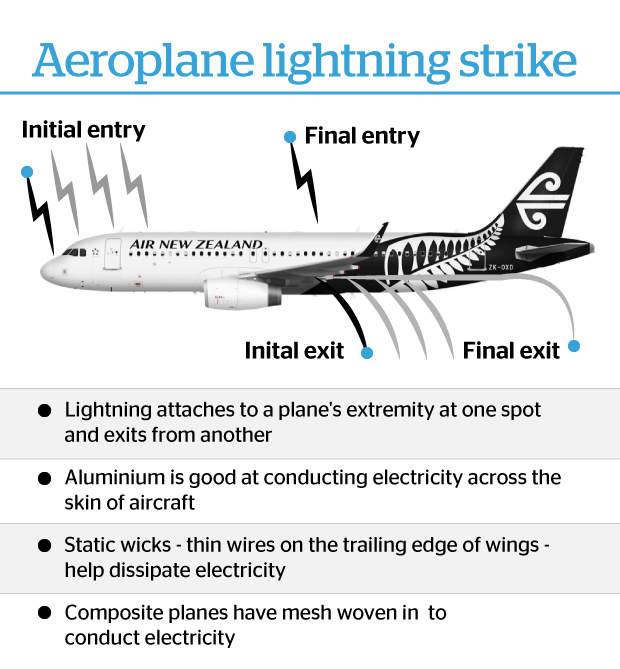
These conductive pathways are meticulously designed to ensure a smooth and continuous flow of electricity. The placement and integration of these conductive materials are crucial. For instance, conductive tapes might be applied along seams between composite panels, or a fine mesh of conductive material might be laminated into the composite structure. The goal is to create an uninterrupted conductive network that can safely guide the lightning’s energy from the point of impact to the points of dissipation without compromising the structural integrity of the aircraft or damaging internal systems. The redundancy built into these conductive pathways further enhances safety; if one path is compromised, others can still carry the electrical load.
Fuel Tank Safety and Bonding
A significant concern with lightning strikes is the potential for ignition of fuel vapors. Aircraft fuel tanks are designed with multiple layers of protection to prevent this. One key aspect is the electrical bonding of all metallic components. This includes ensuring that all metal parts, from the fuel tank itself to surrounding structures and even fuel pumps, are electrically connected. This process of bonding ensures that any electrical charge that might build up is dissipated across the entire connected structure, preventing the creation of sparks that could ignite fuel vapors.
Furthermore, fuel tanks are typically vented to prevent the buildup of pressure and to allow any potential vapors to escape safely away from potential ignition sources. Modern fuel systems also employ sophisticated technologies to minimize the presence of explosive vapor concentrations. The design of the fuel tanks themselves also contributes to safety. They are often constructed with materials that are resistant to ignition, and their internal surfaces are designed to minimize the risk of static electricity buildup. The combination of thorough electrical bonding and careful fuel system design makes the ignition of fuel vapors by a lightning strike an exceedingly rare event.
The Lightning Strike Procedure: What Happens in the Cockpit and Cabin
While the engineering behind aircraft lightning protection is robust, aviation authorities and airlines maintain strict protocols for handling and assessing the impact of a lightning strike. These procedures are designed to ensure the continued safety of the flight and to identify any potential issues that may have arisen.
Flight Crew Actions and Monitoring
In the event of a lightning strike, the flight crew is trained to follow specific procedures. Upon experiencing a strike, the pilots will typically note the time and approximate location of the strike. While the aircraft is designed to withstand these events, the crew will closely monitor critical flight systems. This includes checking engine performance, flight control surfaces, and importantly, the integrity of the navigation and communication systems. Modern aircraft are equipped with sophisticated diagnostic systems that can alert the crew to any anomalies.
The pilots will communicate with air traffic control and, if necessary, inform passengers of the situation. Reassurance is a key component of their communication, emphasizing the aircraft’s design to handle such events. Following the strike, the crew will continue to monitor aircraft systems diligently for the remainder of the flight. In some cases, depending on the severity of the strike as indicated by onboard systems or observed external damage, the crew might opt for a precautionary landing at the nearest suitable airport to allow for a thorough inspection by maintenance personnel.
Post-Flight Inspection and Maintenance
Once the aircraft has landed, a thorough inspection is conducted by a certified maintenance team. This is a critical step, regardless of whether any issues were detected during the flight. The inspection involves a visual examination of the aircraft’s exterior, particularly at the suspected points of lightning entry and exit. Technicians will look for any signs of damage, such as pitting, scorching, or delamination of composite materials.
Beyond visual checks, specialized diagnostic equipment is often employed. This can include ultrasonic testing to detect internal damage to composite structures, or electrical continuity tests to verify the integrity of the conductive pathways. The avionics bays and sensitive electronic systems are also meticulously checked to ensure they have not been affected. If any damage is found, it is repaired according to strict manufacturer specifications and aviation regulations before the aircraft is cleared for its next flight. This rigorous post-flight inspection protocol is a testament to the aviation industry’s unwavering commitment to safety.

Conclusion: A Testament to Technological Advancement
Lightning strikes on aircraft, while visually dramatic, are a testament to the incredible advancements in aerospace engineering. The sophisticated design, meticulous material selection, and robust testing protocols in place ensure that these powerful natural events are managed safely, protecting passengers and crew. The airplane, far from being a fragile shell vulnerable to nature’s fury, is a marvel of technological resilience, where every component is designed with safety and redundancy in mind, turning a potentially terrifying event into a mere footnote in the journey. The continuous evolution of materials science and electrical engineering ensures that the future of aviation will only see even greater robustness against the elements, making air travel one of the safest modes of transportation available.
aViewFromTheCave is a participant in the Amazon Services LLC Associates Program, an affiliate advertising program designed to provide a means for sites to earn advertising fees by advertising and linking to Amazon.com. Amazon, the Amazon logo, AmazonSupply, and the AmazonSupply logo are trademarks of Amazon.com, Inc. or its affiliates. As an Amazon Associate we earn affiliate commissions from qualifying purchases.