
Water is the most fundamental requirement for human survival, but in the vacuum of space, it behaves in ways that defy terrestrial logic. For aerospace engineers and technology developers, the behavior of water presents a unique set of challenges that require high-precision hardware and innovative software solutions. From the life-support systems of the International Space Station (ISS) to the cutting-edge propulsion systems of the next generation of CubeSats, the technology designed to manage water is some of the most sophisticated in the digital and mechanical world. Understanding what happens to water in space is not just a scientific curiosity; it is a technological hurdle that must be cleared for the future of deep-space exploration.
The Engineering of Microgravity Fluidics
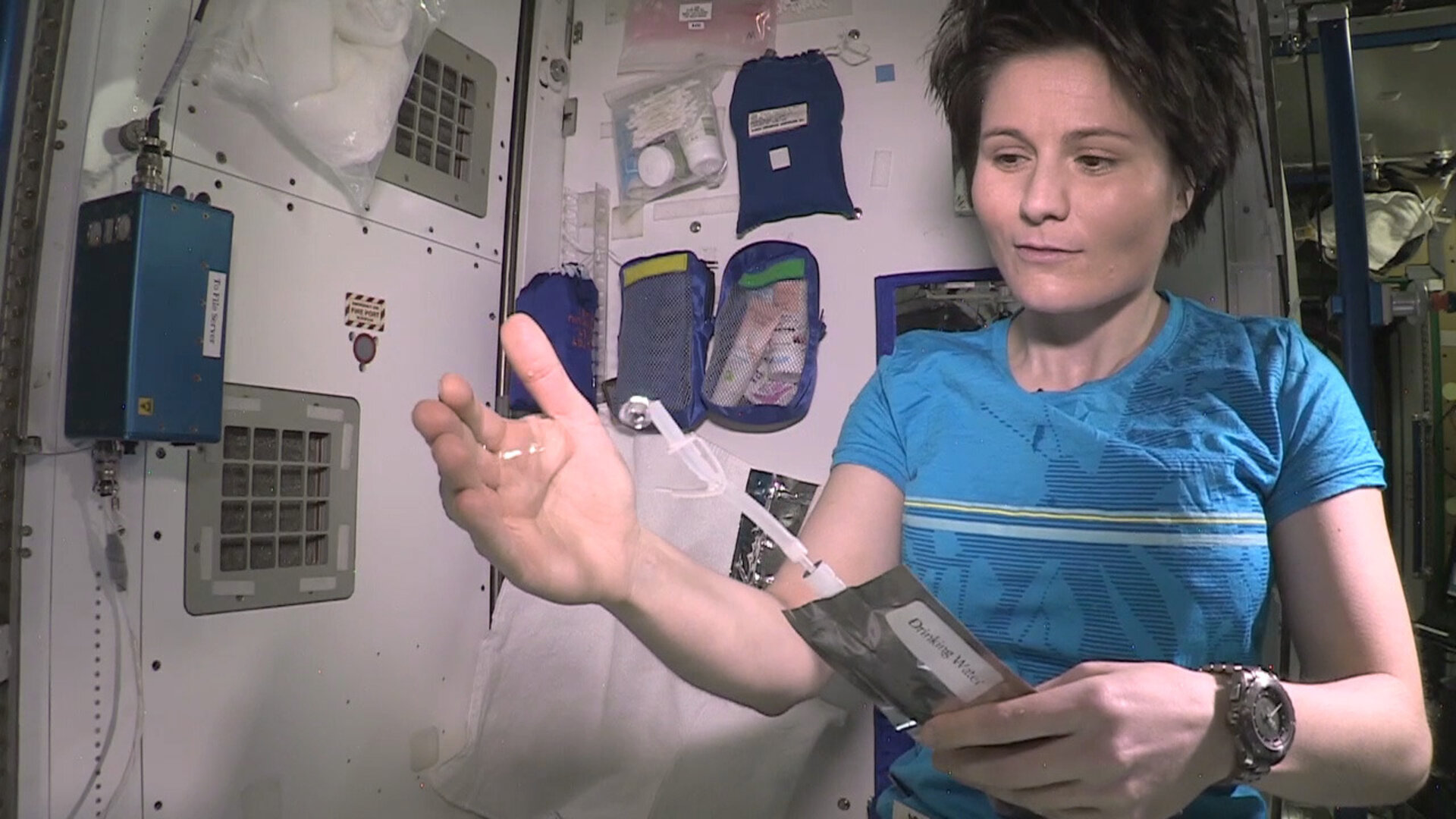
On Earth, gravity is the primary force governing fluid dynamics. We rely on it to keep water at the bottom of a glass and to drive the flow of plumbing systems. In the microgravity environment of low Earth orbit (LEO), gravity becomes negligible, and surface tension becomes the dominant force. This shift necessitates a complete overhaul of how fluid systems are designed.
Overcoming Surface Tension and Adhesion
In space, water does not “pour.” Instead, it forms large, oscillating spheres that cling to surfaces via capillary action. To manage this, engineers utilize Capillary Flow Technology. Rather than relying on pumps that might fail due to air bubbles (gas-liquid separation is notoriously difficult in space), designers use v-shaped channels and specifically textured surfaces to “wick” water to its destination.
Advanced computer modeling and Computational Fluid Dynamics (CFD) software are used to predict how these droplets move. These simulations allow engineers to design fuel tanks and water reservoirs with internal “vanes”—geometric structures that use surface tension to guide water toward the outlet, ensuring that systems never “run dry” even when the tank is half-empty.
Thermal Management Systems in Extreme Temperatures
Space is a land of thermal extremes. In direct sunlight, a spacecraft can heat up to 121°C (250°F), while in the shadow, it can plunge to -157°C (-250°F). Without atmospheric pressure, water cannot exist as a liquid in a vacuum; it either boils instantly into vapor or freezes into ice.
To combat this, spacecraft utilize Active Thermal Control Systems (ATCS). This involves a complex network of heat exchangers and software-controlled heaters. Technology like the “Flash Evaporator” is used on various modules to reject excess heat by boiling small amounts of water into the vacuum, effectively “sweating” for the spacecraft. The sensors and logic gates controlling these systems must be radiation-hardened to prevent glitches that could lead to catastrophic pipe bursts or system-wide freezing.
Regenerative Life Support: The ISS Water Recovery System (WRS)
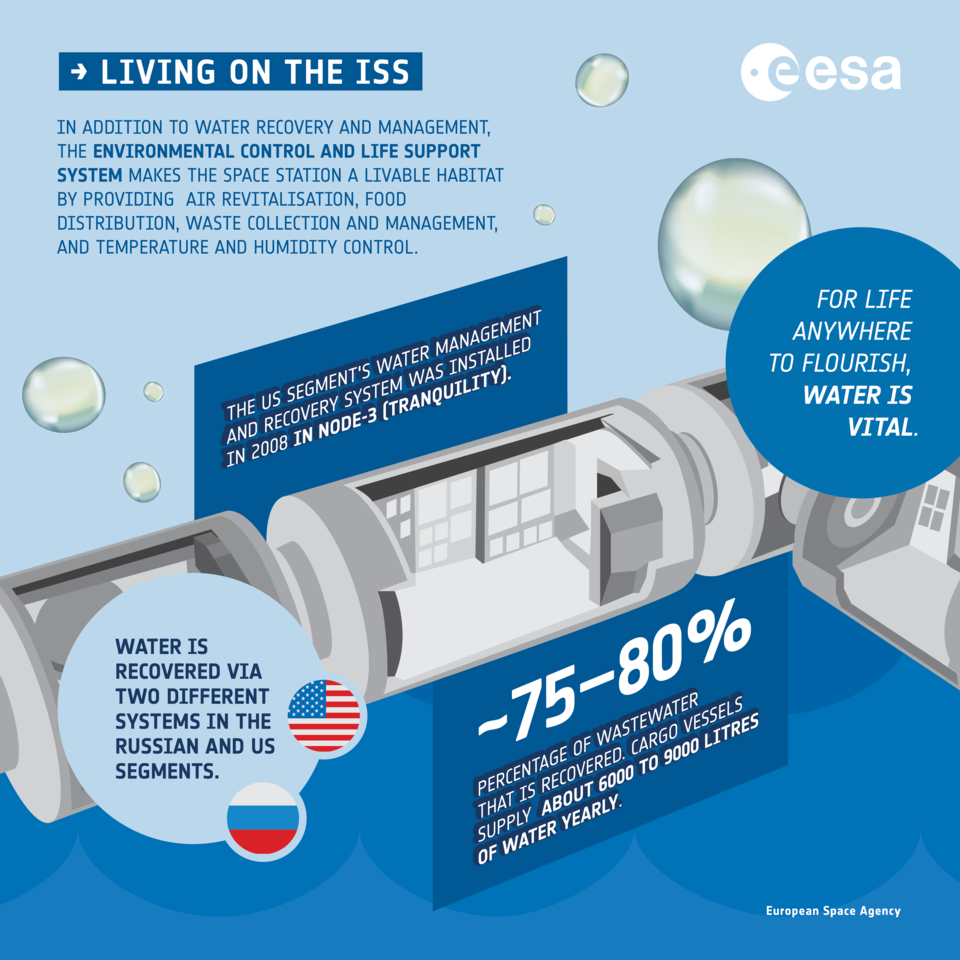
The cost of launching water from Earth is astronomical—roughly $10,000 to $25,000 per gallon depending on the launch vehicle. To make long-term habitation viable, NASA and other agencies have developed the Water Recovery System (WRS), a masterpiece of environmental engineering and automated chemical processing.
Advanced Filtration and Centrifugal Distillation
The WRS is designed to recycle approximately 93% of all water used on the ISS, including sweat, breath condensate, and even urine. The centerpiece of this system is the Urine Processor Assembly (UPA). Because liquid cannot be boiled in a traditional kettle in space (the steam bubbles wouldn’t rise), the UPA uses a rotating distillation tire.
This hardware creates an artificial gravity field by spinning, allowing the liquid to be separated from the gaseous vapor. The tech involved is highly automated, utilizing a suite of IoT-style sensors that monitor pressure, rotational speed, and temperature in real-time. If the brine concentration becomes too high, the system’s onboard AI adjusts the flow rate to prevent clogging, a process that used to require manual intervention but is now largely handled by edge-computing algorithms.
Microbial Monitoring and Quality Control Sensors
Once the water is recovered, it must be purified to standards higher than most municipal tap water on Earth. This is achieved through a multi-stage process involving particulate filters, adsorption beds, and a catalytic oxidation reactor.
The real technological breakthrough, however, lies in the monitoring. Traditional water testing requires a laboratory and several days for cultures to grow. In space, this isn’t an option. New “lab-on-a-chip” technology allows astronauts to test for microbial contamination in minutes. Using fluorescence-based sensors and DNA sequencing tech (like the MinION), the crew can identify specific bacteria or fungi in the water supply, ensuring that the closed-loop system remains sterile and safe for years at a time.
Water as a Propellant: The Future of Space Propulsion Technology
One of the most exciting shifts in aerospace technology is the move toward using water as a “green” propellant. Hydrazine, the traditional fuel for many satellites, is highly toxic and expensive to handle. Water, by contrast, is stable, safe, and abundant.
Electrolysis and Hydrogen-Oxygen Engines
Technology is currently being refined to turn water into a high-energy propellant through electrolysis. By using solar power to split water molecules into hydrogen and oxygen, spacecraft can create their own fuel on demand.
The technical challenge lies in the storage of these gases. Recent innovations in carbon-fiber-reinforced tanks and cryogenic cooling tech have made it possible to store these volatile gases in compact forms. Software-defined propulsion systems can then throttle the combustion of these gases to provide precise station-keeping for satellites, allowing them to stay in their designated orbits for longer periods without the need for toxic chemical refills.
Water Plasma Thrusters for Small Satellites
For CubeSats and micro-satellites, a new generation of “Water Plasma Thrusters” is emerging. These devices use radio-frequency (RF) energy to ionize water vapor into a plasma state. The plasma is then accelerated using electromagnetic fields to produce thrust.
This tech represents a massive leap in digital control. The power processing units (PPUs) for these thrusters must manage high-voltage electricity with extreme precision to maintain the stability of the plasma. Companies like Pale Blue and various aerospace startups are currently flight-testing these water-based engines, which promise to make space cleaner and more sustainable by reducing the risk of toxic leaks in orbit.
In-Situ Resource Utilization (ISRU): Technology for Harvesting Space Water
The final frontier of space water technology is not about bringing water from Earth, but finding it in the solar system. This is known as In-Situ Resource Utilization (ISRU), and it is the key to Mars missions and permanent Lunar bases.
Lunar Polar Volatiles and Extraction Robotics
Recent satellite data has confirmed the presence of water ice in the permanently shadowed regions (PSRs) of the Moon’s poles. Harvesting this ice requires robotics technology that can operate in temperatures near absolute zero.
Engineers are developing autonomous rovers equipped with thermal drills and microwave extraction heads. These robots use computer vision to navigate the treacherous, pitch-black terrain of lunar craters. The “microwave sublimation” tech is particularly innovative: it heats the lunar soil (regolith) to turn the ice directly into vapor without disturbing the dirt, which is then captured by a cold-trap and condensed back into liquid. This process is orchestrated by decentralized autonomous software, as the time delay for communication between Earth and the Moon makes direct remote control difficult.
Cryogenic Storage and Long-Term Containment Tech
Once water is harvested on the Moon or an asteroid, it must be stored for long durations. Space is a high-radiation environment, and long-term exposure can cause water to dissociate or become contaminated with heavy metals from the storage containers.
The tech solution involves advanced materials science—specifically, the development of multi-layer insulation (MLI) and “zero-boil-off” (ZBO) storage tanks. These tanks use active cooling systems and superconducting materials to maintain a stable environment. Furthermore, digital twins—virtual models of these storage systems—are used on Earth to monitor the structural integrity of the tanks in real-time, predicting potential failures before they occur based on telemetry data sent from the lunar surface.
Conclusion
What happens to water in space is a complex narrative of technological triumph over physics. From the microscopic level of capillary flow to the macroscopic level of lunar mining, the tech industry is redefining our relationship with this vital resource. As we transition from being a planet-bound species to a space-faring one, the software, hardware, and engineering protocols developed to manage water will serve as the blueprint for all future life-support and propulsion systems. Water in space is no longer just a biological necessity; it is the most versatile technological asset in the modern digital and industrial aerospace toolkit.
aViewFromTheCave is a participant in the Amazon Services LLC Associates Program, an affiliate advertising program designed to provide a means for sites to earn advertising fees by advertising and linking to Amazon.com. Amazon, the Amazon logo, AmazonSupply, and the AmazonSupply logo are trademarks of Amazon.com, Inc. or its affiliates. As an Amazon Associate we earn affiliate commissions from qualifying purchases.