
When we envision a landfill, the traditional image that comes to mind is often a primitive hole in the ground filled with discarded refuse. However, in the modern era of waste management, the reality is far more sophisticated. A contemporary landfill is not a “dump,” but rather a highly engineered technological facility designed to isolate waste from the environment while extracting every possible watt of energy and byte of data from the decomposition process.
As urbanization accelerates and the volume of global waste increases, the tech sector has pivoted toward “Smart Landfills.” These facilities leverage advanced materials science, IoT sensors, and complex software to manage the biological and chemical reactions occurring beneath the surface. Understanding what happens to waste in a landfill today requires a deep dive into the software, hardware, and engineering trends that have transformed trash into a technological asset.
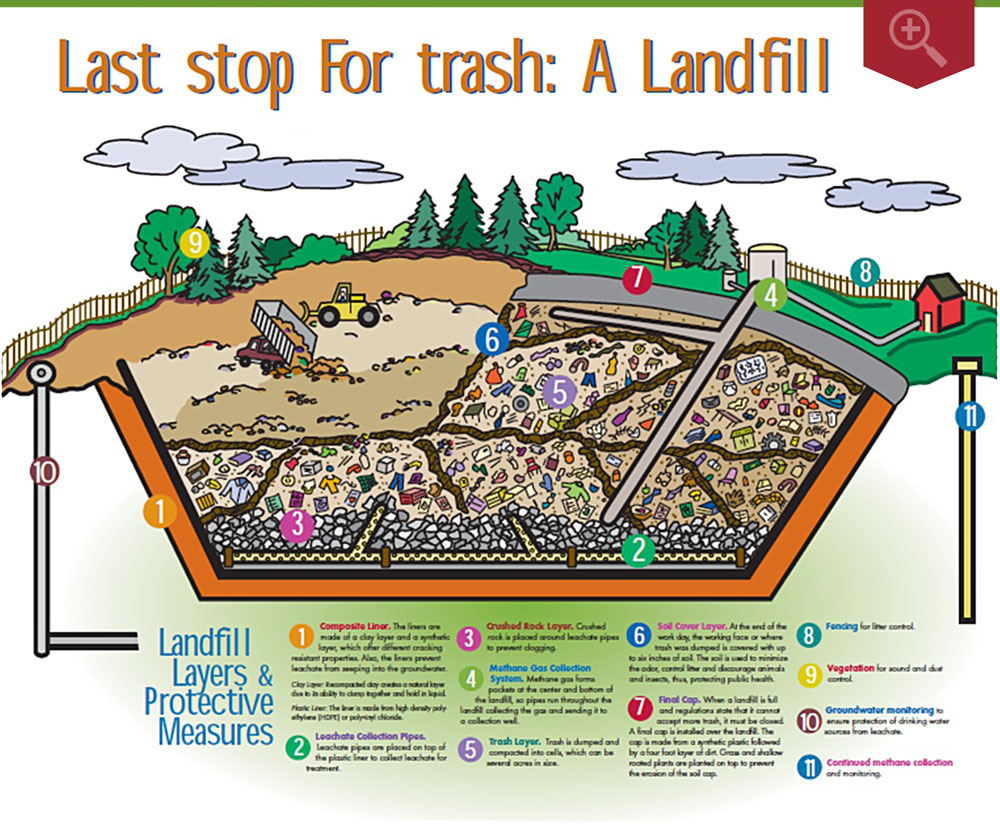
Beyond the Pit: The Digital and Structural Anatomy of a Smart Landfill
The journey of waste begins with the creation of a “cell,” a carefully designed unit of the landfill. Unlike the unlined pits of the past, modern landfill cells are masterpieces of civil and environmental engineering, utilizing a “multi-layered sandwich” of technology to prevent environmental leakage.
Geomembrane Layers and Geosynthetic Clay Liners
The first line of defense is a composite liner system. This isn’t just a plastic sheet; it is a high-density polyethylene (HDPE) geomembrane, often combined with geosynthetic clay liners (GCL). The technology behind these materials involves rigorous stress-crack resistance testing and thermal stability analysis. These liners act as a digital-physical barrier, ensuring that no liquid byproduct, known as leachate, escapes into the groundwater. In a tech-focused facility, these liners are often embedded with leak-detection sensors that use electrical resistivity tomography to identify punctures smaller than a pinhead.
Sensor-Integrated Leachate Collection Systems
As organic waste decomposes and rainwater filters through the landfill, it produces leachate—a complex chemical “soup.” To manage this, engineers install a network of perforated pipes at the base of the cell. In the “Tech” paradigm, these systems are increasingly managed by automated SCADA (Supervisory Control and Data Acquisition) systems. These software platforms monitor flow rates and chemical composition in real-time, triggering pumps to move the liquid to on-site treatment plants where advanced membrane bioreactors (MBR) and reverse osmosis technology purify the water for industrial reuse.
Waste-to-Energy (WTE): Turning Methane into Digital Power
Perhaps the most significant technological evolution in landfill management is the transition from waste disposal to energy production. Landfills are, in essence, massive anaerobic digesters. As bacteria break down organic matter in the absence of oxygen, they produce landfill gas (LFG), which is approximately 50% methane—the primary component of natural gas.
Gas Extraction Wells and Turbine Integration
To capture this gas, a network of vertical and horizontal extraction wells is installed throughout the landfill. These wells are connected to a high-vacuum header system that pulls the gas to a central processing facility. Here, the technology of “gas scrubbing” takes over. Using specialized membranes and pressure swing adsorption (PSA), the gas is stripped of impurities like carbon dioxide and hydrogen sulfide.
The refined methane is then fed into massive internal combustion engines or micro-turbines. These gadgets are the workhorses of the facility, converting chemical energy into electricity. This power can be fed back into the grid or used locally to power energy-intensive operations, such as local data centers or cryptocurrency mining rigs, which are increasingly being co-located with landfills to take advantage of this “free” renewable energy.
Real-Time Methane Monitoring and Atmospheric Security
Technological trends have moved toward the use of drones and satellite imaging to monitor methane leaks. In the past, technicians walked the landfill with handheld sniffers—a slow and inaccurate process. Today, “Smart” landfills utilize UAVs (unmanned aerial vehicles) equipped with tunable diode laser absorption spectroscopy (TDLAS). This tech allows operators to create high-resolution 3D maps of methane concentrations, identifying “hotspots” of biological activity and ensuring that the extraction hardware is operating at peak efficiency.
The Role of AI and Automation in Post-Disposal Sorting
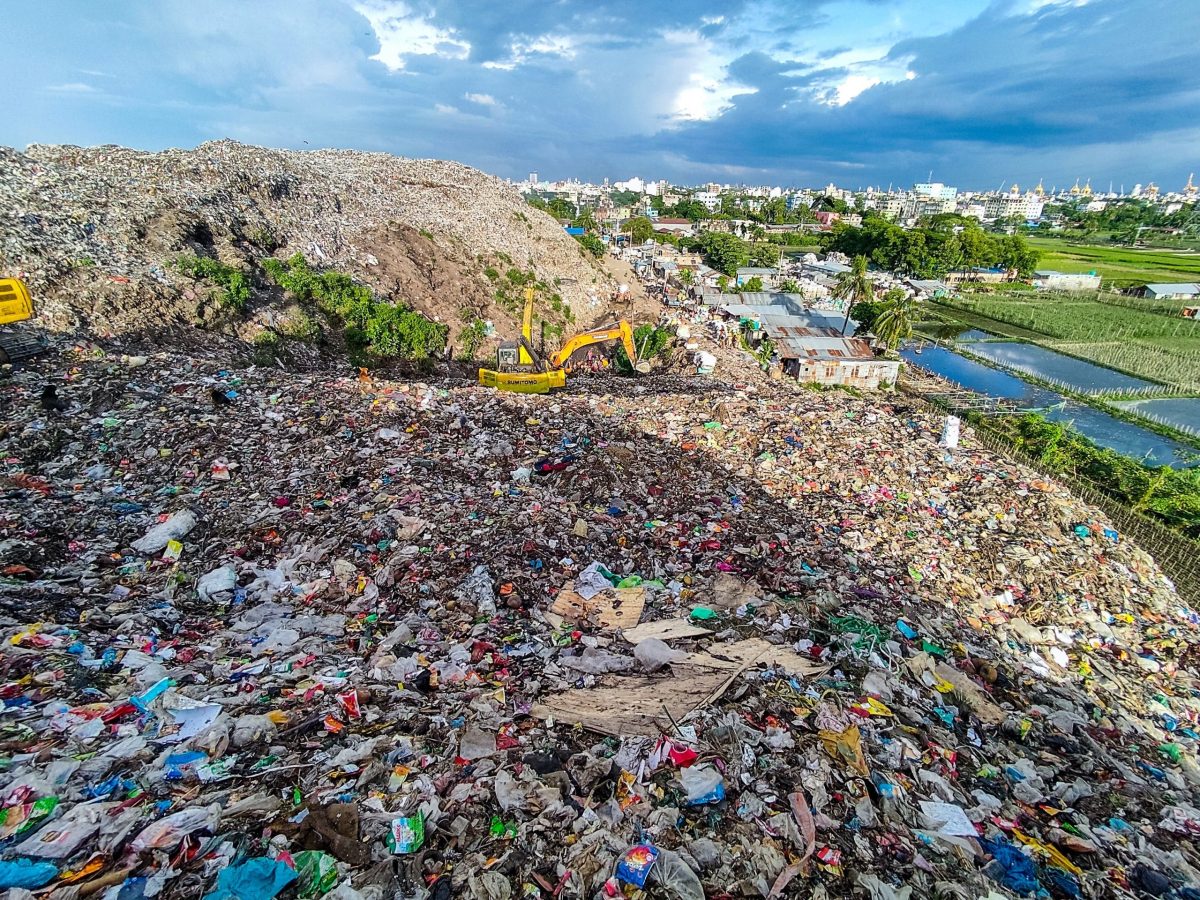
While much of what happens “to” waste occurs after it is buried, the efficiency of a landfill is determined by the technology used at the “working face”—the active area where waste is currently being deposited. AI and robotics have become the new frontier in optimizing this process.
Computer Vision and Robotic Arm Pickers
Before waste is permanently interred, many modern facilities run it through a Material Recovery Facility (MRF) located on-site. Here, AI-driven computer vision systems scan the waste stream. These systems are trained on massive datasets to recognize different types of plastics, metals, and paper.
Once identified, high-speed robotic arms or air-jet sorters pick the valuable recyclables out of the stream. This technology ensures that only truly non-recoverable waste ends up in the landfill cell, extending the facility’s lifespan and maximizing the “data value” of the waste stream. Every item sorted is logged into a database, providing municipalities with granular analytics on consumption patterns and waste generation.
IoT Connectivity in Fleet and Site Management
The “gadgets” of a landfill include more than just sensors in the ground; they include the heavy machinery used to compact the waste. Modern compactors are equipped with GPS-guided 3D mapping software. This allows operators to see a real-time heat map of the landfill’s density.
By using IoT connectivity, the facility manager can ensure that the waste is compacted to the exact technical specification required to maximize space and stability. If one area is too loose, the software alerts the driver, ensuring structural integrity and preventing future “slumping” or cave-ins. This level of precision is only possible through the integration of satellite positioning and onboard diagnostic software.
The Future of Landfill Technology: Bioreactors and Molecular Transformation
As we look toward the future of waste technology, the industry is moving away from the “dry tomb” philosophy (where waste is kept as dry as possible to prevent decay) and toward “bioreactor landfills.”
Aerobic vs. Anaerobic Bioreactor Technology
A bioreactor landfill is a tech-heavy approach that involves the controlled injection of air (aerobic) or liquid (anaerobic) into the waste mass to accelerate decomposition. This is managed by a complex array of software-controlled injectors. The goal is to finish the decomposition process in decades rather than centuries.
In an anaerobic bioreactor, the technology focuses on maximizing methane production for energy. In an aerobic system, the tech focuses on rapid stabilization. Both systems require a level of automated monitoring that was impossible 20 years ago, involving moisture sensors, temperature probes, and pressure transducers all feeding into a centralized AI that adjusts injection rates based on the “health” of the landfill pile.
Data-Driven Life Cycle Assessments (LCA)
The final piece of the landfill tech puzzle is the software used for Life Cycle Assessment. Companies now use digital twins—virtual replicas of the landfill—to predict how the facility will behave over the next 100 years. These simulations account for climate change data, regional geological shifts, and changing waste compositions (e.g., the increase in e-waste).
By utilizing these digital tools, engineers can design landfills that are not just passive receptacles, but active, managed ecosystems. We are entering an era where a landfill is essentially a “biological battery,” managed by sophisticated software and monitored by a global network of sensors.

Conclusion
What happens to waste in a landfill is no longer a simple story of burial and decay. It is a high-tech sequence of isolation, extraction, and transformation. From the geomembrane liners that protect our water to the turbines that turn methane into digital currency, the modern landfill is a testament to technological innovation. As we continue to refine AI sorting, drone monitoring, and bioreactor engineering, the “waste” of today will increasingly become the “resource” of tomorrow, managed by the very same technologies that power the rest of our digital world. The landfill has moved out of the dark ages of the “dump” and into the light of the “tech hub,” proving that even in the world of refuse, data and engineering are king.
aViewFromTheCave is a participant in the Amazon Services LLC Associates Program, an affiliate advertising program designed to provide a means for sites to earn advertising fees by advertising and linking to Amazon.com. Amazon, the Amazon logo, AmazonSupply, and the AmazonSupply logo are trademarks of Amazon.com, Inc. or its affiliates. As an Amazon Associate we earn affiliate commissions from qualifying purchases.