
In the landscape of modern media, few narratives have captured the intersection of visceral survival and late-stage capitalism as poignantly as Squid Game. While audiences were initially captivated by the high-stakes games and the colorful, lethal set pieces, the emotional and intellectual core of the series revolves around Player 001, Oh Il-nam. To understand what happens to the “old man” in Squid Game is to understand a complex case study in wealth disparity, the psychology of the ultra-high-net-worth individual, and the ultimate futility of capital accumulation without moral grounding.

From a financial perspective, Oh Il-nam is not merely a character; he is the personification of the “Master” class in a globalized economy. His trajectory—from a frail participant to the revealed architect of the games—offers profound insights into the nature of money, power, and the “boredom” that often plagues those who have transcended the need for traditional labor.
The Ultimate Stakeholder: Oh Il-nam’s Financial Legacy
The revelation that Oh Il-nam was never truly a victim of the games, but rather their founder, shifts the narrative from a survival horror story to an exploration of corporate ownership and stakeholder management. In the world of Squid Game, the old man represents the ultimate “angel investor” in a project designed to monetize human desperation.
From Player to Founder: The Transition of Capital
When we first meet Player 001, he is presented as the most vulnerable asset in the “market” of the game. He is elderly, suffering from a brain tumor, and seemingly possesses zero competitive advantage. However, this was a calculated move in brand positioning. By entering the arena, Oh Il-nam was performing a “boots on the ground” audit of his own investment.
In the financial world, this is akin to a CEO going “Undercover Boss” to witness the operational efficiencies—or lack thereof—of their organization. What happens to him during the games is a scripted simulation of risk. While other players faced certain death upon losing, Oh Il-nam’s “elimination” during the marble game was a strategic exit. He leveraged his position as the founder to ensure he could experience the thrill of the gamble without the ultimate price of the stake. This highlights a recurring theme in global finance: the safety net of the elite. Even when they “lose,” they rarely lose everything.
The Cost of Boredom: Investing in Extreme Entertainment
One of the most chilling aspects of Oh Il-nam’s character is his motivation. He explicitly states that he created the games because he and his wealthy clients were “bored.” When an individual reaches a certain threshold of wealth, the utility of money changes. It no longer serves to provide security or comfort; instead, it becomes a tool for entertainment and influence.
The “Squid Game” itself is a massive financial undertaking. The overhead costs—maintaining a remote island, paying a private army of “pink guards,” the technology required for the games, and the 45.6 billion won prize pool—require a level of liquidity that only the top 0.01% can command. For the old man, this was not a philanthropic endeavor to help the poor; it was a high-cost luxury service for the bored elite. The “ROI” for Oh Il-nam was not measured in dollars, but in the dopamine hit of watching high-stakes human behavior.
Wealth Inequality and the Psychology of the “Gganbu” Partnership
The relationship between Oh Il-nam and the protagonist, Seong Gi-hun, is perhaps the most significant financial metaphor in the series. Their “Gganbu” partnership represents the bridge—and the insurmountable gap—between the financier and the debtor.
The Illusion of Financial Equality in the Arena
The games are predicated on the “fairness” of the rules. The Front Man repeatedly stresses that every player is equal in the arena. However, this is a financial fallacy. Oh Il-nam entered the game with a terminal diagnosis and a multi-billion-dollar fortune waiting for him outside. Gi-hun entered with massive debt and a family in crisis.
In a professional financial context, this mirrors the concept of “asymmetric risk.” While the rules of the game might be equal, the consequences of failure are not. For the poor, failure is total. For the old man, failure was merely the end of a vacation. This dynamic critiques the “meritocracy” often touted in capitalistic systems, suggesting that those with existing wealth can afford to take risks that would be fatal to those without it.
The Gganbu Asset: Trust as a Currency

The “Gganbu” concept—sharing everything between friends—is a romanticized version of a financial partnership. During the marble game, Oh Il-nam allows Gi-hun to “trick” him, essentially gifting him the win. From a wealth management perspective, this can be seen as a transfer of assets.
The old man saw something in Gi-hun that was more valuable than the game itself: a spark of humanity that the old man’s wealth had long since extinguished. However, even this act of “kindness” was a manipulation. By letting Gi-hun win, Oh Il-nam ensured the game’s continuity and maintained his secret identity. He bought Gi-hun’s survival with his own “fake” death, illustrating how the wealthy often use their resources to control the narrative and outcomes of those beneath them.
The Business Model of the VIPs and the Host’s Exit Strategy
As the series progresses toward its conclusion, we see what happens to the old man in his final days. He transitions from the “Host” to a dying man in a hospital bed, still obsessed with the fundamental questions of human nature and money.
Monetizing Human Despair: The VIP ROI
The VIPs—the masked Westerners who bet on the players—are the clients of the old man’s “firm.” This reveals the “Squid Game” to be a bespoke financial product. It is a betting house where the “assets” are human lives. The old man serves as the CEO who ensures the product remains high-quality and high-stakes.
The money involved is staggering. Each player’s life is valued at 100 million won. This commodification of human life is a sharp critique of how extreme wealth can lead to a dehumanized view of the economy. To the VIPs and the old man, the players are no different than stocks or horses. What happens to the old man—his eventual reveal—proves that he viewed the entire ordeal as his final “grand project,” his legacy in a world where he had already conquered every other market.
The Final Payoff: What Happens to the Old Man’s Fortune?
In his final meeting with Gi-hun, Oh Il-nam dies as the clock strikes midnight. His death marks the ultimate “exit strategy.” Despite his billions, he cannot buy more time. His brain tumor is the one market force he cannot manipulate.
From a financial standpoint, what happens to his fortune remains a point of intrigue. Does the “organization” continue under the Front Man? The prize money was successfully delivered to Gi-hun, but the vast majority of Oh Il-nam’s empire likely remains intact to fund future “seasons” of the game. His death illustrates the “intergenerational wealth” of the system itself. The founder dies, but the corporate structure—the games—persists. The business of exploitation is self-sustaining.
Lessons in Wealth Management and Moral Bankruptcy
The trajectory of Oh Il-nam serves as a cautionary tale for any financial professional or aspiring entrepreneur. It asks a fundamental question: At what point does the pursuit of profit and entertainment lead to a total loss of purpose?
The Futility of Accumulation Without Purpose
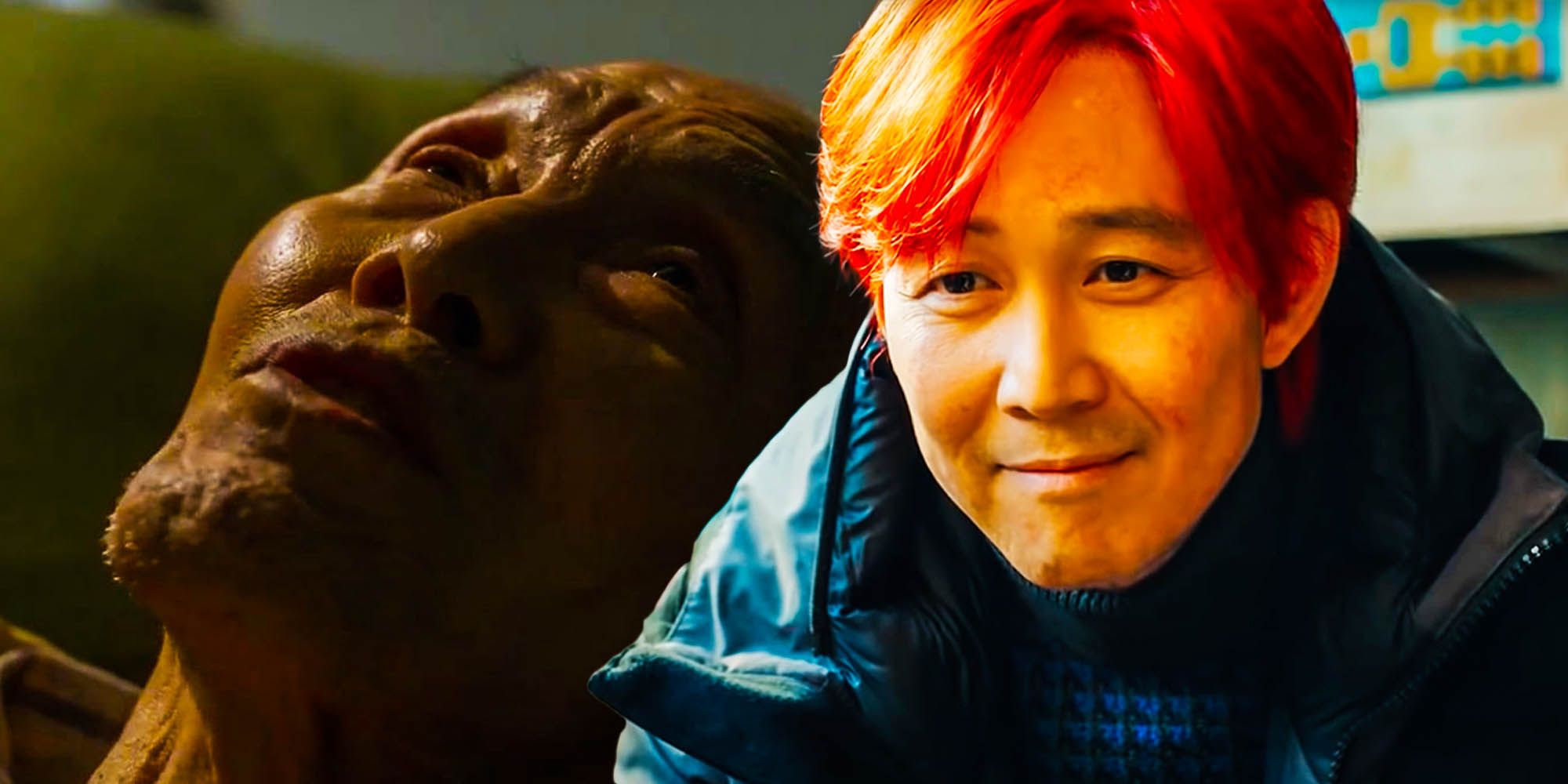
Oh Il-nam’s final bet with Gi-hun—whether anyone will help a homeless man on the street—is his last attempt to justify his cynicism. He believes that money and greed are the only true drivers of human behavior. When Gi-hun wins the bet (as someone does help the homeless man just before the old man dies), it serves as a rebuke of the old man’s entire financial philosophy.
He spent his life accumulating power and wealth, only to realize at the end that he had no one to trust and nothing truly meaningful to hold onto. His “Gganbu” with Gi-hun was his only genuine connection, and it was built on a foundation of lies. This highlights the concept of “social capital”—something the old man lacked entirely, despite his overflowing bank accounts.
Redefining Value in a Post-Game Economy
For Seong Gi-hun, the 45.6 billion won becomes a burden rather than a blessing. He realizes that the “value” of the money is tainted by the blood of those who died for it. This brings us to the final lesson of what happens to the old man in Squid Game: wealth is not neutral.
In business and finance, we often treat capital as a sterile tool. However, the old man’s story reminds us that how money is made, and the human cost associated with it, defines its ultimate worth. Oh Il-nam died in luxury, overlooking a city of lights, yet he died in a state of moral bankruptcy. His legacy is not his fortune, but the cycle of trauma he perpetuated. As Gi-hun turns back at the airport in the final scene, he is not seeking more money; he is seeking to dismantle the “firm” the old man built, signaling a shift from a focus on personal gain to a pursuit of justice—the only currency that truly matters in the end.
aViewFromTheCave is a participant in the Amazon Services LLC Associates Program, an affiliate advertising program designed to provide a means for sites to earn advertising fees by advertising and linking to Amazon.com. Amazon, the Amazon logo, AmazonSupply, and the AmazonSupply logo are trademarks of Amazon.com, Inc. or its affiliates. As an Amazon Associate we earn affiliate commissions from qualifying purchases.