
In the traditional laboratory setting, a chemical reaction is often viewed through the lens of beakers, burners, and bubbling solutions. However, in the modern era of high-performance computing, artificial intelligence, and quantum engineering, the question of “what happens to the atoms” has shifted from a theoretical chemistry problem to a foundational challenge in technology. Today, we don’t just observe chemical reactions; we simulate, program, and manipulate them at the atomic level. Understanding the rearrangement of atoms is the key to unlocking the next generation of semiconductors, high-capacity batteries, and carbon-capture software.
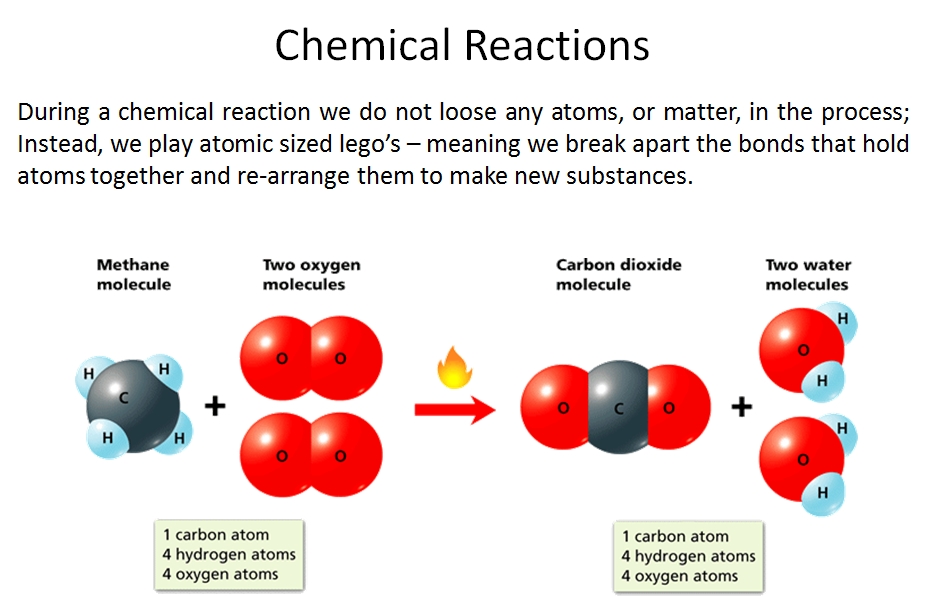
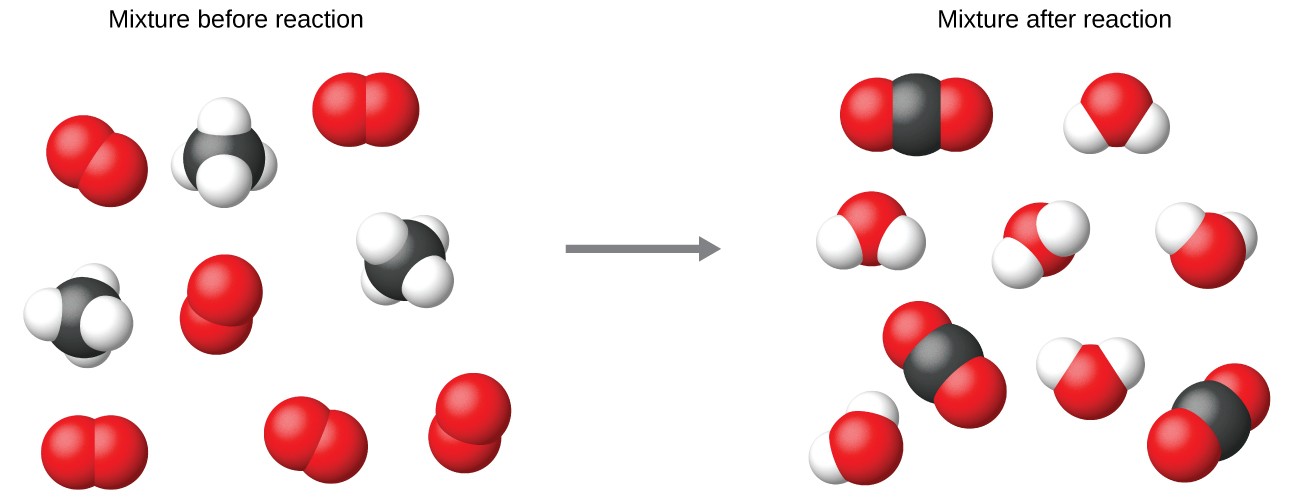
When a chemical reaction occurs, the fundamental rule is that no atoms are created or destroyed—they are simply rearranged. But for a technologist, this rearrangement is a complex data problem. It involves the breaking of existing chemical bonds and the formation of new ones, a process governed by the laws of thermodynamics and quantum mechanics. As we push the boundaries of “Deep Tech,” the ability to track every single atom during this transition is what separates iterative improvements from disruptive innovation.
The Digital Alchemy: How Molecular Dynamics Software Tracks Atomic Shifts
In the tech industry, the most significant breakthroughs in material science are no longer happening in wet labs first; they are happening in “in silico” environments. To understand what happens to atoms during a reaction, engineers rely on Molecular Dynamics (MD) simulations. These are sophisticated software suites that use Newton’s laws of motion to predict how every atom in a system will move over time.
Simulating the Invisible: The Role of AI in Predicting Reaction Pathways
The primary challenge in tracking atoms is the sheer speed of their movement. Atomic bonds break and reform in femtoseconds (quadrillionths of a second). Classical software often struggled with this “time-step” problem. Enter Artificial Intelligence. Machine learning models, such as Graph Neural Networks (GNNs), are now being trained on vast datasets of atomic interactions. Instead of calculating the physics from scratch for every single atom, these AI tools can predict the most likely “reaction pathway.” By identifying the transition states where atoms are at their most unstable, AI allows tech companies to design catalysts that lower the energy required for a reaction, leading to more efficient manufacturing processes.
High-Performance Computing (HPC) and the Physics of Atomic Collision
To simulate a chemical reaction involving thousands of atoms, massive computational power is required. High-Performance Computing clusters process the “Force Fields”—the mathematical descriptions of how atoms push and pull on one another. When a reaction is triggered, usually by heat or a catalyst, the atoms gain kinetic energy. The software must track the precise moment when the kinetic energy overcomes the bond energy holding a molecule together. This level of digital granularity is essential for developing “Smart Materials” that can change their atomic structure in response to external digital signals.
Quantum Supremacy: Solving the Many-Body Problem in Chemical Tech
While classical computers are excellent at tracking the positions of atoms, they hit a “brick wall” when it comes to the electrons that facilitate chemical reactions. This is where Quantum Technology takes center stage. To truly know what happens to the atoms, we must understand the electron clouds surrounding them, which dictates how they will bond.
Why Classical Computers Struggle with Atomic Realignment
In a chemical reaction, atoms don’t just “bounce” like billiard balls. Their electrons exist in a state of probability. For a classical computer to simulate the electron interactions of even a relatively small molecule like caffeine, it would require more memory bits than there are atoms in the observable universe. This is known as the “Many-Body Problem.” Because classical bits are binary (0 or 1), they cannot efficiently represent the superposition of electron states during a chemical reaction.
Quantum Simulations and the Future of Battery Tech
Quantum computers use qubits, which can exist in multiple states simultaneously, making them natively suited to simulate atomic bonds. Companies like IBM, Google, and Honeywell are currently developing quantum algorithms specifically designed to observe what happens to atoms in the “excited state” of a chemical reaction. This has massive implications for green tech. For example, by simulating the atomic shifts in lithium-ion interactions, researchers can design battery cathodes that don’t degrade over time. The atoms stay in a more stable configuration, leading to batteries that last decades rather than years.

Programmable Matter: From Chemical Reactions to Functional Hardware
The ultimate goal of modern hardware tech is to move beyond static components toward “programmable matter.” By understanding the mechanics of how atoms rearrange, engineers are creating materials where the chemical reaction is the “software” that changes the hardware’s physical properties.
Designing New Materials via Algorithmic Chemistry
We are seeing the rise of “Generative Design” for chemistry. Just as an AI might generate a digital image, software like AlphaFold and its successors are generating new molecular structures that have never existed in nature. When these molecules undergo a reaction, the atoms are guided into specific geometries that provide extreme strength, conductivity, or heat resistance. This is the backbone of the “Aero-Tech” industry, where turbine blades are designed at an atomic level to ensure that under high-pressure reactions, the atoms move in ways that prevent structural fatigue.
Synthetic Biology and the “Software” of Life
In the niche of Bio-Tech, chemical reactions are the code. When we edit a genome using CRISPR technology, we are essentially triggering a localized chemical reaction to “cut” and “paste” atoms within a DNA strand. The tech community views DNA as a high-density data storage medium. Understanding what happens to the atoms during the “hybridization” reaction allows developers to encode digital data—binary 0s and 1s—into the nitrogenous bases of DNA. This could lead to a future where data centers are not filled with silicon chips, but with biological “reactors” where atoms are rearranged to store the world’s information.
The Security of the Small: Nanotechnology and Digital Integrity
As we gain the ability to manipulate atoms during chemical reactions, a new frontier of digital security emerges. If we can control the “what” and “where” of atoms, we can create hardware that is physically unhackable.
Molecular Cryptography and Data Storage
In traditional cybersecurity, we protect data using mathematical algorithms. In the world of atomic tech, we are moving toward “Physical Unclonable Functions” (PUFs). By triggering a specific chemical reaction during the manufacturing of a microchip, atoms are settled into a unique, random arrangement that is impossible to replicate. This “atomic fingerprint” ensures that a device is genuine. Because no two chemical reactions result in the precise identical placement of every single atom, the hardware itself becomes the cryptographic key.
The Ethics and Safety of Atomic Manipulation
With the power to control chemical reactions at the atomic scale comes significant responsibility. The tech industry is currently grappling with the “Grey Goo” scenario—the fear of self-replicating nanobots that rearrange atoms uncontrollably. While this remains science fiction, the reality of “Nanotoxicity” is a current tech concern. When atoms rearrange during a reaction, they can create byproducts that are small enough to penetrate human cells or bypass digital sensors. Developing “Regulatory Tech” (RegTech) that can monitor and audit atomic-scale changes in real-time is becoming a priority for global tech standards organizations.
Conclusion: The New Era of Atomic Literacy
“What happens to the atoms in a chemical reaction” is no longer a question confined to the high school classroom. It is the central inquiry of the 21st-century tech stack. Whether it is through the lens of AI-driven simulations, quantum computing, or programmable matter, our ability to map and master the movement of atoms is the engine of modern innovation.
As we move forward, the line between “Digital” and “Physical” will continue to blur. We are entering an era where we can “program” a chemical reaction as easily as we program a website. By understanding the choreography of atoms—how they break apart, how they collide, and how they settle into new forms—we are gaining the ultimate “administrator access” to the physical world. The future of technology isn’t just about bits and bytes; it is about the precise, calculated rearrangement of the very atoms that make up our universe.
aViewFromTheCave is a participant in the Amazon Services LLC Associates Program, an affiliate advertising program designed to provide a means for sites to earn advertising fees by advertising and linking to Amazon.com. Amazon, the Amazon logo, AmazonSupply, and the AmazonSupply logo are trademarks of Amazon.com, Inc. or its affiliates. As an Amazon Associate we earn affiliate commissions from qualifying purchases.