
For many investors, the word “bankruptcy” is the ultimate red flag—a financial alarm bell that signals the potential total loss of capital. However, the reality of corporate bankruptcy is a complex legal and financial process that does not always result in an immediate evaporation of value. Understanding what happens to stock during these turbulent times is essential for any serious investor, as it dictates whether you should hold on for a potential recovery, sell immediately to harvest tax losses, or brace for a total wipeout.
In the world of investing and business finance, bankruptcy is not necessarily the end of a company, but it is often the end of the line for its existing equity. This article explores the mechanics of bankruptcy, the hierarchy of claims, and the cold reality of what shareholders can expect when a company enters the insolvency process.
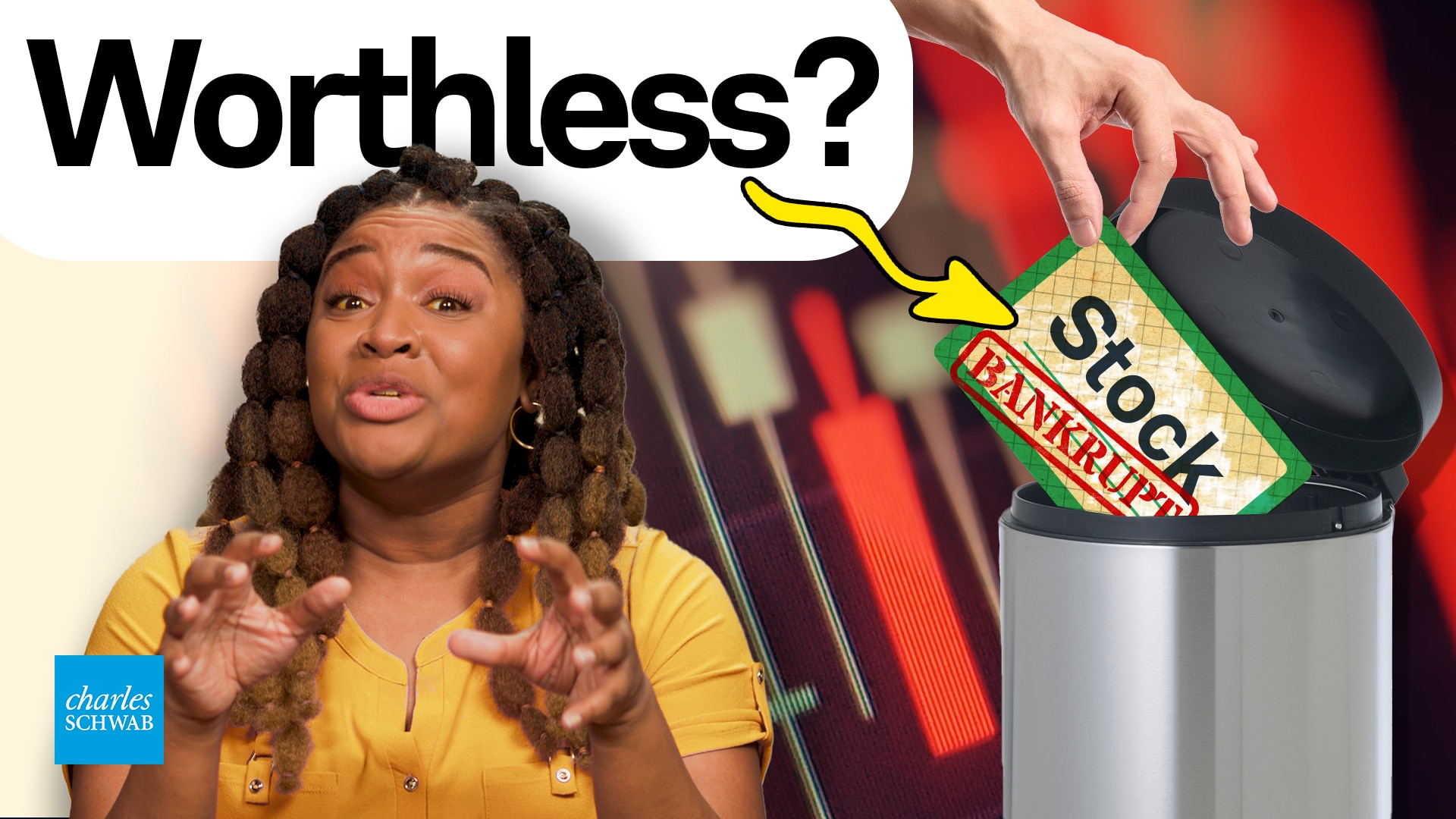
Understanding the Bankruptcy Process: Chapter 11 vs. Chapter 7
When a publicly-traded company in the United States can no longer meet its debt obligations, it typically seeks protection under the federal bankruptcy code. The two most common paths are Chapter 11 and Chapter 7, and each has drastically different implications for someone holding the company’s stock.
Chapter 11 Reorganization: A Path to Recovery?
Chapter 11 is often referred to as “reorganization” bankruptcy. Under this filing, the company expresses its intent to keep operating while it restructures its debts and operations to become profitable again. From a business finance perspective, this is a strategic move to freeze creditor collections and renegotiate contracts.
For the common shareholder, Chapter 11 is a double-edged sword. While the company continues to trade and operate, the restructuring plan almost always prioritizes creditors. In the vast majority of Chapter 11 cases, the “old” stock is canceled, and if the company emerges from bankruptcy, “new” stock is issued to the creditors. This means that even if the company survives, the original shareholders are often left with nothing.
Chapter 7 Liquidation: The Final Curtain
Chapter 7 is the end of the road. In a liquidation, the company stops all operations and goes out of business. A court-appointed trustee is assigned to sell off all the company’s assets—real estate, equipment, intellectual property, and inventory—to pay back creditors.
In a Chapter 7 scenario, the stock is effectively worthless. Once the assets are sold and the proceeds are distributed according to the legal hierarchy, there is almost never any residual value left for common shareholders. Trading in the stock usually ceases immediately or moves to the highly illiquid “pink sheets” before being canceled entirely.
The Absolute Priority Rule: Who Gets Paid First?
To understand why stockholders usually lose everything in a bankruptcy, one must understand the “Absolute Priority Rule.” This is a fundamental principle of business finance that dictates the order in which stakeholders are compensated during a liquidation or reorganization.
Secured Creditors and Bondholders
At the top of the food chain are the secured creditors. These are typically banks or institutional lenders that have provided loans backed by specific collateral, such as property or equipment. Following them are the unsecured creditors, which include bondholders, suppliers, and employees (for unpaid wages).
Because bondholders are essentially lenders to the company, they have a legal “contractual” right to be paid before any equity holder. In a bankruptcy, bondholders often receive cents on the dollar, or they may receive the majority of the equity in the “new” reorganized company. If the bondholders aren’t being paid in full, the law dictates that those below them—the shareholders—cannot receive anything.
Preferred vs. Common Shareholders
Within the equity class itself, there is a hierarchy. Preferred shareholders have a higher claim on assets and earnings than common shareholders. If there is any money left after all creditors and bondholders are paid (which is rare), preferred shareholders are next in line.
Common shareholders are at the very bottom of the pyramid. They are the “residual claimants” of the corporation. This means they only have a right to assets that remain after every other legal obligation has been satisfied. In the world of high-stakes investing, this makes common stock the highest-risk asset class during a corporate collapse.
The Lifecycle of a “Zombie Stock”
When a company files for bankruptcy, its stock doesn’t always disappear from the ticker tape immediately. It often enters a strange, twilight phase where it continues to trade despite having little to no intrinsic value. These are often referred to as “zombie stocks.”

The Transition to the Over-the-Counter (OTC) Markets
Major exchanges like the New York Stock Exchange (NYSE) and NASDAQ have strict listing requirements regarding a company’s share price and financial health. A bankruptcy filing almost always triggers a delisting notice. Once delisted, the stock moves to the Over-the-Counter (OTC) markets, specifically the “Pink Sheets” or the OTCQB.
Trading on the OTC markets is characterized by much lower transparency, lower liquidity, and higher volatility. Institutional investors usually exit their positions immediately, leaving the stock to be traded by retail speculators and day traders.
The “Q” Suffix and Trading Risks
When a company is in bankruptcy proceedings, its ticker symbol is usually modified to include a fifth letter: “Q.” For example, if a company with the ticker ABCD files for Chapter 11, its new ticker on the OTC markets might be ABCDQ. This “Q” is a warning to investors that the company is in bankruptcy.
During this phase, the stock may experience massive price swings based on rumors of a buyout or a favorable restructuring deal. However, investors should be wary. These price spikes are often “dead cat bounces” or the result of short squeezes, and they rarely reflect the actual recovery value for common shareholders.
Tax Implications and Strategic Moves for Investors
While the loss of capital in a bankruptcy is painful, the tax code offers a small silver lining for those involved in personal finance and portfolio management. Knowing how to handle a bankrupt stock on your tax return can help mitigate some of the financial damage.
Declaring a Worthless Security for Tax Losses
If you hold a stock that has been canceled or has become entirely worthless due to bankruptcy, you can claim a capital loss. In the eyes of the IRS, a security that becomes worthless is treated as if it were sold for $0 on the last day of the tax year.
This capital loss can be used to offset capital gains you’ve realized from other investments. If your losses exceed your gains, you can typically use up to $3,000 of the excess loss to offset your ordinary income, with the remainder “carrying over” to future years. This is a critical component of tax-loss harvesting, a strategy used to lower your overall tax liability.
Lessons in Risk Management and Portfolio Diversification
The bankruptcy of a portfolio holding is often a harsh lesson in risk management. Professional investors use this as a prompt to re-evaluate their diversification strategies. Concentrating too much capital in a single sector or a single distressed company exposes an investor to “idiosyncratic risk”—the risk of a specific company failing.
A disciplined approach to business finance involves setting “stop-loss” orders or monitoring a company’s debt-to-equity ratio and interest coverage ratio. When these metrics deteriorate, it is often a sign that the company is heading toward insolvency long before the actual bankruptcy filing occurs.
Case Studies: Historical Examples of Equity Outcomes
Looking at past bankruptcies provides a clear picture of the diverse outcomes for shareholders. While the result is usually a total loss, there are rare exceptions that prove the rule.
The Lehman Brothers Total Loss
The 2008 collapse of Lehman Brothers remains one of the most famous examples of a Chapter 11 filing that resulted in a total wipeout for equity holders. Because the company’s liabilities far exceeded its assets, there was absolutely nothing left for shareholders. The stock went from trading at over $80 a share to zero, serves as a stark reminder of how quickly “blue-chip” equity can evaporate.
The General Motors Rebirth
In 2009, General Motors (GM) filed for a government-backed Chapter 11 reorganization. The “old” GM (Motors Liquidation Company) saw its stock eventually canceled and deemed worthless. A “new” GM was formed, backed by the U.S. Treasury, and issued new shares to the public in 2010. Investors who held the original GM stock prior to the bankruptcy were not given shares in the new company; their investment was effectively gone, even though the brand and the company survived.
The Rare Case of Hertz
In 2020, the rental car giant Hertz filed for Chapter 11 during the height of the COVID-19 pandemic. In a highly unusual turn of events, a massive surge in used car prices significantly increased the value of Hertz’s fleet (its primary asset). This, combined with a bidding war between investment firms, resulted in a restructuring plan where common shareholders actually received a small recovery in the form of cash and warrants for the new company. While this is an extreme outlier, it highlights why some speculators are willing to gamble on bankrupt stocks.

Conclusion
When a company goes bankrupt, the stock is generally the last thing on the legal system’s priority list. Whether through Chapter 7 liquidation or Chapter 11 reorganization, the common shareholder occupies the most vulnerable position in the corporate structure. While the stock may continue to trade as a “zombie” on the OTC markets, the fundamental reality is that equity is usually canceled to make room for creditor repayment.
For the savvy investor, the best defense against bankruptcy is a proactive offense: rigorous financial analysis, an understanding of debt structures, and the discipline to exit a position when the balance sheet begins to crumble. Bankruptcy is a fundamental part of the economic cycle, serving as a mechanism to clear out inefficient businesses, but for the individual investor, it is a reminder that in the world of money and investing, the return of your capital is often more important than the return on your capital.
aViewFromTheCave is a participant in the Amazon Services LLC Associates Program, an affiliate advertising program designed to provide a means for sites to earn advertising fees by advertising and linking to Amazon.com. Amazon, the Amazon logo, AmazonSupply, and the AmazonSupply logo are trademarks of Amazon.com, Inc. or its affiliates. As an Amazon Associate we earn affiliate commissions from qualifying purchases.