
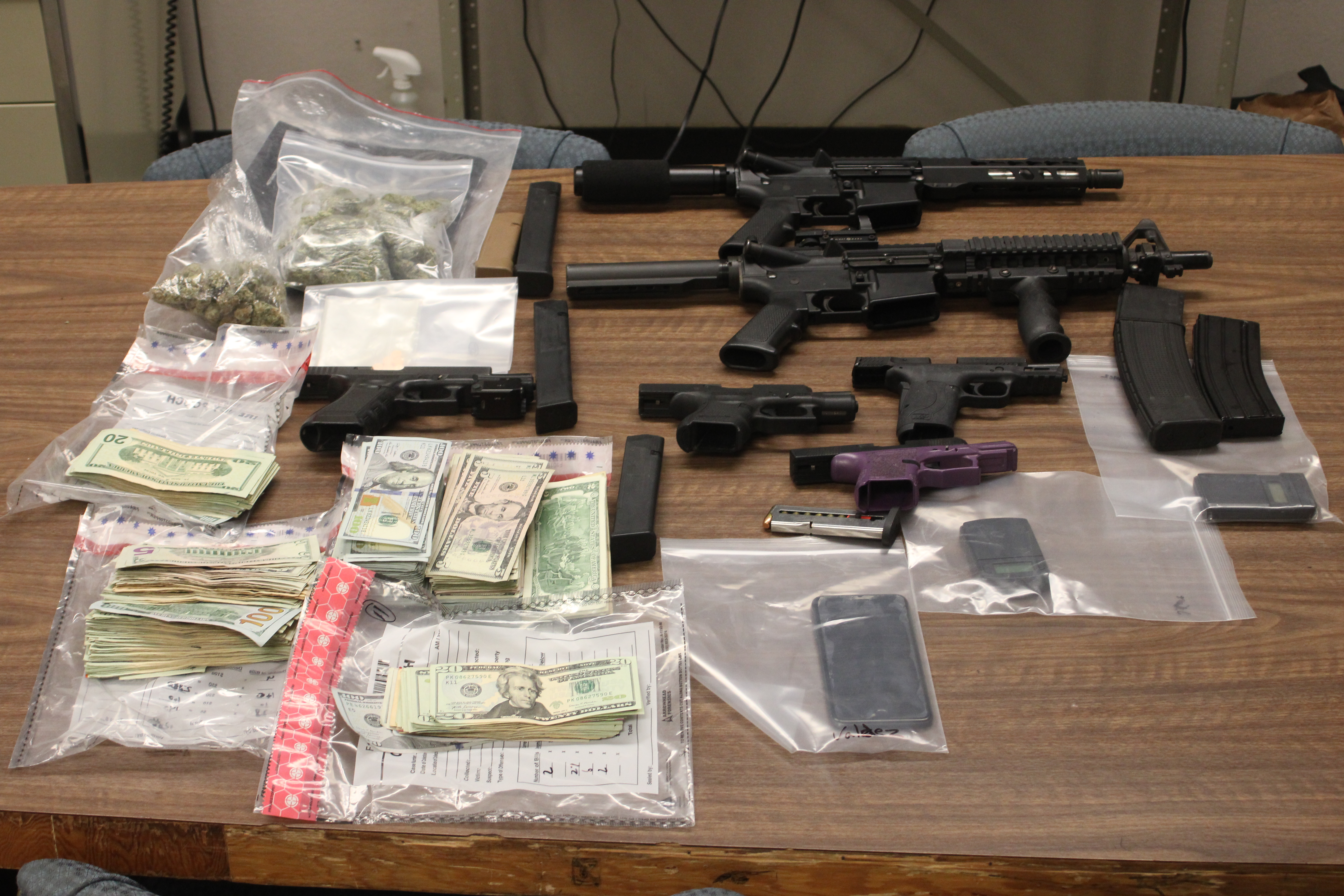
When federal and local law enforcement agencies announce the seizure of millions of dollars in cash during narcotics operations, the images of vacuum-sealed stacks of currency often dominate the headlines. To the public, this money seems like a windfall for the government—a way to replenish public coffers or fund community programs. However, the reality of what happens to seized drug money is a complex, highly regulated financial process governed by the principles of civil and criminal asset forfeiture. Understanding the life cycle of these funds requires a look into the bureaucratic machinery that manages illicit wealth once it is removed from the criminal economy.

The Legal Architecture of Asset Forfeiture
Before seized currency can be integrated into any budget, it must undergo a rigorous legal transition. Asset forfeiture is not a simple act of collection; it is a legal process that requires the government to prove, or in some cases claim, that the currency is the proceeds of illegal activity.
Criminal Versus Civil Forfeiture
The path of seized money depends heavily on whether the forfeiture is criminal or civil. Criminal forfeiture is an action brought against an individual as part of a criminal prosecution. For the government to keep the money, the defendant must be convicted, and the assets must be proven to be linked to the crime. If the defendant is acquitted, the government generally must return the assets.
Civil forfeiture, by contrast, is an action brought against the property itself, rather than the person. Under this framework, the government argues that the currency is “guilty” because it was used in or derived from a crime. This process does not require a criminal conviction, which makes it a powerful—and often controversial—tool for law enforcement. Because the property is the defendant, the burden of proof is significantly lower, allowing agencies to seize funds even when a criminal case against an individual fails to gain traction in court.
The Role of the Department of Justice and Treasury
In the United States, most seized drug money is funneled into two primary funds: the Department of Justice Assets Forfeiture Fund (AFF) and the Department of the Treasury Forfeiture Fund (TFF). These funds serve as centralized accounts where seized cash is deposited, tracked, and eventually redistributed. The administration of these funds is strictly audited to ensure that the money is not merely disappearing into general agency slush funds but is instead being utilized according to congressional mandates.
The Financial Distribution and Management Process
Once the legal hurdles are cleared and the forfeiture is finalized, the seized money enters the government’s financial ecosystem. It is a common misconception that law enforcement agencies simply keep the cash in their own vaults to spend as they see fit. The reality is a structured process of redistribution that is heavily scrutinized by federal oversight committees.
The Equitable Sharing Program
One of the most significant mechanisms for distributing seized funds is the Equitable Sharing Program. This program allows federal agencies to share seized assets with state and local law enforcement agencies that assisted in the investigation. This creates a powerful financial incentive for local police departments to participate in federal task forces.
When a local police department helps a federal agency dismantle a drug trafficking ring, the federal government may transfer a percentage of the seized cash to the local agency. This money is often vital for smaller jurisdictions, providing funding for equipment, training, and specialized tactical gear that might otherwise be unaffordable under constrained municipal budgets. However, this program is subject to stringent reporting requirements to prevent “policing for profit,” ensuring that these funds supplement, rather than replace, regular agency budgets.
Direct Federal Reinvestment
For funds retained by federal agencies, the money is often reinvested into the infrastructure of law enforcement. This includes funding for:
- Investigative Costs: Paying informants, funding undercover operations, and purchasing specialized surveillance technology.
- Victim Restitution: A portion of seized funds is frequently redirected toward compensating victims of crimes, ensuring that the financial impact of criminal enterprises is mitigated for those harmed.
- Operational Training: Funding for advanced forensic training and multi-jurisdictional intelligence centers.
Ethical and Economic Implications of Seized Assets
The massive influx of capital from seized narcotics operations raises significant questions about the intersection of law enforcement and financial strategy. While the intention is to drain the economic power of criminal organizations, the financial incentives built into the system have profound consequences for how police work is prioritized.
The Problem of Financial Incentives
Critics argue that the potential for law enforcement agencies to keep a portion of seized assets creates a moral hazard. If a police department knows that seizing large amounts of cash will result in a direct budgetary boost, they may prioritize cases involving high-value financial assets over other types of crime. This can distort police priorities, leading to the “seizure-first” mentality where the focus shifts from public safety to asset accumulation.
Economically, this turns law enforcement into a self-sustaining enterprise, which removes a key layer of democratic accountability. When an agency is reliant on seized funds to purchase armored vehicles or high-tech surveillance equipment, they become less dependent on local government appropriations. This detachment from the budgetary oversight of city councils or state legislatures can lead to a lack of transparency regarding how these agencies are equipped and how they operate.
Economic Deterrence and Criminal Disruption
Proponents of the system argue that asset forfeiture is one of the most effective ways to disrupt organized crime. Drug trafficking is, at its core, a business. By systematically stripping these enterprises of their liquidity, the government makes the business model unsustainable. Seizing the cash does more than just punish the traffickers; it prevents that capital from being reinvested into further illegal activities, such as human smuggling or the expansion of narcotics distribution networks. From a macro-financial perspective, these forfeitures act as a “tax” on criminal enterprise, albeit one that is collected through the legal system.
Accountability and Future Reforms
As digital currencies and international money laundering schemes become more sophisticated, the process of seizing drug money is evolving. The traditional method of seizing stacks of physical cash is increasingly being replaced by the freezing of digital assets and cryptocurrency wallets. This shift presents new challenges for the Department of Justice and the Department of the Treasury.
Adapting to the Digital Frontier
The rise of Bitcoin and other decentralized assets has forced law enforcement to develop new financial forensic capabilities. Seizing a hard drive containing private keys is vastly different from entering a warehouse and seizing crates of cash. The government now employs specialized cyber-crime units to track digital footprints, and the laws governing the forfeiture of digital assets are currently in a state of rapid development. The goal remains the same—to liquidate the assets and integrate them into the forfeiture funds—but the technical execution requires a higher level of financial expertise.

Strengthening Oversight
To combat the criticism surrounding the Equitable Sharing Program and the potential for abuse, there have been ongoing calls for increased transparency. Legislative efforts often aim to mandate public disclosure of how seized money is spent at the local level. By requiring departments to publish annual reports detailing every dollar received through forfeiture and exactly what equipment or service that dollar purchased, the government aims to restore public trust.
Ultimately, the money seized from drug trafficking operations represents a redistribution of wealth from the criminal underworld to the state. While it serves as a critical tool for funding law enforcement and compensating victims, its management requires a delicate balance. Without rigorous oversight, the pursuit of seized wealth risks corrupting the very agencies tasked with upholding the law. As the financial landscape of crime continues to modernize, the mechanisms for managing these funds must also remain transparent, accountable, and strictly aligned with the principles of justice rather than the pursuit of profit. The life cycle of seized drug money is a story of legal friction, economic incentive, and the constant, evolving struggle to manage the spoils of the war on drugs.
aViewFromTheCave is a participant in the Amazon Services LLC Associates Program, an affiliate advertising program designed to provide a means for sites to earn advertising fees by advertising and linking to Amazon.com. Amazon, the Amazon logo, AmazonSupply, and the AmazonSupply logo are trademarks of Amazon.com, Inc. or its affiliates. As an Amazon Associate we earn affiliate commissions from qualifying purchases.