
The fundamental building blocks of our physical reality are defined by a delicate balance. At the heart of every atom lies a nucleus composed of protons and neutrons, orbited by a cloud of electrons. In a standard, neutral state, the number of negatively charged electrons perfectly matches the number of positively charged protons within the nucleus. However, this equilibrium is not always static. When an atom loses an electron, it undergoes a transformative process that alters its physical and chemical identity, a phenomenon that powers everything from the internal logic of your smartphone’s processor to the high-speed data transmission in modern fiber optics. In the realm of technology, understanding these subatomic shifts is the key to mastering semiconductors, sensors, and energy storage.

The Physics of Ionization and the Birth of Charge Carriers
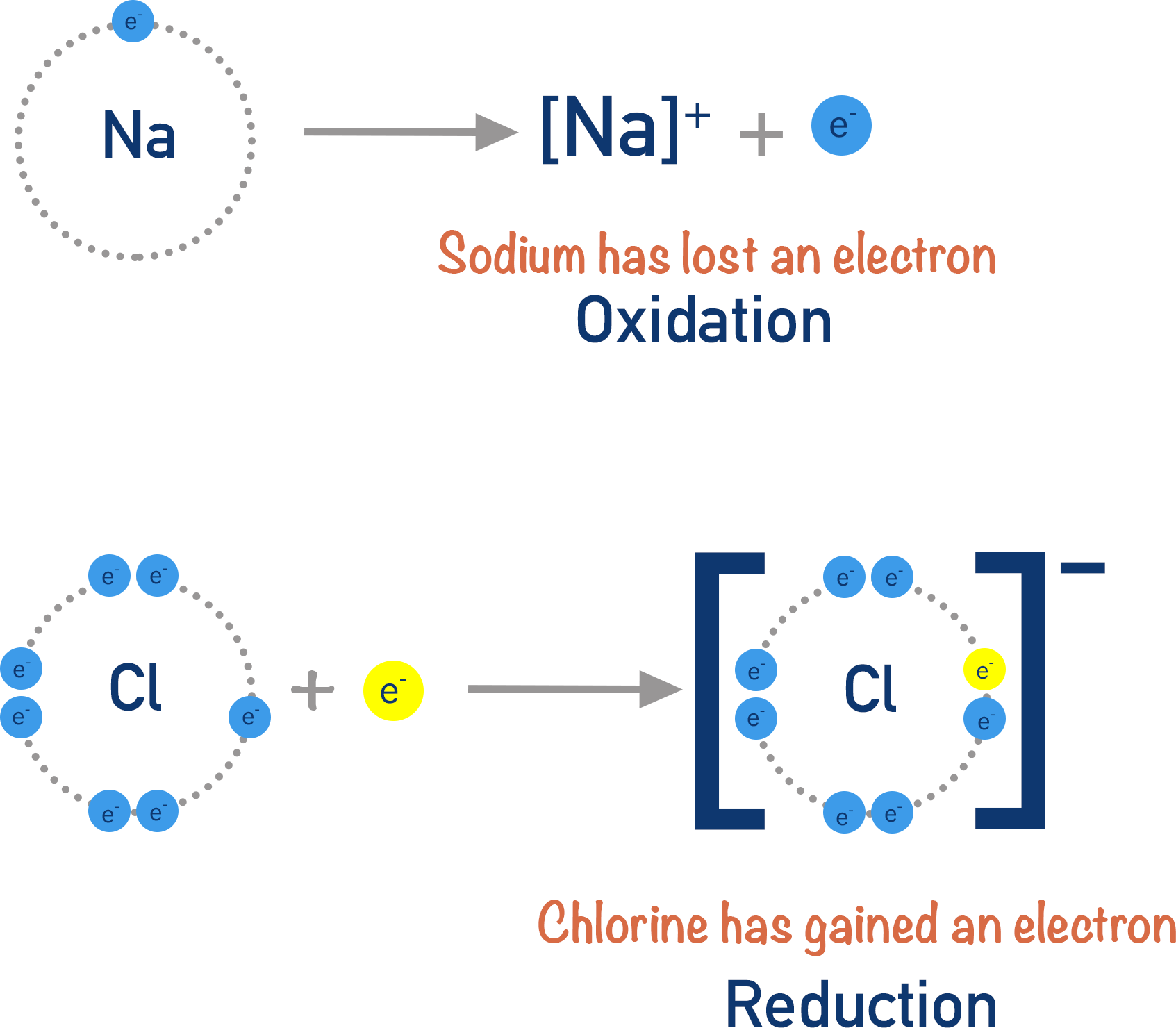
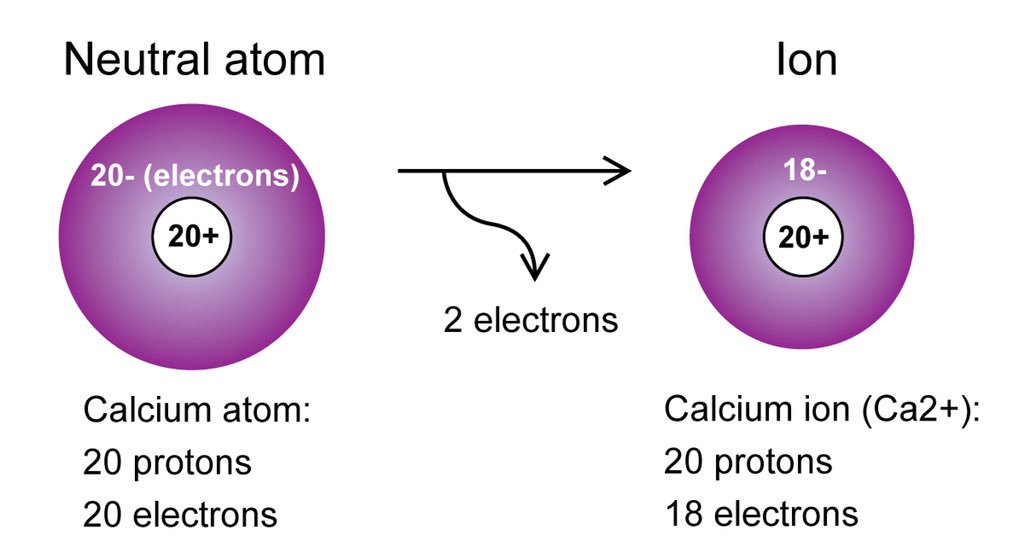
When an atom loses an electron, the balance of electrical charge is disrupted. Because the atom now possesses more protons than electrons, it gains a net positive charge. This charged entity is no longer referred to as an atom in its baseline state; it is now an ion—specifically, a cation. This transition, known as ionization, is the cornerstone of how electronic devices process and store information.
From Neutrality to Polarity
The process of losing an electron typically requires an input of energy, known as the ionization energy. In the vacuum of space, this might happen through high-energy radiation or collisions with other particles. In the context of solid-state technology, this happens through the controlled application of electric fields or through thermal agitation. Once the electron is liberated, the remaining structure becomes highly reactive. It seeks to regain stability by pulling electrons from neighboring atoms, creating a chain reaction of charge movement that we interpret as an electrical current.
The Role of Valence Electrons
Not every electron in an atom is equally likely to be lost. The electrons residing in the outermost shell, known as valence electrons, are the least tightly bound to the nucleus. Technology relies almost exclusively on these outer-shell electrons. By engineering materials where these electrons can be easily manipulated, scientists create the conductors and insulators that form the backbone of all computing hardware.
Semiconductors: The Silicon Revolution
The most significant application of the “loss of an electron” principle is found in semiconductor technology, specifically silicon-based transistors. Silicon is a tetravalent element, meaning it has four valence electrons. In a pure crystal, these electrons are locked into covalent bonds with neighboring atoms, creating an insulator. However, by introducing specific impurities—a process known as “doping”—we can intentionally manipulate the ease with which these atoms lose electrons.
N-Type and P-Type Materials
In N-type (negative) silicon, impurities with five valence electrons are introduced. The extra electron is loosely held, allowing it to migrate easily through the material when a voltage is applied. In P-type (positive) silicon, elements with three valence electrons are used. This creates “holes”—effectively, an absence of an electron where one should be. When an atom in this lattice loses an electron, it leaves a hole that neighboring electrons rush to fill, creating a dynamic flow of positive charge carriers.
The Logic of the Transistor
The transistor, the basic building block of all modern digital logic, functions by controlling the flow of these liberated electrons. By applying a gate voltage, the device can effectively “command” an atom or a region of atoms to shed or retain electrons. This binary state—a high-energy state representing a “1” and a low-energy state representing a “0”—is the language of all software, AI models, and digital interfaces. Without the ability of atoms to lose and reclaim electrons in a controlled fashion, the miniaturization of processors to the nanometer scale would be physically impossible.
Electromagnetism and Data Transmission
Beyond the micro-level of the processor, the loss of an electron is vital for the movement of information across global networks. In copper wiring, the loss of electrons from copper atoms is what permits electricity to flow from power grids to our devices. In fiber optics, we manipulate electrons at the transmitter level to modulate light, but the underlying drive to push signals across the wire depends on the mobility of electrons within metallic lattices.
Ionization in Modern Sensors
Think about the digital camera sensor in your smartphone. When light hits the pixel array, it contains energy sufficient to knock electrons loose from the silicon atoms that make up the sensor. This is known as the photoelectric effect. By counting the number of electrons liberated from the atoms in each pixel, the camera software determines the intensity and color of the light. Every photograph you take is essentially a precise map of where electrons were liberated from atoms by incoming photons.
Energy Storage and Battery Chemistry
The battery—the limiting factor of all mobile technology—is a direct application of electron exchange. In a lithium-ion battery, lithium atoms at the anode lose an electron. The electron is forced through the external circuit to power your device, while the positively charged lithium ion (having lost its electron) travels through an electrolyte separator to the cathode. Charging the battery is simply the process of forcing those electrons back into the lithium atoms, returning them to their neutral, stable state. Understanding the atom’s tendency to lose and regain electrons allows engineers to design batteries that hold more energy and recharge faster, directly influencing the evolution of portable tech.
Future Frontiers: Quantum Computing and Beyond
As we push the boundaries of conventional silicon computing, our focus is shifting toward systems that operate on the fringes of atomic manipulation. Quantum computing, for instance, does not rely on the simple movement of electrons, but rather on the quantum states of individual atoms or ions.
Trapped Ion Technology
One of the most promising paths to building a stable quantum computer involves trapping individual charged ions in electromagnetic fields. By losing an electron, the atom becomes charged, allowing us to manipulate its position and state using lasers and magnetic fields. Because the atom is now an ion, we can “hold” it in place with high precision, using its internal energy states to perform complex calculations that classical computers cannot handle.
The Limits of Miniaturization
As transistors shrink toward the size of individual molecules, the “loss of an electron” becomes a source of instability known as quantum tunneling. At this scale, electrons can spontaneously leap between atoms, bypassing the gate controls of a transistor. This “leakage” is one of the primary hurdles for current AI hardware development. Engineers are now racing to design materials where the loss and retention of electrons can be contained even at the sub-nanometer scale, ensuring that the “0s” and “1s” of our future AI models remain distinct and accurate.
The journey of an electron—from being bound to a stable nucleus to being liberated and harnessed—is the fundamental narrative of modern technology. Every time a message is sent, a file is saved, or a neural network trains on a dataset, it is the result of trillions of atoms losing and regaining electrons in a orchestrated dance of physics. By mastering this atomic behavior, we have transformed the physical world into a digital landscape, proving that the most profound technological advancements are often hidden within the microscopic transitions of the smallest particles in existence.
aViewFromTheCave is a participant in the Amazon Services LLC Associates Program, an affiliate advertising program designed to provide a means for sites to earn advertising fees by advertising and linking to Amazon.com. Amazon, the Amazon logo, AmazonSupply, and the AmazonSupply logo are trademarks of Amazon.com, Inc. or its affiliates. As an Amazon Associate we earn affiliate commissions from qualifying purchases.