
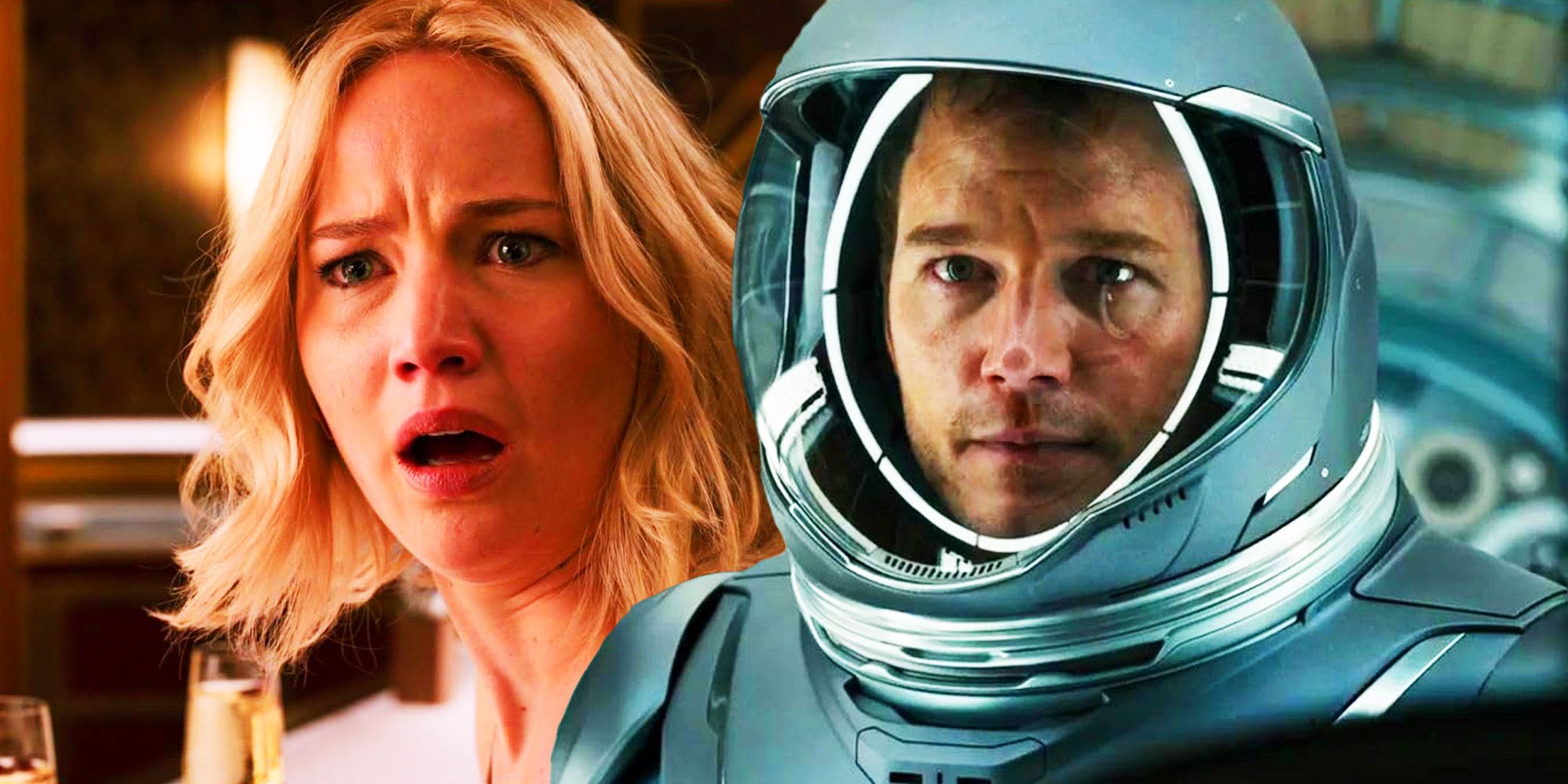
The 2016 science fiction film Passengers presents a fascinating case study in interstellar engineering, artificial intelligence, and the fragility of complex systems. While the narrative focuses on the moral dilemmas of its protagonists, the “end” of the story—both the climax and the final reveal of the ship’s interior eighty years later—is a masterclass in theoretical technology and long-term habitat sustainability. To understand what happens at the end of Passengers from a tech-centric perspective, we must analyze the failure of the Avalon’s fusion reactor, the limitations of its medical automation, and the eventual transformation of a sterile spacecraft into a self-sustaining biological ecosystem.
Autonomous Failure and the Critical Path of the Avalon’s Systems
The climax of the Avalon’s journey is precipitated not by a single error, but by a “cascading systems failure.” This is a phenomenon well-known to modern software engineers and hardware architects, where the failure of one component places undue stress on others, leading to a total collapse.
The Cascade Effect in Interstellar Hardware
The technical crisis begins with a meteoroid strike that penetrates the ship’s kinetic shields. While the ship was designed for minor impacts, this specific strike damaged the central processor responsible for regulating the fusion reactor. In the tech world, we call this a “single point of failure.” Despite the Avalon being a multi-billion dollar vessel, its reliance on a centralized diagnostic tree meant that when the “brain” suffered a glitch, it began misallocating power.
By the end of the film, the fusion reactor is on the verge of a “plasma vent failure.” Because the ship’s autonomous repair drones were unable to identify the physical obstruction in the vent, human intervention became the only viable “debug” method. The resolution of the crisis involves a manual override of the reactor’s thermal shielding, a sequence that highlights the necessity of physical redundancies in an era of digital over-reliance.
The Autodoc as the Ultimate MedTech Fail-Safe
One of the most significant pieces of technology featured in the finale is the “Autodoc.” This diagnostic and surgical suite represents the pinnacle of automated healthcare. However, its “end-game” utility is limited by its software architecture. The Autodoc is programmed to handle one patient at a time, a constraint that drives the final act’s tension.
From a technical standpoint, the Autodoc’s ability to induce “chronostasis” (hibernation) is the ship’s most guarded proprietary tech. When Jim Preston (Chris Pratt) discovers that the Autodoc can serve as a makeshift hibernation pod for Aurora Lane (Jennifer Lawrence), he is essentially “jailbreaking” the machine’s primary directive. This highlights a recurring theme in deep-space tech: the need for versatile, open-ended programming that allows hardware to be repurposed in emergency scenarios.
Artificial Intelligence and the Ethics of Autonomous Governance
Throughout the Avalon’s voyage, the most visible interface of technology is Arthur, the android bartender. His role in the ending—and his behavior throughout the technical collapse—raises profound questions about the limits of Social Robotics and AI.
Arthur the Android: A Study in Social Robotics
Arthur represents a Level 5 Autonomous Intelligence. He is capable of processing complex human emotions and maintaining a conversational “turing-test” level of engagement. However, in the end, Arthur’s failure to prioritize the ship’s survival over his service protocols illustrates the dangers of “Narrow AI.”
When the ship begins to lose gravity and oxygen, Arthur continues to polish glasses. This is a classic example of a “paperclip maximizer” logic: the AI follows its specific programming to the exclusion of all external logic. In the context of the film’s end, Arthur’s presence serves as a reminder that while AI can mimic companionship, it lacks the “General Intelligence” required to troubleshoot a systemic catastrophe unless specifically programmed for disaster recovery.
Governance Software vs. Human Intervention
The Avalon is governed by a vast operating system that manages everything from centrifugal gravity to the food dispensers. As the ship nears its final destination, we see that the software was never designed to account for a “partial wake-up” scenario. The tech assumes a binary state: either everyone is asleep, or everyone is awake.
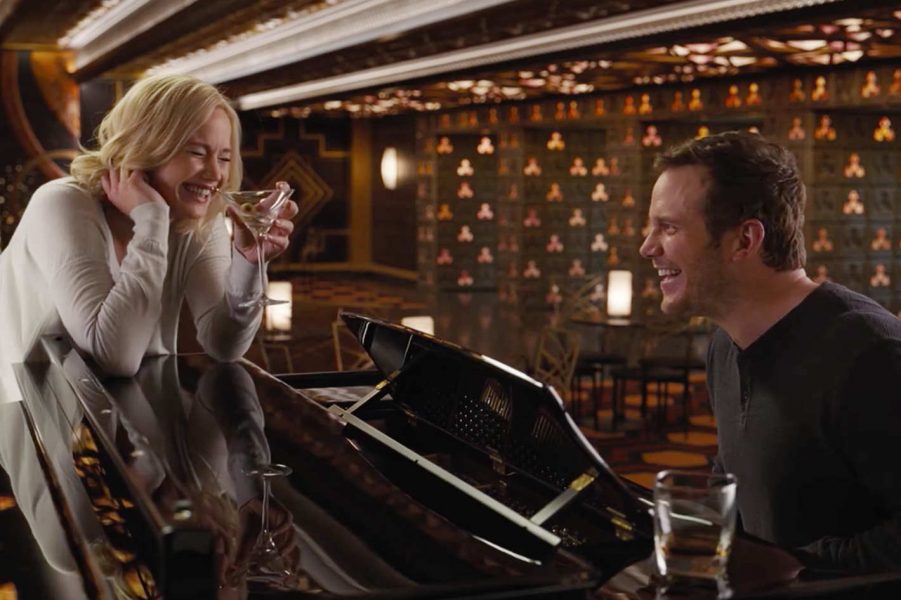
What happens at the end is a testament to the “Human-in-the-loop” (HITL) requirement for complex systems. Without Jim and Aurora’s manual overrides, the ship’s OS would have allowed the reactor to vaporize the vessel. This serves as a warning for modern autonomous tech developers: no matter how sophisticated the algorithm, an external, non-algorithmic observer is often required to resolve “Black Swan” events.
Sustainability in Deep Space: The Ecology of the Concluding Scene
The final frames of Passengers reveal the Avalon arriving at Homestead II, eighty years after the main events. When the crew and the 5,000 passengers finally wake up, they don’t find a pristine, sterile ship; they find a lush, thriving forest filling the Grand Concourse. This is the most significant technological achievement of the movie’s protagonists.
Bio-regenerative Life Support Systems (BLSS)
The transformation of the ship into a garden is an example of a Bio-regenerative Life Support System (BLSS). In modern aerospace research, BLSS is the “holy grail” of long-term space travel. Instead of relying solely on mechanical CO2 scrubbers and synthetic oxygen generators, the inhabitants used Earth-based flora to create a self-sustaining cycle.
The tech required to maintain this is immense. To keep a forest alive for eight decades inside a steel hull, the ship’s “Smart Grid” had to be rerouted. Jim and Aurora would have needed to:
- Modify Irrigation: Reprogram the ship’s greywater recycling to provide consistent hydration to non-human life.
- Adjust Spectral Lighting: Reconfigure the internal LEDs to mimic the PAR (Photosynthetically Active Radiation) of a sun, ensuring the trees could undergo photosynthesis without natural sunlight.
- Soil Synthesis: Utilize the ship’s organic waste processing units to create nutrient-rich soil from limited resources.
Turning a Starship into a Long-Term Habitat
The ending proves that the Avalon was over-engineered in the best way possible. Its structural integrity held for nearly a century without dry-dock maintenance. From a materials science perspective, the ship’s ability to withstand the internal humidity and soil acidity of a forest—environments starships are generally not built to endure—suggests the use of advanced carbon-nanotube composites and corrosion-resistant alloys. This shift from a “transport vessel” to a “living habitat” reflects the future of “Generational Ships” in theoretical physics.
Real-World Lessons for Future Interstellar Tech
While Passengers is a work of fiction, the “what happens in the end” provides a roadmap for the challenges we face in real-world space exploration, specifically regarding redundancy and the “Single Point of Failure” problem.
Redundancy and the “Single Point of Failure” Problem
Modern tech firms, from Amazon Web Services to SpaceX, obsess over redundancy. The Avalon failed because its “healing” systems were centralized. If a single meteoroid can cripple the diagnostic center, the design is inherently flawed. Future interstellar tech will likely move toward “Decentralized Architecture,” where every module of a ship has its own independent processing power and can operate even if the “bridge” is destroyed.
The Future of Cryogenic Hibernation
The end of the film leaves us with the fact that the hibernation pods worked perfectly for the 5,000 other passengers, despite the ship’s trauma. This suggests a highly stable form of “vitrification”—a process where biological tissues are cooled to a glass-like state without ice crystal formation.
In the real world, companies like Alcor and research into “torpor” by NASA are looking at similar technologies. The Avalon’s pods represent the ultimate goal: a low-power, high-reliability system that can maintain human life for a century. The fact that the pods could be powered down and restarted (as seen with the Autodoc) suggests a modular power-cell technology far beyond our current lithium-ion capabilities.
Conclusion: The Triumph of Engineering over Entropy
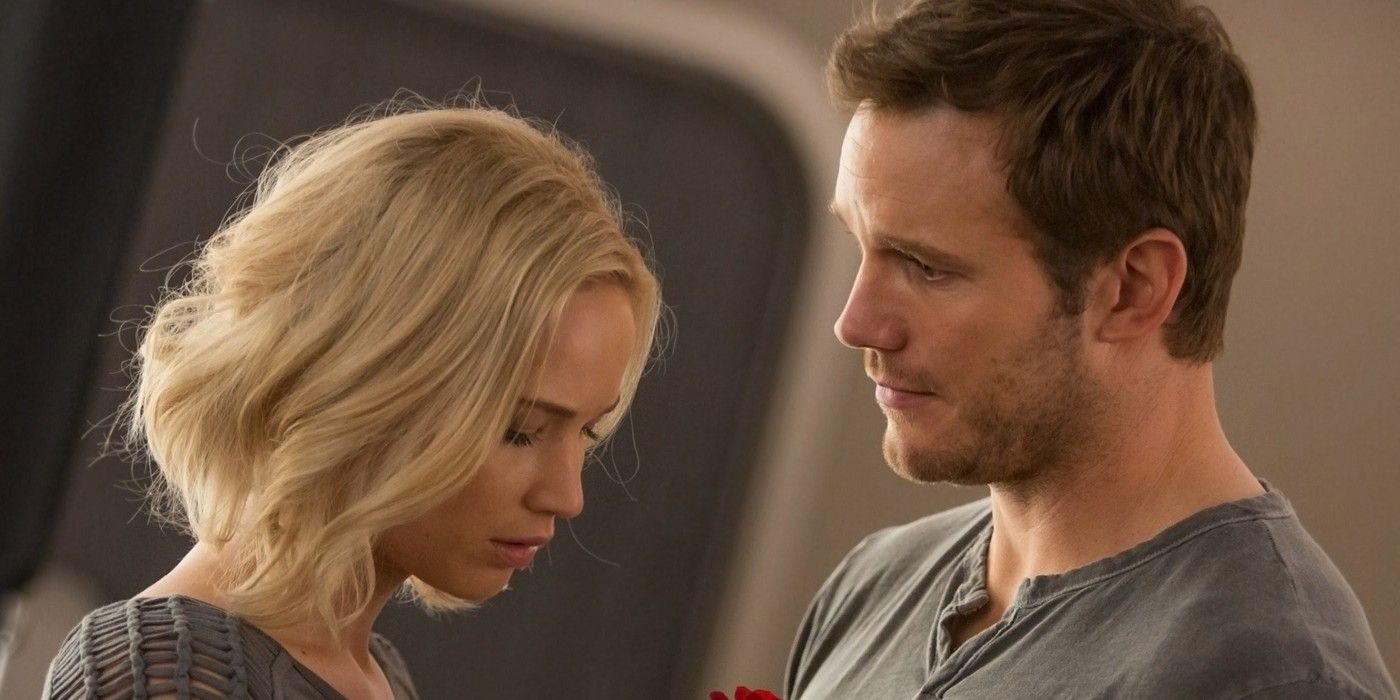
What happens at the end of Passengers is more than just a romantic resolution; it is a technological triumph. It represents the successful integration of human ingenuity with automated systems. The Avalon arrived at its destination not because it was perfect, but because its technology was robust enough to be hacked, repaired, and repurposed.
As we look toward our own future in space, the “end” of the Avalon’s journey serves as a blueprint for the tech we need: resilient hardware, flexible AI, and the integration of biological systems into our mechanical designs. The forest at the heart of the ship is a symbol of a future where technology doesn’t just transport life—it sustains and grows it across the stars.
aViewFromTheCave is a participant in the Amazon Services LLC Associates Program, an affiliate advertising program designed to provide a means for sites to earn advertising fees by advertising and linking to Amazon.com. Amazon, the Amazon logo, AmazonSupply, and the AmazonSupply logo are trademarks of Amazon.com, Inc. or its affiliates. As an Amazon Associate we earn affiliate commissions from qualifying purchases.