
The stock market, often perceived as a complex and exclusive realm, is in reality a cornerstone of modern finance and a vital engine for economic growth. Far from being a mere casino where fortunes are made and lost on whims, it is a sophisticated ecosystem where capital is exchanged, companies raise funds, and investors seek to grow their wealth. Understanding what truly happens within this dynamic environment is crucial for anyone looking to engage with their financial future, from individual savers to large institutional investors. At its essence, the stock market facilitates the buying and selling of shares—small units of ownership in publicly traded companies—connecting those who need capital (companies) with those who have capital to invest (investors). This article will demystify the stock market, exploring its core functions, the forces that drive it, and its profound impact on both personal finance and the global economy.

The Core Function and Ecosystem of the Stock Market
At the heart of the stock market lies a fundamental transaction: the exchange of ownership for capital. This simple premise underpins a vast and intricate network of activities and participants.
Defining the Stock Market: More Than Just a Trading Floor
The term “stock market” often conjures images of bustling trading floors with traders shouting orders, as seen in historical depictions of Wall Street. While such physical exchanges still exist in some forms, the modern stock market is predominantly digital, a vast network of computers and financial institutions connected globally. It is not a single entity but a collection of exchanges (like the New York Stock Exchange, NASDAQ, London Stock Exchange, etc.) and over-the-counter (OTC) markets where stocks, bonds, and other securities are bought and sold. Its primary purpose is to provide a regulated and liquid marketplace for these transactions.
The Dual Role: Capital Formation and Wealth Creation
The stock market serves two critical, interconnected functions. Firstly, it enables capital formation. When a company decides to “go public” through an Initial Public Offering (IPO), it issues shares to investors in exchange for capital. This fresh capital allows the company to fund expansion, research and development, pay down debt, or acquire other businesses. This mechanism is vital for corporate growth and, by extension, economic development. Without access to public markets, many innovative companies would struggle to secure the necessary funding to scale their operations.
Secondly, the market facilitates wealth creation for investors. Individuals and institutions who purchase these shares become part-owners of the company. As the company performs well, grows its profits, and increases its value, the price of its shares typically rises, allowing investors to sell their shares for a profit (capital gains). Additionally, many companies pay out a portion of their profits to shareholders in the form of dividends, providing a regular income stream. This ability to grow wealth over time is a powerful incentive for investors to commit their capital, recycling money back into the productive economy.
Key Players in the Market Arena
Numerous participants contribute to the daily functioning and overall health of the stock market:
- Companies (Issuers): The corporations that issue stocks to raise capital and whose performance dictates much of the market’s activity.
- Investors: Ranging from individual retail investors (you and me) to large institutional investors like mutual funds, pension funds, hedge funds, and insurance companies. They provide the capital in exchange for ownership.
- Brokers: Intermediaries who execute buy and sell orders on behalf of investors. In today’s digital age, online discount brokers have made market access easier and more affordable for retail investors.
- Market Makers: Financial institutions that provide liquidity by continuously quoting both buy and sell prices for a given stock, standing ready to trade. They ensure that there’s always a buyer when someone wants to sell, and a seller when someone wants to buy.
- Exchanges: The platforms (physical or electronic) where buying and selling transactions occur, providing rules and infrastructure.
- Regulators: Government bodies (like the SEC in the U.S. or ESMA in Europe) that oversee the market, ensuring fairness, transparency, and investor protection.
The Mechanics of Buying and Selling Shares
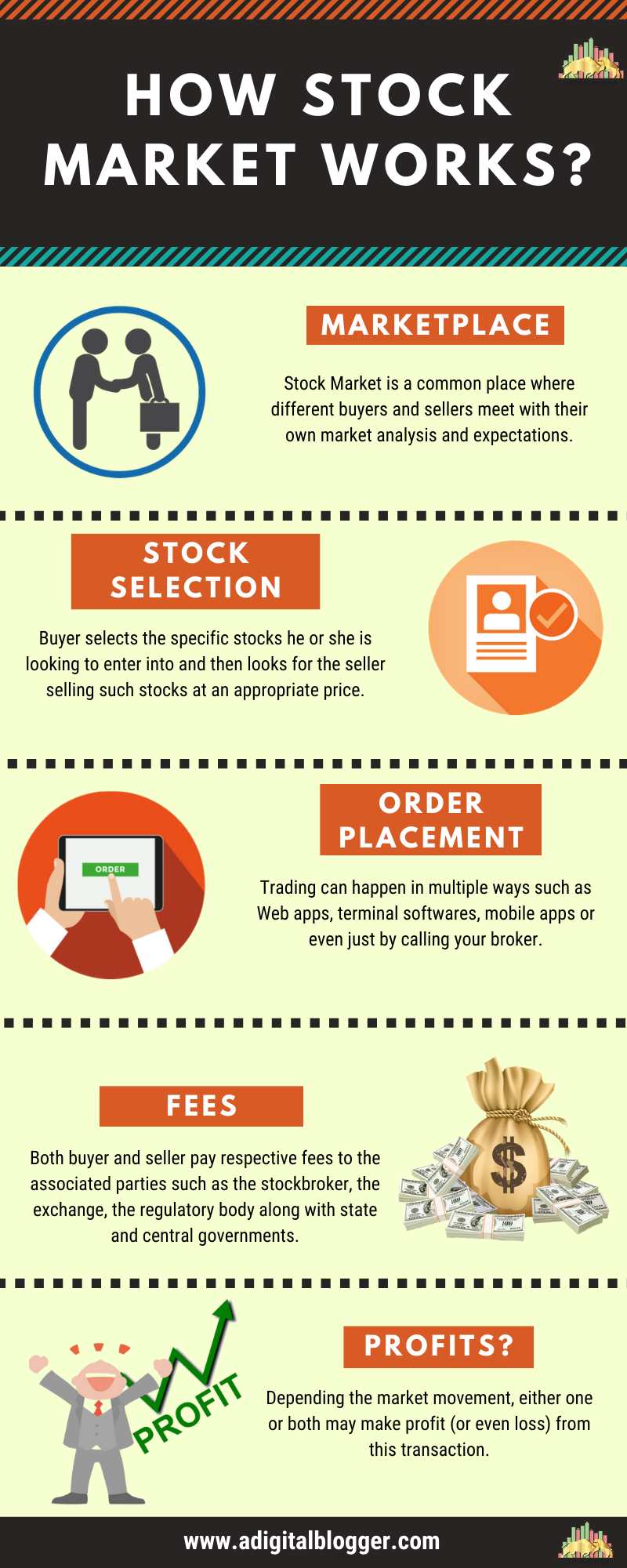
When an investor decides to buy or sell a stock, they typically place an order through a brokerage account. This order specifies the stock’s ticker symbol, the number of shares, and the type of order (e.g., a market order to buy at the best available price, or a limit order to buy or sell at a specific price). The broker then routes this order to an exchange. On the exchange, an electronic system matches buyers with sellers. Once a match is found, the transaction is executed, and ownership of the shares is transferred from the seller to the buyer, usually within a few business days (T+2 settlement). This rapid and efficient matching process is what gives the stock market its characteristic liquidity.
Understanding Stock Market Dynamics and Price Movements
Stock prices are in constant flux, influenced by a myriad of factors. Understanding these dynamics is key to comprehending why prices move the way they do and how market participants make decisions.
Supply, Demand, and Investor Sentiment
At its most fundamental level, stock prices are governed by the classic economic principles of supply and demand. If more investors want to buy a stock than sell it (high demand, low supply), its price will rise. Conversely, if more investors want to sell than buy (low demand, high supply), the price will fall. This dynamic is heavily influenced by investor sentiment, which is the overall attitude of investors towards a particular stock or the market as a whole. Positive news, strong earnings reports, or optimistic economic forecasts can boost sentiment, leading to increased demand. Negative news, scandals, or economic downturns can breed fear and uncertainty, leading to sell-offs.
The Influence of Company Performance and Earnings
While sentiment plays a role, the bedrock of a company’s stock price is its underlying financial health and future prospects. Company performance, particularly its earnings (profits), revenue growth, and future guidance, is a primary driver. When a company consistently reports strong earnings, exceeds analyst expectations, or projects robust future growth, investors are typically willing to pay more for its shares. Conversely, disappointing earnings, reduced forecasts, or operational challenges can lead to significant price declines. Investors are essentially betting on a company’s ability to generate future profits and cash flows, making financial reports crucial data points.
Macroeconomic Factors and Geopolitical Events
The stock market does not operate in a vacuum. Broader macroeconomic conditions significantly impact corporate profitability and investor confidence. Factors such as interest rates, inflation, GDP growth, unemployment rates, and consumer spending can affect an entire market or specific sectors. For instance, rising interest rates can make borrowing more expensive for companies and make bonds (which offer fixed income) more attractive to investors, potentially diverting capital from stocks. Similarly, geopolitical events like trade wars, political instability, or international conflicts can introduce uncertainty, causing widespread market volatility as investors reassess risks. Even natural disasters can have localized or broader market impacts.
Market Orders, Limit Orders, and Volatility
Investors utilize different types of orders to navigate these dynamics. A market order is an instruction to buy or sell immediately at the best available current price. While offering speed, it doesn’t guarantee a specific price, especially in fast-moving markets. A limit order, conversely, allows an investor to specify the maximum price they are willing to pay for a buy order or the minimum price they are willing to accept for a sell order. This offers price control but may mean the order isn’t executed if the market doesn’t reach the specified price.
Volatility—the degree of variation of a trading price series over time—is an inherent characteristic of stock markets. It reflects the speed and magnitude of price changes. While high volatility can present opportunities for quick gains, it also carries increased risk, as prices can drop just as rapidly as they rise. Factors like breaking news, economic data releases, or even large institutional trades can trigger periods of increased volatility.
Navigating the Market: Risks, Rewards, and Participation
Engaging with the stock market involves a balance of potential rewards and inherent risks. Understanding both is critical for informed participation.
The Potential for Capital Growth and Dividends
The primary reward for stock market investors is the potential for capital appreciation. Over the long term, well-chosen stocks from growing companies tend to increase in value, outpacing inflation and other asset classes. Historically, equity markets have delivered superior returns compared to bonds or cash. Beyond capital gains, many companies distribute a portion of their profits to shareholders as dividends. These regular payments provide a passive income stream and can significantly contribute to an investor’s total return, especially for long-term investors focused on income generation. Reinvesting these dividends can also accelerate wealth accumulation through compounding.
Managing Inherent Risks and Market Fluctuations
While rewards are enticing, the stock market carries significant risks. Market risk refers to the risk that the entire market or a broad segment of it will decline, impacting all stocks. Company-specific risk (or idiosyncratic risk) relates to factors unique to a particular company, such as poor management decisions, competitive pressures, or product failures. Liquidity risk might arise if an investor cannot sell their shares quickly enough without significantly impacting the price.
Volatility is a constant companion, meaning prices can fluctuate wildly in short periods. There’s also the risk of loss of principal, where an investor might sell shares for less than they paid, especially if they are forced to sell during a market downturn. Prudent investors manage these risks through diversification (spreading investments across various companies, industries, and asset classes), thorough research, and aligning their investments with their personal risk tolerance and time horizon.
How Individuals and Institutions Participate
Participation in the stock market has become increasingly accessible. Individual retail investors typically open a brokerage account with an online broker, funding it with cash to buy stocks, exchange-traded funds (ETFs), or mutual funds. They conduct their own research or rely on investment advice provided by their broker or financial advisors. Institutional investors, such as pension funds and mutual funds, manage vast sums of money on behalf of their clients or members. They employ teams of analysts and portfolio managers, often engaging in more sophisticated trading strategies and having a significant impact on market movements due to the sheer volume of their trades.
Strategic Approaches for Investors
Investors employ various strategies depending on their goals, risk tolerance, and time horizon. Long-term investing focuses on holding stocks for years, riding out short-term fluctuations, and benefiting from compounding growth and dividends. Value investing involves seeking out stocks that appear to be trading below their intrinsic value, often overlooked by the broader market. Growth investing targets companies expected to grow at an above-average rate. More active traders might engage in swing trading (holding for days or weeks) or day trading (buying and selling within the same day) to capitalize on short-term price movements, though these strategies carry significantly higher risk and require considerable expertise. Regardless of the strategy, continuous learning, disciplined execution, and adherence to a well-defined investment plan are crucial.
The Broader Economic Significance of Stock Markets
Beyond individual investors and companies, the stock market plays a crucial, often underestimated, role in the broader economy.
Reflecting Economic Health and Future Expectations
The stock market is often considered a leading economic indicator. Its performance can reflect the collective expectations of investors about future economic conditions and corporate profitability. A rising market generally signals optimism about economic growth, employment, and corporate earnings. Conversely, a prolonged decline in stock prices can indicate investor apprehension about an impending recession or economic slowdown. While not a perfect predictor, major market shifts often precede changes in the real economy, making stock market indices closely watched by economists and policymakers.
Facilitating Innovation and Corporate Expansion
By providing a platform for companies to raise capital, the stock market directly fuels innovation and corporate expansion. Startups and established companies alike can access the funds needed to invest in new technologies, develop new products, expand into new markets, and create jobs. This capital allocation mechanism efficiently channels savings from investors into productive enterprises, driving technological advancement and economic progress. Without vibrant stock markets, many groundbreaking companies might never get off the ground or reach their full potential, stifling innovation.

The Role of Regulation and Market Integrity
To ensure fairness, transparency, and investor confidence, stock markets are heavily regulated. Regulatory bodies establish rules regarding disclosure requirements, insider trading, market manipulation, and the conduct of brokers and exchanges. These regulations are designed to protect investors from fraud and ensure that all market participants have access to timely and accurate information. A high degree of market integrity is paramount; without it, investor trust erodes, capital flees, and the market’s ability to perform its vital functions diminishes. Continuous efforts are made to adapt regulations to new technologies and evolving market practices, maintaining a delicate balance between oversight and fostering market efficiency.
In conclusion, “what happens in a stock market” is a complex interplay of capital, information, psychology, and regulation. It is where dreams of entrepreneurial expansion meet the aspirations of wealth creation. Far from being an abstract financial concept, it is a dynamic, interconnected system that impacts everything from the price of your morning coffee to the funding for the next medical breakthrough. A nuanced understanding of its workings is not just for financiers; it is an essential component of financial literacy in the modern world.
aViewFromTheCave is a participant in the Amazon Services LLC Associates Program, an affiliate advertising program designed to provide a means for sites to earn advertising fees by advertising and linking to Amazon.com. Amazon, the Amazon logo, AmazonSupply, and the AmazonSupply logo are trademarks of Amazon.com, Inc. or its affiliates. As an Amazon Associate we earn affiliate commissions from qualifying purchases.