
Maintaining the health of your vehicle is a fundamental aspect of personal finance and asset management. When you invest in a car, you are managing a depreciating asset that requires consistent, cost-effective maintenance to maximize its lifespan and minimize repair bills. One of the most common yet avoidable mistakes in vehicle maintenance is overfilling the engine oil. While it might seem like adding a little extra oil provides a “cushion” for the engine, it actually triggers a cascade of mechanical issues that can lead to significant financial loss. Understanding the fiscal impact of poor maintenance is essential for every savvy car owner who wants to protect their investment.
The Financial Implications of Mechanical Neglect
From a personal finance perspective, your vehicle represents a significant capital outlay. Repairing an engine damaged by improper fluid levels is one of the most expensive headaches an owner can face. When you overfill the oil, you aren’t just creating a mess; you are actively inducing wear and tear that will inevitably manifest as a hefty invoice at the repair shop.
The True Cost of Engine Repair
Engine components such as gaskets, seals, and catalytic converters are engineered to operate within specific tolerances. When the oil level exceeds the manufacturer’s recommendations, the internal pressure within the crankcase rises dramatically. This pressure forces oil into areas where it does not belong, leading to premature failure of seals that are costly to replace. If the issue is ignored, the resulting damage—such as a blown head gasket or a ruined catalytic converter—can cost thousands of dollars, effectively wiping out the savings you might have gained by performing your own oil changes or extending maintenance intervals.
Long-Term Value Depreciation
Vehicles are assets that suffer from depreciation, but this rate can be accelerated by poor maintenance records and physical damage. A car that has suffered internal engine damage due to overfilling often requires extensive repairs that may be noted in a vehicle history report. Furthermore, if the oil overfill causes the engine to run poorly, its resale value drops significantly. Savvy buyers and dealerships inspect engines for signs of leaks or smoke, both of which are symptoms of having too much oil. Protecting your vehicle’s mechanical integrity is, quite literally, protecting your net worth.
How Overfilling Damages Your Engine
Understanding the mechanics of why too much oil is detrimental helps clarify why it is a fiscal liability. The engine is a complex system of moving parts designed to operate in a specific environment. Introducing excess fluid disrupts the balance of this system in several distinct ways.
The Aeration Phenomenon
When the oil level is too high, the crankshaft—which spins at high velocities—begins to hit the surface of the oil reservoir (the oil pan). This is often referred to as “churning.” As the crankshaft whips through the oil, it turns the lubricant into a frothy, aerated foam.
Oil is intended to be a liquid, not a gas-filled foam. Because foam is compressible and inconsistent, it cannot provide the necessary hydraulic pressure required to lubricate the engine bearings. This leads to increased friction, elevated engine temperatures, and, in severe cases, catastrophic internal failure. From a financial standpoint, a ruined engine block is often a total loss, forcing many owners to consider replacing the vehicle entirely.

Pressure Buildup and Seal Failure
Internal combustion engines are sealed systems. They rely on gaskets and seals to keep oil inside the engine and debris out. When there is too much oil, the increased volume occupies the space intended for air, leading to a rise in crankcase pressure. This pressure seeks the path of least resistance. Often, that path is through the main seals or valve cover gaskets. Once a seal is breached, oil begins to leak onto the exterior of the engine and potentially onto hot exhaust components. The cost of replacing these gaskets is primarily labor-intensive, making it a high-cost repair job that could have been avoided with a simple dipstick check.
The Catalytic Converter Risk
Perhaps the most expensive hidden cost of overfilling oil is the damage to the exhaust system. If the crankcase pressure forces oil past the piston rings or into the combustion chamber, it is burned alongside the fuel. This creates thick, blue-tinted exhaust smoke. The oil vapors eventually make their way through the exhaust system and into the catalytic converter.
Catalytic converters are precious-metal-lined components designed to filter emissions. They are notoriously expensive to replace. When they become clogged with oil residue, they fail, causing the vehicle to fail emissions testing. Replacing a catalytic converter can easily cost between $1,000 and $2,000, turning a simple DIY oil change mistake into a major financial event.
Proactive Maintenance and Financial Protection
Avoiding the pitfalls of overfilling is a matter of discipline and standardizing your maintenance procedures. Viewing your car as a piece of business equipment rather than just a convenience allows you to approach maintenance with the necessary rigor to ensure longevity.
The Importance of Precise Measurement
Always use the manufacturer’s specified oil capacity, which can be found in the owner’s manual or on the oil cap itself. Many people make the mistake of adding the entire bottle of oil without checking the dipstick, failing to account for the residual oil that remains in the engine galleries after a drain. The most cost-effective way to manage your maintenance is to add slightly less oil than the total capacity, let the engine run for a moment, and then check the dipstick. You can always add more, but removing excess oil is a messy and time-consuming process that often requires specialized tools.
Monitoring for Symptoms
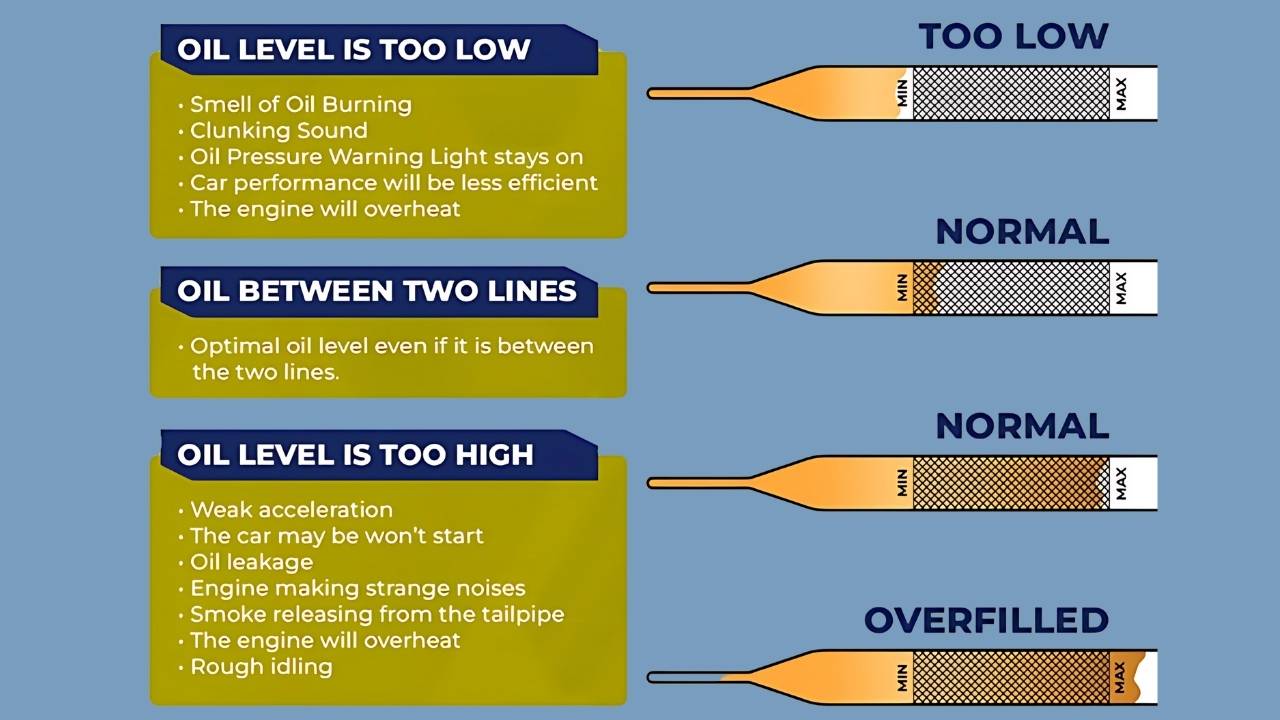
If you suspect you have overfilled your engine, catch the symptoms early to avoid expensive downstream repairs:
- Blue Exhaust Smoke: This indicates oil is being burned, often due to high pressure forcing oil into the combustion chamber.
- Oil Leaks: Inspect your driveway for fresh spots. An overfilled engine will often push oil out through the weakest seal.
- Engine Noise: If the oil has become aerated and is failing to lubricate components, you may hear knocking or ticking sounds.
- Performance Issues: A sluggish engine or reduced fuel economy can be a sign that the engine is struggling to overcome the internal drag caused by excessive oil.

The ROI of Professional Consultation
While DIY maintenance is a fantastic way to save money, it is important to know your limits. If you are uncomfortable with the technical aspects of checking levels or disposing of fluids, paying a professional technician for a routine oil change is a sound financial decision. The cost of a professional service is minuscule compared to the cost of replacing an engine or a catalytic converter.
If you do accidentally overfill your car, do not ignore it. The most economical approach is to drain the excess oil immediately. Whether you use a fluid extraction pump through the dipstick tube or loosen the drain plug on the oil pan, removing the excess fluid is a small time investment that prevents thousands of dollars in potential future damage.
By treating your car with the same fiscal responsibility you apply to your investment portfolio, you ensure that your vehicle remains a reliable asset rather than a liability. Proper fluid management is the cornerstone of vehicle longevity. When you prioritize the health of your engine, you are protecting your wallet from the unnecessary and preventable costs associated with mechanical negligence. Consistency, accuracy, and quick action when issues arise are the hallmarks of a smart car owner who understands the value of their property.
aViewFromTheCave is a participant in the Amazon Services LLC Associates Program, an affiliate advertising program designed to provide a means for sites to earn advertising fees by advertising and linking to Amazon.com. Amazon, the Amazon logo, AmazonSupply, and the AmazonSupply logo are trademarks of Amazon.com, Inc. or its affiliates. As an Amazon Associate we earn affiliate commissions from qualifying purchases.