
In the world of personal finance and risk management, we often discuss the importance of calculating the “return on investment” or the “cost of a mistake.” Usually, these discussions revolve around stock market volatility, real estate bubbles, or high-interest debt. However, one of the most lopsided financial ratios a person can encounter occurs inside a pressurized metal tube at 35,000 feet. While a single cigarette might cost less than a dollar, lighting it on a commercial flight can result in a financial liability exceeding the annual salary of most middle-class professionals.

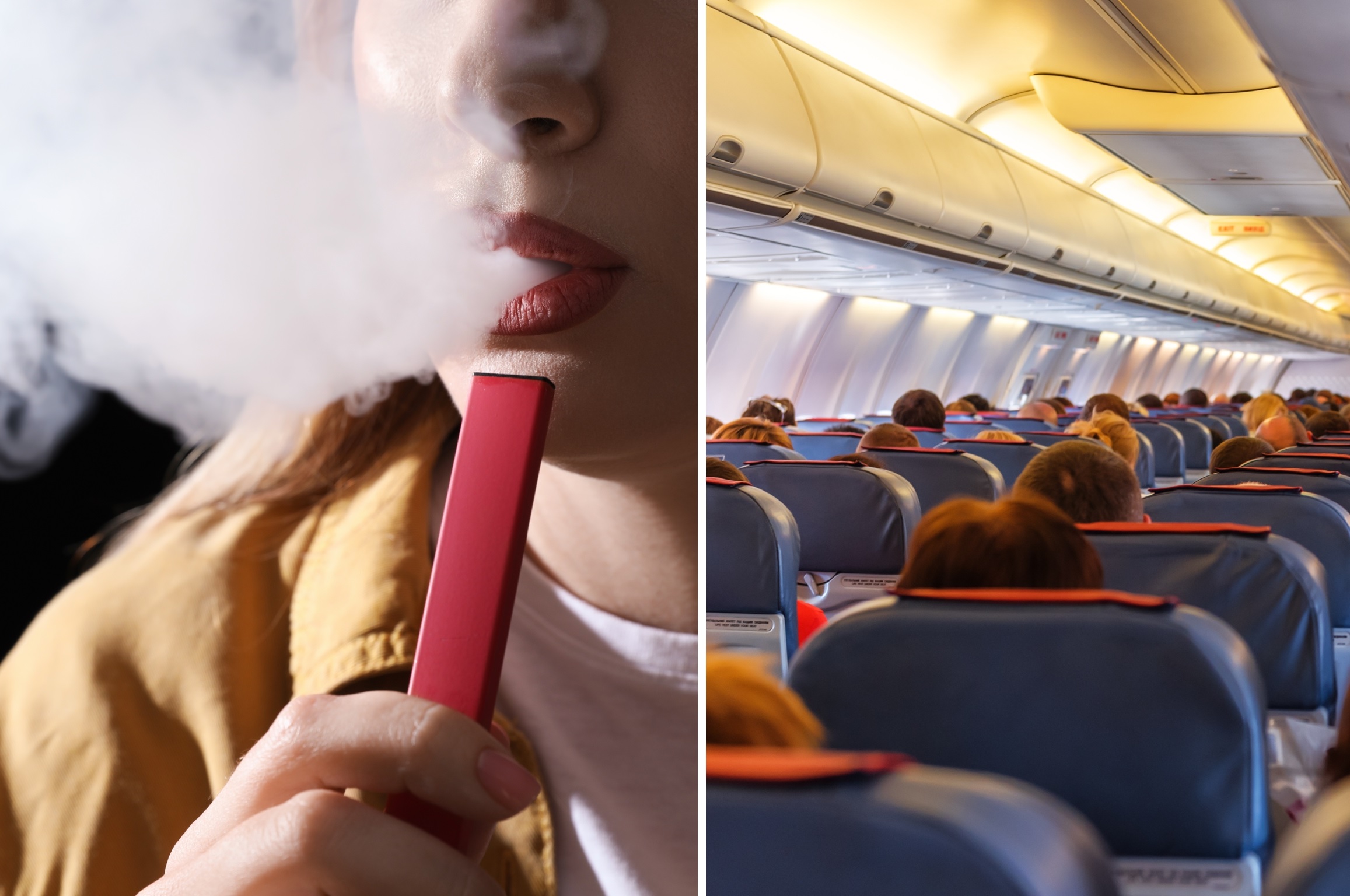
Smoking on a plane is no longer just a violation of cabin etiquette; it is a high-stakes financial gamble. Since the phased-in bans of the late 1980s and the total global prohibition in the 1990s, the economic infrastructure surrounding aviation safety has evolved to treat in-flight smoking as a major operational threat. From five-figure federal fines to the astronomical costs of emergency diversions, the financial wreckage of a single cigarette can haunt an individual’s balance sheet for decades.
The Federal Aviation Administration (FAA) Fines: A Costly Entry Point
The most immediate financial blow for any passenger caught smoking is the civil penalty levied by the Federal Aviation Administration (FAA) or the equivalent national aviation authority. These are not mere “tickets” akin to a speeding violation; they are significant statutory penalties designed to act as a deterrent for behavior that endangers the safety of the aircraft.
Statutory Penalties and the Range of Fines
Under current FAA regulations, a passenger can be fined up to $2,000 for smoking in an airplane lavatory or tampering with a smoke detector. However, the fine is rarely a fixed number. The FAA uses a sliding scale based on the severity of the incident and the passenger’s level of cooperation. If the smoking occurs in the open cabin, the fine usually starts at the lower end of the spectrum, but even then, “lower end” typically means a four-figure sum that immediately wipes out any potential savings from a budget-friendly flight.
The Escalation Factor: Interference with Flight Crew
The financial danger increases exponentially if the passenger refuses to extinguish the cigarette or becomes argumentative with the flight attendants. In such cases, the offense is often reclassified as “interfering with a crew member’s duties.” This is a much more serious violation that carries a maximum civil penalty of up to $37,000 per violation. From a wealth management perspective, this is a catastrophic event—a single impulsive decision resulting in a liability that rivals the down payment on a home.
The Hidden Costs of Emergency Diversions
While a $25,000 fine is a heavy burden, it often represents only a fraction of the total economic damage. If the captain deems the smoking incident a safety hazard—particularly if there is a threat of fire or if the passenger becomes unruly—they have the authority to divert the aircraft to the nearest suitable airport. This is where the financial “meter” truly begins to run.
Fuel Dumping and Operational Expenses
Diverting a large commercial jet is a complex logistical nightmare with a massive price tag. To land safely at an unplanned airport, a pilot may need to dump thousands of pounds of fuel to reach the maximum structural landing weight. In today’s energy market, the cost of wasted jet fuel alone can reach $10,000 to $20,000.
Beyond fuel, the airline incurs “landing fees” at the unplanned airport, which are based on the weight of the aircraft. There are also ground handling fees to consider. The airline must pay for the gate, the ground crew, and the staircase or jet bridge. These operational expenses are meticulously tracked and, in many jurisdictions, the airline has the right to seek restitution from the passenger who caused the diversion.
Compensating Fellow Passengers and Crew Logistics
A diversion often causes the flight crew to exceed their federally mandated “duty time.” If the crew “times out” at a diversion airport, the airline is forced to fly in a replacement crew or put the entire plane’s passengers in hotels overnight. For a wide-body aircraft carrying 300 passengers, hotel vouchers, meal stipends, and rebooking fees can easily cost an airline $50,000 to $100,000. In several high-profile legal cases, airlines have successfully sued individual passengers for the full amount of these operational losses.
Legal Fees and Long-Term Financial Liabilities
The financial fallout of smoking on a plane extends far beyond the immediate fines and restitution. Because tampering with a smoke detector is a federal offense, the legal proceedings that follow can be lengthy, complex, and incredibly expensive.
Criminal Defense Costs
If the incident escalates to criminal charges—which often happens if a smoke detector is disabled or if the passenger is perceived as a threat—the individual will need to hire specialized legal counsel. Defending against federal charges requires a high-caliber attorney, with retainers often starting at $10,000. If the case goes to trial, legal fees can quickly balloon into the six-figure range. Even if the passenger avoids prison time, the legal bills alone can result in personal bankruptcy.
Civil Litigation and Damage to Future Earning Potential
In our modern, interconnected economy, your “personal brand” is a financial asset. A passenger who is arrested and removed from a flight for smoking usually ends up in the news or on social media. This “reputational risk” translates directly into a loss of future income. Many corporate employment contracts include “morality clauses” or “conduct clauses.” A public arrest for endangering an aircraft is often grounds for immediate termination. Furthermore, future employers who conduct background checks will see a federal violation, which could preclude the individual from high-paying roles in finance, law, or government.
The Ripple Effect on Insurance and Travel Privileges
The final layer of financial consequence involves the secondary impacts on an individual’s lifestyle and insurance profile. Just as a DUI affects your car insurance, being a “disruptive passenger” can have long-term economic repercussions.
Inclusion on “No-Fly” Lists and Increased Travel Costs
While the government’s No-Fly List is primarily for security threats, individual airlines maintain their own internal “Banned Passenger” lists. If you are banned from a major carrier like Delta, United, or American, you lose access to their entire route network. From a business finance perspective, this is a major disadvantage. You may be forced to book significantly more expensive last-minute flights on other carriers or spend more on ground transportation, adding thousands of dollars in “hidden” travel costs over your lifetime.
Impact on Personal Liability Insurance
Many high-net-worth individuals carry “umbrella” insurance policies to protect them from liability. However, these policies almost universally exclude coverage for “intentional acts” or “illegal activities.” Because smoking on a plane is a willful violation of federal law, the passenger’s insurance company is unlikely to cover any of the fines or restitution costs. This means the individual must pay every dollar out of their own pocket, often necessitating the liquidation of retirement accounts (which carries its own tax penalties) or the sale of assets.

Conclusion: The Ultimate Loss of Capital
From a purely financial standpoint, there are few activities as irrational as smoking on a plane. It represents a total failure of risk assessment. When you weigh the momentary satisfaction of a cigarette against the potential loss of $100,000 in fines and restitution, the decimation of a professional reputation, and the long-term increase in travel costs, the “deal” is objectively terrible.
In the world of money and business, we are taught to look for “asymmetric upside”—investments where the potential gain far outweighs the risk. Smoking on a plane is the exact opposite: it is a case of “asymmetric downside.” The risk is total financial ruin, while the reward is non-existent. For any passenger considering testing the sensors in a Boeing or Airbus lavatory, the smartest financial advice is simple: the most expensive cigarette you will ever smoke is the one you light at 35,000 feet. Preserve your capital, protect your career, and wait until you’re on the ground.
aViewFromTheCave is a participant in the Amazon Services LLC Associates Program, an affiliate advertising program designed to provide a means for sites to earn advertising fees by advertising and linking to Amazon.com. Amazon, the Amazon logo, AmazonSupply, and the AmazonSupply logo are trademarks of Amazon.com, Inc. or its affiliates. As an Amazon Associate we earn affiliate commissions from qualifying purchases.