
For many, a driver’s license is a rite of passage, a symbol of independence, and a necessary tool for modern living. However, from a purely fiscal perspective, a driver’s license is an asset—and failing to secure it after three attempts is a significant financial setback. While the emotional toll of failing a driving test is often discussed, the economic implications are frequently overlooked.
Failing your driving test three times isn’t just a blow to your confidence; it is a compounding financial liability. Between re-application fees, the escalating costs of professional instruction, and the massive “opportunity cost” of being unable to commute or work in specific industries, the price tag of failure adds up quickly. This article explores the deep-seated financial consequences of failing your driving test three times and how to manage the fiscal recovery of your fourth attempt.
The Immediate Out-of-Pocket Expenses: Accumulating Direct Costs
The most visible impact of failing a driving test multiple times is the immediate drain on your bank account. In many jurisdictions, the cost of the test itself is only the tip of the iceberg. By the time a candidate reaches their fourth attempt, they have often spent triple or quadruple their original budget.
Retest Fees and the “Sunk Cost” Trap
Every time you book a driving test, you are required to pay a standardized fee to the government or the licensing authority. While a single fee might seem manageable—ranging anywhere from $50 to $150 depending on your location—the cumulative effect of three failures is substantial.
From a financial management perspective, many learners fall into the “sunk cost fallacy.” This is the psychological tendency to continue investing in a losing proposition because of the money already spent. After three failures, a candidate might feel compelled to keep spending on the same instructor or the same testing center without a change in strategy, leading to a cycle of perpetual debt without the acquisition of the asset (the license).
Mandatory Remedial Lessons and Instructor Fees
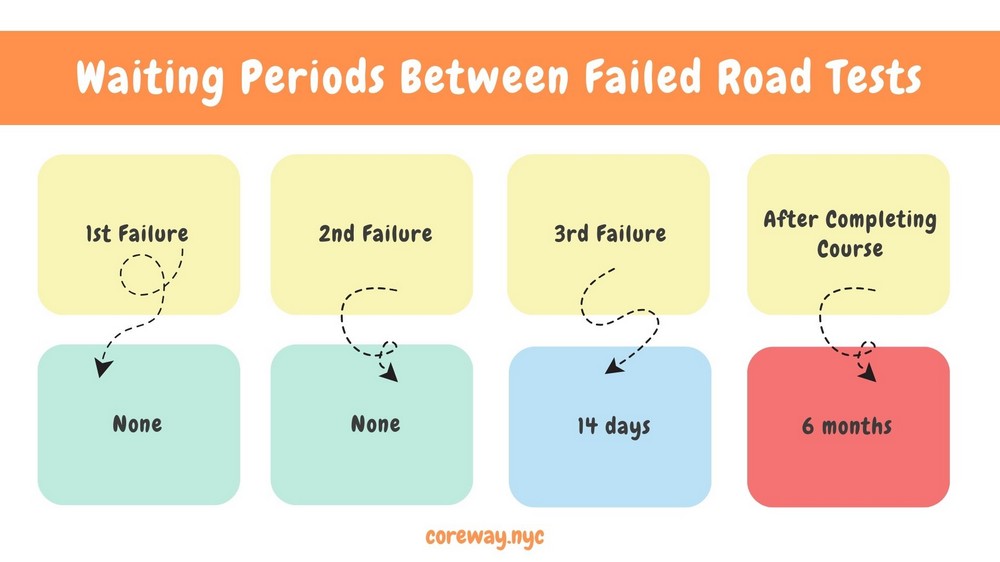
In many regions, failing the test three times triggers specific regulatory requirements. Some states or countries require a mandatory waiting period or a set number of professional remedial lessons before a fourth attempt is permitted.
Professional driving instructors charge by the hour, and as demand for licenses remains high, these rates continue to climb. If a learner requires an additional 10 to 20 hours of instruction to correct the “three-time failure” habits, they could be looking at an additional $600 to $1,200 in coaching fees alone. This does not include the cost of renting the instructor’s vehicle for the test day, which often carries its own premium.
The Long-Term Impact on Insurance and Risk Assessment
While the immediate costs are painful, the long-term financial implications of multiple failures often manifest in the insurance market. Insurance is a game of risk assessment, and your driving history—even before you are fully licensed—can sometimes influence your financial profile.
Why Actuaries Track Your Road History
Actuaries are the professionals responsible for calculating risk and setting insurance premiums. In some insurance markets, particularly those that offer “learner driver insurance” or “non-owner policies,” a history of multiple failed attempts can be a red flag.
If a driver struggles to pass the basic competency test three times, insurers may view that individual as a higher risk once they finally do get behind the wheel. While not every insurance company has access to your specific test failure count, the delay in getting licensed means you are entering the “years of experience” bracket much later. Insurance premiums for new drivers are notoriously high, but they typically decrease as the driver gains “years held” on their license. By failing three times, you are effectively delaying your entry into lower-premium tiers, costing you thousands of dollars over a five-year period.
Comparing Premiums: Licensed vs. Perpetual Learner
There is a massive price disparity between being a licensed driver and a perpetual learner. As a learner, you often cannot benefit from “No Claims Discounts” or “Safe Driver” incentives that are reserved for full license holders. Furthermore, if you are forced to rely on specialized high-risk insurance because of a poor testing record or a long duration of learner status, your monthly premiums could be 50% to 100% higher than those of a peer who passed on their first attempt. The “cost of waiting” is a silent drain on your personal net worth.
Opportunity Cost: The Price of Lost Mobility
In personal finance, the concept of “opportunity cost” refers to the loss of potential gain from other alternatives when one alternative is chosen. When you fail your driving test three times, you aren’t just losing the money spent on the test; you are losing the money you could have been making if you were mobile.
Career Stagnation and Commuter Expenses
Many high-paying jobs require a valid driver’s license as a prerequisite. This includes roles in logistics, outside sales, construction management, and healthcare services that require home visits. By failing your test three times, you are effectively locking yourself out of a significant portion of the job market.
If you are offered a job that pays $5,000 more per year but requires a license, and you cannot take it because you failed your third attempt, your failure has a literal $5,000 price tag attached to it. Over a year of testing delays, this represents a significant hit to your lifetime earning potential.
The Hidden Costs of Public Transit and Ridesharing
While advocates for urban living suggest that cars are a liability, for many people, the lack of a car is even more expensive. If you are forced to rely on ridesharing services like Uber or Lyft because you haven’t passed your test, you are likely spending significantly more per mile than a car owner would spend on gas, insurance, and maintenance combined.
Reliability is also a financial factor. Public transit delays can lead to lost wages or even termination of employment. The “failure to pass” tax is paid every day you spend $20 on a round-trip rideshare or lose two hours of your life on a bus route that could have been a 15-minute drive.
Strategic Financial Planning for the Fourth Attempt
After three failures, it is time to stop viewing the driving test as a rite of passage and start viewing it as a business investment. To stop the financial bleed, you need a different capital allocation strategy.
Budgeting for Intensive Courses
If traditional hourly lessons have failed you three times, your current “business model” isn’t working. It may be time to invest in an “intensive” or “crash” course. These courses often cost between $800 and $1,500 but offer 30–40 hours of concentrated instruction over a single week, culminating in a test.
From a ROI (Return on Investment) perspective, paying $1,000 upfront for a high-probability pass is often cheaper than continuing to pay $60 per week for months on end with no guarantee of success. An intensive course minimizes the “knowledge decay” that happens between weekly lessons, protecting your previous financial investment.
Diversifying Your Learning Investments
Sometimes, the reason for failure isn’t skill, but the environment. If you have failed three times in a high-traffic urban center, it might be worth the travel cost to take your fourth test in a less congested area (if local laws allow).
Additionally, consider investing in digital tools. There are numerous AI-driven apps and VR simulators designed to help students master the “Theory” and “Hazard Perception” portions of the test. While these apps may cost $20–$50, they are significantly cheaper than a failed test fee. Investing in “educational tech” for your driving test is a smart way to diversify your preparation and ensure that your fourth attempt is your last.
Conclusion: The Bottom Line on Triple Failure
Failing your driving test three times is an expensive ordeal that extends far beyond the DMV office. It is a combination of direct costs, increased insurance liabilities, and massive opportunity costs in the labor market. However, by identifying these leaks in your personal finances, you can shift your strategy.
Treat your fourth attempt not as a test of your worth, but as a crucial financial milestone. By budgeting for more effective instruction, understanding the long-term impact on your insurance premiums, and recognizing the career doors that a license will open, you can transform a cycle of failure into a strategic success. In the world of personal finance, the goal isn’t just to pass—it’s to stop the financial drain and start building the mobility that leads to greater wealth.
aViewFromTheCave is a participant in the Amazon Services LLC Associates Program, an affiliate advertising program designed to provide a means for sites to earn advertising fees by advertising and linking to Amazon.com. Amazon, the Amazon logo, AmazonSupply, and the AmazonSupply logo are trademarks of Amazon.com, Inc. or its affiliates. As an Amazon Associate we earn affiliate commissions from qualifying purchases.