
In the landscape of modern gaming, few titles have pushed the boundaries of software complexity and player agency as significantly as Larian Studios’ Baldur’s Gate 3 (BG3). At the heart of its intricate web of systems lies a pivotal mechanical and narrative choice: the decision to “evolve” using the Astral-Touched Tadpole. While players often view this through the lens of role-playing, the evolution process is a masterclass in software engineering, branching narrative logic, and dynamic asset management.
To understand what happens when you evolve in BG3, one must look beyond the screen and into the underlying technology that powers the Forgotten Realms. From the implementation of the Illithid Power skill tree to the complex boolean flags that trigger world-state changes, the “evolution” is more than a plot point—it is a significant shift in the game’s technical state.
The Mechanics of Evolution: Software Integration of Illithid Powers
The transition from a standard humanoid to a “Half-Illithid” is triggered by a specific item: the Astral-Touched Tadpole. From a technical standpoint, this is a global state-change event. When a player consumes or communes with this tadpole, the software must recalibrate the character’s internal data structure to unlock a Tier 3 sub-tree within the Illithid Powers interface.
The Skill Tree Expansion and Scripted Interactivity
Larian Studios utilized a modular approach to character progression. Unlike traditional RPGs where level-ups follow a linear path, the Illithid Power system operates as a secondary layer of software logic. When evolution occurs, the game’s UI (User Interface) logic must dynamically refresh to display the outer ring of the brain map.
Each node in this tree is a script-heavy entity. For instance, the “Fly” ability—unlocked automatically upon evolution—requires the game engine to toggle a specific movement flag that was previously restricted. This involves modifying the character’s collision detection and pathfinding algorithms in real-time. Instead of calculating a path along the ground mesh (NavMesh), the engine must now account for verticality and Z-axis movement, demonstrating the fluid nature of BG3’s Divinity Engine 4.0.
Resource Management and Action Economy
The evolution also introduces new “Passive” and “Action” hooks into the game’s combat engine. The software must track “Mind Sanctuary” or “Freecast” states, which interact with the game’s resource pools (spell slots and action points). The technical challenge here is ensuring these new scripts do not conflict with existing class features. The “Freecast” ability, for example, requires a complex “listener” script that monitors when a resource is spent and intercepts that command to return the value to the player—a high-level logic gate that must remain bug-free across thousands of potential equipment and spell combinations.
The Graphical Engineering of Transformation: Shaders and Assets
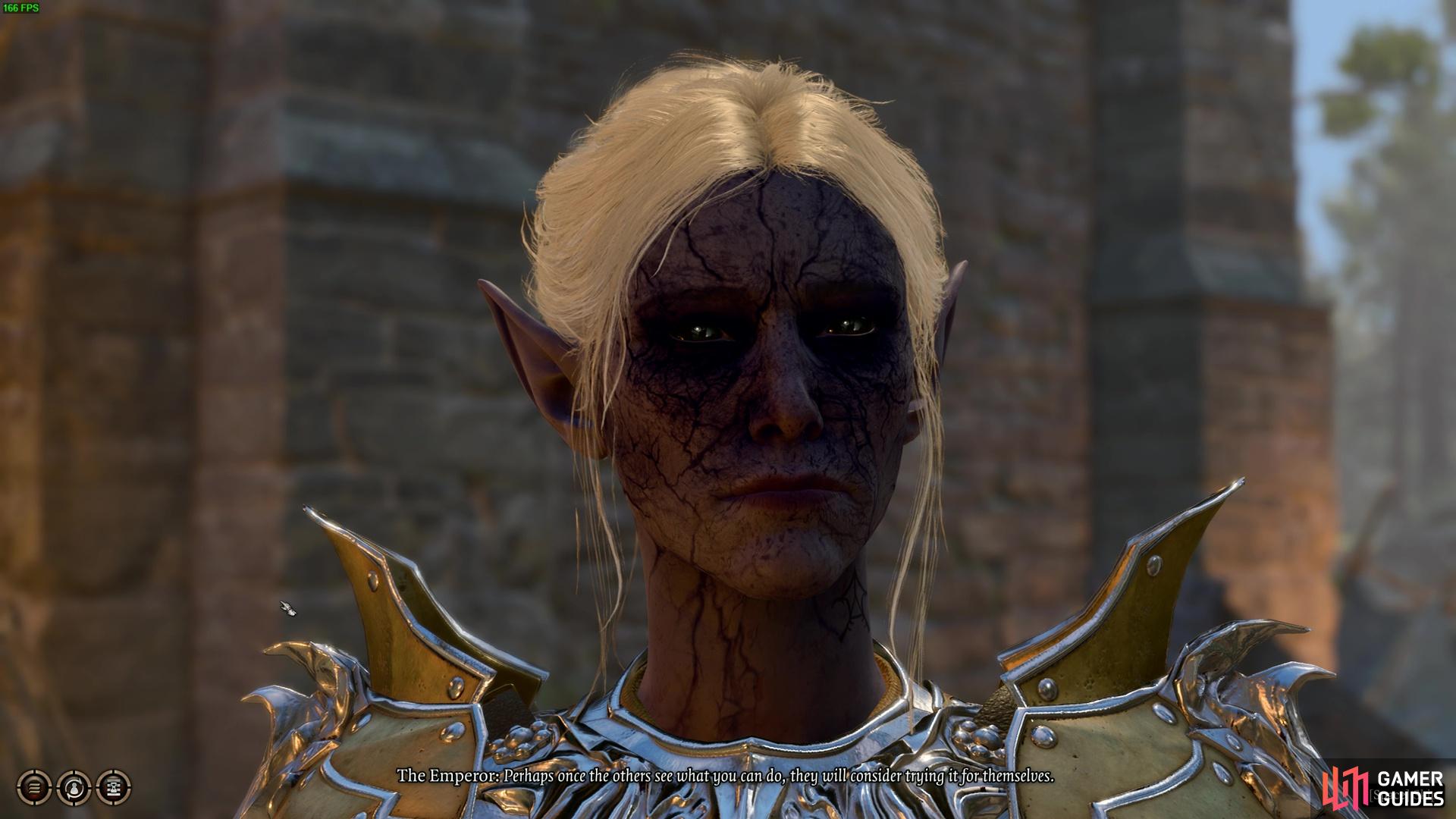
One of the most immediate “consequences” of evolving in BG3 is the physical transformation of the player character. This is not a simple swap of a character model; it is a sophisticated application of cosmetic overlays and texture modifications.
Cosmetic Overlays and Shader Changes
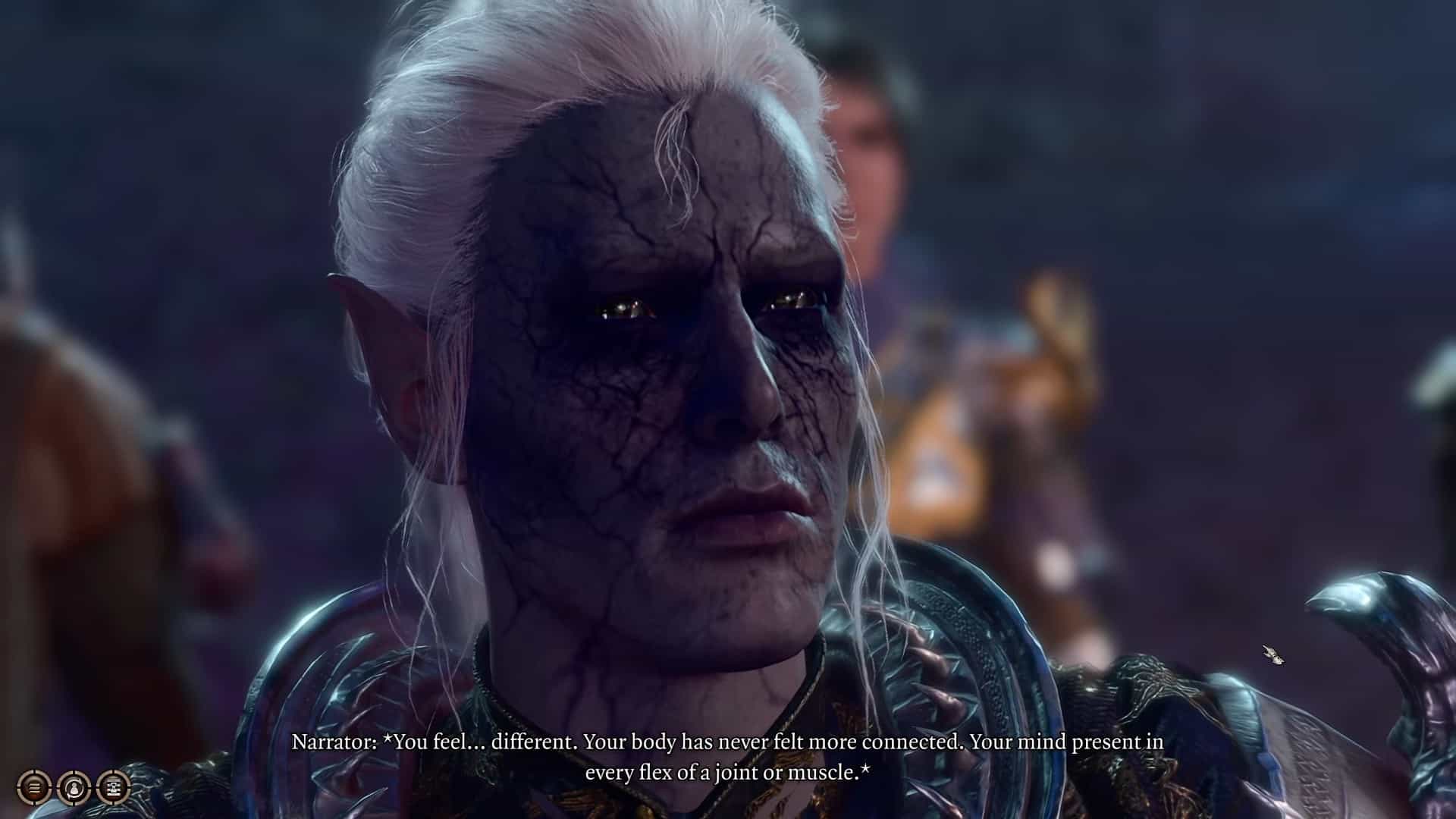
When the evolution state is set to “True,” the game engine applies a series of “vein” shaders and ocular texture overrides to the character model. These are not baked into the original character design but are rendered as dynamic layers. The dark, sprawling veins that appear on the character’s face are essentially a transparency map applied over the base skin texture.
The software must ensure these textures align correctly regardless of the character’s race (from a small Gnome to a large Dragonborn). This requires a robust UV mapping system that can stretch and adapt to various skeletal meshes without distorting the visual intent. Furthermore, the change to the eyes—turning them into pitch-black voids—is a material swap within the engine’s rendering pipeline, replacing the standard iris/pupil shaders with a high-gloss, low-reflectivity black material.
Asset Management in Real-Time Evolution
Beyond the player, the evolution affects how the game handles cinematic assets. BG3 uses in-engine cinematics rather than pre-rendered video. This means that every time your character appears in a cutscene after evolving, the game must render those specific facial shaders in real-time. The technical overhead is significant; the engine must pull the “Half-Illithid” flag and apply the visual modifications to the character model during the loading of the cinematic scene, ensuring that the narrative continuity is maintained without performance drops.

Computational Narrative: How Choice Logic Dictates the World
The most impressive “tech” behind the evolution in BG3 is the narrative engine—a massive database of interconnected flags and triggers that determine how the world reacts to your new form.
NPC Reactivity and Boolean Flags
In the game’s code, the evolution is a “Global Flag.” Every NPC interaction has the potential to check for this flag. When you approach a companion like Shadowheart or Astarion after evolving, the dialogue tree executes a conditional check: IF Player_Is_HalfIllithid = True.
If this condition is met, the software bypasses standard greeting scripts and prioritizes specific “reactivity” lines. This is not just a single line of text; it often leads to entirely different sub-branches of the narrative. The complexity of this “Choice and Consequence” engine is staggering. There are thousands of permutations where the game must track who saw you, what their approval rating is, and how your evolved state influences their future loyalty scripts.
Final Act Dependencies and End-Game Scripting
As the game moves into its final act, the evolution flag becomes a critical component of the “End Game Logic Controller.” The software must track whether the player has evolved to determine which ending cinematics and mechanical choices are available. For example, the ability to fully transform into a Mind Flayer is gated behind the initial “evolution” step.
From a software design perspective, this is a dependency chain. The game’s “Quest Tracker” and “World State Manager” must constantly communicate to ensure that if a player reaches the finale, the correct variables are loaded. If the player chose to evolve, the game must load specific scripts for the final confrontation that allow for unique “Illithid-only” solutions to the game’s ultimate conflict.
Gameplay Balance and the Technical “Power Creep”
From a game design and balance perspective, the evolution represents a massive “Power Creep” that the software must account for. The technical challenge is keeping the game challenging when the player has essentially been given “god-tier” abilities.
Ability Synergies and Engine Performance
The “evolved” abilities are designed to be “game-breakingly” powerful. The “Cull the Weak” passive, for instance, triggers an explosion of psychic energy when an enemy’s health drops below a certain threshold. Technically, this requires the engine to constantly monitor the HP of every entity on the battlefield.
When an HP threshold is crossed, the engine must instantly calculate a radius-based damage effect and trigger a particle system (VFX). In large-scale battles with 20 or more NPCs, these constant “heartbeat” checks for HP thresholds can be taxing on the CPU. Larian’s optimization ensures that these checks are performed efficiently, preventing the “evolution” from causing frame-rate stuttering during high-intensity combat.
AI Response to Evolved Player Abilities
Finally, the evolution forces the enemy AI to adapt. The AI in BG3 is designed to recognize certain threats. While the AI doesn’t “know” you are evolved in the way a human does, its tactical weight-map changes. If a player uses the “Fly” ability to bypass traditional terrain obstacles, the AI’s pathfinding must recalibrate to find ways to reach the player or utilize its own ranged capabilities. The evolution essentially forces the game’s combat AI to switch from a 2D-plane tactical approach to a full 3D-spatial awareness model.
Conclusion: The Technical Legacy of the Astral Tadpole
Choosing to evolve in Baldur’s Gate 3 is a transformative experience for the player, but for the software, it is a complex orchestration of graphical rendering, narrative database management, and mechanical balancing. It showcases how far “Tech” in the gaming industry has come—moving away from static choices and toward a dynamic, reactive environment where a single “evolution” ripples through every layer of the software’s architecture.
Whether it is the shaders that darken your character’s eyes or the deep-coded boolean flags that change the fate of the city of Baldur’s Gate, the evolution system is a testament to the power of modern game engines. It proves that in the world of high-end software development, narrative and technology are no longer separate entities; they are an evolved, singular organism.
aViewFromTheCave is a participant in the Amazon Services LLC Associates Program, an affiliate advertising program designed to provide a means for sites to earn advertising fees by advertising and linking to Amazon.com. Amazon, the Amazon logo, AmazonSupply, and the AmazonSupply logo are trademarks of Amazon.com, Inc. or its affiliates. As an Amazon Associate we earn affiliate commissions from qualifying purchases.