
The efficacy and safety of pharmaceutical products are paramount, and understanding how environmental factors can impact these vital attributes is a critical aspect of drug development and patient care. The question of “what happens if tirzepatide gets warm?” delves into the core principles of pharmaceutical stability, specifically focusing on a drug that has gained significant attention for its therapeutic applications. While tirzepatide is a prescription medication and its handling instructions are detailed in its official prescribing information, exploring the potential consequences of temperature excursions provides valuable insight into the science behind maintaining drug integrity and ensuring optimal patient outcomes.
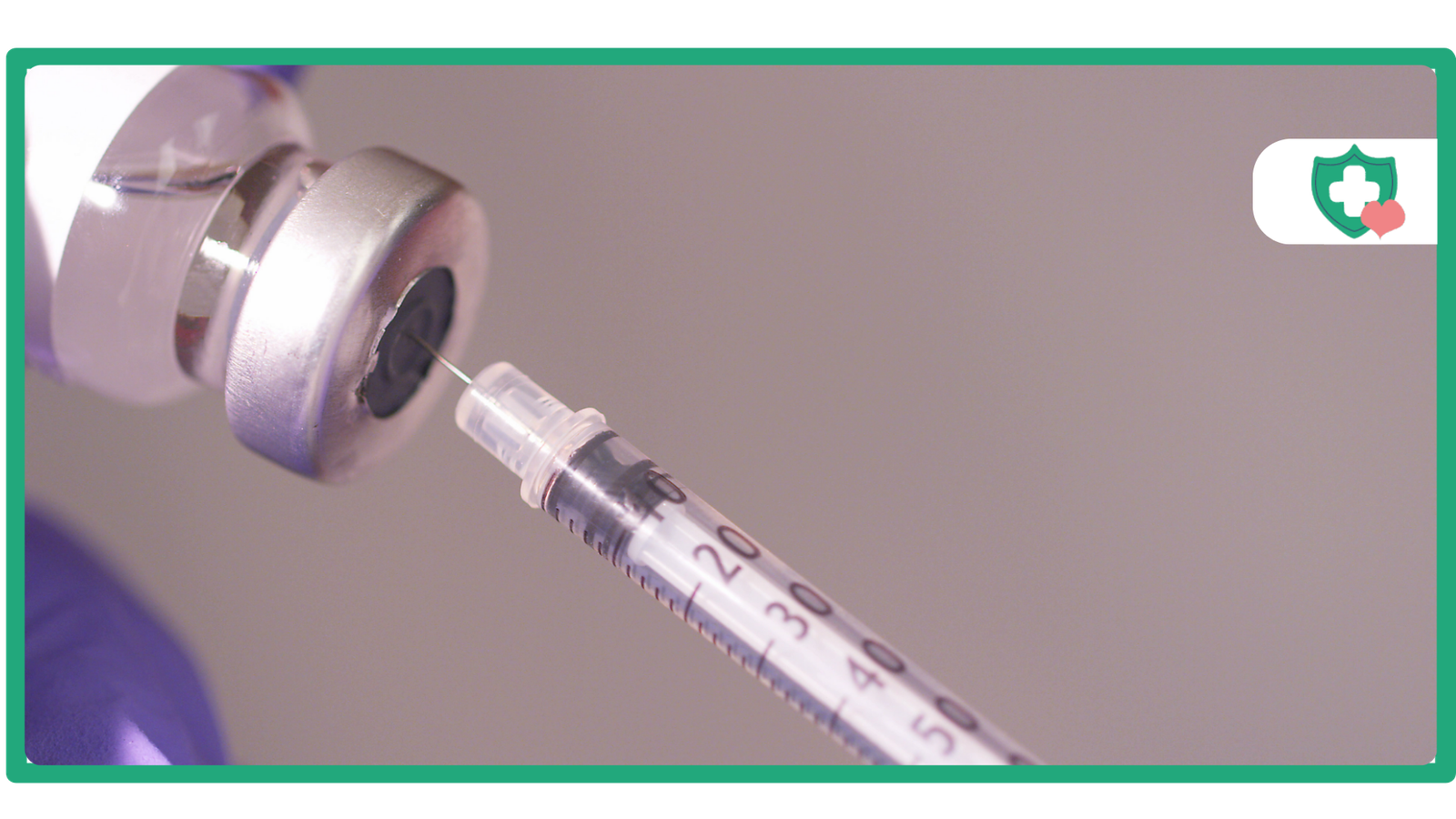
This article will navigate the complexities of pharmaceutical stability, focusing on the potential impact of elevated temperatures on tirzepatide. We will examine the general principles of drug degradation, the specific considerations for peptide-based therapeutics like tirzepatide, the typical storage recommendations, and the practical implications for patients and healthcare providers should a temperature excursion occur.
Understanding Pharmaceutical Degradation: The Silent Enemy of Efficacy
Pharmaceutical products, regardless of their form or active ingredient, are susceptible to degradation over time. This degradation is a chemical process that alters the original molecular structure of the drug, potentially leading to a loss of potency, the formation of harmful byproducts, or changes in physical characteristics. Understanding the mechanisms of degradation is the first step in appreciating why temperature control is so crucial.
The Pillars of Degradation: Heat, Light, Moisture, and Oxygen
Several environmental factors can accelerate the degradation of pharmaceutical compounds. While each drug’s susceptibility varies, the primary culprits are generally:
- Heat: Elevated temperatures provide the kinetic energy needed for chemical reactions to occur more rapidly. This is often the most significant factor influencing the shelf-life of a drug. The Arrhenius equation, a fundamental principle in chemistry, quantifies the relationship between temperature and the rate of chemical reactions, clearly demonstrating that as temperature increases, reaction rates accelerate exponentially. For pharmaceuticals, this means that even a moderate increase in temperature can significantly shorten the drug’s effective lifespan.
- Light: Ultraviolet (UV) and visible light can also catalyze degradation reactions, particularly for compounds with chromophores (parts of a molecule that absorb light). Photodegradation can lead to the formation of free radicals and other reactive species, initiating a cascade of unwanted chemical changes. Many pharmaceuticals are therefore packaged in light-resistant containers to mitigate this risk.
- Moisture (Humidity): Water can act as a reactant in hydrolytic degradation pathways. For drugs that are sensitive to hydrolysis, exposure to high humidity or direct contact with water can lead to the breakdown of the active pharmaceutical ingredient (API). This is particularly relevant for solid dosage forms where moisture can penetrate packaging, or for liquid formulations where water is already present and can facilitate degradation.
- Oxygen: Oxidation is another common degradation pathway. Oxygen can react with various functional groups within a drug molecule, leading to structural changes and loss of activity. Antioxidants are often included in formulations to prevent or slow down oxidative degradation.
Kinetics of Degradation: The Rate of Decline
The rate at which a drug degrades is governed by its specific chemical structure and the prevailing environmental conditions. Pharmaceutical scientists employ sophisticated analytical techniques to determine the “order” of the degradation reaction.
- Zero-Order Kinetics: In this scenario, the rate of degradation is independent of the drug concentration. The drug degrades at a constant rate, meaning that half of the drug will degrade in a fixed amount of time.
- First-Order Kinetics: This is the most common type of degradation observed for pharmaceuticals. The rate of degradation is directly proportional to the concentration of the drug. As the concentration decreases, the rate of degradation also slows down. This means that it takes longer for the remaining drug to degrade as time progresses.
- Higher-Order Kinetics: While less common, some degradation reactions can follow second or even higher-order kinetics, where the rate is dependent on the concentration of two or more reactants.
Understanding the kinetics of degradation is crucial for predicting the shelf-life of a drug and establishing appropriate storage conditions. Accelerated stability studies, often conducted at elevated temperatures, are used to predict the long-term stability of a drug under normal storage conditions.
Tirzepatide and Peptide Stability: Unique Considerations for a Biologic Therapeutic
Tirzepatide, a dual glucose-dependent insulinotropic polypeptide (GIP) and glucagon-like peptide-1 (GLP-1) receptor agonist, is a peptide-based therapeutic. Peptides, being composed of amino acids linked by peptide bonds, have specific vulnerabilities that differ from small molecule drugs. This distinction is critical when considering the impact of temperature on tirzepatide.
The Nature of Peptide Degradation
Peptides are more complex than many traditional small molecule drugs and are susceptible to a range of degradation pathways that are characteristic of proteins and peptides:
- Hydrolysis: The peptide bonds themselves can be broken by hydrolysis, leading to the fragmentation of the peptide chain into smaller peptides or individual amino acids. This directly reduces the quantity of the active tirzepatide molecule.
- Deamidation: This process involves the conversion of an asparagine or glutamine residue to aspartic acid or glutamic acid, respectively. Deamidation can alter the charge and conformation of the peptide, potentially affecting its receptor binding affinity and therapeutic activity.
- Oxidation: Amino acid residues such as methionine, cysteine, and tryptophan are prone to oxidation, which can lead to structural changes and loss of biological function.
- Racemization: Amino acids can exist in two stereoisomeric forms (L and D). Racemization refers to the conversion of the naturally occurring L-amino acid to the D-isomer. This change in stereochemistry can significantly impact the peptide’s biological activity.
- Aggregation: Under certain conditions, peptide molecules can clump together to form aggregates. This can lead to a loss of solubility, reduced potency, and in some cases, can trigger an immune response. Elevated temperatures can accelerate the processes that lead to aggregation.
- Denaturation/Conformational Changes: Heat can disrupt the delicate three-dimensional structure of a peptide, a process known as denaturation. While small molecule drugs generally maintain their specific molecular shape, peptides rely heavily on their folded structure for biological activity. Unfolding can expose susceptible bonds to degradation or alter binding interactions.
How Heat Exacerbates Peptide Degradation
For peptide-based therapeutics like tirzepatide, elevated temperatures can significantly accelerate these degradation pathways:
- Increased Reaction Rates: As with small molecules, higher temperatures provide more energy for hydrolytic, deamidation, and oxidative reactions to occur.
- Conformational Instability: Peptides are inherently less stable than small molecules. Heat can disrupt the non-covalent interactions (hydrogen bonds, ionic bonds, van der Waals forces) that maintain the peptide’s folded conformation, leading to unfolding and increased susceptibility to chemical attack.
- Aggregation Propensity: Temperature fluctuations can influence the solubility of peptides, making them more prone to aggregation. This is particularly true for complex biologics that are designed to interact with specific biological targets.
The specific sequence of amino acids in tirzepatide, along with its overall three-dimensional structure, will dictate its precise susceptibility to these degradation mechanisms. Pharmaceutical manufacturers conduct rigorous stability testing to identify the conditions under which tirzepatide remains stable and to establish appropriate handling and storage guidelines.
Storage Recommendations and the “Cold Chain” Principle
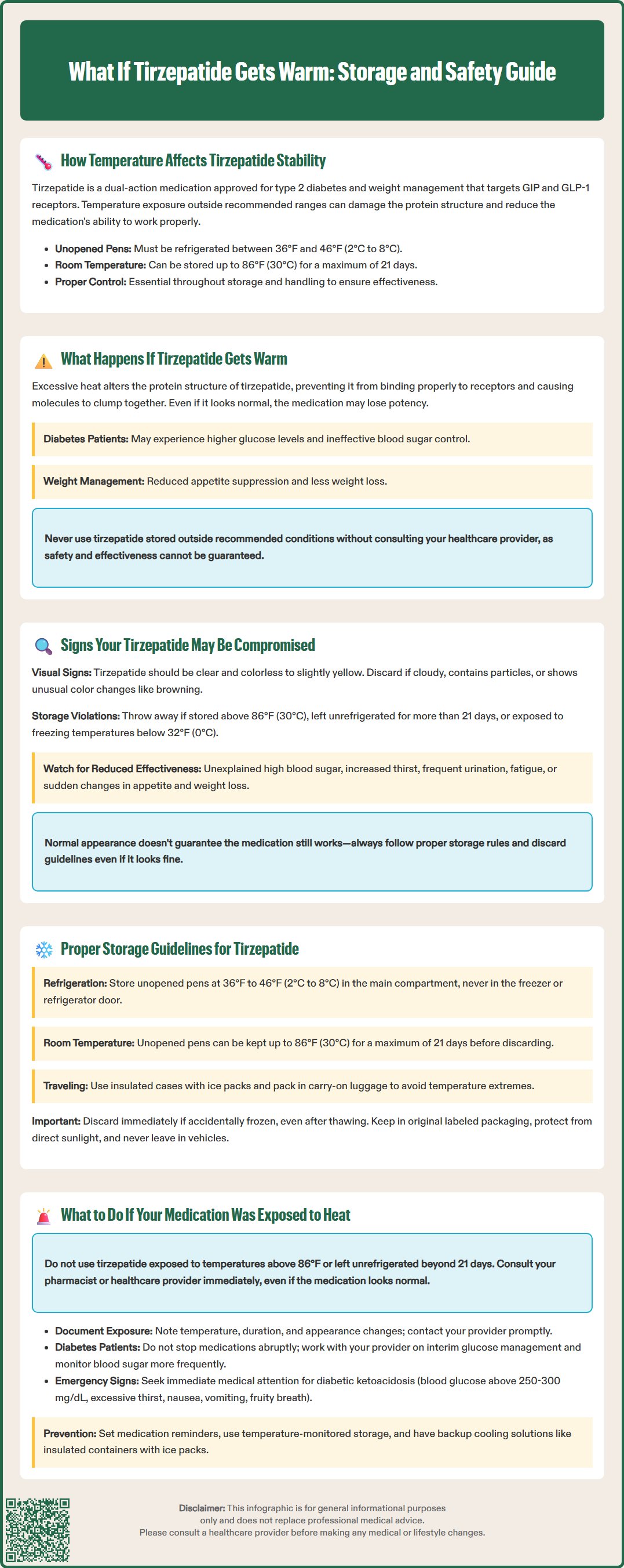
To mitigate the risks of degradation and ensure the consistent delivery of therapeutic effects, pharmaceutical products, especially biologics like tirzepatide, are subject to strict storage recommendations. These recommendations are not arbitrary; they are based on extensive scientific data derived from stability studies.
The Importance of Refrigeration for Tirzepatide
Tirzepatide, like many injectable peptide therapeutics, is typically stored under refrigerated conditions. This usually means a temperature range of 2°C to 8°C (36°F to 46°F).
- Preservation of Molecular Integrity: Refrigeration significantly slows down the rates of chemical reactions that lead to degradation. By maintaining a lower temperature, the kinetic energy available for these reactions is reduced, thus preserving the peptide’s molecular structure and biological activity for its intended shelf-life.
- Prevention of Aggregation and Denaturation: The reduced thermal energy also helps to prevent conformational changes and aggregation, which are critical for maintaining the solubility and efficacy of peptide-based drugs.
- Extending Shelf-Life: Adhering to recommended storage conditions ensures that the drug product remains within its specified potency and purity limits until its expiration date.
The Concept of the “Cold Chain”
The “cold chain” refers to the unbroken series of refrigerated storage and transportation that is required for temperature-sensitive products, including pharmaceuticals, vaccines, and certain food items. For tirzepatide, maintaining the cold chain is crucial from the moment it leaves the manufacturing facility until it reaches the patient.
- Manufacturing and Distribution: Manufacturers ensure that tirzepatide is stored and transported under controlled refrigerated conditions. This involves specialized packaging, temperature-controlled shipping containers, and monitoring devices to record temperature excursions.
- Pharmacy Storage: Once received by a pharmacy, tirzepatide must be stored in a refrigerator that maintains the specified temperature range. Regular monitoring of refrigerator temperature is essential.
- Patient Storage: Patients are instructed to store their tirzepatide in a refrigerator at home. They are also advised on proper handling during use, such as not leaving the pre-filled pen at room temperature for extended periods.
What Constitutes a Temperature Excursion?
A temperature excursion occurs when a temperature-sensitive product deviates from its specified storage temperature range for a defined period. This deviation can be an excursion above the upper limit (e.g., getting too warm) or below the lower limit (e.g., freezing).
- Above the Recommended Temperature: If tirzepatide gets too warm, it can accelerate the degradation processes discussed earlier. This can lead to a loss of potency, meaning a dose may not deliver the intended therapeutic effect. In some cases, degradation products might form, although whether these are clinically significant or harmful requires specific toxicological assessment by the manufacturer.
- Below the Recommended Temperature (Freezing): Freezing can also be detrimental to peptide-based therapeutics. It can cause physical damage to the formulation, such as precipitation or aggregation, and can alter the solubility of the drug. While tirzepatide is typically not intended to be frozen, accidental freezing can also compromise its integrity.
The duration and magnitude of the temperature excursion are critical factors in determining the potential impact on the drug’s quality. Short, minor excursions might have a negligible effect, whereas prolonged or significant excursions can render the drug unusable.
Consequences of a Warm Tirzepatide: From Potency Loss to Patient Impact
The primary concern when tirzepatide gets warm is the potential compromise of its efficacy and safety. While the exact consequences are product-specific and determined by the manufacturer’s stability data, we can infer general implications based on the principles of pharmaceutical degradation.
Loss of Potency: A Diminished Therapeutic Effect
The most direct and likely consequence of tirzepatide being exposed to elevated temperatures is a reduction in its potency. Potency refers to the strength of the drug, or how much of the active ingredient is present and biologically active.
- Reduced Drug Concentration: Degradation processes can chemically alter or break down the tirzepatide molecule. This effectively reduces the amount of active tirzepatide available in the vial or pen.
- Sub-Therapeutic Dosing: If the potency is reduced, a standard dose may no longer deliver the full intended therapeutic effect. This could mean that patients experience less effective blood glucose control or weight management than they would with a properly stored product. For chronic conditions managed by tirzepatide, this could lead to a worsening of symptoms or a slower progression towards treatment goals.
- Unpredictable Response: The rate of degradation may not be uniform, leading to variable potency within a batch or even within a single vial if exposed to temperature fluctuations over time. This unpredictability makes it challenging for clinicians to manage patient care.
Potential for Altered Safety Profile
While the primary concern is usually potency loss, significant degradation could theoretically lead to the formation of byproducts. The safety profile of a drug is established through extensive clinical trials, and any deviation from the intended chemical composition raises questions about potential risks.
- Formation of Degradation Products: As discussed, hydrolysis, deamidation, and oxidation can lead to the formation of new chemical entities. While these are often inert, in some cases, they can be immunogenic or even toxic.
- Manufacturer’s Role in Assessing Safety: Pharmaceutical manufacturers are responsible for identifying and characterizing potential degradation products. They establish acceptable limits for these impurities based on toxicological studies. If degradation exceeds these limits, the product is considered substandard.
- Clinical Relevance: It is important to note that for many common degradation pathways in peptide therapeutics, the resulting byproducts are often inactive fragments or chemically altered forms that do not pose a significant safety risk. However, without specific data from the manufacturer, it’s prudent to assume that any deviation from recommended storage could impact safety.

Practical Implications for Patients and Healthcare Providers
When a temperature excursion is suspected, practical steps need to be taken to ensure patient safety and treatment continuity.
- Patient Responsibility: Patients who suspect their tirzepatide has been exposed to excessive heat should not use the affected product. This might include instances where a refrigerator malfunctioned, the medication was left out of refrigeration for an extended period, or it was exposed to direct sunlight or extreme ambient temperatures during transport.
- Contacting Healthcare Providers: The patient should contact their prescribing physician or pharmacist immediately to report the suspected temperature excursion. They should provide details about the circumstances, including the duration and estimated temperature.
- Replacement of Medication: In most cases, if there is a reasonable suspicion that the tirzepatide has been compromised due to temperature, the healthcare provider will likely advise discarding the affected medication and obtaining a replacement. This is a precautionary measure to ensure the patient receives a product of guaranteed quality and efficacy.
- Pharmacist and Manufacturer Communication: Pharmacists play a crucial role in educating patients about proper storage and handling. They also act as a conduit for reporting potential quality issues to the pharmaceutical manufacturer. Manufacturers have established procedures for investigating such reports and may request the return of compromised product for analysis.
- No Self-Diagnosis or Continued Use: Patients should never attempt to self-diagnose the potency or safety of a potentially compromised medication. Continuing to use a drug whose integrity is in question could lead to treatment failure, potentially impacting their health outcomes.
In conclusion, the question of “what happens if tirzepatide gets warm?” highlights the critical importance of adhering to pharmaceutical storage guidelines. For peptide-based therapeutics like tirzepatide, elevated temperatures can accelerate degradation pathways, leading to a loss of potency and potentially impacting the drug’s safety profile. Maintaining the cold chain from manufacturing to patient administration is paramount to ensuring that tirzepatide remains a safe and effective treatment option for individuals managing conditions like type 2 diabetes and chronic weight management. Patients should always follow the specific storage and handling instructions provided by their healthcare provider and report any suspected temperature excursions without delay.
aViewFromTheCave is a participant in the Amazon Services LLC Associates Program, an affiliate advertising program designed to provide a means for sites to earn advertising fees by advertising and linking to Amazon.com. Amazon, the Amazon logo, AmazonSupply, and the AmazonSupply logo are trademarks of Amazon.com, Inc. or its affiliates. As an Amazon Associate we earn affiliate commissions from qualifying purchases.