
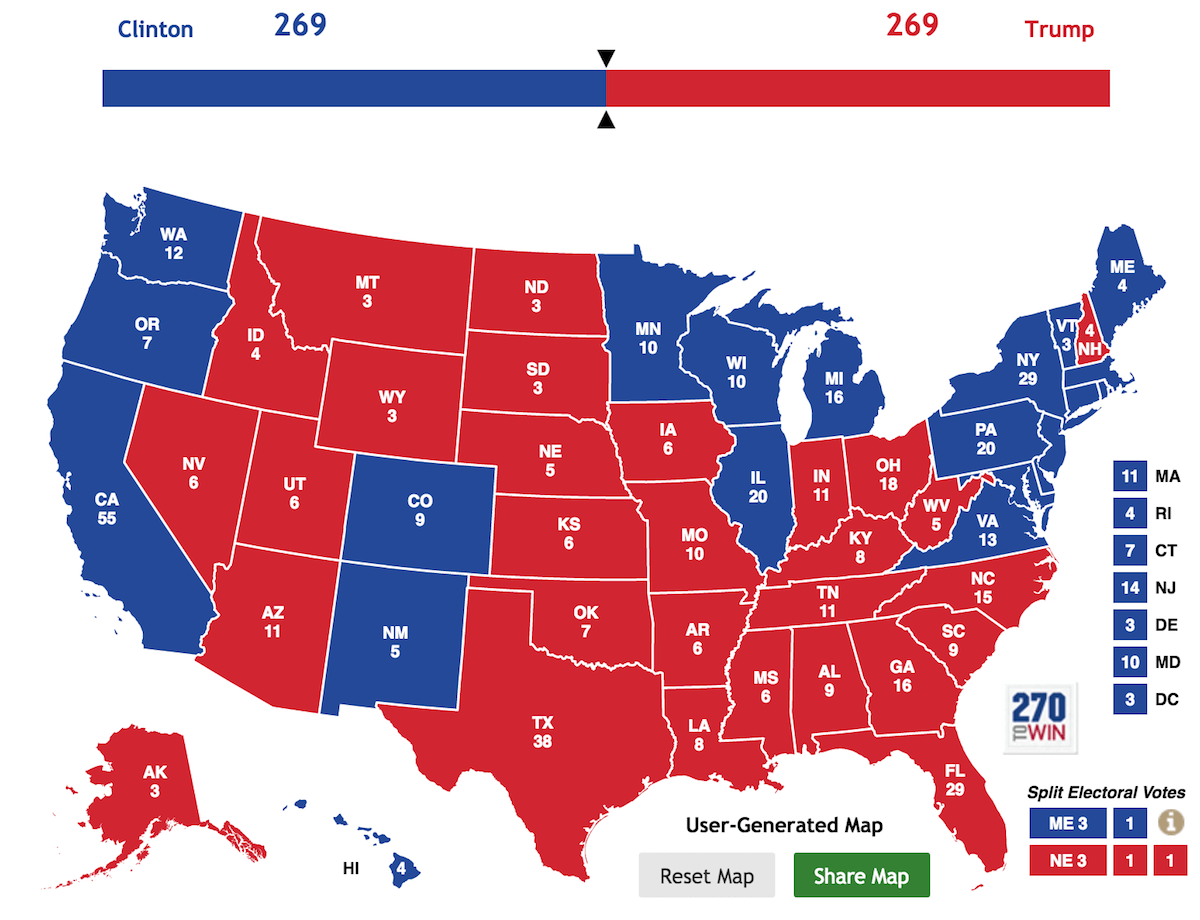
The United States Presidential election is a cornerstone of its democratic process, a quadrennial event that captivates the nation and the world. At its heart lies the Electoral College, a system that, while often taken for granted, holds the ultimate power to determine the next commander-in-chief. The magic number within this system is 270 – the simple majority of Electoral College votes required to win the presidency. But what happens when this pivotal threshold is not met by any single candidate? This scenario, though rare, is not purely hypothetical and carries profound implications for the stability of American governance and the legitimacy of its electoral outcomes. Understanding the potential ramifications of a “no-270” election is crucial for appreciating the intricacies of the U.S. political system and the contingency plans in place for such an unprecedented event.
The Constitutional Framework: Contingencies for an Inconclusive Election
The Founding Fathers, in their wisdom, anticipated that a presidential election might not yield a clear victor. While they established the Electoral College, they also enshrined mechanisms within the Constitution to address situations where no candidate secures the required majority of electoral votes. These provisions, outlined in the Twelfth Amendment, are designed to ensure that the country does not find itself without a leader, though the process they dictate can be complex and politically charged.
The House of Representatives Decides the Presidency
The primary constitutional recourse when no candidate reaches 270 electoral votes is for the election to be decided by the House of Representatives. This process, specifically detailed in the Twelfth Amendment, grants the House the exclusive authority to elect the President from among the top three candidates who received electoral votes. However, this is not a straightforward popular vote within the House. Instead, each state delegation receives a single vote. This means that a state with only one Representative wields the same voting power as a state with a large delegation. This “one state, one vote” system has significant implications, potentially empowering smaller states and their congressional delegations disproportionately.
The voting in the House proceeds until a candidate secures a majority of the states – meaning at least 26 state delegations must vote for the same individual. This process can be lengthy and contentious. The House members are expected to vote according to the popular vote winner in their respective states, but the temptation for partisan maneuvering and deal-making becomes immense. The candidate who receives a majority of the state votes becomes President.
The Senate Elects the Vice President
In parallel to the House’s presidential decision-making, the Senate is tasked with electing the Vice President. Similar to the presidential selection, if no candidate achieves an electoral majority for Vice President, the Senate will select from the top two candidates. Here, the voting process is more conventional, with each Senator casting one vote. The candidate who receives a majority of the total votes cast by the Senators becomes the Vice President. This separate process for the Vice Presidency means that the President and Vice President could potentially come from different political parties, a scenario that could lead to significant executive branch discord and paralysis.
The Political and Social Fallout: Navigating a Constitutional Crisis
Beyond the procedural mechanics of the Twelfth Amendment, a “no-270” election scenario would unleash a torrent of political and social challenges. The legitimacy of the outcome, the public’s trust in democratic institutions, and the overall stability of the nation would be severely tested.
Eroding Public Trust and Legitimacy
The most immediate and perhaps most damaging consequence would be the profound erosion of public trust in the electoral process and the democratic system itself. When the outcome of an election is determined not by the direct will of the voters, but through complex congressional procedures, it can lead to widespread disillusionment and a sense of disenfranchisement. For supporters of the candidate who won the popular vote but failed to secure the necessary electoral votes, the result could feel inherently unfair and illegitimate. This could fuel protests, civil unrest, and a deepening of partisan divides.
Heightened Political Instability and Gridlock
A contested election decided by Congress would almost certainly plunge the nation into a period of intense political instability. The “one state, one vote” system in the House could lead to unprecedented lobbying, horse-trading, and potential corruption. The pressure on individual Representatives and Senators would be immense, with their votes becoming the subject of intense scrutiny and intense political pressure. This process could drag on for weeks or even months, creating a vacuum of leadership and exacerbating existing political gridlock. The ability of the government to address pressing national issues would be severely hampered during this prolonged period of uncertainty.
The Role of the Judiciary

While the Constitution outlines the process, the judiciary could potentially be called upon to interpret and rule on various aspects of a disputed election. Lawsuits challenging the procedures, the validity of electoral votes, or the conduct of the election could emerge, leading to further legal and political battles. The Supreme Court, as the ultimate arbiter of legal disputes, could find itself in the unenviable position of making decisions that have profound political implications, further politicizing the judiciary and potentially undermining its perceived impartiality.
Precedents and Modern Implications: Learning from History
While a “no-270” scenario has not occurred in modern U.S. history, historical precedents offer valuable insights into the potential challenges and outcomes. Understanding these past instances, even those that did not reach the full constitutional contingency, can inform our understanding of the current risks.
The Election of 1800: The First Electoral College Crisis
The election of 1800 stands as the most significant historical example of an electoral crisis. In this election, there was no distinction between presidential and vice-presidential electors, leading to Thomas Jefferson and his running mate Aaron Burr receiving an equal number of electoral votes. The election then went to the House of Representatives, which was controlled by the outgoing Federalists. For 36 ballots, the House was deadlocked, with a significant portion of the Federalist contingent attempting to prevent Jefferson from becoming president. Ultimately, after intense political negotiation and assurances from Jefferson about his future policies, the election was resolved. This crisis directly led to the passage of the Twelfth Amendment, which established separate ballots for President and Vice President, aiming to prevent such a deadlock.
The Election of 1876: A Compromised Resolution
The election of 1876 presented another complex scenario. Rutherford B. Hayes was declared the winner over Samuel Tilden, despite Tilden winning the popular vote. This outcome was heavily disputed due to widespread allegations of voter fraud and intimidation in several Southern states. To resolve the crisis and avoid further civil unrest, a special Electoral Commission was established, composed of members from both the House and Senate, as well as Supreme Court justices. The commission ultimately awarded all the disputed electoral votes to Hayes, in exchange for the withdrawal of federal troops from the South, effectively ending Reconstruction. This resolution, though it averted a constitutional crisis, was a deeply divisive compromise that had lasting consequences.
The Modern Electoral College Debate
In the context of increasingly polarized politics and the recurring instances of the popular vote winner not winning the presidency (e.g., 2000 and 2016), the Electoral College itself has come under intense scrutiny. The prospect of an election being decided by Congress, or a presidency being inaugurated with questionable legitimacy, amplifies the arguments for reform or even abolition of the Electoral College. Critics argue that the system is undemocratic and that a “no-270” scenario would be the ultimate indictment of its continued relevance in a 21st-century democracy. Proponents, however, argue that the Electoral College protects less populated states and promotes national unity by requiring broad geographic support.
Preparing for the Unthinkable: Safeguarding Democratic Stability
Given the profound implications of a “no-270” election, robust preparation and a commitment to democratic principles are paramount. While the constitutional framework exists, its execution in a highly polarized environment presents significant challenges that require careful consideration and proactive measures.
Enhancing Election Security and Transparency
The first line of defense against an inconclusive election is to ensure the integrity and security of the voting process itself. This includes strengthening cybersecurity measures for voter registration databases and electronic voting systems, combating misinformation and disinformation campaigns that can sow doubt about election outcomes, and ensuring clear and consistent election laws and procedures across all states. Transparency throughout the entire electoral process, from ballot counting to certification, is crucial to building public confidence and preempting claims of illegitimacy.
Promoting Bipartisan Cooperation and De-escalation
In the event of a “no-270” scenario, a commitment to bipartisan cooperation and de-escalation would be essential. Political leaders, from both parties, would need to demonstrate restraint and a willingness to work within the constitutional framework, even if the outcome is not their preferred one. Open lines of communication between Congress, the White House, and state election officials would be critical. Public discourse would need to be managed carefully to avoid further inflaming tensions and inciting violence. The media also plays a vital role in responsible reporting, focusing on facts and constitutional processes rather than sensationalism.

Educating the Public on Electoral Processes
A lack of public understanding about the Electoral College and its contingency mechanisms can exacerbate confusion and mistrust during a crisis. Comprehensive civic education efforts that clearly explain how presidential elections are decided, including the implications of an inconclusive outcome, are vital. This education should be ongoing and accessible to all citizens, empowering them to understand the processes that shape their government and to engage constructively in democratic discourse, even during times of electoral uncertainty. The possibility of 270 not being reached is not just a theoretical debate; it is a potential reality that underscores the enduring importance of vigilance, understanding, and commitment to the foundational principles of American democracy.
aViewFromTheCave is a participant in the Amazon Services LLC Associates Program, an affiliate advertising program designed to provide a means for sites to earn advertising fees by advertising and linking to Amazon.com. Amazon, the Amazon logo, AmazonSupply, and the AmazonSupply logo are trademarks of Amazon.com, Inc. or its affiliates. As an Amazon Associate we earn affiliate commissions from qualifying purchases.