
Signing a Master Promissory Note (MPN) is a significant step in securing financial aid, particularly student loans. While the act of signing might seem like the final hurdle, it’s merely the beginning of a multi-year financial journey. Many borrowers, especially first-timers, might feel a sense of relief mixed with uncertainty about what comes next. This comprehensive guide aims to demystify the post-MPN process, providing a clear roadmap of the critical stages, responsibilities, and opportunities that lie ahead. Understanding these steps is crucial for managing your financial future effectively and avoiding common pitfalls.
Understanding the Master Promissory Note (MPN) and Its Immediate Aftermath
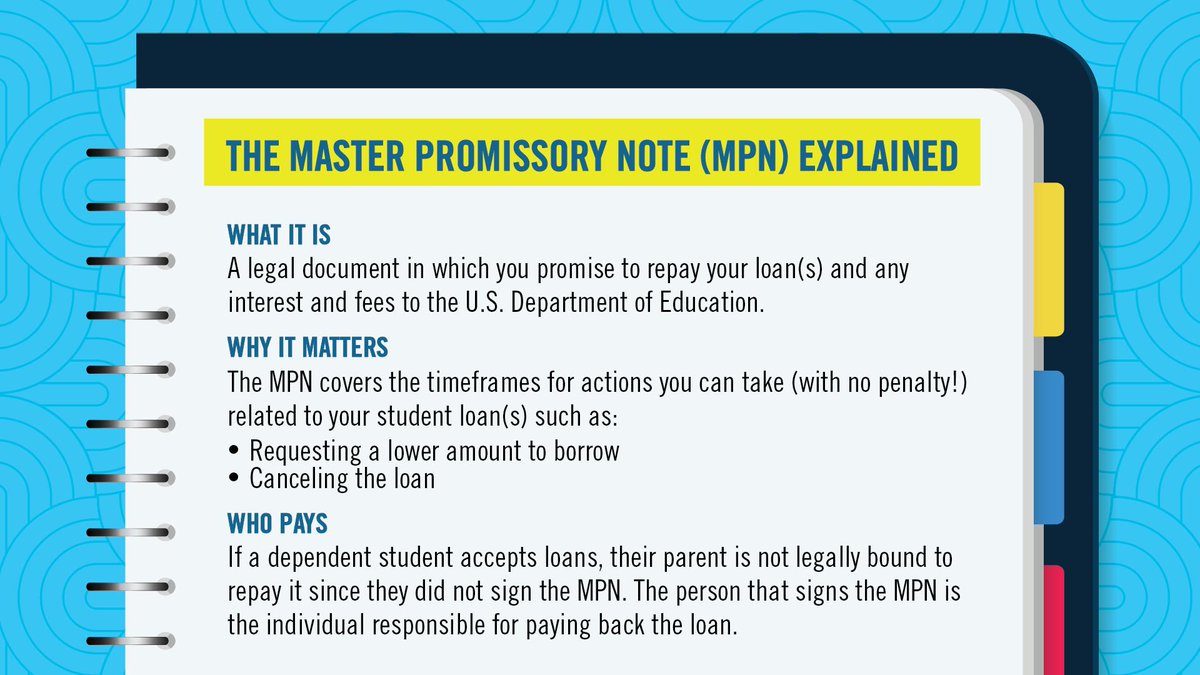
Before delving into the subsequent stages, it’s vital to grasp the foundational role of the MPN itself. Far from a mere formality, the MPN is a legally binding document that outlines the terms and conditions of your loan. By signing it, you agree to repay the loan, including accrued interest and fees, to the U.S. Department of Education or the lender. It signifies your commitment and understanding of the financial obligation you are undertaking.
What an MPN Is and Why It’s Required
An MPN is essentially a promise to repay. It’s a master document because, for federal student loans, it can be used for multiple loans over a period of up to 10 years, meaning you might not need to sign a new MPN each academic year. This streamlines the borrowing process, allowing you to secure subsequent federal student loans based on the initial agreement, provided you continue to meet eligibility requirements.
The requirement for an MPN stems from the need for a standardized legal agreement between the borrower and the lender. It covers critical aspects such as:
-
Your obligation to repay: A clear statement of your responsibility.
-
Interest rates: How interest is calculated and applied.
-
Fees: Any origination fees or other charges associated with the loan.
-
Repayment terms: When repayment begins, the length of the repayment period, and available plans.
-
Deferment and forbearance options: Circumstances under which payments can be temporarily postponed.
-
Consequences of default: The serious repercussions of failing to repay the loan as agreed.
Without a signed MPN, your loan cannot be disbursed, as there would be no legal contract enforcing repayment.
Confirmation, Disclosure, and Loan Disbursement Process
Once you’ve signed your MPN, the wheels of the financial aid system begin to turn. The first immediate step typically involves the lender (for federal loans, this is the Department of Education through its servicers) confirming your MPN.
Following this confirmation, you will receive a disclosure statement for each loan awarded under that MPN. This statement is a critical document that provides specific details about your loan, including the exact loan amount, interest rate, disbursement dates, and any associated fees. It’s imperative to review these statements carefully to ensure they match your expectations and financial aid package. Any discrepancies should be addressed with your school’s financial aid office immediately.
Loan disbursement is the process by which your loan funds are released. For federal student loans, the funds are typically sent directly to your school. The school then applies the funds to your tuition, fees, and other authorized charges. If there’s a remaining balance after these deductions, it’s refunded to you to cover other educational expenses, such as housing, books, and living costs. Federal regulations often require loans to be disbursed in at least two installments, usually at the beginning of each semester or academic term. There’s also usually a waiting period (often 30 days) before the first disbursement for first-time, first-year undergraduate borrowers.
Understanding Your Loan Servicer
A crucial element that emerges after signing your MPN is the assignment of a loan servicer. While the Department of Education is your lender for federal student loans, it uses several loan servicers to manage the billing, collections, and customer service for these loans. You won’t directly interact with the Department of Education for day-to-day loan management. Instead, your loan servicer will be your primary point of contact for:
-
Making payments: They process your monthly installments.
-
Providing statements: They send you billing statements and annual summaries.
-
Answering questions: They are equipped to handle inquiries about your loan balance, interest, and repayment options.
-
Processing deferment or forbearance requests: They manage applications for temporary payment postponements.
-
Helping with repayment plan changes: They can assist you in switching between different repayment plans.
It is absolutely essential to know who your loan servicer is. You can find this information by logging into your account on the Federal Student Aid (FSA) website (StudentAid.gov). Once identified, create an online account with your servicer, update your contact information, and familiarize yourself with their platform. Proactive engagement with your servicer is key to successful loan management.
Navigating the Grace Period and Preparing for Repayment
After your loan is disbursed, you typically won’t begin repayment immediately, especially for student loans. A grace period is usually granted, offering a buffer between leaving school and starting to make payments. This period is a critical window for financial planning.
The Grace Period Explained
Most federal student loans, specifically Direct Subsidized and Unsubsidized Loans, come with a six-month grace period after you graduate, leave school, or drop below half-time enrollment. During this time, you are not required to make payments.
-
Direct Subsidized Loans: The government pays the interest during your grace period, meaning the loan balance won’t grow.
-
Direct Unsubsidized Loans: Interest does accrue during the grace period. While you’re not required to pay it, this accrued interest will be capitalized (added to your principal balance) at the end of the grace period, increasing the total amount you owe. Paying the interest during your grace period, if possible, can save you money in the long run.
The grace period for Direct PLUS Loans (for graduate students and parents) works differently. Parent PLUS Loans typically enter repayment 60 days after the final disbursement, though borrowers can request a deferment. Graduate PLUS Loans have the same six-month grace period as subsidized/unsubsidized loans.
Use your grace period wisely. It’s not just a break from payments; it’s an opportunity to solidify your financial standing and prepare for the regular obligations that are about to begin.
When Repayment Begins and Initial Steps
Once your grace period concludes, your loan officially enters repayment status. Your loan servicer will send you notices and billing statements well in advance of your first payment due date. These communications will outline:
-
Your first payment due date.
-
Your monthly payment amount.
-
Information about your assigned repayment plan (often the Standard Repayment Plan by default).
-
Instructions on how to make payments.
Upon receiving these notices, your immediate steps should include:
-
Confirming your repayment plan: Ensure you understand the plan you’re on and if it aligns with your financial capacity.
-
Setting up payment reminders: Mark your calendar or set up digital reminders for your payment due dates.
-
Considering auto-debit: Enrolling in automatic payments can often result in a 0.25% interest rate reduction for federal loans and ensures you never miss a payment, preventing late fees and negative credit impacts.
Choosing and Changing a Repayment Plan
Federal student loans offer a variety of repayment plans designed to accommodate different financial situations. While you might be automatically enrolled in the Standard Repayment Plan (fixed payments for up to 10 years), it’s crucial to evaluate if this is the best fit for you.
Other common repayment plans include:
-
Graduated Repayment Plan: Payments start low and gradually increase every two years, suitable for those expecting their income to rise over time.
-
Extended Repayment Plan: Offers lower monthly payments by extending the repayment period up to 25 years, but you’ll pay more interest overall.
-
Income-Driven Repayment (IDR) Plans: These plans (REPAYE, PAYE, IBR, ICR) tie your monthly payment to your income and family size, adjusting payments annually. They are particularly beneficial for borrowers with high debt relative to their income and may offer loan forgiveness after 20 or 25 years of qualifying payments.
-
Income-Sensitive Repayment Plan: For Federal Family Education Loan (FFEL) Program loans, similar to IDR plans.
It’s vital to research and understand each plan’s pros and cons. You can switch between repayment plans at any time, typically without penalty, by contacting your loan servicer. Choosing the right plan can significantly impact your financial well-being, potentially making your loan more manageable or saving you money over the life of the loan.
Ongoing Loan Management and Future Considerations
Managing your loan isn’t a one-time event; it’s an ongoing commitment that requires periodic review and adjustments based on your life circumstances. Proactive management can prevent financial distress and potentially reduce your overall cost of borrowing.
Monitoring Your Loan Balance and Interest Accrual
Regularly checking your loan servicer account is crucial. This allows you to:
-
Track your principal balance: See how much you still owe.
-
Monitor interest accrual: Understand how interest is adding to your total debt, especially for unsubsidized loans.
-
Review payment history: Ensure all your payments are correctly recorded.
-
Access tax documents: Retrieve your 1098-E student loan interest statement for tax deductions.
Understanding the components of your payment – how much goes to interest versus principal – can also motivate you to make extra payments when possible.
Options for Financial Hardship: Deferment and Forbearance
Life can throw unexpected curveballs, such as job loss, illness, or economic downturns. Federal student loan programs offer temporary relief options if you face financial hardship:
-
Deferment: Allows you to temporarily postpone loan payments. During deferment, the government often pays the interest on subsidized loans, so your balance doesn’t grow. Common reasons for deferment include unemployment, economic hardship, military service, and enrollment in school.
-
Forbearance: Also allows you to temporarily stop or reduce your loan payments. However, interest typically accrues on all loan types (subsidized and unsubsidized) during forbearance and is then capitalized, increasing your total debt. Forbearance is usually granted for shorter periods or for situations not covered by deferment.
While these options provide vital safety nets, it’s generally advisable to exhaust all other options, like income-driven repayment plans, before utilizing forbearance due to the interest capitalization. Always contact your loan servicer before you miss a payment to discuss your options.
Making Extra Payments and Early Payoff Strategies
If your financial situation improves, consider strategies to pay off your loan faster. Making extra payments can significantly reduce the total interest you pay and shorten your repayment period.
-
Applying extra payments to the principal: When making an extra payment, explicitly instruct your servicer to apply the additional amount directly to the principal balance of the loan with the highest interest rate. This strategy, known as the “debt avalanche” method, saves the most money over time.
-
Bi-weekly payments: Instead of one monthly payment, pay half the amount every two weeks. This results in one extra full payment per year, accelerating your payoff.
-
Round up payments: If your payment is $280, consider paying $300. Those small, consistent increases add up.
-
Windfalls: Use bonuses, tax refunds, or unexpected income to make lump-sum payments.
Paying off your loans early offers substantial financial benefits, freeing up cash flow for other financial goals.
Long-Term Implications and Comprehensive Financial Planning
Your student loans are not isolated financial products; they are an integral part of your overall financial picture. Understanding their long-term implications and integrating them into a broader financial strategy is crucial for achieving financial freedom.
Impact on Credit Score
Your student loan repayment history directly impacts your credit score.
-
Positive impact: Consistent, on-time payments demonstrate financial responsibility and build a positive credit history, which is beneficial for future borrowing (mortgages, car loans) and even for employment background checks.
-
Negative impact: Missed payments, late payments, or default will severely damage your credit score, making it difficult to obtain credit, rent an apartment, or even secure certain jobs. Defaulting on federal student loans also carries additional severe consequences, including wage garnishment, tax refund offset, and loss of eligibility for future federal aid.
It’s imperative to prioritize on-time payments to protect and build your credit health.
Refinancing and Consolidation Considerations
As your financial situation evolves, you might explore options to optimize your loans:
-
Federal Direct Consolidation Loan: This option allows you to combine multiple federal student loans into a single new loan with one servicer and one monthly payment. It can simplify repayment and potentially unlock eligibility for certain income-driven repayment plans or Public Service Loan Forgiveness. The interest rate is a weighted average of your existing loans, rounded up to the nearest one-eighth of a percentage point.
-
Private Loan Refinancing: This involves taking out a new loan from a private lender to pay off your existing federal and/or private student loans. The primary motivation for refinancing is usually to secure a lower interest rate, which can save a significant amount of money, or to consolidate private and federal loans into a single private loan. However, refinancing federal loans into a private loan means forfeiting valuable federal loan benefits like access to income-driven repayment plans, generous deferment/forbearance options, and potential loan forgiveness programs. This decision requires careful consideration.

Integrating Loan Repayment into Your Overall Financial Strategy
Your student loan strategy should be a component of your broader financial plan. Consider:
-
Budgeting: Incorporate your monthly loan payment into your regular budget.
-
Emergency Fund: Prioritize building an emergency fund (3-6 months of living expenses) before aggressively paying off student loans, as this provides a buffer against unexpected financial shocks.
-
Other Financial Goals: Balance loan repayment with other financial goals, such as saving for retirement, a down payment on a home, or investing. The “debt vs. investing” debate often depends on your loan interest rates and your risk tolerance.
-
Financial Literacy: Continuously educate yourself about personal finance, investing, and debt management to make informed decisions throughout your life.
Signing the Master Promissory Note is merely the gateway to your loan journey. What happens after is a dynamic process of monitoring, planning, and adapting. By staying informed, actively engaging with your loan servicer, and integrating your loan management into a comprehensive financial strategy, you can navigate the complexities of student debt and set yourself on a path toward financial success and freedom.
aViewFromTheCave is a participant in the Amazon Services LLC Associates Program, an affiliate advertising program designed to provide a means for sites to earn advertising fees by advertising and linking to Amazon.com. Amazon, the Amazon logo, AmazonSupply, and the AmazonSupply logo are trademarks of Amazon.com, Inc. or its affiliates. As an Amazon Associate we earn affiliate commissions from qualifying purchases.