
For many workers navigating the often complex and arduous journey of a work-related injury, the declaration of “permanent and stationary” (P&S) status represents a critical inflection point. This medical determination, signifying that your condition has reached maximum medical improvement (MMI) and is unlikely to improve further, marks a shift from active treatment to a phase focused on resolving the financial and practical implications of your permanent impairment. Far from being an endpoint, it’s the beginning of a new chapter that demands careful financial planning, strategic decision-making, and often, professional guidance to secure your economic future.
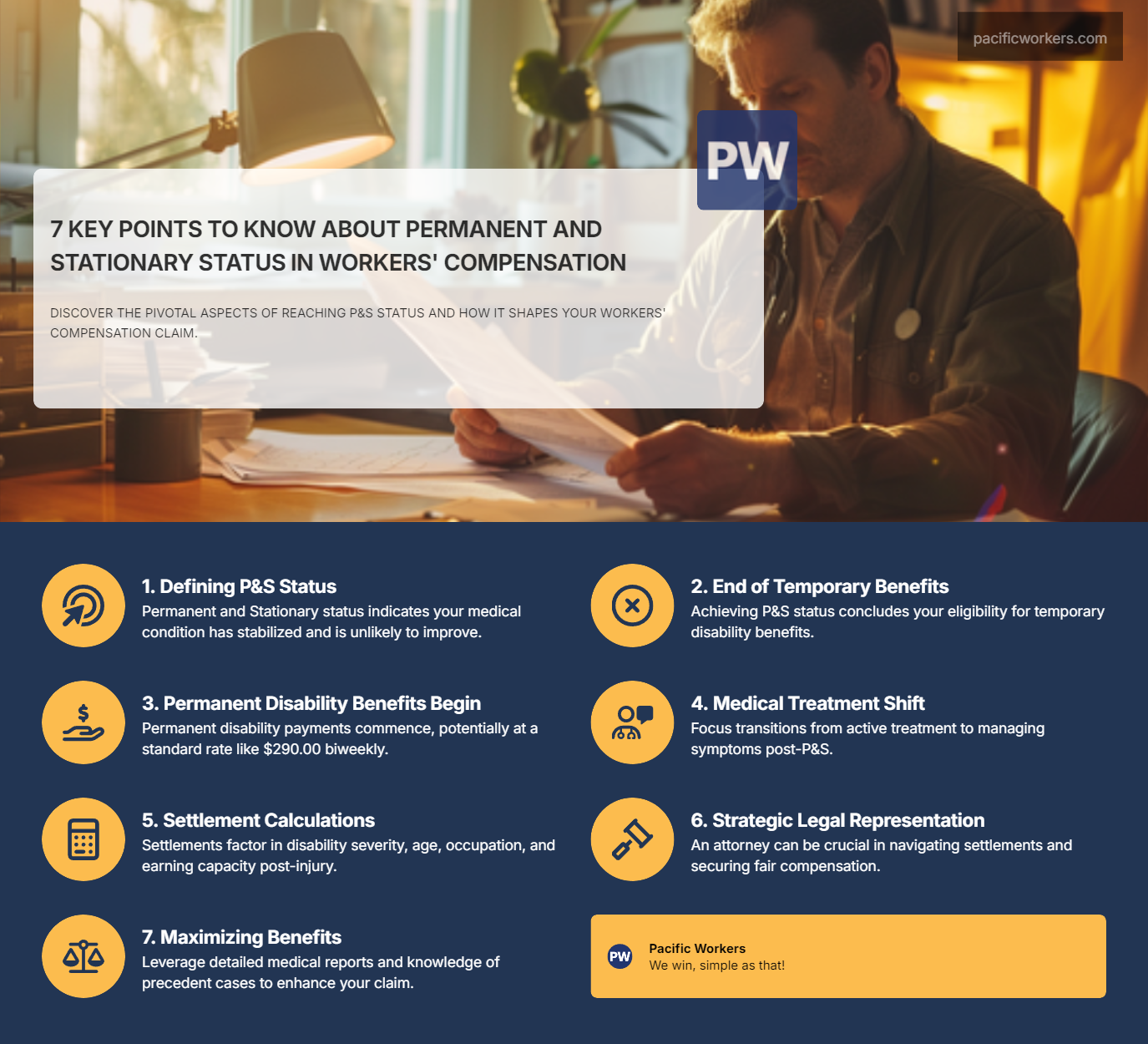
Understanding Permanent and Stationary Status
The concept of “permanent and stationary” is foundational to the workers’ compensation system, yet its implications are frequently misunderstood by injured workers. Grasping this status is the first step toward effectively managing the subsequent financial decisions.
The Definition of P&S
A worker is declared permanent and stationary when their treating physician determines that their medical condition, stemming from a work-related injury or illness, has stabilized and is not expected to improve with further medical treatment. This doesn’t necessarily mean the worker is entirely free of pain or symptoms, nor does it imply a complete recovery. Instead, it signifies that the worker has reached their maximum medical improvement (MMI). At this juncture, the medical focus shifts from active healing to managing the remaining symptoms and assessing any lasting impairment.
Reaching Maximum Medical Improvement (MMI)
MMI is the clinical benchmark for P&S status. It means that any further medical interventions, surgeries, physical therapy, or medication changes are unlikely to produce significant improvement in the worker’s condition. While a doctor might continue to prescribe medication for pain management or suggest assistive devices, these are considered palliative or supportive measures, not treatments aimed at improving the underlying injury. The determination of MMI is crucial because it triggers the formal evaluation of permanent disability and sets the stage for the calculation of benefits. This phase often involves a final medical report from your primary treating physician or an Agreed Medical Evaluator (AME) or Qualified Medical Evaluator (QME), which details your remaining limitations and potential future medical needs.
Financial Implications and Next Steps
Once declared P&S, the financial gears of the workers’ compensation system move into their final phases. This is where the long-term monetary impact of your injury truly comes into focus, necessitating a proactive approach to understanding and maximizing your entitlements.
Permanent Disability Ratings and Impairment
A core component of P&S status is the assessment of permanent disability (PD). After reaching MMI, your physician, AME, or QME will evaluate your remaining physical or mental limitations and assign an impairment rating. This rating is a medical assessment of your permanent functional limitations resulting from the work injury. This medical impairment rating is then typically translated into a permanent disability rating, which considers factors like your age, occupation, and the severity of the injury. The permanent disability rating directly influences the amount of permanent disability benefits you are eligible to receive. These benefits are intended to compensate you for the reduction in your ability to compete in the open labor market or earn a living due to your work injury. Understanding how this rating is calculated and what factors influence it is paramount, as it directly correlates with your financial compensation.
Settlement Options: Stipulation with Award vs. Compromise and Release
With a permanent disability rating established, two primary settlement options typically emerge, each with distinct financial implications:
-
Stipulation with Award: This agreement specifies your permanent disability rating, the weekly amount of permanent disability benefits, and usually outlines your right to future medical care for the industrial injury. Under this type of settlement, the insurance company agrees to pay your permanent disability benefits over a period, and you retain the right to petition for future medical treatment related to the injury. This can be beneficial if your future medical needs are uncertain but likely to be ongoing and substantial.
-
Compromise and Release (C&R): This is a full and final settlement of your entire workers’ compensation claim. In exchange for a lump sum payment, you give up your right to all future benefits related to the injury, including permanent disability payments, vocational rehabilitation, and future medical care. This option offers immediate financial liquidity but requires careful consideration of your long-term medical and financial needs. A C&R can be attractive for those who want to sever ties with the workers’ compensation system and manage their own medical care, or who need a substantial sum for immediate financial obligations or investments. However, it also shifts the entire burden of future medical costs onto you.

Choosing between these options requires a thorough financial analysis of your present needs versus your projected future expenses, especially medical costs.
Medical Benefits Post-P&S
Even after being declared P&S, your right to medical treatment for the work injury may continue, especially if you settle via a Stipulation with Award. This ongoing medical care is for maintenance, palliative care, or treatment aimed at preventing a decline in your condition, rather than improving it. However, the scope and approval process for post-P&S medical care can be stringent. If you opt for a Compromise and Release, all future medical expenses for the industrial injury become your responsibility, necessitating robust planning for health insurance coverage and potential out-of-pocket costs. It’s crucial to understand the nuances of what medical care is covered and how to obtain authorization for it after your P&S status is confirmed, particularly if your injury is severe or degenerative.
Vocational Rehabilitation and Retraining Benefits
If your permanent disability prevents you from returning to your previous job or occupation, you may be entitled to vocational rehabilitation or supplemental job displacement benefits (SJDB). These benefits are designed to help you retrain for a new career, enhance your skills, or find modified work that accommodates your restrictions. The financial assistance provided can cover educational expenses, training programs, or job placement services. For many, this represents a vital lifeline, allowing them to re-enter the workforce in a capacity that aligns with their new physical or mental capabilities, thereby mitigating the long-term financial impact of the injury. Eligibility and the scope of these benefits vary by jurisdiction and the specific circumstances of your case.
Navigating Your Financial Future
Being declared permanent and stationary is a pivotal moment that reshapes your financial landscape. Proactive planning and strategic decision-making are essential to ensure long-term stability and security.
Long-Term Financial Planning
The declaration of P&S necessitates a comprehensive review and often a complete overhaul of your personal financial plan. This includes assessing your new income potential, evaluating the sufficiency of your workers’ compensation settlement (whether a structured award or lump sum), and planning for any ongoing medical expenses. Consider creating a detailed budget that accounts for reduced income, potential increases in daily living expenses due to your impairment (e.g., accessibility modifications, specialized equipment), and the costs of any future medical care not covered by insurance. It’s also an opportune time to revisit your retirement planning, investments, and insurance policies (life, disability, health) to ensure they adequately reflect your changed circumstances and provide sufficient protection.
Managing Medical Costs and Ongoing Care
One of the most significant financial challenges post-P&S, especially after a Compromise and Release, is managing ongoing medical costs. Without the direct support of the workers’ compensation system for future medical care, you must have a clear strategy. This involves securing robust health insurance coverage, understanding deductibles, co-pays, and out-of-pocket maximums, and potentially setting aside a portion of any lump-sum settlement specifically for medical expenses. Researching government programs (like Medicare or Medicaid, if eligible) or private insurance options that can effectively cover your condition is critical. For those with significant long-term needs, exploring a medical trust or structured settlement for the medical portion of your award could offer greater financial predictability and protection.
Exploring New Income Streams or Modified Work
If your injury prevents you from returning to your pre-injury job, exploring new income streams or modified work becomes imperative. This might involve utilizing vocational rehabilitation benefits to retrain for a less physically demanding profession, seeking part-time employment, or even starting a home-based business that accommodates your physical limitations. Consider leveraging existing skills or developing new ones through online courses or certification programs. The goal is to rebuild your earning capacity in a way that is sustainable and aligns with your new physical realities. This might also entail advocating for reasonable accommodations in your workplace if you are able to return to some form of work with your previous employer.
Seeking Professional Guidance
The complexities surrounding P&S status, permanent disability ratings, settlement options, and long-term financial planning are substantial. Attempting to navigate these waters alone can lead to costly mistakes and overlooked opportunities.
The Role of a Workers’ Compensation Attorney
A qualified workers’ compensation attorney is an invaluable ally after a P&S declaration. They can explain your rights, help you understand the nuances of your permanent disability rating, negotiate with the insurance company on your behalf, and ensure you receive the maximum benefits you are entitled to. An attorney can also help you evaluate settlement offers, advising whether a Stipulation with Award or a Compromise and Release is more advantageous given your specific medical condition, financial needs, and long-term outlook. Their expertise is crucial in reviewing complex legal documents, identifying potential pitfalls, and representing your interests in court if necessary.

Financial Advisors and Future Security
Beyond legal counsel, consulting with a financial advisor specializing in injury settlements or long-term financial planning can provide crucial insights. A financial advisor can help you manage a lump-sum settlement, create an investment strategy that accounts for your new income profile and future expenses, and develop a comprehensive financial plan that ensures your long-term security. They can also assist with budgeting, understanding tax implications of settlements, and integrating your workers’ compensation benefits with other potential income sources or government programs. This holistic approach ensures that the compensation received serves as a foundation for a stable financial future, rather than a temporary fix.
aViewFromTheCave is a participant in the Amazon Services LLC Associates Program, an affiliate advertising program designed to provide a means for sites to earn advertising fees by advertising and linking to Amazon.com. Amazon, the Amazon logo, AmazonSupply, and the AmazonSupply logo are trademarks of Amazon.com, Inc. or its affiliates. As an Amazon Associate we earn affiliate commissions from qualifying purchases.