
For millions of federal student loan borrowers, the Saving on a Valuable Education (SAVE) plan was presented as a revolutionary shift in the landscape of personal finance. Launched by the Biden-Harris administration, it was designed to be the most affordable income-driven repayment (IDR) plan in history, promising to slash monthly payments, prevent the runaway accumulation of interest, and provide a faster track to loan forgiveness. However, in a matter of months, the plan transitioned from a cornerstone of federal policy to the center of a high-stakes legal battle.

As of late 2024, the SAVE plan is currently in a state of legal limbo, leaving borrowers, financial advisors, and policy experts grappling with a complex web of injunctions, administrative forbearances, and uncertain futures. Understanding what happened to the SAVE plan requires a deep dive into its original mechanics, the legal challenges that halted its implementation, and the immediate financial implications for those caught in the crossfire.
Understanding the SAVE Plan: The Most Generous IDR in History
To understand the current crisis, one must first understand what made the SAVE plan so significant within the context of personal finance. For decades, student loan repayment was often a math problem that many borrowers simply couldn’t solve. Even while making regular payments under previous IDR plans, many saw their balances grow due to interest that exceeded their monthly payment amounts.
How SAVE Differed from REPAYE and Other IDR Plans
The SAVE plan was technically a rebranding and significant enhancement of the Revised Pay As You Earn (REPAYE) plan. It introduced three primary pillars that fundamentally changed the math of student debt:
- Increased Income Protection: The SAVE plan protected a much larger portion of a borrower’s income from being used for loan payments. It increased the discretionary income exemption from 150% of the federal poverty guideline to 225%. For a single borrower, this meant that roughly the first $32,800 of annual income was exempt from payment calculations.
- Reduced Payment Percentages: For those with undergraduate loans, the plan was designed to cut monthly payments in half—moving from 10% of discretionary income to just 5%. Borrowers with a mix of undergraduate and graduate loans would pay a weighted average between 5% and 10%.
- The Interest Subsidy: Perhaps the most radical feature was the elimination of unpaid interest. As long as a borrower made their calculated monthly payment (even if that payment was $0), the government would waive any remaining interest that accrued that month. This effectively ended the phenomenon of “negative amortization,” where borrowers owed more than they originally borrowed despite making payments for years.
The Faster Path to Forgiveness
The SAVE plan also introduced a provision for borrowers with smaller original loan balances. Those who borrowed $12,000 or less could see their remaining balance forgiven after just 10 years of payments, rather than the standard 20 or 25 years required by other IDR plans. For every $1,000 borrowed above $12,000, an additional year of payments was required, up to a maximum cap.
The Legal Battle: Why the SAVE Plan is Currently on Ice
The implementation of the SAVE plan was met with immediate and vigorous legal opposition. Several states, led primarily by Republican attorneys general, filed lawsuits arguing that the Department of Education exceeded its authority by creating a plan that was so generous it effectively bypassed the legislative process.
The Injunctions and Court Rulings
In June 2024, two separate federal judges in Kansas and Missouri issued preliminary injunctions that partially blocked the SAVE plan. While the Kansas ruling initially focused on the payment reduction from 10% to 5%, the Missouri ruling took a broader aim at the plan’s forgiveness provisions.
The situation escalated rapidly in July 2024, when the 8th U.S. Circuit Court of Appeals issued a sweeping administrative stay. This ruling effectively blocked the Department of Education from implementing or enforcing any further parts of the SAVE plan. The court’s intervention was a response to arguments that the Higher Education Act does not grant the executive branch the power to cancel such vast amounts of debt or fundamentally alter repayment structures without explicit Congressional approval.
The Core Arguments Against the Plan
The legal challenges generally hinge on the “Major Questions Doctrine,” a Supreme Court principle that suggests executive agencies cannot make decisions of vast economic and political significance without clear authorization from Congress. Opponents argue that the SAVE plan is not a mere adjustment to repayment terms but a massive, unauthorized spending program that shifts the cost of higher education from borrowers to taxpayers. Furthermore, they argue that the plan harms state-based loan servicers and tax revenues, providing the legal “standing” necessary to bring the lawsuits.
What This Means for Borrowers Right Now
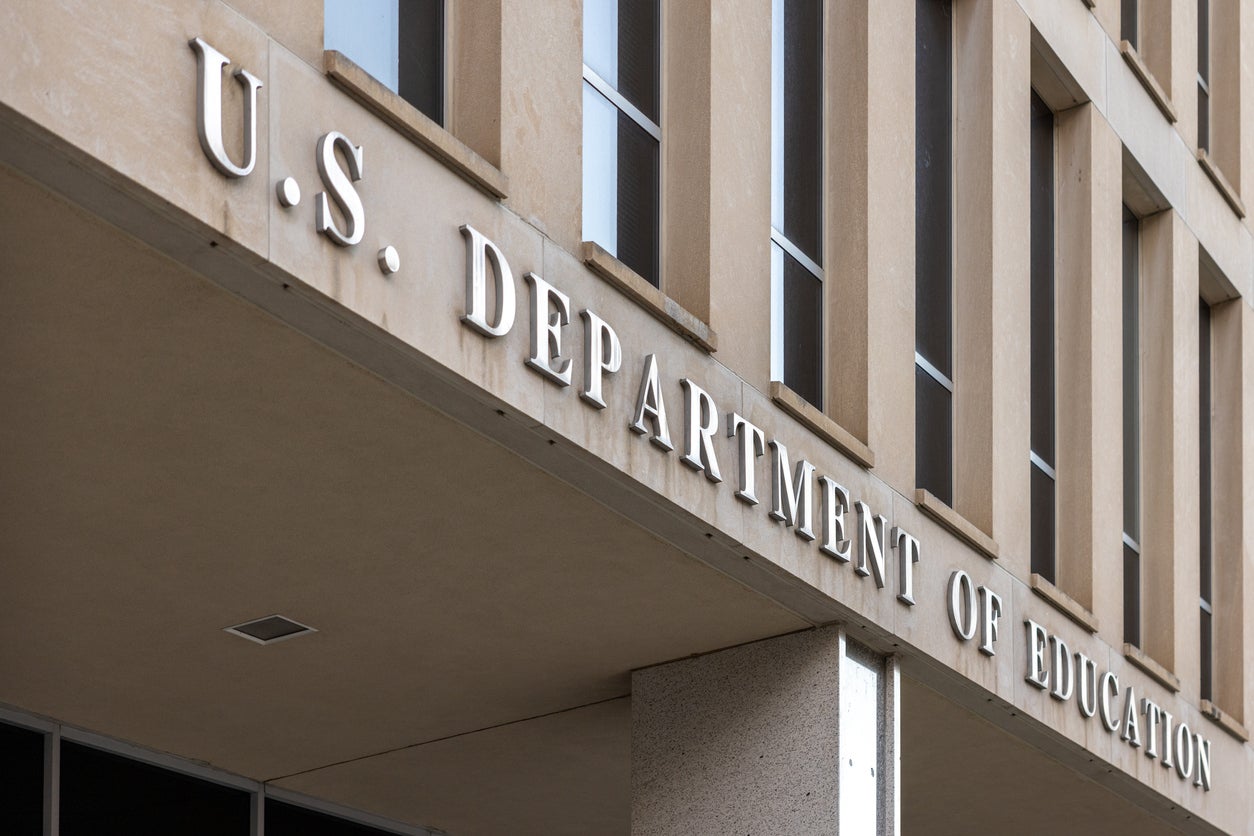
The legal freeze has created a chaotic environment for the roughly 8 million borrowers who had already enrolled in the SAVE plan. The Department of Education has been forced to take drastic measures to comply with court orders while attempting to minimize the damage to individual financial lives.
The Administrative Forbearance Period
Because the Department of Education cannot legally process payments under the SAVE plan’s current structure, it has placed all enrolled borrowers into a mandatory “administrative forbearance.”
During this period:
- No payments are due: Borrowers are not required to make monthly payments.
- Interest is set to 0%: To prevent borrowers from being penalized by the legal delay, the government has paused interest accrual.
- No credit toward forgiveness: This is the most significant downside. Time spent in this specific administrative forbearance does not count toward the 20- or 25-year forgiveness timeline required by IDR plans.
Impact on Public Service Loan Forgiveness (PSLF)
For those working in the public sector or for non-profits, the SAVE plan freeze is particularly distressing. To qualify for Public Service Loan Forgiveness, a borrower must make 120 “qualifying payments.” Under the current 8th Circuit injunction, the months spent in administrative forbearance for the SAVE plan do not count as qualifying months for PSLF.
This has effectively paused the progress of hundreds of thousands of teachers, nurses, and government employees who were on the cusp of total debt discharge. While some borrowers may eventually be able to “buy back” these months if they meet certain criteria later, the current lack of progress is a major setback for long-term financial planning.
Navigating the Uncertainty: Strategic Financial Moves
In the absence of a final court ruling, borrowers must take a proactive approach to their personal finances. The “wait and see” approach is common, but it requires a strategic understanding of how to manage cash flow and debt obligations during this period of volatility.
To Pay or Not to Pay?
For those in the SAVE plan administrative forbearance, interest is not accruing. From a purely mathematical standpoint, there is little incentive to make payments right now. Instead, savvy borrowers are redirecting their would-be loan payments into high-yield savings accounts (HYSAs) or money market funds. This allows the money to earn interest for the borrower while they wait for the courts to decide the fate of the plan. If the plan is upheld, they can use those savings to make a lump-sum payment or continue regular payments. If the plan is struck down, they have a cash reserve to navigate the transition to a different repayment program.
Exploring Alternative Repayment Options
The Department of Education has temporarily disabled the online IDR application portal while they update their systems to reflect the court orders. Borrowers who wish to switch out of the SAVE plan and into a different plan—such as the Income-Based Repayment (IBR) plan—must currently submit paper applications.
However, switching plans is not a decision to be made lightly. The IBR plan generally has a higher payment calculation (15% of discretionary income for older borrowers) and does not offer the same interest subsidy as the SAVE plan. For many, staying in the interest-free forbearance of the SAVE plan is the most financially sound move until a final Supreme Court ruling provides clarity.

The Long-Term Outlook for Federal Student Loans
The fate of the SAVE plan is likely headed to the U.S. Supreme Court. The outcome will have profound implications for the future of student debt in America and the broader financial health of millions of households.
If the SAVE plan is permanently struck down, it will represent a significant shift in the federal government’s ability to manage the student loan crisis. Borrowers will likely be transitioned back to older, less generous plans, potentially leading to a spike in delinquency and default rates. It would also force a massive re-calculation of discretionary spending for millions of consumers, which could have a cooling effect on the broader economy.
Conversely, if the plan is upheld, it will solidify a new era of student lending where the “debt trap” of compounding interest is largely neutralized for lower- and middle-income earners. This would allow a generation of borrowers to pivot their financial focus toward homeownership, retirement savings, and entrepreneurship.
For now, the mantra for borrowers is “vigilance.” Keeping a close eye on Department of Education communications, maintaining a robust emergency fund, and understanding the nuances of loan capitalization are essential components of a modern financial strategy. The SAVE plan was meant to provide a clear path forward; instead, it has become a masterclass in the intersection of law, politics, and personal finance. Until the legal dust settles, the “save” in the SAVE plan remains a question mark rather than a guarantee.
aViewFromTheCave is a participant in the Amazon Services LLC Associates Program, an affiliate advertising program designed to provide a means for sites to earn advertising fees by advertising and linking to Amazon.com. Amazon, the Amazon logo, AmazonSupply, and the AmazonSupply logo are trademarks of Amazon.com, Inc. or its affiliates. As an Amazon Associate we earn affiliate commissions from qualifying purchases.