
The mystery of the Indus Valley, or Harappan civilization, has captivated historians for decades. However, when viewed through the lens of modern brand strategy and corporate identity, the story of the Harappans transforms from a mere archaeological puzzle into a profound case study on the lifecycle of a brand. At its peak (circa 2600–1900 BCE), the Harappan civilization was not just a collection of city-states; it was a cohesive, standardized, and highly recognizable “global brand” that dominated the ancient markets of South Asia and Mesopotamia.

To understand what happened to the Harappan civilization is to understand the risks of extreme brand rigidity, the failure to pivot in the face of market disruption, and the eventual dissolution of a corporate identity that once seemed invincible.
The Foundation: Building the World’s First Standardized Brand Identity
Long before the modern concept of “Brand Guidelines,” the Harappans mastered the art of visual and functional consistency. If you were to walk into any Harappan city—whether Mohenjo-Daro, Harappa, or Lothal—the “user experience” (UX) was remarkably identical. This level of consistency is something modern multinational corporations strive for today.
The Style Guide of the Bronze Age
The most striking evidence of Harappan brand consistency lies in their architecture and infrastructure. They utilized a standardized brick ratio of 1:2:4. Regardless of whether a building was in the far north or the coastal south, the materials remained the same. This was the “corporate identity” in physical form. By maintaining this strict adherence to specifications, the Harappan “brand” signaled reliability, engineering prowess, and a unified governance system to all who entered their territories.
The Harappan Seal: Logo and Authenticity
In brand strategy, a logo serves as a mark of trust and origin. The Harappan seals, featuring the famous “unicorn” or bull motifs accompanied by an undeciphered script, served as the ultimate brand mark. These seals were used to “brand” goods for export. When a merchant in Mesopotamia saw a seal from the Indus Valley, they knew exactly what level of quality to expect. This was a sophisticated system of quality control and intellectual property that allowed their “brand” to command a premium in international trade.
Urban Planning as User Experience
The Harappan cities were the “Apple Stores” of the ancient world—clean, minimalist, and hyper-functional. Their advanced drainage systems and grid-like street layouts were designed for optimal flow and hygiene. This wasn’t just engineering; it was a commitment to a specific brand promise: a lifestyle of order and sanitation that was unmatched by their contemporary competitors in Egypt or Sumeria.
Market Dominance: The Logistics of a Trade Powerhouse
The Harappan civilization didn’t just exist in a vacuum; it was a trade-centric entity that built a vast network of “subsidiaries” and trade outposts. Their “brand” was synonymous with high-value commodities, including carnelian beads, lapis lazuli, and textiles.
Strategic Positioning in Global Markets
The Harappans were masters of strategic positioning. They established the outpost of Shortughai in modern-day Afghanistan specifically to control the “supply chain” of lapis lazuli. By owning the source and the distribution, they acted as a vertically integrated corporation. Their presence in the Persian Gulf and Mesopotamia shows a brand that was not afraid to go global, adapting its “marketing” to meet the needs of distant consumers while maintaining its core identity.
Standardized Weights and Measures
One of the most effective tools for market dominance is the creation of a standard that everyone else must follow. The Harappans developed a sophisticated system of binary and decimal weights. By enforcing these standards across thousands of miles, they eliminated “transaction friction”—a key goal in modern business finance and brand strategy. When you traded with a Harappan, there was no ambiguity. The “Indus Standard” was the gold standard of the Bronze Age, reinforcing the brand’s reputation for fairness and precision.

The Dissolution: Why the Brand Failed to Pivot
If the Harappan brand was so successful and standardized, what led to its disappearance? In branding, the greatest danger is often the inability to adapt to a changing market—or in this case, a changing environment. The collapse of the Harappan civilization was not a sudden “bankruptcy” but a long, agonizing “brand dilution.”
Climate Change as Market Disruption
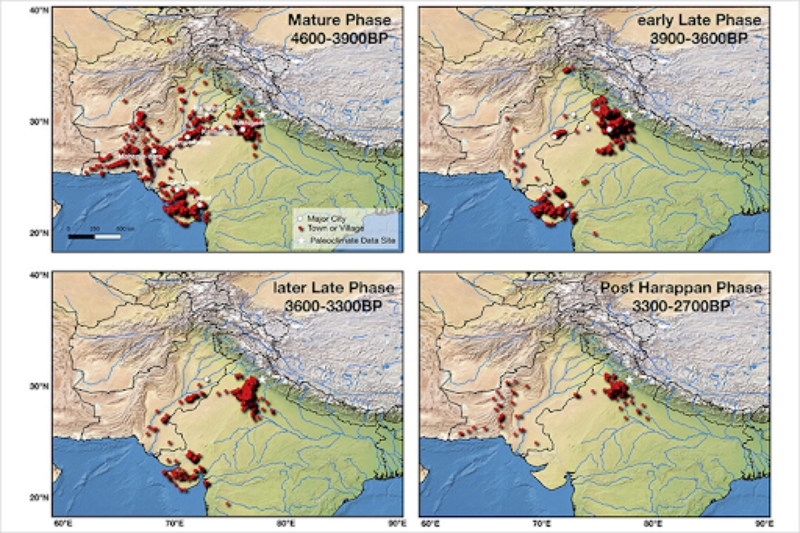
Every brand operates within an ecosystem. For the Harappans, that ecosystem was the Sarasvati-Indus river system. Geological and climatic shifts led to the drying up of major river arteries and the redirection of water sources. In modern terms, this was a massive disruption to their primary “infrastructure.” Instead of innovating or pivoting their “business model” to a more nomadic or decentralized approach, the Harappans clung to their rigid urban structures for as long as possible.
The Failure of the “Central Office”
As the environment changed, the highly centralized “corporate” structure of Harappan society began to fracture. When the cities could no longer support the massive populations, the “brand promise” of safety and order was broken. We see a decline in the quality of urban maintenance—houses were built over old streets, and the once-pristine drainage systems fell into disrepair. This is the equivalent of a luxury brand losing its quality control; once the “customer” (the citizen) loses faith in the brand’s core value proposition, the organization begins to collapse from within.
De-branding and the Loss of Literacy
One of the most tragic aspects of the Harappan collapse was the loss of their script. As people migrated away from the large urban centers to smaller, rural settlements in the east and south, they abandoned the “Harappan Brand” entirely. They stopped using the standardized weights, they stopped carving the iconic seals, and they stopped using the script. This “de-branding” was a survival strategy. The high-overhead “corporate” lifestyle of the cities was no longer viable in a resource-scarce environment.
Lessons for Modern Brand Longevity
The story of the Harappan civilization offers timeless lessons for today’s brand strategists and corporate leaders. While their collapse happened thousands of years ago, the mechanics of their decline are eerily familiar to the “innovator’s dilemma” faced by modern tech and lifestyle brands.
The Perils of Over-Standardization
The Harappans were so committed to their “style guide” that they lacked the flexibility to adapt. When the environment changed, their rigid systems became a liability. For modern brands, this highlights the importance of “Brand Agility.” A brand identity must be strong enough to be recognizable but flexible enough to evolve when the market (or the environment) shifts.
The Importance of a “Plan B” (Innovation Strategy)
The Harappans lacked a secondary “product line.” Their entire identity was tied to a specific type of urban, river-dependent commerce. When that “product” became obsolete due to environmental factors, they had no alternative “market” to pivot to. Modern brands must constantly invest in R&D and diversify their “portfolio” to ensure that the failure of one “ecosystem” doesn’t lead to the extinction of the entire brand.
Heritage vs. Rebranding
In their final centuries, the Harappans didn’t attempt a “rebrand”—they simply faded away. There was no transition into a “Harappa 2.0.” In contrast, successful long-term brands often undergo radical transformations while keeping a small “DNA” of their original identity. The Harappans’ total adherence to their original “Brand Book” meant that when the book no longer applied to the world, the civilization had no choice but to close its doors.
Conclusion: The Ghost of a Brand
What happened to the Harappan civilization? It succumbed to the weight of its own success. By creating the world’s most standardized, reliable, and recognizable brand identity, it built a system that was perfect for a specific moment in time. However, it failed to account for the “volatility” of the world.
Today, the Harappan “Brand” exists only in museums and archaeological sites. It serves as a haunting reminder that even the most powerful corporate identities—those that control trade, define architecture, and set the standards for an entire era—can disappear if they fail to adapt. For the modern brand strategist, the Harappan story is a call to balance consistency with curiosity, and standardization with the courage to change.
aViewFromTheCave is a participant in the Amazon Services LLC Associates Program, an affiliate advertising program designed to provide a means for sites to earn advertising fees by advertising and linking to Amazon.com. Amazon, the Amazon logo, AmazonSupply, and the AmazonSupply logo are trademarks of Amazon.com, Inc. or its affiliates. As an Amazon Associate we earn affiliate commissions from qualifying purchases.