
The story of Queen is often told through the lens of rock and roll excess, operatic ambition, and the singular brilliance of Freddie Mercury. However, from a strategic perspective, the trajectory of Queen following the tragic passing of Mercury in 1991 represents one of the most successful examples of brand preservation and evolution in the history of the entertainment industry. When a brand loses its “CEO” and primary visual identity, the result is typically a slow fade into nostalgia. Queen did the opposite. They transitioned from a static legacy act into a dynamic, multi-generational global franchise.

Understanding what happened to Queen requires looking past the music and analyzing their moves as a corporate entity. By leveraging strategic partnerships, embracing transmedia storytelling, and meticulously managing their intellectual property, the remaining members—Brian May and Roger Taylor—transformed a 1970s rock band into a permanent fixture of modern corporate identity.
The Post-Mercury Pivot: Preserving the Brand Essence
When Freddie Mercury passed away, the “Queen” brand faced an existential crisis. In the world of branding, the lead singer is the visual shorthand for the company’s values and output. Without Mercury, the brand risked becoming a “tribute” version of itself. The initial strategy employed by May and Taylor was not to replace the irreplaceable, but to honor the brand’s history while keeping the “product” in the public eye through high-impact events.
The 1992 Tribute Concert as a Brand Re-Launch
The Freddie Mercury Tribute Concert for AIDS Awareness was more than a memorial; it was a massive brand activation. By inviting global superstars like Elton John, George Michael, and David Bowie to perform Queen’s catalog, the surviving members sent a clear message: the songs were the core asset, and they could transcend any single performer. This event solidified the Queen songbook as a “standard” in the same vein as the Great American Songbook, ensuring the music remained relevant to a global audience.
The “Made in Heaven” Project
In 1995, the band released Made in Heaven, utilizing vocal tracks recorded by Mercury in his final months. This was a critical tactical move. It provided “new” product for the market, satisfying consumer demand while allowing the brand to transition gracefully into a dormant phase. It was the final chapter of the original iteration, clearing the deck for the brand’s second act.
Strategic Partnerships: The Era of Queen +
A major challenge for any legacy brand is “product-market fit” when the original offering changes. Queen’s solution was the “Queen +” model. Rather than hiring a permanent new lead singer—which would have diluted the brand’s historical equity—they opted for strategic collaborations. This allowed the brand to experiment with different “flavors” while maintaining the core Queen identity.
The Paul Rodgers Experiment (2004–2009)
The partnership with Paul Rodgers was a strategic shift toward a more mature, blues-rock demographic. It was a “safe” brand extension that proved Queen could still sell out arenas. However, the synergy wasn’t perfect. Rodgers’ grit clashed with Queen’s camp and theatricality. From a brand perspective, this era proved that the “Queen” name had immense pull, but the “product” needed a more flamboyant edge to truly resonate with the brand’s DNA.
The Adam Lambert Synergy (2011–Present)
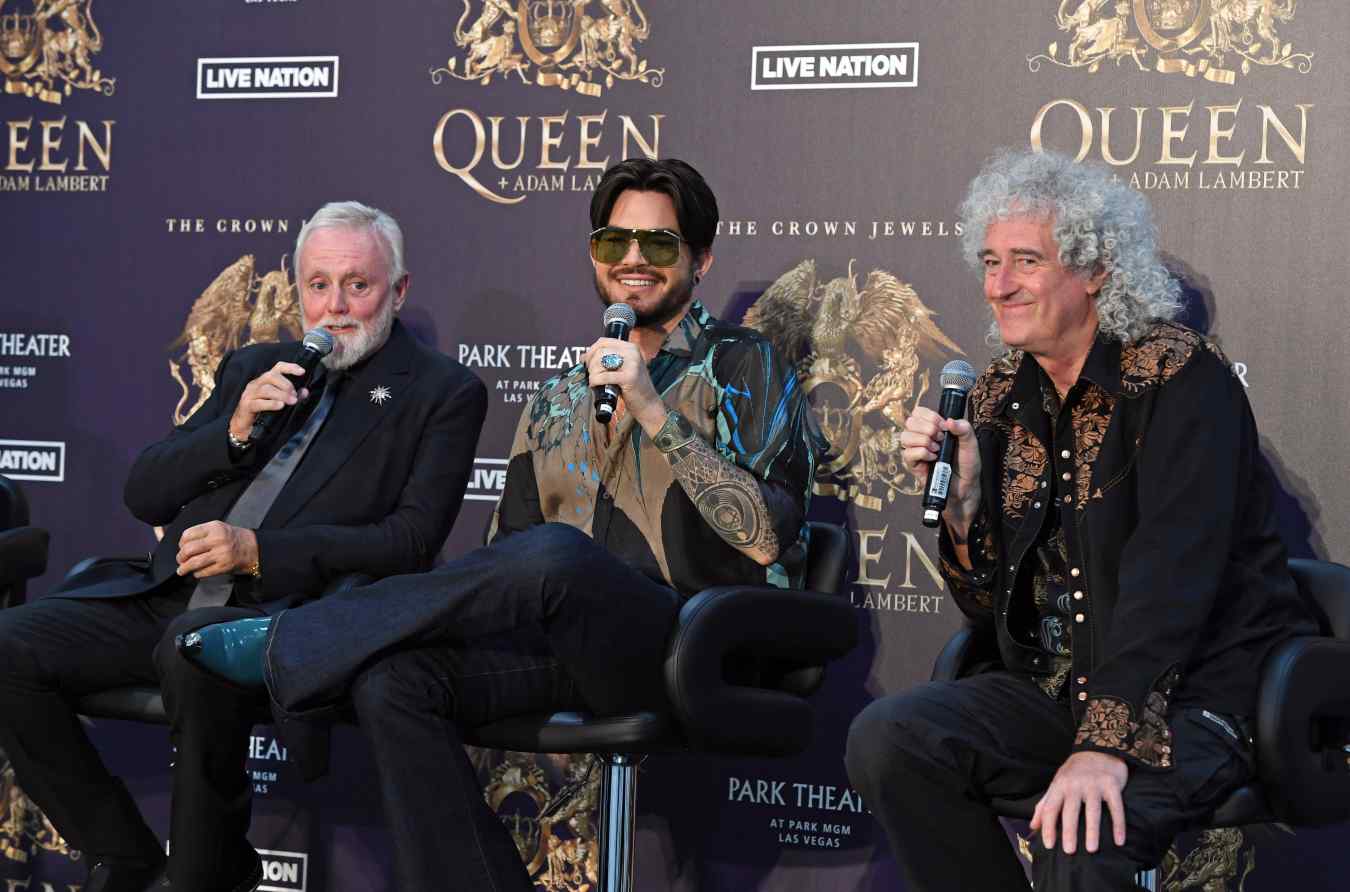
The introduction of Adam Lambert represented a masterstroke in brand alignment. Lambert brought the vocal range and theatricality that the brand had lacked since 1991. More importantly, he brought a younger demographic. The “Queen + Adam Lambert” entity functioned as a high-end luxury revival. They didn’t record new music; they perfected the delivery of the existing catalog. This move stabilized the brand’s live-performance revenue stream and introduced the music to a demographic that hadn’t been born during the band’s initial peak.
Transmedia Storytelling and the “Bohemian Rhapsody” Effect

In the 21st century, brand longevity is tied to the ability to exist across multiple platforms. Queen’s management understood that to remain a top-tier global brand, they needed to move beyond the “audio-only” space.
The “We Will Rock You” Musical
One of the most significant contributors to the brand’s financial health was the stage musical We Will Rock You. By licensing their music for a theatrical production, Queen turned their catalog into a recurring revenue stream that operated independently of the band members’ physical presence. The musical ran for 12 years in London’s West End and toured globally, functioning as a perpetual marketing funnel that introduced children and theater-goers to the Queen brand.
The 2018 Biopic as a Global Brand Activation
The release of the film Bohemian Rhapsody in 2018 is perhaps the most successful brand-revival event in music history. The film was not just a historical recount; it was a meticulously crafted piece of brand marketing. It sanitized the more controversial aspects of the band’s history to create a PG-13 “hero’s journey” that appealed to families.
The ROI on the film was astronomical. Not only did it gross over $900 million at the box office, but it triggered a massive surge in digital consumption. Following the film’s release, Queen’s streaming numbers skyrocketed, often outpacing contemporary artists like Drake and Taylor Swift on platforms like Spotify. The film effectively “refreshed” the brand for the Gen Z and Millennial markets, ensuring another 30 to 40 years of brand relevance.
Intellectual Property and the Business of Nostalgia
What happened to Queen is ultimately a story of professional IP management. While many of their contemporaries sold off their rights early or became mired in internal legal battles, the members of Queen (including the estate of Freddie Mercury and the retired John Deacon) maintained a cohesive business structure under Queen Productions Ltd.
Digital Strategy and Social Media
Queen’s transition to the digital age was seamless. Their official YouTube channel was one of the first legacy acts to reach over 10 million subscribers. They leaned into “User Generated Content” (UGC), allowing their music to be used on platforms like TikTok and Instagram, which turned tracks like “Another One Bites the Dust” into viral challenges. By making their IP accessible to young creators, they ensured the brand remained a part of the cultural zeitgeist rather than a museum piece.
The $1.2 Billion Sony Music Acquisition
In mid-2024, news broke that Sony Music was in the process of acquiring Queen’s music catalog, name, and likeness for a reported $1.2 billion. This is the ultimate “exit strategy” for a brand. It represents the highest valuation ever placed on a single band’s assets. This sale wasn’t just for the songs; it was for the brand. Sony isn’t just buying MP3s; they are buying a global trademark that can be used for holograms, AI-generated content, merchandise, and further film projects. This acquisition marks the transition of Queen from a “band” into a permanent corporate asset of a multi-national conglomerate.
Lessons for Modern Corporate Identity
The evolution of Queen offers several critical insights for brand strategists and corporate leaders:
- Core Assets Transcend Personnel: Queen proved that if your “product” (the songs) is strong enough, the brand can survive the loss of its primary ambassador. The key is to focus on the emotional connection the consumer has with the asset.
- Strategic Evolution Over Stagnation: Queen never tried to recreate the 1970s. They adapted their live shows to modern production standards and utilized new technologies to keep the brand feeling “current.”
- Cross-Platform Integration: A brand is no longer just one thing. Queen is a band, a musical, a movie, a fashion line, and a digital presence. Diversification of touchpoints is the key to longevity.
- Controlled Narrative: By remaining heavily involved in projects like Bohemian Rhapsody, May and Taylor controlled the brand’s narrative. They didn’t let outsiders define their history; they curated it to maximize brand equity.
In conclusion, “what happened” to Queen is that they became a benchmark for legacy brand management. They successfully navigated the most difficult transition any brand can face—the loss of its core identity—and emerged stronger, wealthier, and more culturally relevant than ever before. Through a combination of strategic partnerships and aggressive IP exploitation, Queen has moved into the realm of the “immortal brand,” a status few entities in any industry ever achieve.
aViewFromTheCave is a participant in the Amazon Services LLC Associates Program, an affiliate advertising program designed to provide a means for sites to earn advertising fees by advertising and linking to Amazon.com. Amazon, the Amazon logo, AmazonSupply, and the AmazonSupply logo are trademarks of Amazon.com, Inc. or its affiliates. As an Amazon Associate we earn affiliate commissions from qualifying purchases.