
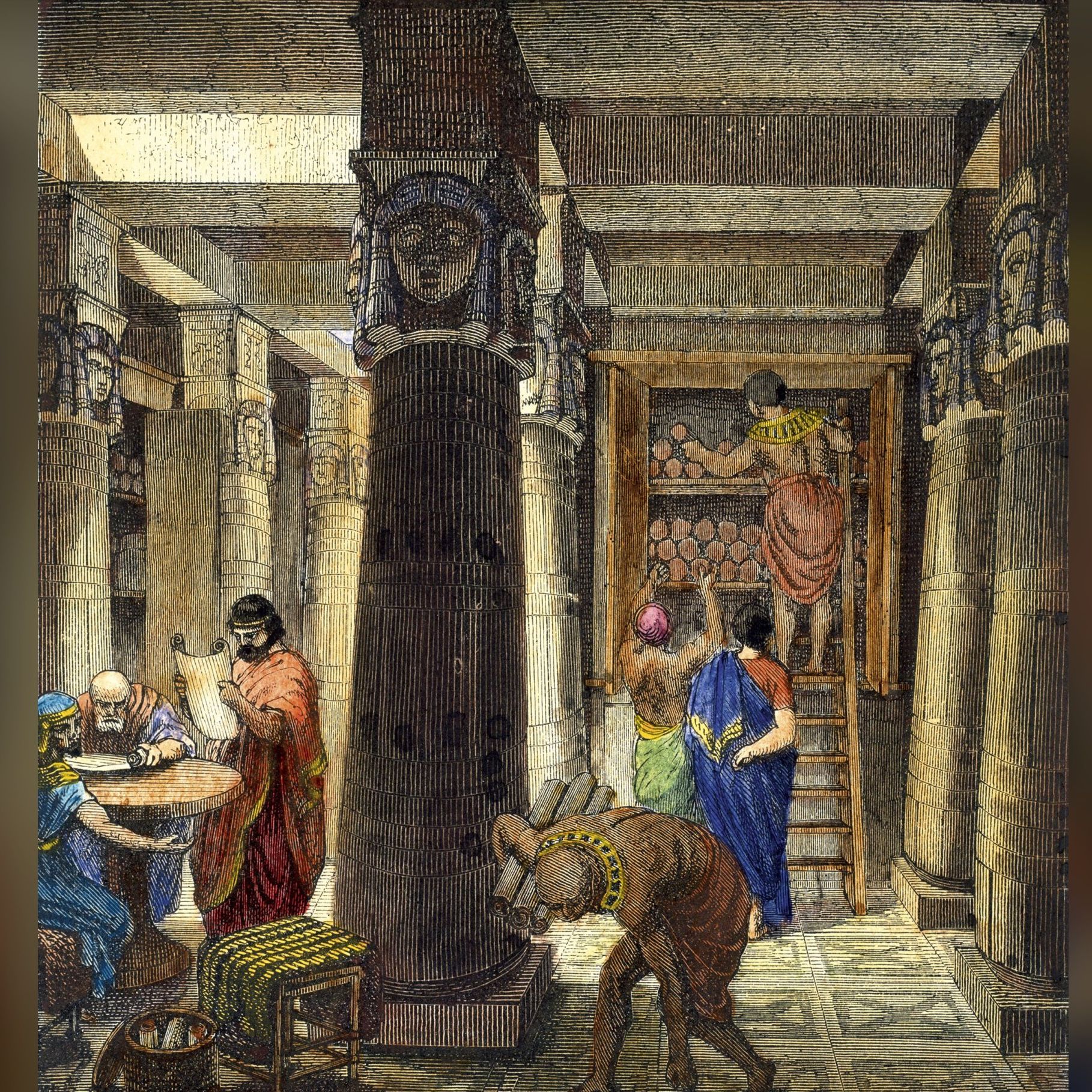
The whispers of the ancient Library of Alexandria, a beacon of knowledge in the Hellenistic world, continue to echo through history. Its legendary demise, often attributed to a single, catastrophic event, is a narrative far more complex and nuanced than popular imagination suggests. While the physical destruction of this intellectual powerhouse is a subject of scholarly debate, the story of the Library’s loss offers profound lessons for our digital age, particularly in the realm of information preservation and the inherent fragility of vast data repositories. This exploration delves into the historical accounts of the Library’s decline, drawing parallels to contemporary challenges in safeguarding digital information and highlighting the critical importance of robust digital archiving strategies.

The Myth and the Reality of Destruction
The romanticized image of the Library of Alexandria burning to ashes in a single conflagration, often linked to Julius Caesar’s siege of the city in 48 BCE, is a compelling but largely inaccurate portrayal. While historical accounts do mention fires and damage during this period, the Library’s decline was a much more protracted process, influenced by a confluence of factors extending over centuries. Understanding this gradual decay is crucial for appreciating the systemic vulnerabilities that can lead to the loss of monumental intellectual assets.
The Accidental Blaze: Caesar’s Siege and Early Damage
During Julius Caesar’s Alexandrian War, a fire broke out in the harbor and reportedly spread to parts of the city, potentially damaging some of the Library’s collection. Plutarch, a Greek biographer, mentions this event, but it’s important to note that the scale of destruction to the Library itself remains ambiguous. Some scholars believe that only warehouses containing scrolls, rather than the main Library buildings, were affected. This incident serves as an early warning sign of the Library’s susceptibility to the vagaries of warfare and urban unrest, a stark reminder that even well-established institutions are not immune to external forces. This event, while significant, was not the death knell. It was an early injury, a precursor to a slower, more insidious decline. The sheer volume of the collection meant that such localized damage, while regrettable, would not instantly obliterate the entirety of its holdings.
Subsequent Wars and Political Instability: The Slow Erosion of a Jewel
The centuries that followed Caesar’s intervention were marked by further political turmoil in Alexandria. The Library, as an institution patronized by rulers, suffered from the ebb and flow of royal favor and financial support. Successive Roman emperors and local governors had varying degrees of interest in maintaining and expanding the Library. Periods of neglect were punctuated by attempts at revival, but the consistent flow of funding and the dedication of resources necessary to maintain such a vast collection became increasingly challenging. The city itself underwent periods of decline and resurgence, each impacting the institutional capacity to support and protect its intellectual treasures. This fluctuating environment created an unstable ecosystem for the Library, making it vulnerable to the gradual erosion of its resources and the attrition of its scholarly community. Each period of unrest or disinterest chipped away at its foundations, making it less resilient to future threats.
Religious and Ideological Shifts: The Persecution of Knowledge
Beyond military conflicts and political instability, the Library also faced challenges from shifting religious and ideological landscapes. As Christianity rose to prominence in the Roman Empire, pagan institutions and knowledge were sometimes viewed with suspicion or outright hostility. The Serapeum, a temple complex that housed a significant collection of scrolls (sometimes referred to as a “daughter library”), was reportedly destroyed in 391 CE by a mob of Christian zealots. While the extent of its connection to the main Library is debated, this event symbolizes a broader trend of the suppression of non-Christian or perceived “pagan” knowledge, which may have contributed to the decline in the collection’s vitality and the persecution of its scholars. This highlights the danger posed by ideological extremism to the preservation of diverse intellectual heritage. The destruction of the Serapeum, even if distinct from the main Library, sent a clear message about the vulnerability of accumulated knowledge to prevailing social and religious currents. It demonstrated that intellectual treasures could become targets when they were perceived to be at odds with dominant ideologies.
The Digital Parallel: Preserving the Unseen Archive
The loss of the Library of Alexandria, though a physical one, offers a potent metaphor for the challenges we face in the digital age. Today, vast amounts of information are stored digitally, creating a new kind of archive that is simultaneously ubiquitous and profoundly fragile. The mechanisms that protect and sustain our digital knowledge are far removed from the papyrus scrolls and stone structures of antiquity, yet the underlying principles of preservation and vulnerability remain strikingly similar.
The Ephemeral Nature of Digital Information: Bits and Bytes in Peril

Unlike the tangible scrolls of Alexandria, which could withstand a degree of physical decay over time, digital data is inherently ephemeral. Files can be corrupted, storage devices fail, and file formats become obsolete. A hard drive can crash, a cloud server can be hacked, and an entire digital library could vanish with a single technical malfunction or cyberattack. This fragility is amplified by the sheer volume of digital information being generated daily. The “Library of Alexandria” of our era is distributed across countless servers, devices, and cloud platforms, making it an immense, yet dispersed, collection susceptible to a myriad of threats that are often invisible and instantaneous. The sheer quantity of data we generate today far surpasses anything the ancient world could have conceived, and the methods of storage and retrieval are equally complex and, paradoxically, less resilient in certain ways. A single corrupted bit could render an entire document unreadable, a far more insidious form of decay than the gradual fading of ink on papyrus.
Obsolescence and Format Decay: The Ghosts in the Machine
The digital realm faces a unique challenge: obsolescence. The hardware and software that store and access digital information are constantly evolving. A file created in a proprietary format a decade ago might be unreadable today on modern operating systems. The constant churn of technological advancement, while driving innovation, also creates digital “ghosts” – information locked away in formats that can no longer be accessed. This is analogous to the loss of specialized knowledge in Alexandria, where the understanding of certain languages or obscure texts might have faded with the passing of its scholars. The digital archive is perpetually at risk from its own progress, requiring continuous migration and updating to remain accessible. The very tools that allow us to create and store information can become the barriers to its future access. This constant need for technological adaptation is a significant hurdle in long-term digital preservation.
The “Great Firewall” and Information Control: Modern Censorship
Just as ideological shifts in the ancient world could lead to the suppression of knowledge, modern digital environments face challenges from information control and censorship. Governments and corporations can restrict access to information, delete content, or manipulate digital archives to serve their own agendas. The concept of a “Great Firewall” in some countries, or the de-platforming of voices, represents a modern form of intellectual suppression. This raises profound questions about the ownership and control of digital knowledge and the potential for its manipulation or erasure for political or economic gain, mirroring the historical instances where knowledge was deemed undesirable or dangerous by dominant powers. The control of information in the digital age, whether through outright censorship or subtle manipulation of algorithms, presents a new and potent threat to the unfettered access to knowledge that the Library of Alexandria once represented.
The Digital Alexandria Project: Lessons in Preservation
The aspiration to recreate the Library of Alexandria in the modern era, often manifested in initiatives like the Bibliotheca Alexandrina, underscores the enduring human desire to centralize and safeguard knowledge. However, the true lesson lies not in recreating a physical edifice, but in understanding and implementing the principles of robust digital preservation. The fate of the ancient Library serves as a compelling case study for the development of strategies that can safeguard our increasingly digital intellectual heritage.
Archiving and Redundancy: The Digital Scrolls
The most effective defense against digital loss is comprehensive archiving and redundancy. This involves creating multiple copies of data, storing them in diverse geographical locations, and employing a variety of storage media. Techniques like distributed storage systems and blockchain technology are emerging as potential solutions for ensuring data integrity and resilience. Just as the ancient Library sought to collect copies of every known work, modern digital preservation aims to create an unassailable, distributed repository of information, ensuring that no single point of failure can lead to irreversible loss. This involves not only making copies but ensuring those copies are independent and stored in environments less prone to simultaneous disaster.
Standardization and Open Formats: Unlocking the Digital Vault
To combat the threat of obsolescence, the digital preservation community is increasingly advocating for the use of open standards and universally compatible file formats. This ensures that digital information can be accessed and understood across different platforms and over long periods. Initiatives focused on digital object management and metadata standards are crucial for creating a future-proof digital archive, allowing future generations to unlock the “digital vault” without encountering insurmountable technical barriers. The effort to standardize digital information aims to prevent the creation of inaccessible digital relics, ensuring that our current knowledge remains legible for centuries to come.
Open Access and Decentralization: Democratizing Knowledge
Finally, the spirit of the Library of Alexandria, as a universal repository of knowledge, can be embodied in the principles of open access and decentralization. Making information freely and widely available reduces the risk of it being controlled or suppressed by a single entity. Decentralized networks and open-source platforms foster resilience and empower a broader community to participate in the preservation and dissemination of knowledge. This approach mirrors the ancient ideal of knowledge being accessible to scholars from across the known world, fostering a more robust and democratic intellectual commons. The more distributed and accessible knowledge is, the less vulnerable it becomes to concentrated destruction or manipulation.
The story of the Library of Alexandria is not simply a cautionary tale of physical destruction; it is a timeless lesson in the vulnerability of information and the critical need for foresight and proactive strategies in its preservation. As we navigate the complexities of the digital age, the echoes of Alexandria serve as a vital reminder that the safeguarding of our collective knowledge is an ongoing, dynamic endeavor, demanding constant vigilance and innovative solutions. The challenges are immense, but the inspiration drawn from humanity’s greatest ancient repository of knowledge can guide us in building a digital future where information endures, accessible and uncorrupted, for generations to come.
aViewFromTheCave is a participant in the Amazon Services LLC Associates Program, an affiliate advertising program designed to provide a means for sites to earn advertising fees by advertising and linking to Amazon.com. Amazon, the Amazon logo, AmazonSupply, and the AmazonSupply logo are trademarks of Amazon.com, Inc. or its affiliates. As an Amazon Associate we earn affiliate commissions from qualifying purchases.