
In the annals of technological history, few figures are as polarizing as Stanley Meyer. To some, he was a visionary inventor who unlocked the secret to clean, infinite energy; to others, he was a cautionary tale of pseudoscience and engineering fraud. The central claim that defined his life—and sparked decades of conspiracy theories—was the invention of a “water-powered car.” Meyer asserted that he had developed a device capable of breaking down water into its component elements, hydrogen and oxygen, with significantly less energy than traditional electrolysis required.
Today, as the global tech industry pivots toward a hydrogen-based economy and green energy solutions, the story of Stanley Meyer serves as a critical case study in the intersection of disruptive innovation, thermodynamic reality, and the high stakes of alternative energy development.
The Mechanics of the Water Fuel Cell
To understand the rise and fall of Stanley Meyer, one must first look at the technical specifications of his “Water Fuel Cell” (WFC). At the height of the 1970s oil crisis, Meyer presented a solution that seemed to defy the established laws of physics.
Electrolysis vs. The “Meyer Method”
Standard electrolysis is a well-understood chemical process where an electric current is passed through water to separate hydrogen and oxygen. However, according to the First and Second Laws of Thermodynamics, the energy required to break these molecular bonds is always greater than the energy recovered when the hydrogen is burned. Meyer claimed his technology bypassed these limitations. He argued that his fuel cell didn’t use high-current electrolysis but rather “resonant” voltage.
The Resonant Cavity and Voltage Intensifier
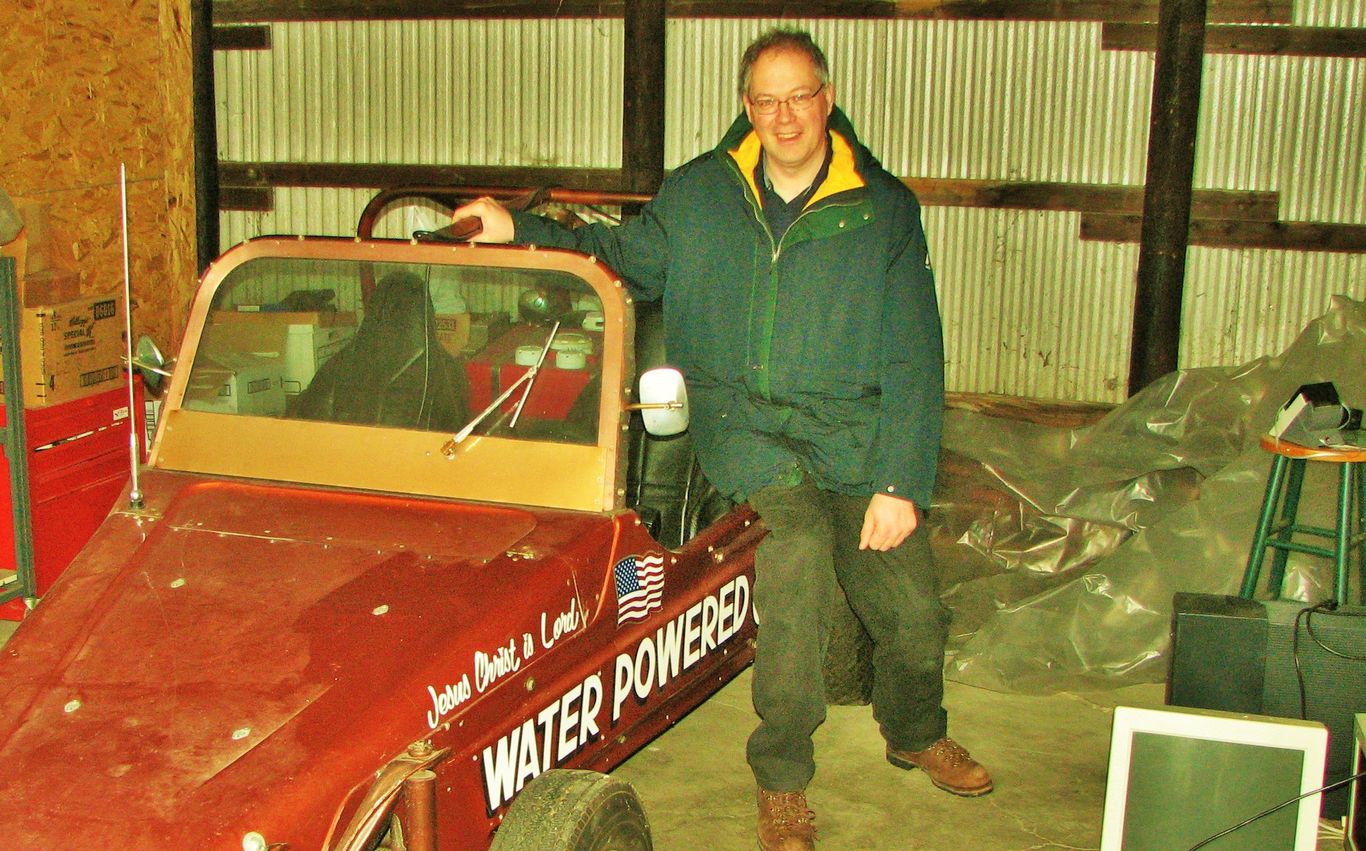
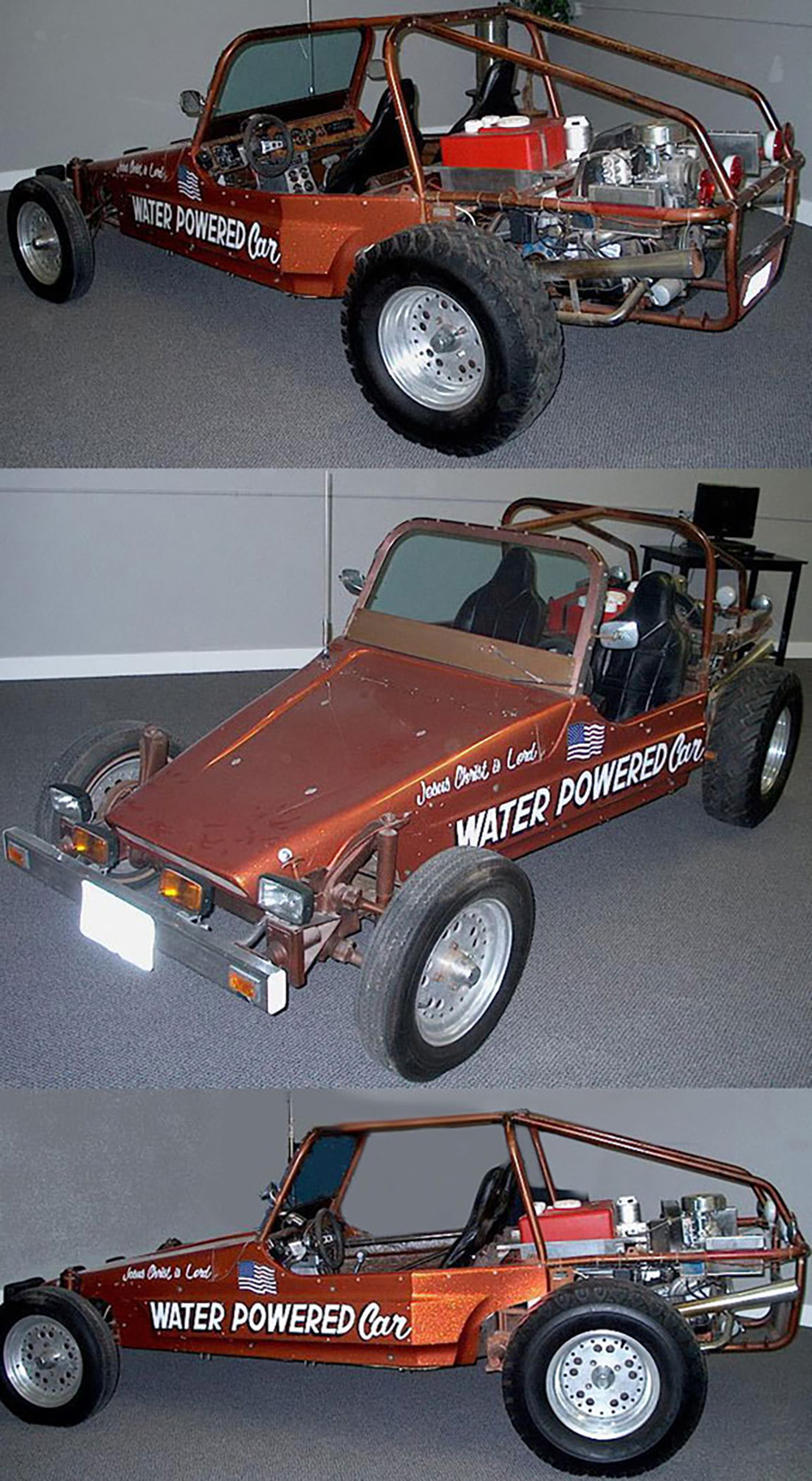
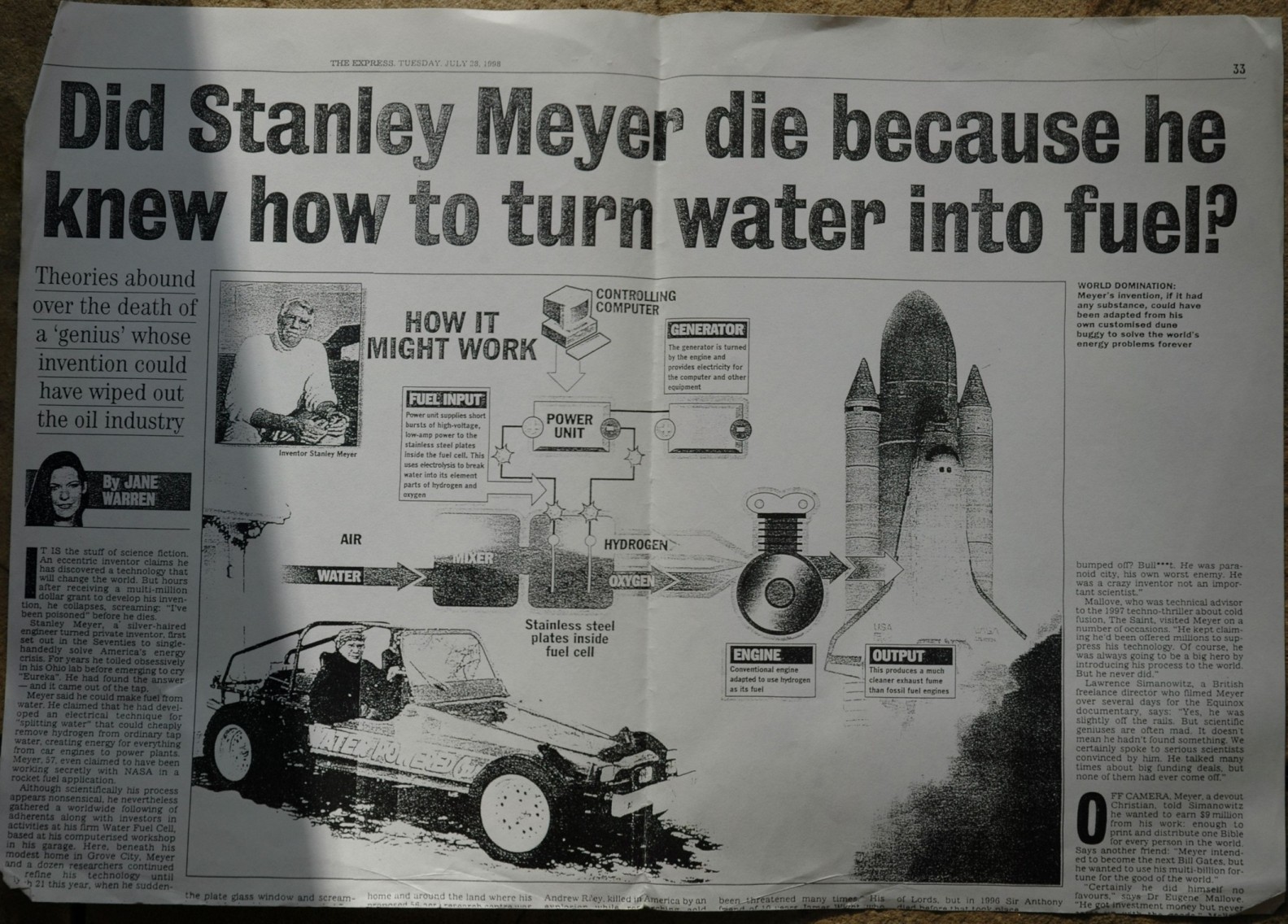
Meyer’s technical documentation described a system utilizing a “Voltage Intensifier Circuit.” He claimed that by hitting the natural resonant frequency of water molecules, he could shatter them into gas using very little current but high-voltage pulses. He referred to this as “fracturing” the water molecule. In his various prototypes, including a famous converted dune buggy, he replaced the spark plugs with “water injectors” that would theoretically mist water into the cylinders, where it would be instantly dissociated into hydrogen and oxygen gas and then ignited.
The Thermodynamics Debate
From a technical standpoint, Meyer’s claims hit a wall with the scientific community. To the engineering world, his device functioned as a “perpetual motion machine” of the first kind. If Meyer’s device worked as described, it would mean creating a net gain of energy from a closed-loop system—a feat that contradicts the conservation of energy. Despite this, Meyer’s ability to demonstrate a running engine (albeit for short periods) captured the imagination of a public desperate for a tech-based escape from fossil fuel dependency.
The Engineering Controversy and Legal Fallout
As Meyer’s fame grew, so did the scrutiny from both the legal system and the scientific establishment. The mid-1990s marked a turning point where his technical claims were subjected to the rigor of the courtroom.
The 1996 Fraud Conviction
The decline of Meyer’s professional reputation began in earnest in 1996. Two investors sued Meyer, alleging that his technology was not the revolutionary breakthrough he claimed. The court in Fayette County, Ohio, appointed three expert witnesses to evaluate Meyer’s Water Fuel Cell. These experts, including Michael Laughton, a Professor of Electrical Engineering at Queen Mary University of London, found that there was nothing “revolutionary” about the cell.
The court concluded that Meyer’s device was simply using conventional electrolysis under a different name. Meyer was found guilty of “gross and egregious fraud” and was ordered to repay the investors their $25,000. This legal ruling remains the most significant piece of evidence cited by skeptics who view the technology as a sophisticated hoax.
Independent Testing and Replicability Issues
A cornerstone of any technological advancement is replicability. For a “tech” to be considered valid, other engineers must be able to reproduce the results. Throughout the 80s and 90s, numerous “backyard” engineers and hobbyists tried to replicate the “Meyer Cell” using his patents. While many achieved standard electrolysis, none were able to produce the “over-unity” (more energy out than in) results Meyer claimed. The complexity of his circuits and the lack of specific “resonant frequency” data led many to believe that Meyer was either mistaken about his own invention’s efficiency or intentionally obfuscating the technical details.
The “Conspiracy” vs. The Engineering Reality
Despite the court’s findings, a narrative emerged within the tech underground that Meyer was being suppressed. This narrative suggests that “Big Oil” or government interests pressured the courts to discredit him. This is a common trope in the history of “free energy” tech, but from a purely technical perspective, the lack of a peer-reviewed, functional prototype that could be independently verified by third-party labs remains the primary reason Meyer’s work is categorized as fringe science rather than mainstream engineering.
The Mysterious Demise and “Poisoning” Claims
The legend of Stanley Meyer reached its peak not with his invention, but with his death. The circumstances surrounding his passing on March 21, 1998, have fueled decades of online speculation and “tech-noir” conspiracy theories.
The Final Meeting in 1998
On the day he died, Meyer was at a Cracker Barrel restaurant in Ohio, reportedly meeting with two Belgian investors. According to his brother, Stephen Meyer, Stanley took a sip of cranberry juice, suddenly grabbed his throat, and ran outside. He collapsed in the parking lot, allegedly crying out, “They poisoned me,” before dying. This dramatic exit is the foundation of the belief that Meyer was assassinated to prevent his technology from reaching the market.
Autopsy Results and Medical Findings
Despite the popular narrative of foul play, the official medical report tells a different story. The Franklin County Coroner’s Office conducted an autopsy and determined that Meyer died of a cerebral aneurysm. He had a history of high blood pressure, which is a significant risk factor for such a medical event. The toxicology report showed no traces of known poisons. To the medical and forensic community, Meyer’s death was a tragic but natural occurrence. To his followers, however, the timing was too coincidental to be anything other than a high-tech hit.
The Proliferation of the “Big Oil” Narrative
In the tech world, the story of Stanley Meyer has become a cautionary tale about the “suppression” of innovation. This narrative posits that any technology capable of disrupting the multi-trillion-dollar energy sector will be met with lethal resistance. While there is no empirical evidence to support that Meyer was killed, the persistence of this story highlights a deep-seated public distrust of corporate energy entities and a desire for a “David vs. Goliath” hero in the tech space.
The Legacy: From Backyard Tinkering to Modern Green Hydrogen
While Stanley Meyer’s specific “Water Fuel Cell” remains discredited by the scientific mainstream, the concept of using hydrogen as a primary fuel source has never been more relevant. The tech world is currently witnessing a massive influx of capital into “Green Hydrogen.”
The Rise of HHO Technology in Enthusiast Circles
Even today, a vibrant subculture of “HHO” (Hydrogen-Oxygen) enthusiasts exists online. These hobbyists build “brown’s gas” generators for their cars, citing Meyer’s patents as inspiration. Most of these systems are used as “hydrogen-boosters” to supposedly improve the fuel efficiency of gasoline engines. While some users report better mileage, automotive engineers point out that any gains are usually the result of the engine’s computer adjusting fuel-to-air ratios rather than the “miracle” properties of the gas itself.
How Modern Hydrogen Vehicles Actually Work
The “Tech” that actually succeeded where Meyer failed is the Hydrogen Fuel Cell Electric Vehicle (FCEV), such as the Toyota Mirai or the Hyundai Nexo. Unlike Meyer’s claim of burning water, these vehicles use compressed hydrogen gas stored in high-pressure tanks. This hydrogen is passed through a fuel cell stack where it combines with oxygen from the air to create electricity via a chemical reaction (not combustion), which then powers an electric motor. The only byproduct is water vapor. This is a complete reversal of Meyer’s process: instead of using electricity to create fuel from water, these cars use fuel to create electricity and water.
Lessons in Tech Literacy and Due Diligence
The story of Stanley Meyer serves as a vital lesson in the importance of tech literacy. In an era of “deep techs” and complex energy solutions, the ability to distinguish between a revolutionary breakthrough and a violation of the laws of physics is crucial. Meyer’s legacy is a reminder that while innovation often requires thinking outside the box, it cannot bypass the fundamental thermodynamic realities of the universe.
In conclusion, what happened to Stanley Meyer was the collision of a bold technical vision with the immovable object of physical law and legal scrutiny. Whether he was a misguided dreamer or a deliberate charlatan, his story remains a fascinating chapter in the history of technology. It highlights our collective obsession with finding a “magic bullet” for the energy crisis and the enduring power of a mystery that refuses to be solved by science alone. As we move toward a future of sustainable energy, we do so by standing on the shoulders of legitimate engineering—leaving the “water-powered cars” of the past as a footnote in the complex evolution of how we power our world.
aViewFromTheCave is a participant in the Amazon Services LLC Associates Program, an affiliate advertising program designed to provide a means for sites to earn advertising fees by advertising and linking to Amazon.com. Amazon, the Amazon logo, AmazonSupply, and the AmazonSupply logo are trademarks of Amazon.com, Inc. or its affiliates. As an Amazon Associate we earn affiliate commissions from qualifying purchases.