
For over a decade, Spotify was the undisputed gold standard for digital music. Its pitch was simple: every song ever recorded, available instantly, with a clean interface that stayed out of the way. However, in recent years, users opening the app have found a vastly different experience. The minimalist player has been replaced by a bustling, high-energy ecosystem of video previews, AI-generated voices, and algorithmic feeds.
To understand “what happened” to Spotify from a technology perspective, one must look at the transition from a passive utility to an active, AI-driven media platform. This shift reflects broader trends in software development, where the race for user engagement has forced a total re-engineering of the streaming experience.

The UI Revolution: From Minimalist Player to Content Hub
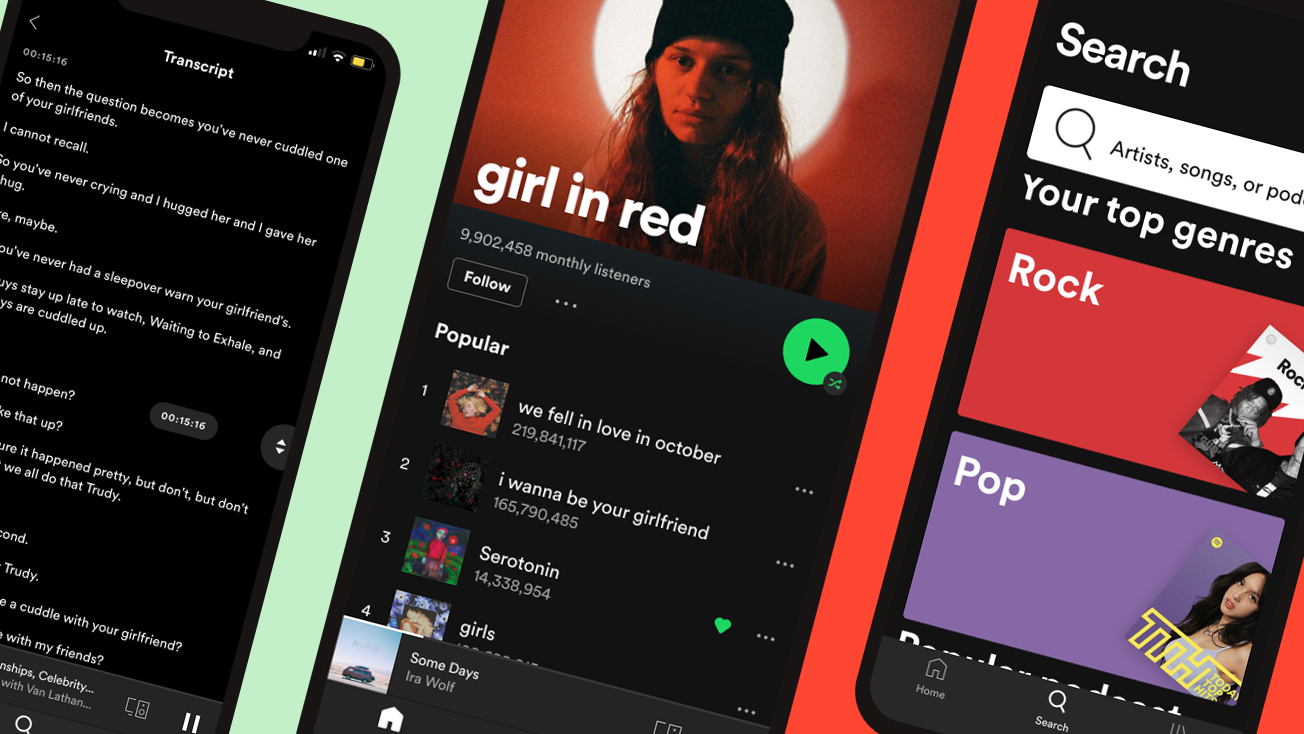
The most immediate change users notice is the interface. Spotify was once a list-based application—a digital library where the user was the librarian. Today, the application functions more like a social media feed, a change driven by the “TikTok-ification” of digital interfaces.
The TikTok-ification of Music Discovery
In 2023, Spotify launched its most controversial redesign to date, introducing a vertical, visual “Home” feed. This wasn’t just a cosmetic change; it was a fundamental shift in technical philosophy. By utilizing auto-playing video previews and Canvas (the looping visuals behind tracks), Spotify moved away from metadata-heavy navigation to sensory-heavy discovery.
From a software engineering standpoint, this required a massive overhaul of the app’s data-fetching architecture. Maintaining a smooth, lag-free vertical scroll while pre-loading high-quality audio and video snippets is a significant technical hurdle. The goal was to reduce the “cognitive load” of choosing music, using visual stimuli to trigger a “save” or “play” action, much like the algorithmic loops of ByteDance’s flagship app.
Navigation Bloat and the User Experience Trade-off
As Spotify integrated podcasts and audiobooks, the app’s “information architecture” became increasingly crowded. This has led to what some tech critics call “feature creep.” What used to be a three-tab bottom bar has expanded, and the search function now has to parse through millions of disparate media types.
The technical challenge here is “Search and Discovery” logic. Spotify’s engineers had to develop a unified search index that could distinguish between a song titled “The Daily,” a podcast called The Daily, and an audiobook with a similar name. While this makes the app a “one-stop shop” for audio, it has sparked a debate about whether the software has become too bloated for the average music listener who simply wants to find an album and hit play.
The AI Pivot: Beyond the Basic Recommendation Engine
If the first decade of Spotify was defined by the “Discover Weekly” playlist—a static, weekly data drop—the current era is defined by real-time, generative AI. Spotify has transitioned from being a platform that hosts content to one that curates and narrates it.
The Rise of the AI DJ and Personalized Narration
The introduction of “DJ”—an AI-powered feature that uses a synthetic voice to introduce tracks—marked a turning point. Technically, this feature is a masterclass in modern AI integration. It combines three distinct technologies: Spotify’s existing personalization algorithms, generative AI (via OpenAI) to write the scripts, and a dynamic “text-to-speech” engine (from the acquisition of Sonantic) to deliver the voice.
This isn’t just about playing music; it’s about creating a “lean-back” experience. The software is no longer just a tool; it is a persona. The AI DJ analyzes a user’s “acoustic profile” in real-time, adjusting the vibe based on time of day and historical listening habits, representing a move toward “Contextual Computing”—software that understands the user’s environment.
Machine Learning and the “Daylist” Phenomenon
Perhaps the most successful recent technical implementation is the “Daylist.” Unlike the static “Daily Mixes” of old, the Daylist updates multiple times a day with hyper-specific, often oddly named genres (e.g., “Post-Apocalyptic Synthwave Tuesday Morning”).

The backend powering this is a sophisticated machine learning model that clusters millions of tracks into thousands of niche micro-genres. By analyzing the “temporal patterns” of millions of users—what people listen to while caffeinating versus what they listen to while winding down—Spotify has turned data science into a social currency. The technology succeeded because it made the algorithm feel “sentient” and shareable, turning technical data points into a relatable user experience.
The Audio Ecosystem: Integrating Podcasts and Audiobooks
Spotify’s transformation isn’t just about how we listen to music; it’s about the software becoming a multi-format media engine. This transition required a complete rethink of how the platform handles audio delivery and file management.
Technical Challenges of Multi-Format Hosting
Hosting music is relatively straightforward; files are generally 3 to 10 minutes long and follow standard metadata formats. Podcasts and audiobooks, however, are long-form. They require different caching strategies, bookmarking features, and playback speeds (1.5x, 2x).
To accommodate this, Spotify had to re-engineer its “Player Core.” This is the underlying software that manages the audio stream. Integrating “Watch” functionality for video podcasts meant the app had to switch seamlessly between audio-only and video-stream modes without dropping the connection or losing the user’s place in a three-hour recording. This “seamless handoff” is a high-level technical achievement, especially when synchronized across the “Spotify Connect” ecosystem (moving from phone to smart speaker to car).
The Impact of High-Efficiency Codecs and Offline Playback
As the library grew to include millions of podcast episodes and audiobooks, data management became a priority. Spotify utilizes the Ogg Vorbis and AAC formats for music, but for long-form spoken word, the technical team had to optimize for clarity and data conservation. The evolution of their proprietary streaming protocols has allowed the app to maintain high-quality audio even on low-bandwidth connections, a necessity for a global app reaching markets with varying internet infrastructure.
The Mystery of Spotify HiFi: A Technical Stagnation?
While Spotify has sprinted forward in AI and UI design, one area of technical development remains noticeably stagnant: Lossless Audio. Announced years ago as “Spotify HiFi,” the feature has become a point of contention for tech enthusiasts.
Lossless Audio and the Competitive Landscape
Competitors like Apple Music and Tidal have already integrated ALAC (Apple Lossless Audio Codec) and FLAC into their standard offerings. For Spotify, the delay isn’t just about licensing; it’s about infrastructure. Delivering “Lossless” audio requires significantly more bandwidth and storage—up to 10 times the data of a standard 320kbps stream.
For a platform with hundreds of millions of users, the server-side costs of flipping the switch on HiFi are astronomical. Furthermore, Spotify’s current “Connect” protocol, which allows users to control music across devices, would need a significant update to ensure that high-bitrate audio can be transmitted wirelessly without losing quality. The “technical debt” of supporting a decade-old infrastructure while trying to implement audiophile-grade features is likely what has kept HiFi in development limbo.
Infrastructure Costs vs. Audiophile Demands
From a product management perspective, Spotify has seemingly prioritized “feature-richness” over “audio-fidelity.” The technology budget that could have gone toward lossless streaming was instead directed toward the AI DJ and the video feed. This suggests a technical philosophy that values how people discover music over the purity of the signal they are hearing.
Conclusion: A Platform Redefined by Data and Engagement
So, what happened to Spotify? The answer lies in the transition from a product to a platform.
Spotify has evolved from a simple MP3-replacement tool into a complex, AI-driven media engine. It has prioritized the technology of “Engagement” (AI narration, visual feeds, social sharing) over the technology of “Utility” (simple lists, high-fidelity audio). While this has alienated some “purist” users who miss the minimalist days of 2014, it has technically positioned Spotify as the leader in the “Attention Economy.”
The Spotify of today is a marvel of data science and machine learning. It is an app that knows what you want to hear before you do, delivered through an interface that is constantly testing the limits of how much information a user can consume. Whether this evolution is “better” is a matter of taste, but from a technological standpoint, Spotify has never been more powerful—or more complex. The “green circle” on our home screens is no longer just a record player; it is a sophisticated, algorithmic window into the global audio landscape.
aViewFromTheCave is a participant in the Amazon Services LLC Associates Program, an affiliate advertising program designed to provide a means for sites to earn advertising fees by advertising and linking to Amazon.com. Amazon, the Amazon logo, AmazonSupply, and the AmazonSupply logo are trademarks of Amazon.com, Inc. or its affiliates. As an Amazon Associate we earn affiliate commissions from qualifying purchases.