
Rocket 3F, once a promising contender in the 3D modeling software landscape, has faded from widespread discussion and active development. Its journey, from its initial announcement to its current state of near obscurity, offers valuable insights into the dynamics of the software industry, particularly within the competitive niche of 3D content creation. While a definitive, single event hasn’t been publicly declared as its demise, understanding the factors that contributed to its decline requires an examination of its development trajectory, market reception, and the ever-evolving technological environment.
The Promise and Initial Hype of Rocket 3F
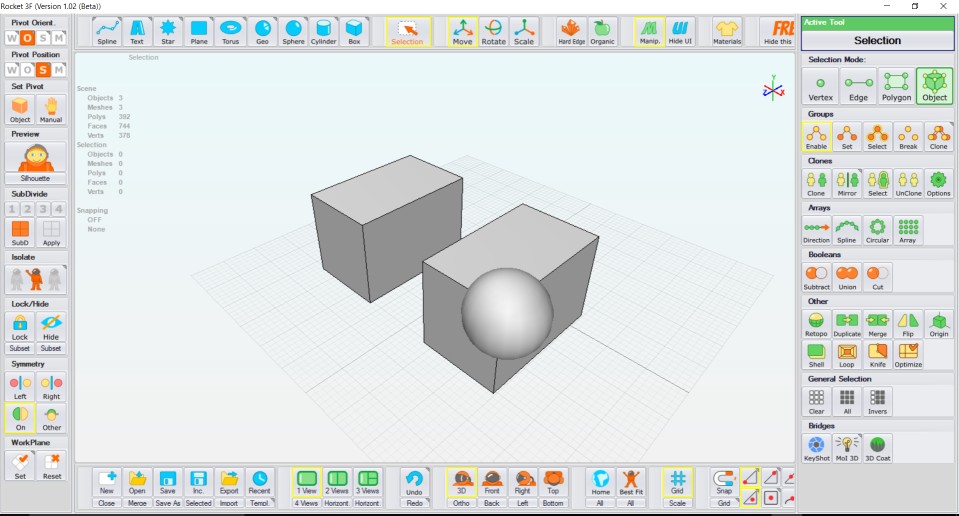
Rocket 3F emerged with an ambitious vision, aiming to democratize and streamline 3D modeling for a broader audience. At its core, the software was designed to bridge the gap between concept and creation, emphasizing ease of use and a more intuitive workflow compared to some of the more established, industry-standard software. This promise resonated with many aspiring 3D artists and hobbyists who found traditional tools to be overly complex and resource-intensive.
Targeting a New Generation of 3D Creators
The developers of Rocket 3F positioned it as a tool for the modern creator, whether they were independent game developers, aspiring animators, or even those interested in 3D printing and architectural visualization. The emphasis on an accessible interface, combined with potentially powerful features, was a compelling proposition. In a market often dominated by expensive, feature-rich software requiring extensive training, Rocket 3F offered a glimmer of hope for those seeking to enter the field without a significant financial or time investment.
Early Development and Feature Set
Initial announcements and early beta releases showcased a software with a unique approach to modeling. Features often highlighted included a nodal system for procedural generation, integrated sculpting tools, and a focus on real-time rendering. The intention was to provide a comprehensive suite of tools within a single application, reducing the need for users to juggle multiple software packages for different stages of their workflow. This integrated approach was a significant draw, promising a more fluid and efficient creative process.
The Competitive Landscape and Market Challenges
The 3D modeling software market is notoriously competitive. Established players like Autodesk’s Maya and 3ds Max, along with Blender, a powerful open-source alternative, have long dominated the industry. These tools boast extensive feature sets, vast user communities, and a deep ecosystem of plugins and tutorials. For any new software to gain traction, it needs to offer a truly disruptive advantage or cater to a significantly underserved niche.
Battling Established Giants and the Open-Source Powerhouse
Rocket 3F entered a market where users had already invested time and resources into learning existing software. Migrating to a new platform, even if promising, presents a significant hurdle. Furthermore, Blender’s meteoric rise as a free, open-source, and increasingly capable alternative presented a formidable challenge. Its continuous development, driven by a passionate community, meant that it was constantly evolving and adding new features, often rivaling or surpassing those of commercial software. This made it difficult for Rocket 3F to carve out a substantial market share, especially when competing against a free, yet highly professional, option.
The “Chasing the Dragon” Dilemma: Feature Parity vs. Innovation
Developing 3D modeling software is an incredibly complex and resource-intensive undertaking. To compete, Rocket 3F would have needed to continuously innovate while also striving to match the core functionalities offered by its more established rivals. This often leads to a “chasing the dragon” scenario, where development efforts are spread thin trying to keep up, rather than focusing on truly novel advancements that could differentiate the product. The sheer scope of features required for professional-grade 3D modeling means that a smaller development team, as Rocket 3F likely had, can struggle to maintain pace.
User Adoption and Community Building
Beyond the software itself, a thriving user community is crucial for the success of any creative tool. A strong community provides support, shares knowledge, and contributes to the growth of the software through tutorials, plugins, and asset creation. Without a robust and engaged user base, even a technically sound piece of software can falter. Building this community takes time, consistent communication, and active engagement from the developers, which may have been a challenge for Rocket 3F as its visibility waned.
The Fading Momentum: Potential Factors in Decline
While the exact reasons for Rocket 3F’s decline are not definitively documented in public forums, several common factors can be inferred that often contribute to the stagnation or disappearance of software projects, especially in the tech sector.
Development Stalls and Lack of Updates
One of the most significant indicators of a software project’s decline is a noticeable slowdown or complete halt in development and updates. When a software stops receiving bug fixes, new features, or compatibility updates for newer operating systems or hardware, it quickly becomes obsolete and unusable for many. For Rocket 3F, a lack of consistent updates would have signaled to potential users and existing customers that the project was no longer a priority or had encountered insurmountable development challenges. This can stem from various issues, including funding problems, loss of key personnel, or simply the overwhelming complexity of maintaining and evolving such a sophisticated piece of software.
Funding and Business Model Challenges
Developing and marketing sophisticated software requires substantial financial investment. Even if Rocket 3F had a compelling vision, securing and maintaining adequate funding is a persistent challenge. This could have involved difficulties in attracting investors, a struggling sales model, or a business strategy that proved unsustainable in the long run. The transition from an initial promise to a commercially viable product is a perilous journey, and many promising software projects falter due to financial constraints. Without a clear and successful path to revenue generation, long-term development and support become impossible.
Shifting Technological Landscape and Evolving User Needs
The technology landscape, especially in 3D, is in constant flux. New hardware, rendering techniques, and user workflows emerge rapidly. A software that doesn’t adapt to these shifts risks becoming irrelevant. For instance, the increasing importance of real-time rendering in game development, the rise of AI-assisted workflows, or advancements in virtual and augmented reality could have presented challenges that Rocket 3F, in its original conception, was not equipped to address. User needs also evolve; as creators become more experienced, they may demand more advanced features, tighter integrations, or greater control, pushing the boundaries of what an accessible tool can offer.
Inconclusive Public Communication and Perceived Abandonment
A lack of clear and consistent communication from the development team regarding the project’s status can lead to speculation and a perception of abandonment. When users and potential customers don’t receive updates on development progress, roadmaps, or future plans, they naturally assume the worst. This silence can be more damaging than a formal announcement of discontinuation, as it leaves the community in limbo and discourages further investment of time and effort into learning and using the software. The absence of active engagement on forums, social media, or official blogs can create a vacuum filled with uncertainty and ultimately lead to users migrating to more actively supported alternatives.
Lessons Learned from Rocket 3F’s Trajectory
The story of Rocket 3F, though perhaps not a widely publicized one, offers valuable lessons for developers, entrepreneurs, and users within the technology sector, particularly in the highly specialized field of 3D software.
The Importance of Sustainable Development and Community Engagement
Rocket 3F’s journey underscores the critical need for a sustainable development model. This includes not only securing consistent funding but also building a robust development pipeline that can adapt to technological advancements and user demands. Equally important is the cultivation of a strong, engaged community. Developers who actively listen to their users, provide regular updates, and foster a supportive environment are far more likely to succeed. The open-source model, exemplified by Blender, demonstrates the power of community-driven development in creating and sustaining powerful software.
Niche Identification and Differentiation in Crowded Markets
While Rocket 3F aimed for accessibility, the challenge lay in differentiating itself sufficiently from established players. In a market saturated with powerful and feature-rich options, a new entrant must identify a truly unmet need or offer a fundamentally different approach that provides a clear advantage. Simply aiming for “easier” might not be enough if it comes at the cost of essential professional capabilities or if a free alternative already offers a comparable, albeit steeper, learning curve. Successful software often thrives by carving out a specific, well-defined niche and excelling within it.
The Perils of Inconsistent Communication and Project Management
The perceived silence surrounding Rocket 3F’s evolution highlights the importance of transparent and consistent communication. For any software project, especially one that has garnered initial interest, maintaining open channels of communication with the user base is paramount. This includes providing regular progress updates, acknowledging challenges, and setting realistic expectations for future development. A lack of communication can lead to misunderstandings, frustration, and ultimately, the erosion of user trust and loyalty, contributing to the software’s decline without a definitive public pronouncement. The technology industry is built on innovation, but it is also built on trust and reliable support.
aViewFromTheCave is a participant in the Amazon Services LLC Associates Program, an affiliate advertising program designed to provide a means for sites to earn advertising fees by advertising and linking to Amazon.com. Amazon, the Amazon logo, AmazonSupply, and the AmazonSupply logo are trademarks of Amazon.com, Inc. or its affiliates. As an Amazon Associate we earn affiliate commissions from qualifying purchases.