
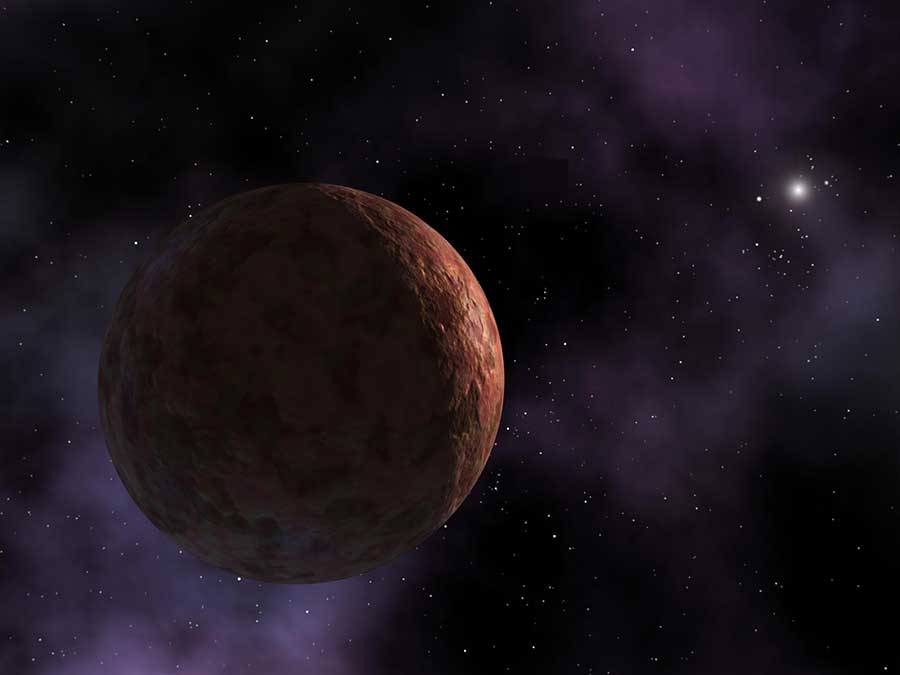
The concept of “Planet X”—a hypothetical, large planet orbiting the Sun beyond Neptune—has captivated astronomers and the public alike for over a century. Born from observed anomalies in the orbits of known planets and fueled by mathematical prediction, the quest for Planet X was a testament to humanity’s drive to map the cosmos. However, the story of Planet X is not just one of astronomical discovery; it is a profound narrative of technological evolution, illustrating how advancements in observation, computation, and data analysis have reshaped our understanding of the solar system, transforming elusive hypotheses into either confirmed realities or scientific footnotes.

The Dawn of Celestial Mysteries: Early Technology and the Planet X Hypothesis
The genesis of the Planet X theory lay in the painstaking, often manual, work of astronomers in the late 19th and early 20th centuries. The discovery of Uranus in 1781 and Neptune in 1846 both followed a similar pattern: irregularities in the orbit of an already-known planet suggested the gravitational pull of an unseen body. This method, known as perturbation analysis, became the bedrock of the Planet X hypothesis.
Observational Limits and Gravitational Puzzles
Early telescopes, though revolutionary for their time, presented significant limitations. Ground-based observatories contended with atmospheric distortion, light pollution, and the inherent difficulty of resolving faint objects across vast interstellar distances. The technology of photographic plates, while offering a means to record observations, was labor-intensive. Astronomers would meticulously compare plates taken at different times, searching for minute shifts in star-like points that might betray the movement of a planet. This process was prone to human error and severely constrained by exposure times and detector sensitivity.
It was against this backdrop that Percival Lowell, driven by discrepancies in Neptune’s predicted orbit, embarked on his tenacious search for Planet X in the early 1900s. His computations, derived from classical Newtonian mechanics, suggested the existence of a ninth major planet. The technology available to him—primarily sophisticated refracting telescopes and photographic emulsions—was at the cutting edge for its era, yet still insufficient to definitively pinpoint such a distant, dim object. The challenge was not just seeing something, but distinguishing it from the myriad of background stars, a task requiring immense patience and high-resolution imaging that was simply not yet perfected.
The Computational Quest for the Unknown
Before the advent of electronic computers, “computation” was a literal human endeavor. Astronomers and their assistants spent countless hours performing complex calculations by hand or with mechanical calculators. Lowell’s predictions for Planet X’s position were based on intricate mathematical models of celestial mechanics, calculating the minute gravitational effects of a hypothetical body on the known planets. This manual computational effort was a monumental intellectual achievement, demonstrating the power of theoretical physics to predict reality.
The sheer volume of data generated by astronomical observations, even in this analog era, demanded meticulous organization and analysis. Star catalogs were compiled by hand, and orbital elements were refined through iterative calculations. The very concept of Planet X underscored a fundamental belief in the uniformity of physical laws and the power of mathematics to reveal hidden truths, even when the technological means to directly observe those truths were still nascent. The discovery of Pluto in 1930 by Clyde Tombaugh at Lowell Observatory, following Lowell’s predictions, initially seemed to validate the Planet X theory, a triumph of human-powered calculation guiding telescopic search. However, as we now know, Pluto turned out to be far too small to account for the gravitational perturbations that initially inspired the search.
Disproving the Elusive: Technological Advances and New Understanding
The mid-to-late 20th century marked a paradigm shift in astronomical technology, moving from analog to digital and from human-intensive to automated processes. These advancements were pivotal in either confirming or refuting long-standing hypotheses, including the true nature of Planet X.
The Rise of Digital Astronomy and Precision Mapping
The advent of charged-coupled devices (CCDs) in the 1970s revolutionized astronomical imaging. CCDs are highly sensitive digital sensors that replaced photographic plates, offering significantly greater quantum efficiency, a wider dynamic range, and the ability to instantly capture and process images electronically. This technological leap allowed astronomers to detect much fainter objects and conduct deep-sky surveys with unprecedented speed and accuracy.
Coupled with adaptive optics, which compensate for atmospheric distortion, and eventually space-based telescopes like the Hubble Space Telescope (launched in 1990), observational capabilities improved exponentially. These new technologies provided astronomers with crystal-clear views of the outer solar system, far surpassing anything available to Lowell or Tombaugh. The improved resolution and sensitivity allowed for precise astrometry—the measurement of star and planet positions—which became critical in reassessing the orbits of outer planets.
Computational Power and Orbital Mechanics
The revolution in computing power, driven by Moore’s Law, had a profound impact on celestial mechanics. Supercomputers could now run sophisticated N-body simulations, modeling the gravitational interactions of thousands or even millions of celestial bodies over billions of years. These simulations were far more accurate and comprehensive than anything possible with manual calculation.
When astronomers re-analyzed the orbital data of Neptune and Uranus using these advanced computational models and highly precise astrometric measurements from new telescopes, a crucial revelation emerged: the apparent “anomalies” that had fueled the Planet X hypothesis were largely a result of inaccurate initial mass estimates for Neptune. When Neptune’s mass was refined through observations from Voyager 2 in the late 1980s, the discrepancies in Uranus’s orbit vanished. Furthermore, Pluto was reclassified as a dwarf planet, its diminutive mass entirely insufficient to exert the gravitational influence attributed to Planet X. This convergence of precise observation and powerful computation effectively disproved the original Planet X hypothesis as defined by Lowell. The “missing” gravitational pull was simply an artifact of outdated data and less precise computational models.
From Myth to Modern Search: Planet Nine and the AI Frontier
Despite the debunking of the original Planet X, the spirit of searching for an unseen gravitational influencer persists. The modern successor to Planet X is “Planet Nine,” a new hypothesis driven by different observational anomalies, primarily the peculiar clustering of orbits of extreme trans-Neptunian objects (eTNOs) in the far outer solar system. This renewed quest is entirely a product of 21st-century technological advancements.
Big Data and Algorithmic Discovery
The search for Planet Nine is fundamentally a big data problem. Modern sky surveys, such as the Dark Energy Survey and eventually the Vera C. Rubin Observatory (formerly LSST), generate petabytes of astronomical data. Manually sifting through this deluge for faint, moving objects or subtle orbital patterns is impossible. This is where artificial intelligence (AI) and machine learning (ML) come into play.
AI algorithms are designed to identify patterns, anomalies, and correlations within massive datasets that would be invisible to human observers. Machine learning models are trained on known celestial objects to distinguish them from noise, identify potential new objects, and even predict their likely orbital parameters. This allows for automated detection of candidate objects and statistical analysis of orbital alignments, such as the clustering observed in eTNOs, which suggests a distant gravitational perturber. Without these advanced computational tools, the Planet Nine hypothesis could not have even been formulated based on the subtle, collective behavior of a handful of distant ice worlds.
Next-Generation Observatories and Deep Space Survey
The technological arms race in observational astronomy continues to accelerate the search. New observatories, both ground-based and space-based, offer unprecedented capabilities. Ground-based telescopes like the Atacama Large Millimeter/submillimeter Array (ALMA) and future facilities like the Extremely Large Telescope (ELT) combine vast collecting areas with cutting-edge instrumentation, allowing them to detect extremely faint, cold objects far beyond Neptune.
Space telescopes, free from atmospheric interference, continue to push the boundaries of sensitivity and resolution. These instruments are equipped with advanced digital imaging sensors, sophisticated spectrographs, and powerful onboard processors that enable rapid data acquisition and preliminary analysis. Furthermore, dedicated survey telescopes are being designed specifically to scan vast swathes of the sky repeatedly, searching for moving objects over long periods, which is crucial for identifying very distant, slow-moving planets. The technological synergy between these advanced observatories and AI-driven data processing is essential for the monumental task of finding a potential Planet Nine in the vast, dark expanse of the outer solar system.

The Enduring Legacy: When Hypotheses Meet High-Tech
The story of Planet X is a compelling demonstration of how technology drives scientific progress. What began as a manual, arduous search guided by classical mechanics and limited optics evolved into a highly automated, data-intensive endeavor leveraging AI, supercomputing, and advanced observatories. The initial Planet X hypothesis, born from the limitations of 19th-century technology, was eventually disproven by the precision of 20th-century technology. Yet, the same scientific curiosity, now amplified by cutting-edge tools, continues the quest for new planets, pushing the boundaries of what we can observe and compute. The journey from Planet X to Planet Nine is a testament to humanity’s relentless pursuit of knowledge, continually refining its tools to uncover the universe’s deepest secrets.
aViewFromTheCave is a participant in the Amazon Services LLC Associates Program, an affiliate advertising program designed to provide a means for sites to earn advertising fees by advertising and linking to Amazon.com. Amazon, the Amazon logo, AmazonSupply, and the AmazonSupply logo are trademarks of Amazon.com, Inc. or its affiliates. As an Amazon Associate we earn affiliate commissions from qualifying purchases.