
For decades, Payless ShoeSource was a cornerstone of the American retail landscape. Its orange-and-white logo was a beacon for budget-conscious families, promising trendy footwear at prices that defied the market. At its peak, the company operated over 4,000 stores across dozens of countries. Yet, in 2019, the brand famously shuttered all its North American locations following its second bankruptcy in two years.
The story of Payless is not merely a tale of retail insolvency; it is a profound case study in brand strategy, the danger of identity dilution, and the complexities of modernizing a legacy corporate identity in a digital-first world.
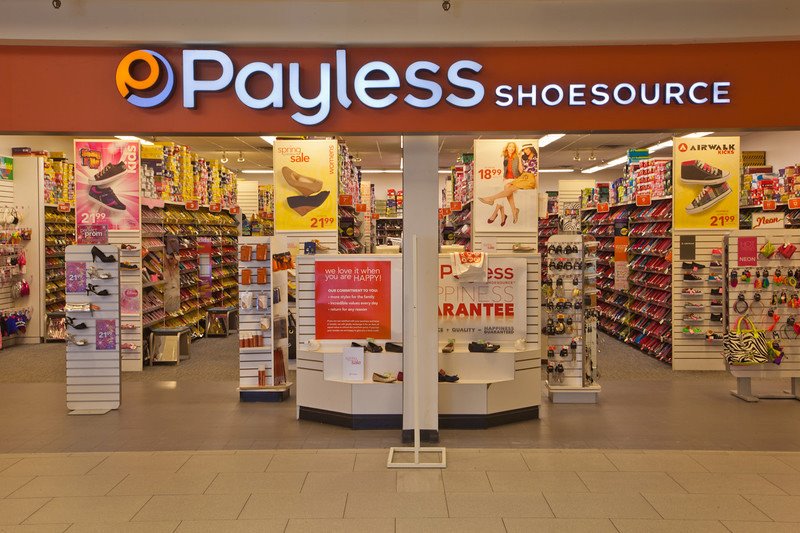
The Rise and Dilution of the Payless Value Proposition
To understand the brand’s decline, one must first recognize the strength of its original foundation. Founded in 1956 in Topeka, Kansas, Payless revolutionized the footwear industry by introducing the self-service model. Before Payless, shoe shopping was a high-touch, clerk-assisted experience. Payless democratized the process, allowing customers to browse aisles of open boxes, try on shoes at their own pace, and enjoy significant savings.
Democratic Fashion: Building the Original Identity
The Payless brand was built on the pillar of “accessible style.” By the 1980s and 90s, the company had successfully positioned itself as a destination where the “everyman” could find styles that mimicked high-end trends. The brand strategy was clear: high volume, low margin, and high convenience. For a time, Payless was the largest specialized footwear retailer in the world. Their brand equity was rooted in reliability and the “pro-consumer” stance of keeping prices low.
The Commoditization Trap
As the 21st century progressed, the Payless brand fell into the “commoditization trap.” When a brand’s primary differentiator is price, it becomes vulnerable to any competitor that can squeeze margins further. Payless began to lose its unique identity as big-box retailers like Target and Walmart improved their footwear aesthetics, and off-price giants like T.J. Maxx and DSW offered name-brand designer shoes at discounted prices.
Payless found itself squeezed in the middle. It lacked the premium allure of designer labels and could no longer claim the absolute lowest price floor against global e-commerce giants. The brand identity, which once signaled “smart shopping,” began to signal “dated retail,” leading to a slow erosion of consumer trust and relevance.
The Identity Crisis: From Discount Hero to Relic
A brand is more than a logo; it is the sum of every touchpoint a customer has with the company. For Payless, those touchpoints began to sour long before the legal filings. The physical environment of the stores—often cluttered, understaffed, and located in declining shopping malls—began to conflict with the “style” part of their value proposition.
Failure to Adapt to the E-commerce Revolution
Brand strategy in the 2010s required a seamless “omnichannel” presence. While competitors were investing heavily in digital storytelling and intuitive user experiences, Payless remained tethered to its brick-and-mortar legacy. The brand failed to translate its self-service joy into a digital format. On the web, the “bargain bin” feel of a physical Payless store didn’t translate to a premium user experience; it simply felt cheap. This lack of digital investment alienated younger demographics—Millennials and Gen Z—who were looking for brands that shared their values of convenience and curated aesthetics.
The Impact of Private Equity on Brand Health
In 2012, Payless was taken private in a leveraged buyout. This move had a catastrophic effect on the brand’s ability to innovate. Brand strategy requires capital for marketing, store redesigns, and talent acquisition. Instead, much of the company’s cash flow was redirected toward servicing debt. When a brand stops investing in its own image, the market notices. The marketing became reactive rather than proactive, focusing on “closing sales” rather than “brand building.” The result was a brand that looked and felt like it was stuck in 1998, while the rest of the fashion world had moved into a new era of influencer-led marketing and rapid trend cycles.
The “Palessi” Experiment: A Masterclass in Perceptual Mapping
In 2018, as the company struggled to redefine itself, it launched one of the most brilliant and debated marketing stunts in recent history: “Palessi.” This campaign serves as a critical lesson in how brand perception dictates value.
Challenging Consumer Bias
Payless took over a former Armani store in Santa Monica, filled it with their standard $20 and $30 shoes, and rebranded the boutique as “Palessi”—an upscale, fictional Italian designer. They invited fashion influencers to the grand opening. Unaware of the ruse, the influencers praised the “quality leather” and “elegant craftsmanship,” with some paying upwards of $600 for shoes that actually retailed for $19.99.
The goal was to prove that Payless products were high-quality and stylish, and that only “brand snobbery” kept people away. From a brand strategy perspective, the experiment was a success in terms of viral reach. It proved that the product wasn’t the problem; the perceived value of the Payless name was the hurdle.
Leveraging Irony for Brand Awareness
While “Palessi” garnered millions of impressions, it also highlighted a grim reality: the Payless brand was so tarnished that the company had to hide its own name to get people to appreciate its designs. While the campaign was clever, it didn’t solve the underlying structural issues of the brand. You cannot prank your way out of a failing business model, but the Palessi experiment remains a definitive example of how brand framing dictates the price consumers are willing to pay.
The Post-Bankruptcy Pivot: Rebranding for a Digital-First Era
After the 2019 liquidation, many assumed Payless was gone for good. However, in 2020, the brand emerged from bankruptcy under new leadership with a complete strategic overhaul. This “Payless 2.0” represents an attempt to salvage the brand’s core equity while shedding the baggage of its past.
Dropping the “ShoeSource” and Modernizing Visual Identity
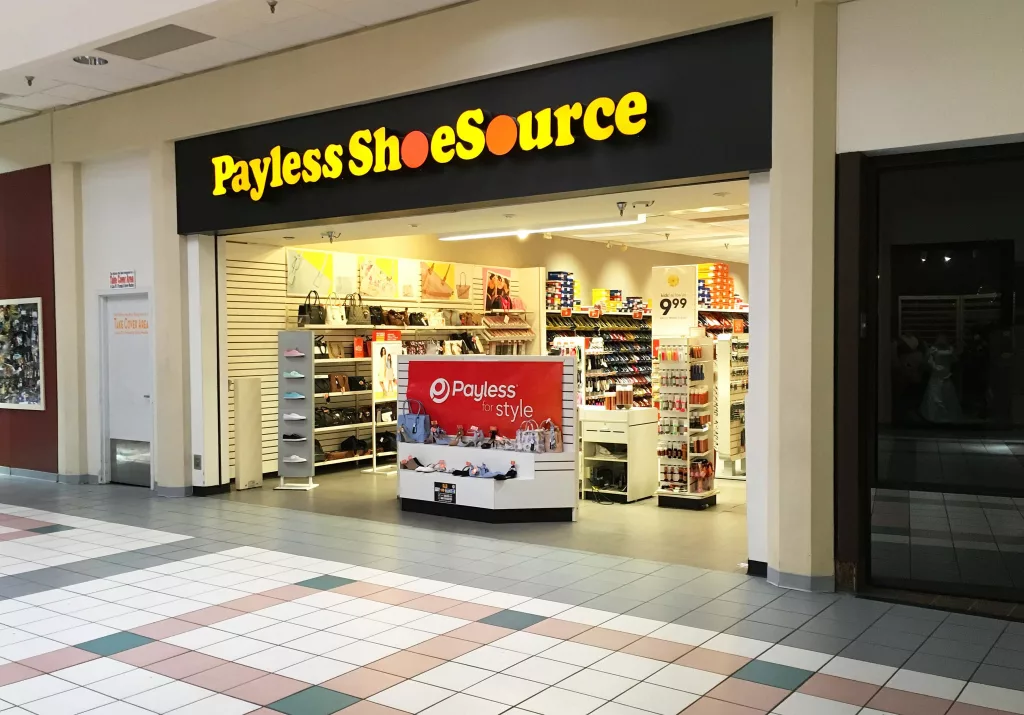
The first major move in the rebrand was simplifying the name. Dropping “ShoeSource” and moving forward simply as “Payless” signaled a move toward a more modern, lifestyle-oriented brand rather than a warehouse-style retailer. The visual identity was refreshed with cleaner lines and a more vibrant color palette, designed to pop on social media feeds and mobile apps.
Omnichannel Strategy and Global Scaling
The new brand strategy shifted away from the “mall-only” model. The company pivoted to a digital-first approach, relaunching its e-commerce platform with a focus on ease of use and social integration. Simultaneously, it leaned into its international strength. While Payless struggled in the U.S., its brand remained incredibly strong in Latin America and Southeast Asia.
The current brand identity focuses on being a “global house of brands,” partnering with recognizable names like Kendall + Kylie and Disney to bring exclusive, affordable collections to a wider audience. This shift from “shoe store” to “curated platform” is a vital step in regaining relevance with the modern shopper.

Lessons for Modern Brand Managers
The trajectory of Payless offers several critical insights for anyone involved in brand strategy and corporate identity.
- Value is Not Just Price: A brand that competes solely on price is always one competitor away from irrelevance. Payless lost its “cool” because it stopped standing for something beyond “cheap.” A brand must provide a reason for the consumer to care—be it through design, community, or experience.
- The Physical and Digital Must Align: You cannot have a high-tech website and a decaying physical store. The brand experience must be consistent across all channels. Payless’s failure to maintain its physical “temples” of the brand accelerated its downfall.
- Perception is Reality: The Palessi campaign proved that the narrative surrounding a brand is just as important as the product itself. If the market perceives your brand as “low-tier,” even high-tier products will be dismissed. Repositioning a brand requires a fundamental change in narrative, not just a new logo.
- Agility is Essential: Payless stayed too long in a retail model that was dying. Successful brands are those that anticipate shifts in consumer behavior—like the move to e-commerce and the rise of the “athleisure” trend—and adapt their identity to fit the new landscape.
Today, Payless continues its journey of redemption. By focusing on a “phygital” (physical and digital) presence and leveraging its international equity, it is attempting to reclaim its spot as a leader in affordable fashion. The brand’s survival, despite two bankruptcies and the total closure of its original domestic footprint, is a testament to the enduring power of a household name—and a reminder that in the world of branding, no identity is ever truly permanent. Success lies in the ability to evolve without losing the core soul that made the brand famous in the first place.
aViewFromTheCave is a participant in the Amazon Services LLC Associates Program, an affiliate advertising program designed to provide a means for sites to earn advertising fees by advertising and linking to Amazon.com. Amazon, the Amazon logo, AmazonSupply, and the AmazonSupply logo are trademarks of Amazon.com, Inc. or its affiliates. As an Amazon Associate we earn affiliate commissions from qualifying purchases.