
NVIDIA. The name alone conjures images of cutting-edge graphics, high-performance computing, and the very vanguard of artificial intelligence. For decades, this Silicon Valley titan has not merely adapted to technological shifts; it has often dictated them. But in a landscape as volatile and rapidly evolving as technology, even giants face scrutiny. “What happened to NVIDIA?” is a question that, far from implying decline, often probes its latest strategic moves, its resilience in the face of market challenges, and its continued ability to redefine the boundaries of what’s possible.
NVIDIA’s journey is a microcosm of the modern tech narrative: a story of relentless innovation, strategic pivots, and the uncanny ability to foresee and capitalize on emergent computational paradigms. From its humble beginnings as a purveyor of dedicated graphics cards for gaming PCs, it has metamorphosed into a full-stack computing platform company, driving advancements in fields as diverse as AI research, data center infrastructure, autonomous vehicles, and the nascent metaverse. This article delves into NVIDIA’s multifaceted evolution, examining the pivotal moments, technological breakthroughs, and strategic decisions that have shaped its current formidable position and will likely define its future.
From Graphics Cards to AI Powerhouse: NVIDIA’s Evolving Core
NVIDIA’s origin story is firmly rooted in the burgeoning PC gaming market of the 1990s. Its initial success was built on creating highly efficient and powerful graphics processing units (GPUs) that could render complex 3D worlds with unprecedented fidelity. This foundational expertise in parallel processing, initially geared towards visual computing, would prove to be the unexpected bedrock for its future dominance in an entirely different domain: artificial intelligence.
The Genesis of GPU Dominance
In the early days, the battle for GPU supremacy was fierce. Companies vied to deliver faster frame rates, more realistic textures, and innovative rendering techniques. NVIDIA’s GeForce line, launched in 1999, quickly became synonymous with high-end gaming performance, establishing the company as a leader. Its commitment to integrated hardware and software development, particularly with DirectX and OpenGL standards, ensured that developers could harness the full power of their cards. This period also saw NVIDIA pioneer the concept of programmable shaders, giving developers more creative control and paving the way for increasingly sophisticated graphical effects. The underlying architecture, designed for massively parallel operations to process millions of pixels simultaneously, was a technological marvel, though its full potential was yet to be realized beyond its primary gaming application. This relentless pursuit of visual fidelity and computational efficiency in graphics laid the groundwork for a revolution that would extend far beyond the gaming console.
The AI Revolution’s Unforeseen Catalyst
The true inflection point for NVIDIA came not from gaming, but from academia. Researchers in the mid-2000s discovered that the highly parallel architecture of GPUs, designed to process graphics data in parallel, was incredibly well-suited for the computational demands of neural networks. This revelation coincided with the resurgence of deep learning, a subfield of AI that required immense computational power to train complex models. NVIDIA’s introduction of CUDA (Compute Unified Device Architecture) in 2006 was a game-changer. CUDA provided a software layer that allowed developers to program NVIDIA GPUs for general-purpose computing, effectively turning graphics processors into highly optimized supercomputers for AI. This opened the floodgates for researchers and eventually corporations to leverage NVIDIA’s hardware for tasks like image recognition, natural language processing, and data analysis. The shift was transformative: NVIDIA’s market cap and strategic focus began to increasingly reflect its role as the de facto hardware provider for the burgeoning AI industry, far surpassing its identity as merely a gaming hardware vendor.
Diversification Beyond Traditional Gaming
With AI and deep learning firmly in its sights, NVIDIA embarked on a massive diversification strategy. Its GPUs and accompanying software stack became indispensable in data centers, powering enterprise-grade AI workloads, scientific simulations, and high-performance computing (HPC). The company expanded its professional visualization offerings with Quadro and RTX professional GPUs, catering to industries like film, architecture, engineering, and product design, where real-time rendering and complex simulations are critical. Furthermore, NVIDIA recognized the potential of its technology in emerging markets such as autonomous vehicles (with its Drive platform), robotics, and industrial automation. This strategic pivot involved not just selling chips but developing comprehensive platforms that integrate hardware, software, and services, effectively creating ecosystems that lock in customers and foster innovation. This diversification significantly de-risked the company, making it less reliant on the cyclical nature of the consumer gaming market and positioning it at the heart of the digital transformation across multiple industries.
Navigating the Semiconductor Landscape: Challenges and Opportunities
The semiconductor industry is characterized by its capital intensiveness, rapid technological obsolescence, and susceptibility to global macroeconomic and geopolitical forces. NVIDIA, despite its dominant position, has not been immune to these pressures, navigating a complex web of supply chain disruptions, intense competition, and evolving regulatory environments.
Supply Chain Volatility and Geopolitical Headwinds
The global chip shortage that began in late 2020 exposed the fragility of the intricate semiconductor supply chain. NVIDIA, like many fabless companies, relies heavily on contract manufacturers, primarily TSMC, for the production of its advanced chips. This reliance meant that manufacturing capacity constraints, exacerbated by pandemic-induced disruptions and unprecedented demand surges from various sectors (gaming, data centers, automotive), directly impacted NVIDIA’s ability to meet market demand. Furthermore, escalating geopolitical tensions, particularly between the U.S. and China, have introduced significant headwinds. Export controls on advanced AI chips have, at times, restricted NVIDIA’s ability to sell its highest-end products to certain markets, forcing it to develop specialized, compliant versions. These external pressures have highlighted the need for greater supply chain resilience and strategic maneuvering in an increasingly fragmented global economy.
Intense Competition and Innovation Race
While NVIDIA enjoys a significant lead in the high-end GPU and AI accelerator market, it operates in a fiercely competitive environment. AMD, its traditional rival, has consistently pushed its Radeon GPUs and Instinct accelerators, gaining traction in both consumer and data center segments. Intel, a giant in its own right, has re-entered the discrete graphics market with its Arc GPUs and is heavily investing in AI accelerators like Gaudi, aiming to challenge NVIDIA’s dominance, especially in server AI. Beyond traditional rivals, hyperscale cloud providers like Amazon (with Graviton and Trainium/Inferentia), Google (TPU), and Microsoft are developing their own custom silicon optimized for their specific cloud workloads, potentially reducing their reliance on third-party vendors for certain tasks. To maintain its edge, NVIDIA must continually out-innovate, not just on raw performance but also on power efficiency, software integration, and the breadth of its ecosystem. The innovation race is perpetual, demanding massive R&D investments and a forward-looking product roadmap.

Regulatory Scrutiny and Market Dynamics
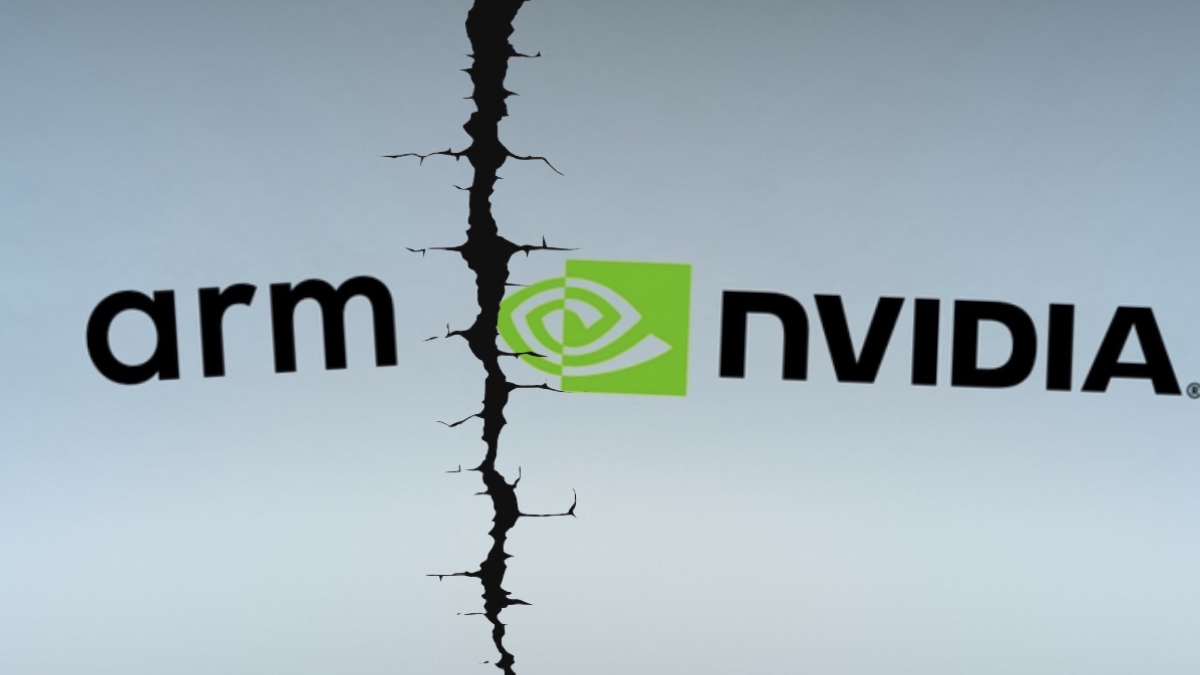
NVIDIA’s growing influence has also attracted increased regulatory scrutiny. The most prominent example was its attempted acquisition of ARM Holdings, a deal valued at over $40 billion, which ultimately collapsed due to significant antitrust concerns from regulators globally. This episode underscored the perceived threat of a single entity controlling such a foundational piece of the technology infrastructure. Regulators worried about NVIDIA potentially leveraging ARM’s CPU designs and IP to gain an unfair advantage or stifle competition across various markets. Furthermore, the sheer market capitalization and strategic importance of NVIDIA in critical technologies like AI mean that its every move is watched closely by governments and competitors alike. The company must navigate these complex regulatory landscapes, ensuring compliance while pursuing its growth ambitions, a delicate balancing act in an era of heightened antitrust enforcement and national security concerns over critical technologies.
Pioneering the Next Digital Frontiers: NVIDIA’s Strategic Vision
Looking ahead, NVIDIA is not merely content with its current dominance; it is actively shaping the next wave of computing paradigms. Its strategic investments and product development are focused on building the foundational technologies for what many believe will be the defining digital experiences of the coming decades.
The Omniverse and the Metaverse Infrastructure
Perhaps one of NVIDIA’s most ambitious undertakings is the NVIDIA Omniverse, a platform for connecting and building 3D virtual worlds and applications. Positioned as the foundational infrastructure for the industrial metaverse, Omniverse allows developers, designers, and engineers to collaborate in real-time, simulate complex environments, and create digital twins of physical objects and spaces. This platform leverages NVIDIA’s core strengths in real-time rendering, physics simulation, and AI to create incredibly realistic and interactive virtual environments. From designing factories and cities to training robots and autonomous vehicles in simulated realities, Omniverse aims to bridge the physical and digital worlds, enabling highly efficient and innovative workflows across numerous industries. NVIDIA sees the metaverse not just as a consumer playground but as a transformative tool for enterprises, and it is positioning its hardware and software as the definitive engine for this future.
Autonomous Systems and Robotics
NVIDIA’s Drive platform is a comprehensive hardware and software solution for autonomous vehicles, ranging from advanced driver-assistance systems (ADAS) to full self-driving capabilities. Leveraging its powerful GPUs for real-time sensor processing, perception, planning, and control, Drive is being adopted by numerous automakers and autonomous driving startups. The company’s vision extends beyond cars to a broader push into robotics and intelligent machines. Its Jetson platform provides edge AI computing for robotics, smart cities, and industrial applications, enabling devices to process complex AI models locally. By combining powerful processing with advanced AI software, NVIDIA is enabling robots to learn, adapt, and operate autonomously in unstructured environments, promising to revolutionize logistics, manufacturing, healthcare, and exploration. The company’s expertise in parallel processing and AI makes it a natural fit for this increasingly critical sector.
Software-Defined Hardware and Ecosystem Lock-in
A critical, yet often underestimated, aspect of NVIDIA’s strategy is its relentless focus on software. While its hardware (GPUs, DPUs) is groundbreaking, it’s the comprehensive software stack – CUDA, cuDNN, TensorRT, DALI, and the entire Omniverse platform – that truly differentiates NVIDIA. This software acts as a “moat,” creating a powerful ecosystem that makes it incredibly challenging for developers and enterprises to switch to alternative hardware. Developers invest years learning and optimizing their code for CUDA, building a vast library of applications and tools. This software-defined approach means that NVIDIA is not just selling chips; it’s selling an entire computing platform that is constantly evolving and improving through software updates. This deep integration ensures that new hardware architectures are immediately accessible and optimized for a wide array of applications, cementing NVIDIA’s position as a holistic provider of computing solutions, where the value of the platform often outweighs the cost of individual components.
The Future of Computing: NVIDIA’s Enduring Influence
NVIDIA’s journey is far from over. As technology continues its exponential growth, the company remains at the forefront, not just anticipating change but actively engineering it. Its impact on the future of computing promises to be as profound as its contributions to the past.
Sustaining Innovation in an AI-First World
The demand for ever-more powerful and efficient AI compute shows no signs of abating. NVIDIA continues to push the boundaries of chip design, developing new architectures that are tailored for next-generation AI models, including massive large language models and multi-modal AI. Its research extends into cutting-edge areas like quantum computing integration, advanced networking (via Mellanox acquisition), and accelerated computing for every workload. Sustaining innovation means not just delivering raw performance but also addressing power efficiency, cost-effectiveness, and ease of deployment for increasingly complex AI systems. The company’s commitment to research and development, coupled with its ability to attract top engineering talent, is crucial for maintaining its lead in an AI-first world.
The Interplay of Hardware, Software, and Services
NVIDIA is increasingly evolving into a full-stack computing company. It’s not enough to offer best-in-class chips and software; the future lies in providing comprehensive platforms that include cloud services. NVIDIA’s AI Enterprise software suite, its DGX Cloud offerings, and its various simulation services demonstrate a clear move towards offering computing as a service. This strategy allows customers to access NVIDIA’s powerful hardware and optimized software without the significant upfront investment in physical infrastructure. This blending of hardware, proprietary software, and cloud-based services creates a powerful, integrated ecosystem that is difficult for competitors to replicate, ensuring NVIDIA’s relevance across the entire computing spectrum.
In conclusion, “what happened to NVIDIA” reveals a company that has undergone a profound transformation, moving far beyond its initial identity as a graphics card manufacturer. It has skillfully navigated technological shifts, economic challenges, and competitive pressures by consistently investing in innovation, strategically diversifying its product portfolio, and fostering a powerful software ecosystem. From enabling the AI revolution to laying the groundwork for the metaverse and autonomous systems, NVIDIA has positioned itself as an indispensable architect of the digital future. While challenges undoubtedly lie ahead – from maintaining technological leadership amidst fierce competition to adapting to geopolitical realities – NVIDIA’s strategic vision and relentless pursuit of computational excellence suggest its influence will only grow in shaping the next era of technology.
aViewFromTheCave is a participant in the Amazon Services LLC Associates Program, an affiliate advertising program designed to provide a means for sites to earn advertising fees by advertising and linking to Amazon.com. Amazon, the Amazon logo, AmazonSupply, and the AmazonSupply logo are trademarks of Amazon.com, Inc. or its affiliates. As an Amazon Associate we earn affiliate commissions from qualifying purchases.