
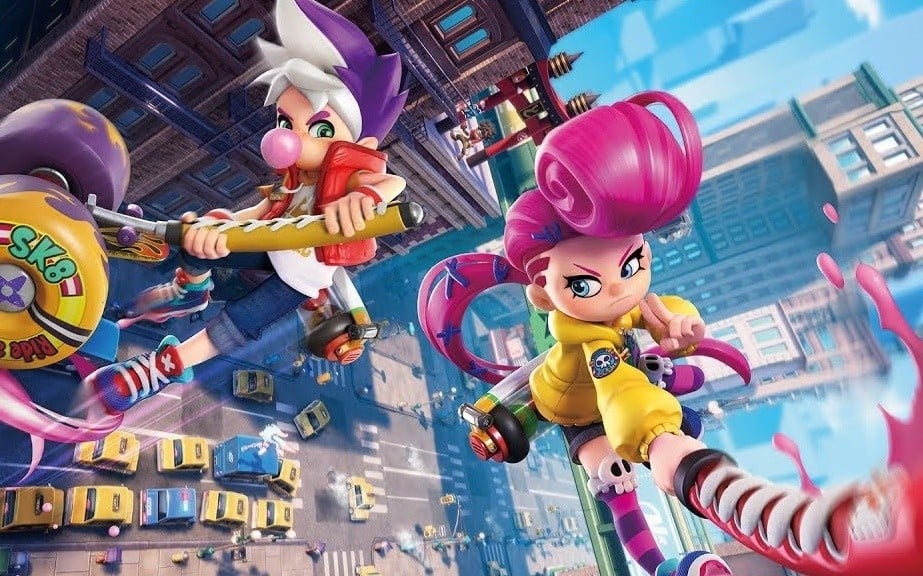
When GungHo Online Entertainment first revealed Ninjala at E3 2018, the tech and gaming world took immediate notice. With its vibrant aesthetic and kinetic movement, the title was positioned as a software powerhouse designed specifically to leverage the unique capabilities of the Nintendo Switch hardware. Upon its release in June 2020, it achieved a staggering milestone: ten million downloads within its first few years. However, in the fast-moving landscape of modern software and digital applications, the initial “hype” often transitions into a quieter phase of maintenance and technical refinement. To understand what happened to Ninjala, one must look past the colorful exterior and analyze it as a complex piece of live-service software navigating a crowded digital ecosystem.
The Technical Architecture of a Games-as-a-Service (GaaS) Model
Ninjala was built from the ground up as a “Games-as-a-Service” (GaaS) application. Unlike traditional software releases that are static upon purchase, a GaaS product is a living piece of code that requires constant server-side updates, client-side patches, and a robust backend infrastructure to sustain a global user base.
The Dynamics of Continuous Deployment
From a software development perspective, Ninjala’s survival has depended on its “Season” architecture. Since its 2020 launch, the developers have maintained a rigorous deployment schedule, introducing new gameplay mechanics, gum weapons, and maps every few months. This continuous integration/continuous deployment (CI/CD) cycle is essential for any modern app looking to maintain a high “Daily Active User” (DAU) count. The tech team at GungHo had to ensure that each update didn’t break existing game balance—a technical feat known as regression testing—while simultaneously adding heavy assets like new character models and high-resolution textures to the limited storage environment of the Switch.
Balancing Free-to-Play Algorithms
The software’s monetization engine is another critical technical component. As a free-to-play application, Ninjala utilizes a sophisticated backend system to manage the “Jala” currency, battle passes, and the “Gumball Machine” (the game’s version of loot boxes). The technical challenge here lies in ensuring secure, real-time transactions that sync across Nintendo’s eShop servers and GungHo’s internal databases. This necessitates a high degree of data integrity to prevent “item loss” errors, which can be catastrophic for the reputation of a digital service.
Network Infrastructure and the Latency Challenge
In any real-time action software, the biggest technical hurdle is latency—often referred to as “lag.” Ninjala is particularly sensitive to this because its core combat loop relies on frame-perfect timing and a unique “Parry” system that mimics a high-speed Rock-Paper-Scissors mechanic.
Peer-to-Peer vs. Dedicated Servers
One of the primary discussions in the Ninjala tech community has been the game’s networking model. In its early days, players frequently encountered “teleporting” opponents and delayed hit registration. These are classic symptoms of a networking architecture struggling to synchronize data packets across diverse geographic locations. While many high-tier applications utilize dedicated servers to act as a “source of truth,” the technical overhead and cost of maintaining global server farms are immense. Ninjala’s developers had to continually optimize their netcode to minimize “desync” issues, ensuring that when a player triggers a “Gum Binding” move, the action is reflected on the opponent’s screen with millisecond precision.
Regional Optimization and Matchmaking Logic
As the player base shifted from a global phenomenon to a more concentrated group of enthusiasts—largely in Japan and North America—the matchmaking algorithms had to be re-engineered. The software must balance two conflicting technical goals: speed of connection (finding a match quickly) and quality of connection (finding a match with low ping). Recent updates have seen refinements in how the app handles regional matchmaking, prioritizing technical stability over sheer lobby-filling speed, which has significantly improved the experience for the remaining core community.
Software Evolution through Collaborative Integration
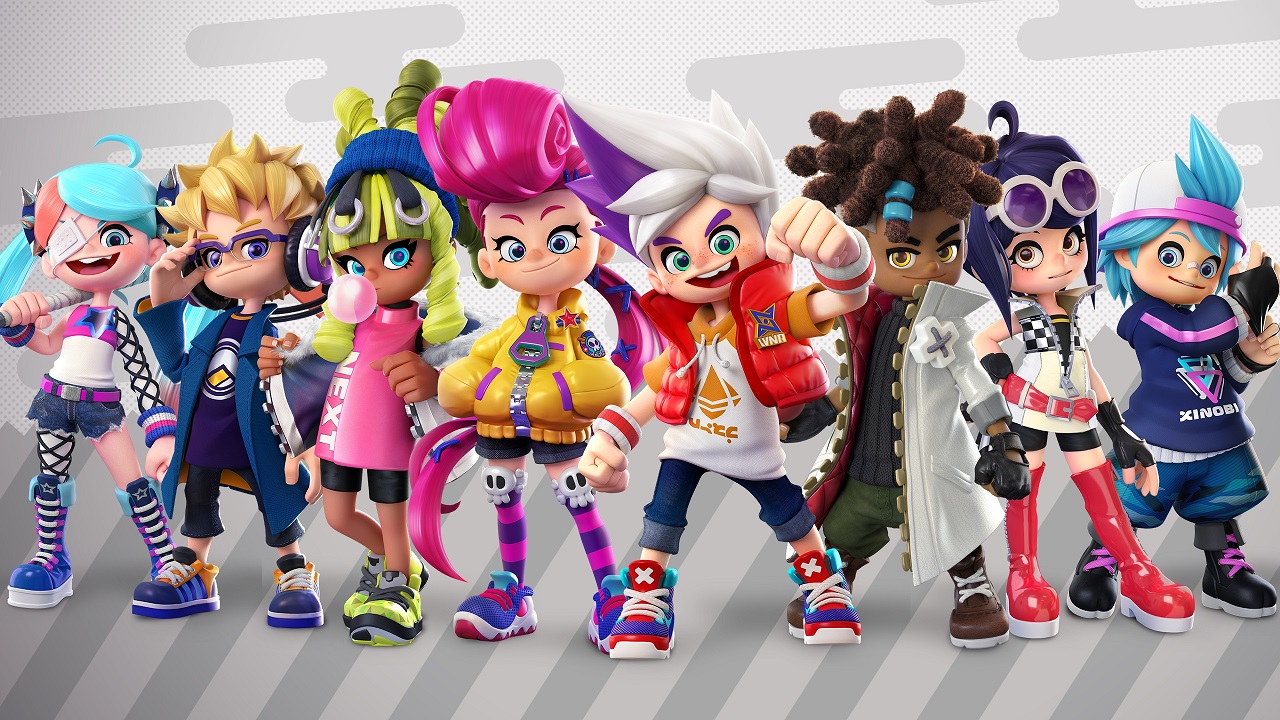
One of the most impressive technical feats of Ninjala is its ability to serve as a platform for third-party digital assets. The game has seen an unprecedented number of collaborations with major IPs, including Demon Slayer, Monster Hunter, and Sonic the Hedgehog.
Modular Asset Management
Integrating external assets into a pre-existing software framework is not a simple “copy-paste” job. Each collaboration requires the development team to build modular “skins” and emotes that fit the game’s specific skeleton and animation rigs. From a software engineering standpoint, the Ninjala engine (built on Unreal Engine 4) had to be optimized to handle these diverse assets without increasing load times or causing memory leaks. The fact that the game can seamlessly transition from a Hello Kitty event to a Jujutsu Kaisen event speaks to the flexibility of its underlying codebase.
The Expansion of the “Ninjala IP” as a Digital Suite
Beyond the core battle game, the software has expanded into a multi-media suite. This includes an integrated “Ninjala TV” feature and links to the Ninjala anime series. This cross-platform integration requires a unified UI/UX design that allows users to move between playing, watching, and purchasing without leaving the application environment. This “all-in-one” app approach is a common trend in modern software, aiming to maximize user “stickiness” by providing multiple forms of entertainment within a single digital portal.
Performance Optimization on the Nintendo Switch Hardware
The Nintendo Switch, while revolutionary, possesses significant technical constraints compared to high-end PCs or the latest PlayStation and Xbox consoles. Ninjala’s technical legacy is defined by how it pushes the Switch’s Tegra X1 processor to its limits.
Maximizing the Tegra X1 Architecture
To maintain a high-speed experience, the developers employed several clever software engineering tricks. Dynamic resolution scaling is used to ensure that when the screen is filled with eight players all using “Gum Ninjutsu” simultaneously, the frame rate remains as stable as possible. By lowering the internal rendering resolution during high-stress moments, the software prioritizes input responsiveness over visual crispness—a necessary trade-off for a competitive action title.
Shaders, Particles, and Memory Management
The “pop” and “vibrancy” of Ninjala are achieved through sophisticated shader work and particle effects. However, these are notoriously taxing on the Switch’s 4GB of RAM. The development team has spent years refining the game’s memory management, ensuring that assets are loaded and unloaded (garbage collection) efficiently. This technical polish is why the game, despite its age, still looks and performs better than many newer, less-optimized titles on the platform.
The Future of the Ninjala Platform
What happened to Ninjala? It didn’t disappear; it evolved. It transitioned from a “viral” software launch into a specialized, high-performing niche application. As we look toward the future of digital entertainment and mobile/console apps, Ninjala provides a fascinating case study in software longevity.
Potential for Cloud and Next-Gen Porting
As cloud gaming technology matures, there is significant potential for Ninjala to expand beyond the Switch. By offloading the heavy processing to remote servers, the game could theoretically run on any device with a screen and an internet connection. Furthermore, rumors of new Nintendo hardware suggest that the Ninjala codebase may eventually undergo a “next-gen” optimization, allowing for 4K textures and 120Hz refresh rates, which would breathe new life into the competitive scene.
Lessons in Software Endurance
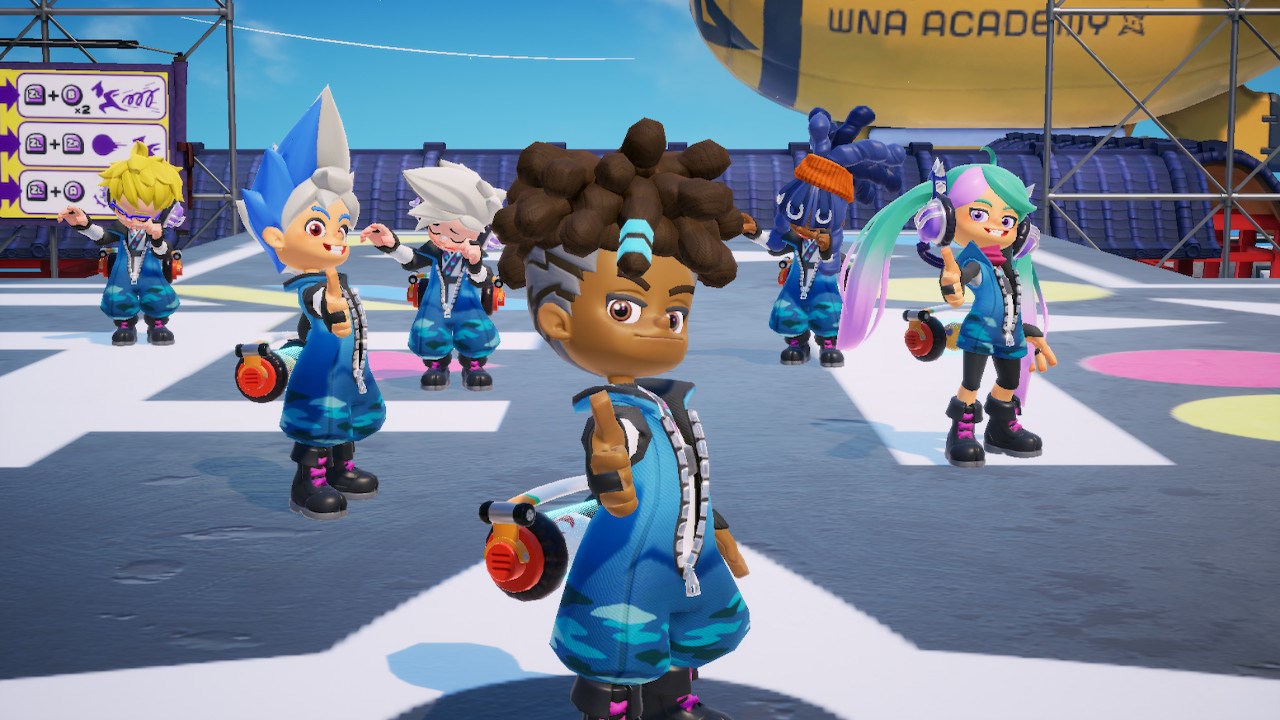
The story of Ninjala is a reminder that in the tech world, the “launch” is just the beginning. The real work lies in the years of patching, server maintenance, and community management that follow. While it may no longer dominate the social media zeitgeist, Ninjala remains a technically impressive example of how to maintain a complex, live-service software product in a competitive and resource-constrained environment. Its journey from a highly-anticipated reveal to a steady, reliable digital service offers valuable insights for software developers and tech enthusiasts alike regarding the importance of optimization, scalability, and technical resilience.
aViewFromTheCave is a participant in the Amazon Services LLC Associates Program, an affiliate advertising program designed to provide a means for sites to earn advertising fees by advertising and linking to Amazon.com. Amazon, the Amazon logo, AmazonSupply, and the AmazonSupply logo are trademarks of Amazon.com, Inc. or its affiliates. As an Amazon Associate we earn affiliate commissions from qualifying purchases.