
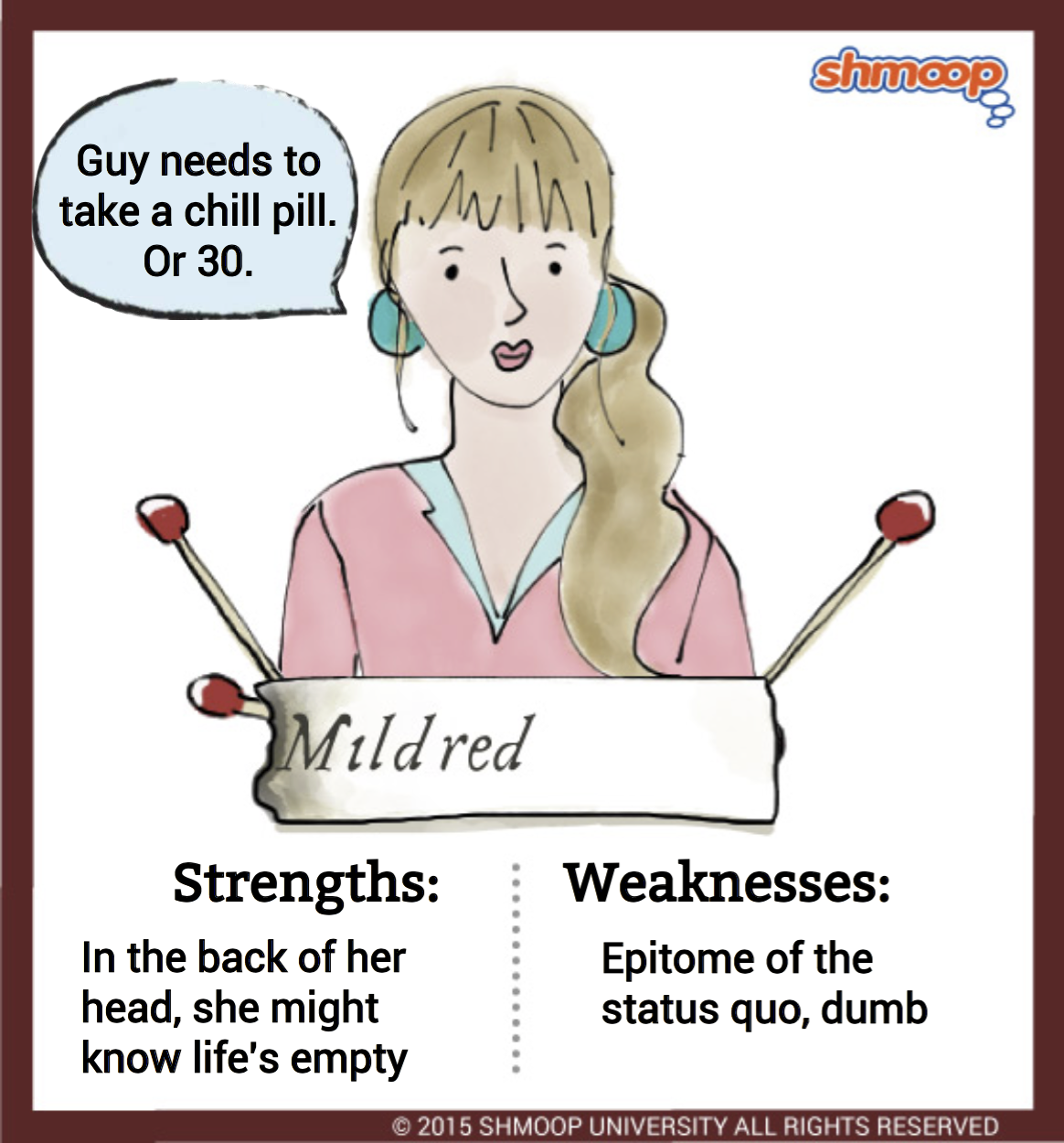
In Ray Bradbury’s dystopian masterpiece, Fahrenheit 451, Mildred Montag serves as the tragic personification of a society consumed by its own gadgets. While the protagonist, Guy Montag, seeks liberation through literature, Mildred represents the logical conclusion of a world that prioritizes “connectivity” over connection. When we ask what happened to Mildred, we are not merely asking about a plot point; we are examining the systemic technological erosion of a human soul. Mildred’s journey—from her immersive media addiction to her eventual digital disintegration—offers a chillingly accurate blueprint for the challenges we face in our current era of ubiquitous screens and algorithmic escapism.

The Architecture of Distraction: The Parlor Walls as Proto-Metaverse
The most striking technological feature of Mildred’s life is the “Parlor Walls.” These are floor-to-ceiling television screens that broadcast interactive soap operas, turning the living room into a fully immersive sensory experience. Mildred’s obsession with these walls is not just a hobby; it is her entire reality.
From Three Walls to Four: The Infinite Loop of Immersive Content
Throughout the narrative, Mildred’s primary ambition is to purchase a fourth parlor wall. Her home already features three walls of interactive screens, but she feels “unbalanced” without the fourth. This mirrors the modern tech consumer’s drive for the “next big upgrade.” Whether it is a higher resolution display, a more immersive VR headset, or a seamless smart-home ecosystem, the goal is total immersion. For Mildred, the fourth wall represents the completion of a digital cocoon that effectively shuts out the physical world. In a tech context, this is the ultimate “walled garden,” where the user is so surrounded by proprietary content that the boundary between simulated life and actual life vanishes.
Parasocial Relationships and the Death of Authentic Connection
Mildred refers to the characters on the screens as her “family.” She participates in scripts where she is given a few lines to read, creating an illusion of agency and belonging. This is a sophisticated precursor to the parasocial relationships seen today on platforms like Twitch, YouTube, and TikTok. Mildred believes she has a community, but it is a one-way street fueled by data and pre-recorded responses. She doesn’t have to do the hard work of maintaining a relationship with her husband because the “family” provides a frictionless, low-effort alternative. What happened to Mildred was a total replacement of human intimacy with simulated social interaction.
The Seashells: The Progenitors of Wireless Audio and Personal Isolation
If the parlor walls are the visual anchors of Mildred’s life, the “Seashells” are her auditory shackles. These small, thimble-sized radios fit into her ears, providing a constant stream of music, talk, and “oceanic” white noise.
Constant Connectivity as a Barrier to Self-Reflection
Mildred is never seen without her Seashells. Even while sleeping, she is plugged into a digital stream. From a technology standpoint, this represents the “always-on” nature of modern mobile devices. The Seashells function as an early vision of Bluetooth earbuds, but with a more sinister psychological purpose: the elimination of silence. In Fahrenheit 451, silence is the enemy of the state because silence allows for thought. By staying constantly connected to a stream of data, Mildred prevents herself from ever having to confront her own unhappiness or the hollowness of her existence.
The Sound of Silence: How Audio Escapism Erases Reality
The technological irony of the Seashells is that while they are designed to “fill” the user’s mind, they actually empty it. Mildred becomes an expert at lip-reading her husband because she refuses to take the buds out. This highlights a modern tech dilemma: the “filter bubble.” When we can choose exactly what we hear at all times, we lose the ability to engage with the ambient world—the unexpected conversations, the sounds of nature, or the uncomfortable truths spoken by those around us. Mildred didn’t just lose her hearing; she lost her receptivity to external reality.
The Bio-Digital Feedback Loop: Mildred’s Overdose and Technological Despair
One of the most pivotal moments in the book occurs early on when Montag finds Mildred unconscious after overdosing on sleeping pills. This event is the catalyst for the story, yet Mildred herself has no memory of it the next morning.
The Role of the “Snake”: Automated Healthcare and Dehumanization
When the medics arrive to save Mildred, they don’t bring empathy or human care; they bring two specialized machines. One, colloquially called the “Snake,” pumps her stomach, while the other replaces her blood. The technicians operating them aren’t even doctors; they are mere machine-tenders. This highlights a terrifying tech-centric future where even life-saving interventions are commodified and automated to the point of coldness. The technology “fixes” Mildred’s physical body, but it does nothing to address the psychological despair that led to the overdose. In this world, tech treats symptoms, never causes.
Why the Digital High Leads to a Physical Low
Mildred’s overdose is a direct result of the “dopamine loop” created by her gadgets. The parlor walls and Seashells provide constant, low-level stimulation that keeps her in a state of perpetual distraction. However, when the screens go dark and the batteries die, the sudden drop in stimulation is unbearable. This “digital hangover” is a well-documented phenomenon in modern psychology, where overexposure to high-stimulation digital media leads to increased rates of anxiety and depression. Mildred wasn’t trying to die; she was trying to feel something—or perhaps to feel nothing at all—because the digital world had rendered her incapable of handling the weight of actual existence.
Lessons for the Digital Age: Avoiding the Mildred Montag Trajectory
What happened to Mildred serves as a warning for the 21st-century tech consumer. As we integrate AI, VR, and wearable technology deeper into our daily routines, the risk of becoming “Mildred-like” grows.
Mindful Consumption in an Era of Algorithm-Driven Content
The tragedy of Mildred is her lack of intentionality. She doesn’t choose what to watch; she simply watches what is broadcast. Modern algorithms function much like the “family” scripts in Mildred’s parlor, feeding users content designed to maximize engagement rather than provide value. To avoid Mildred’s fate, tech users must practice “digital hygiene”—the act of intentionally choosing when and how to engage with technology. This involves setting boundaries for screen time, curating feeds to include challenging perspectives, and recognizing when a platform is using dark patterns to keep us “plugged in.”

The Importance of Unplugging to Reclaim Human Agency
The final “what happened” for Mildred is her total abandonment of her home and husband when the city is threatened with war. She chooses the parlor walls over her life, and as she flees, she is presumably incinerated in the nuclear blast that destroys the city. She died as she lived: a ghost in a machine.
To remain human in a high-tech world, we must prioritize “analog” experiences—reading physical books, engaging in face-to-face conversation, and spending time in silence. Technology should be a tool that enhances our ability to interact with the world, not a wall that separates us from it. Mildred Montag is the ultimate case study in what happens when the tool becomes the master. By studying her descent, we can learn to navigate our own technological landscape with greater wisdom, ensuring that our gadgets serve our humanity rather than erasing it.
aViewFromTheCave is a participant in the Amazon Services LLC Associates Program, an affiliate advertising program designed to provide a means for sites to earn advertising fees by advertising and linking to Amazon.com. Amazon, the Amazon logo, AmazonSupply, and the AmazonSupply logo are trademarks of Amazon.com, Inc. or its affiliates. As an Amazon Associate we earn affiliate commissions from qualifying purchases.