
In 2021, the word “Metaverse” was inescapable. When Facebook rebranded itself as Meta, it signaled what many believed to be a tectonic shift in the digital landscape—a move from a two-dimensional internet to a persistent, three-dimensional virtual world. Proponents promised a future where we would work, socialize, and shop as avatars in a seamless digital layer. Yet, by 2024, the roar of the Metaverse has quieted to a whisper, largely replaced by the thunderous arrival of Generative Artificial Intelligence (AI).
To the casual observer, it might seem as though the Metaverse was a failed experiment. However, the reality is more nuanced. The Metaverse hasn’t disappeared; it has undergone a technical maturation, shedding its overhyped skin to reveal a more practical, enterprise-focused foundation.
The Technical Bottlenecks and the Reality of the Hype Cycle
The initial vision of the Metaverse was hampered by a significant gap between technological ambition and hardware reality. For a truly immersive, persistent digital world to exist, several technical pillars must be perfectly aligned: high-fidelity rendering, low-latency connectivity, and ergonomic hardware.
The Hardware Limitation and the “Uncanny Valley”
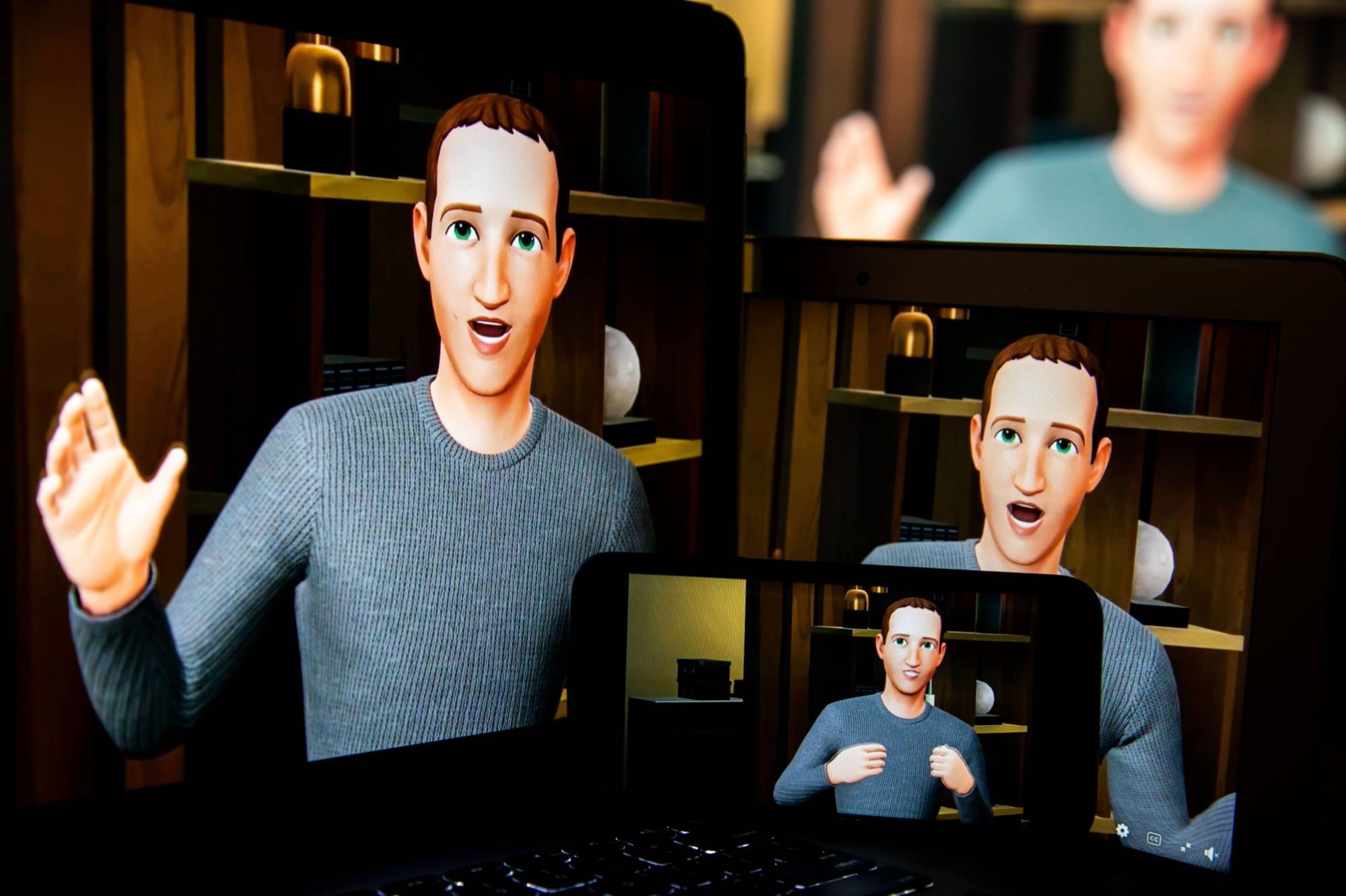
One of the primary reasons the Metaverse stalled was the friction of entry. VR headsets, while more advanced than ever, remained bulky, expensive, and prone to causing motion sickness. The “Metaverse” as presented in early demos featured legless avatars and simplified graphics that felt like a step backward compared to modern AAA video games. This technical limitation created an “uncanny valley” effect where the digital experience was not quite immersive enough to be addictive, yet too cumbersome to be a daily tool.
Bandwidth and Latency Constraints
A global, interconnected Metaverse requires massive data throughput. To have thousands of users interacting in a single virtual space without lag (latency) requires advancements in edge computing and 5G/6G infrastructure that are still in the rollout phase. The technical infrastructure of the current internet—built largely for asynchronous data transfer—struggled to support the synchronous, real-time demands of a high-fidelity virtual world.
The Lack of Interoperability
In the tech world, the “walled garden” approach is a common business strategy, but it is the antithesis of a true Metaverse. For the Metaverse to function like the internet, a user should be able to move an asset (like a digital tool or an avatar) from one platform to another seamlessly. The tech industry failed to agree on universal standards for 3D assets, resulting in a fragmented landscape of “mini-verses” that couldn’t communicate with one another.
The Great Pivot: Generative AI as the New North Star
Perhaps the most significant factor in the perceived “death” of the Metaverse was the meteoric rise of Generative AI. When ChatGPT launched in late 2022, the tech industry’s collective focus shifted overnight. Capital, talent, and R&D budgets were redirected from virtual reality to large language models (LLMs).
Resource Allocation and the Shift in R&D
For tech giants like Meta, Google, and Microsoft, the ROI on AI appeared much more immediate than the long-term gamble of the Metaverse. AI offered instant utility—coding assistance, content generation, and automated customer service—whereas the Metaverse required a decade of hardware refinement. Consequently, the “Metaverse” teams were often downsized or rebranded as “Spatial Computing” or “AI-Integration” departments.
AI as the Engine of Virtual Worlds
Paradoxically, the pivot to AI may be exactly what the Metaverse needs to survive. One of the greatest technical hurdles of the Metaverse was the cost and time required to build 3D environments. Generative AI is now being used to procedurally generate vast digital landscapes, realistic textures, and intelligent non-player characters (NPCs) through simple text prompts. Instead of a “death,” AI represents a technical “acceleration” for virtual worlds, providing the tools to build them more efficiently.
From Social VR to Intelligent Assistants
The focus has shifted from where we are online to how we interact with information. The tech industry realized that users were more interested in “augmented intelligence” than “virtual escapism.” This led to a cooling of interest in social VR spaces like Horizon Worlds in favor of AI-driven productivity tools that integrate into our existing workflows.
The Rise of the Industrial Metaverse and Digital Twins

While the consumer-facing Metaverse struggled, the “Industrial Metaverse” began to thrive. This is the tech-heavy, pragmatic side of the vision that focuses on enterprise utility rather than social interaction.
Digital Twins and Predictive Simulation
In the industrial sector, the Metaverse is used to create “Digital Twins”—exact 3D replicas of factories, power grids, or jet engines. Companies like Nvidia, through their Omniverse platform, have enabled engineers to run simulations in a virtual environment that obeys the laws of physics. This allows for stress-testing and workflow optimization without the risk or cost of physical experimentation. This technical application is where the Metaverse is seeing its highest ROI today.
Augmented Reality (AR) in the Workforce
The technical focus has shifted from “Virtual Reality” (replacing the world) to “Augmented Reality” (enhancing the world). In fields like telemedicine, high-end manufacturing, and logistics, AR overlays provide workers with real-time data, schematics, and remote expert assistance. This “Technical Metaverse” is less about wearing a headset to a virtual party and more about using a heads-up display to repair a complex piece of machinery.
NVIDIA and the Power of the GPU
A key player in the survival of the Metaverse concept has been NVIDIA. By focusing on the hardware necessary to render complex 3D simulations (GPUs), they have positioned themselves as the backbone of both AI and the Industrial Metaverse. Their technical contributions ensure that even if the “social” Metaverse remains dormant, the “simulated” Metaverse continues to evolve at a rapid pace.
Spatial Computing: Apple’s Re-Imagining of the Concept
In 2023, the tech narrative shifted again with the announcement of the Apple Vision Pro. Notably, Apple avoided the word “Metaverse” entirely, opting instead for the term “Spatial Computing.” This wasn’t just a marketing move; it was a technical distinction.
The Integration of Physical and Digital
Spatial Computing focuses on the “pass-through” experience—using high-resolution cameras to project digital interfaces onto the real world. This addresses the isolation problem of traditional VR. Technically, this requires an immense amount of processing power (the R1 chip) to ensure that digital objects stay pinned in physical space with zero perceptible lag. Apple’s entry has forced the industry to move toward “Mixed Reality” (MR) rather than pure VR.
The Refinement of the User Interface
A major technical failure of the early Metaverse was the input method. Clunky controllers made interaction feel unnatural. The shift toward spatial computing has prioritized eye-tracking and gesture control. By mapping the user’s natural movements, the technology becomes an extension of the body rather than an external peripheral. This technical refinement is essential for moving immersive tech from a niche hobby to a general-purpose computing platform.
Productivity over Presence
Apple’s vision for spatial computing emphasizes productivity—having multiple “floating” monitors, collaborating on 3D models, and immersive video conferencing. This moves the goalposts away from the Metaverse’s original “digital playground” and toward a “spatial workstation.” The tech industry is now following suit, focusing on how spatial layers can improve professional efficiency.
The Future: A Converged Digital Infrastructure
The Metaverse didn’t die; it fragmented and integrated into other emerging technologies. The future of this tech trend is one of convergence, where AI, Web3, and Spatial Computing merge into a cohesive digital infrastructure.
The Role of Web3 and Decentralization
For a Metaverse to truly function, the technical backend must handle digital ownership. This is where blockchain and Web3 protocols come in. While the “NFT craze” has cooled, the underlying technology for secure, decentralized digital assets remains a crucial technical component for a future persistent internet where users, not corporations, own their data.
Miniaturization and the Path to Smart Glasses
The ultimate technical goal for the Metaverse remains the miniaturization of hardware. The industry is moving toward “Smart Glasses”—devices that look like standard eyewear but possess the power of a smartphone and the display capabilities of an AR headset. Companies like Xreal and Meta’s Orion project are pushing the boundaries of optics and battery density to make this a reality.

A Gradual Integration
We are unlikely to have a “Big Bang” moment where we all suddenly live in the Metaverse. Instead, the “Metaverse” will be a series of incremental technical upgrades to our current lives. It will be the AI that helps us navigate, the AR that helps us work, and the digital twins that keep our cities running. The Metaverse isn’t a destination; it is the inevitable evolution of the internet into a spatial, intelligent, and three-dimensional medium. The hype may have vanished, but the technological foundation is being built, one line of code and one silicon chip at a time.
aViewFromTheCave is a participant in the Amazon Services LLC Associates Program, an affiliate advertising program designed to provide a means for sites to earn advertising fees by advertising and linking to Amazon.com. Amazon, the Amazon logo, AmazonSupply, and the AmazonSupply logo are trademarks of Amazon.com, Inc. or its affiliates. As an Amazon Associate we earn affiliate commissions from qualifying purchases.