
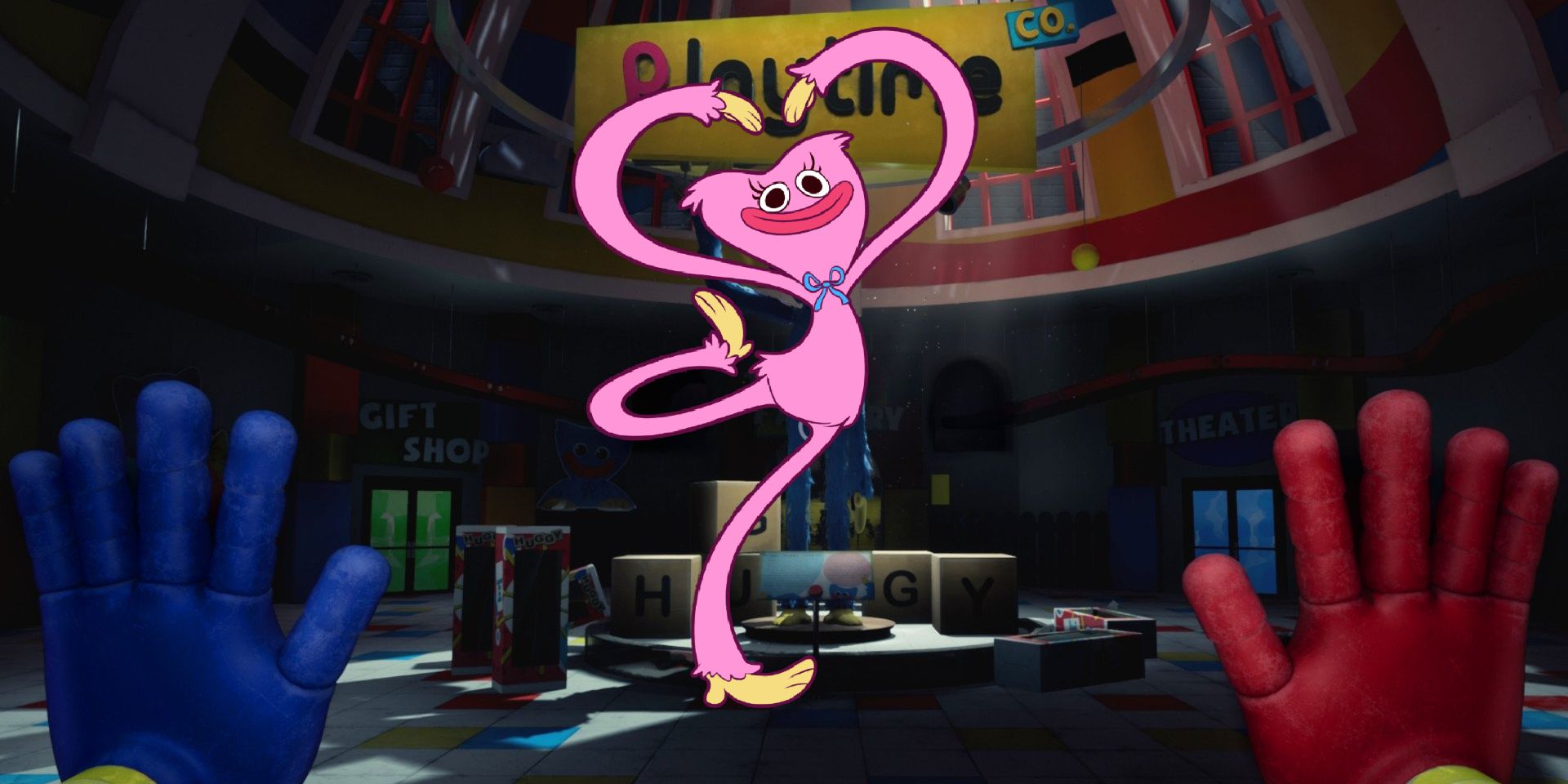
The release of Poppy Playtime Chapter 3: Deep Sleep marked a significant milestone in the evolution of indie horror software. Developed by Mob Entertainment, the latest installment pushed the boundaries of the Unreal Engine, delivering a more sophisticated, atmospheric, and technically complex experience than its predecessors. Among the many questions left lingering in the minds of players and tech-savvy analysts alike, none is more pressing than the fate of Kissy Missy. As a central character within the game’s digital ecosystem, Kissy Missy represents a unique intersection of narrative scripting and character-driven game design. To understand what happened to her in Chapter 3, one must look closely at the technical execution of the game’s final sequences and the software-driven cues that suggest her ultimate trajectory.

The Evolution of Character Logic in Deep Sleep
Chapter 3 introduced a massive expansion in scope, moving from the claustrophobic corridors of the toy factory to the sprawling, interconnected “Playcare” facility. From a technical standpoint, this required a complete overhaul of the game’s environmental rendering and character AI. Kissy Missy, who first appeared in Chapter 2 as a brief but memorable interactive asset, was elevated in Chapter 3 to a pivotal narrative tool.
From Static Asset to Dynamic Ally
In earlier iterations of the series, Kissy Missy functioned primarily as a scripted sequence. Her interaction with the player was limited, serving more as a benchmark for the game’s potential for non-hostile entities. In Chapter 3, her role was expanded through more complex animation rigging and state-based logic. She is no longer just a backdrop; she becomes a functional part of the player’s progress, helping to operate heavy machinery and navigating the environment alongside the protagonist. This shift in software implementation is significant because it establishes an emotional and mechanical reliance on the character, making the events at the end of the chapter significantly more impactful.
The Complexity of “Friendly” NPC Scripting
Creating a non-player character (NPC) that feels helpful rather than intrusive is a significant hurdle in game design. The developers utilized sophisticated pathfinding and trigger-based events to ensure Kissy Missy’s movements felt organic within the Playcare setting. Unlike the aggressive AI of CatNap, which uses a combination of line-of-sight detection and “stalker” logic, Kissy Missy’s code is designed to remain passive but responsive. This juxtaposition highlights the technical versatility of the Poppy Playtime engine, allowing for a wide range of character behaviors within the same digital framework.
Analyzing the Chapter 3 Cliffhanger: The Elevator Incident
The climax of Chapter 3 occurs after the player and Poppy successfully navigate the horrors of the Playcare. The technical climax of the narrative is centered on a lift sequence that serves as the transition point between Chapter 3 and the upcoming Chapter 4. It is during this transition that the central mystery regarding Kissy Missy unfolds.
The Auditory Cues and Scripted Event Triggers
As the player and Poppy ascend in the lift, Kissy Missy remains at the bottom to operate the manual override systems. Through the use of spatialized audio—a key technical feature in modern horror games—the player hears a sudden and violent struggle occurring below. From a software perspective, this event is executed entirely through audio assets and off-screen scripting. There is no visual confirmation of an attacker, which is a classic technique used to manage hardware resources while maximizing psychological tension.
The screams heard are distinctly those of Kissy Missy, punctuated by the sounds of mechanical crashing and what sounds like an intense physical altercation. Analysts who have delved into the game’s audio files have noted that the sounds are layered with high-frequency distortion, suggesting a struggle against multiple entities or a singular, powerful force. Because the game engine does not render the attack visually, the developers have successfully bypassed the need for complex, resource-heavy combat animations while creating a “soft” cliffhanger that ensures player retention for the next software update.
Data Mining and Hidden Game Assets
In the wake of Chapter 3’s release, the gaming community’s technical wing began “data mining”—the process of extracting hidden files from the game’s directory to find clues about future content. Interestingly, while the character model for Kissy Missy is present in the final scene, there are no “dead” or “damaged” versions of her model in the Chapter 3 files. This suggests that from a development standpoint, her fate is intentionally left open. Developers often include “placeholders” or “gore-mesh” versions of characters if they are intended to die on-screen. The absence of such assets in the software package for Chapter 3 points toward a survival or capture scenario rather than a definitive death.
The Technical Execution of Horror: Why the Mystery Works
The “disappearance” or potential attack on Kissy Missy is not just a plot point; it is a masterclass in utilizing technical constraints to drive narrative engagement. By keeping the events off-screen, Mob Entertainment leverages the player’s imagination, a tool often more powerful than the most advanced GPU rendering.
Performance Optimization Through Ambiguity
In large-scale indie games, managing the “draw distance” and the number of active high-poly models is crucial for performance stability across various hardware configurations. By focusing the final scene on the interior of the lift and using high-quality audio triggers for Kissy Missy’s struggle, the developers could allocate more processing power to the atmospheric lighting and texture mapping of the lift’s interior. This technical decision ensures that the game maintains a high frame rate during its most emotionally resonant moment, providing a smooth user experience while delivering a narrative blow.
Sound Design as a Narrative Engine
The audio software used in Poppy Playtime is integral to its identity. In Chapter 3, the use of directional audio cues tells a story that the visuals do not. The specific frequency of the “thuds” and “clangs” heard during the lift scene has been analyzed by fans to determine the identity of the attacker. Technically, these sounds are synchronized with the lift’s upward movement, creating a sense of increasing distance and helplessness. This synchronization is achieved through precisely timed sound-cues in the game’s timeline, demonstrating the importance of the relationship between audio engineering and narrative pacing.
Speculations and the Tech Stack of Chapter 4
The events surrounding Kissy Missy have set the stage for what is expected to be a major technical leap in Chapter 4. As the developers move toward even more complex AI and potentially larger environments, the fate of Kissy Missy will likely serve as a catalyst for new gameplay mechanics.
The Prototype’s Growing Influence
The most prevalent theory among technical analysts is that the Prototype—the central antagonist represented by a conglomerate of mechanical and biological parts—is responsible for the attack. In the game’s code, the Prototype is often treated as a “master controller” for other entities. It is highly probable that Kissy Missy has been captured to be integrated into the Prototype’s collective mass. If this is the case, Chapter 4 may introduce a “corrupted” version of her character, requiring the development of new AI behaviors and boss-fight mechanics that blend her friendly animations with aggressive, hostile scripting.
Unreal Engine 5 and Future-Proofing
There is speculation that the next chapter of the series may fully transition to Unreal Engine 5, utilizing features like Nanite and Lumen to enhance the visual fidelity of the characters. If Kissy Missy returns, the increase in polygon count and the more advanced global illumination would allow for a much more detailed “damaged” version of her character model. This technical upgrade would be necessary to convey the physical toll of her struggle at the end of Chapter 3.

The Digital Legacy of Kissy Missy
Kissy Missy’s trajectory in Chapter 3 highlights a broader trend in digital entertainment software: the rise of the “dynamic ally” in horror. From a technical and branding perspective, her character serves as a vital counterbalance to the unrelenting horror of the factory. Her fate is a testament to the power of well-executed software scripting, where a few lines of audio and a well-timed trigger can create more conversation than an entire cinematic cutscene.
As players look forward to the next update, the technical community continues to monitor the game’s development logs and asset updates for any hint of her return. Whether she survived the encounter or has been repurposed by the Prototype, her presence in Chapter 3 has solidified her role as a cornerstone of the Poppy Playtime software ecosystem. The mystery of what happened to her remains one of the most successful examples of how technical restraint and clever narrative design can work together to create a lasting digital legacy.
aViewFromTheCave is a participant in the Amazon Services LLC Associates Program, an affiliate advertising program designed to provide a means for sites to earn advertising fees by advertising and linking to Amazon.com. Amazon, the Amazon logo, AmazonSupply, and the AmazonSupply logo are trademarks of Amazon.com, Inc. or its affiliates. As an Amazon Associate we earn affiliate commissions from qualifying purchases.