
In the hyper-competitive arena of modern attention economies, few figures have managed to cultivate as distinct and polarizing a personal brand as Jim Jordan. While casual observers view him through the lens of legislative battles and committee hearings, a branding strategist sees something far more complex: a masterclass in archetype consistency, visual semiotics, and niche-targeted marketing. To understand “what happened” to Jim Jordan is to trace the trajectory of a brand that moved from the insurgent margins to the institutional center, testing the limits of how far a disruptive identity can scale within a traditional framework.

The Foundation of the Jordan Brand DNA
Every successful brand is built on a core promise. For Jim Jordan, that promise is unyielding combativeness. From the moment he entered the national stage, his personal brand was built on the “Fighter” archetype. This wasn’t a brand identity focused on legislative nuance or bipartisan consensus; it was a brand built on the concept of the “Last Line of Defense.”
The Visual Identity: The No-Jacket Aesthetic
In corporate branding, visual consistency is paramount. Just as Steve Jobs’ black turtleneck or Mark Zuckerberg’s gray hoodie signaled a specific “disruptor” ethos, Jordan’s refusal to wear a suit jacket on the House floor became a potent brand identifier. This wasn’t merely a comfort choice; it was a visual shorthand for “the man at work.” By eschewing the traditional uniform of the “Washington Elite,” Jordan successfully signaled to his base that he was an outsider working in the trenches. This visual brand became so powerful that it sparked its own media cycles, reinforcing his identity as someone too busy fighting for his constituents to be bothered by the formalities of the establishment.
The Wrestling Coach Narrative
The backstory is a critical component of brand equity. Jordan’s history as a champion wrestler and coach provides the metaphorical framework for his political persona. In marketing terms, this is “The Origin Story.” It frames every interaction as a match, every debate as a takedown, and every policy disagreement as a test of endurance. This narrative creates a sense of authenticity—a quality that is the holy grail of modern personal branding. For his “customers” (the voters and the donor base), the wrestling coach persona suggests a man who understands discipline, grit, and the necessity of struggle.
The Strategic Pivot: From Outsider to Institutionalist
A significant shift occurred in the Jordan brand architecture during the transition from the Obama era to the Trump era. Originally, Jordan was the co-founder of the House Freedom Caucus, a brand positioned as a rebellious insurgent force fighting even its own party leadership. This was “Challenger Brand” positioning at its finest—identifying a “stale” incumbent (the GOP establishment) and offering a high-energy alternative.
Scaling the Brand through Alignment
The most dramatic evolution of the Jordan brand happened when it aligned with the MAGA movement. This was a strategic merger of two high-equity brands. By becoming one of Donald Trump’s most visible defenders, Jordan transitioned from a niche “Freedom Caucus” leader to a national figurehead. This move allowed the Jordan brand to tap into a massive, pre-existing distribution network of media outlets and social media echo chambers.
Leveraging Committee Chairs as Brand Platforms
“What happened” to Jim Jordan is that he successfully transitioned from a “voice in the wilderness” to a “voice of the institution.” As Chairman of the House Judiciary Committee, he gained a platform that transformed his brand’s capabilities. He moved from shouting at the podium to wielding the gavel. In branding terms, this is the transition from a “Start-up” to an “Industry Leader.” He used this new authority to conduct high-profile “investigations” that served as content-generation machines for his brand’s social media channels, keeping his audience engaged with a constant stream of “exclusive” conflict.
Brand Crisis and the Limits of Disruption
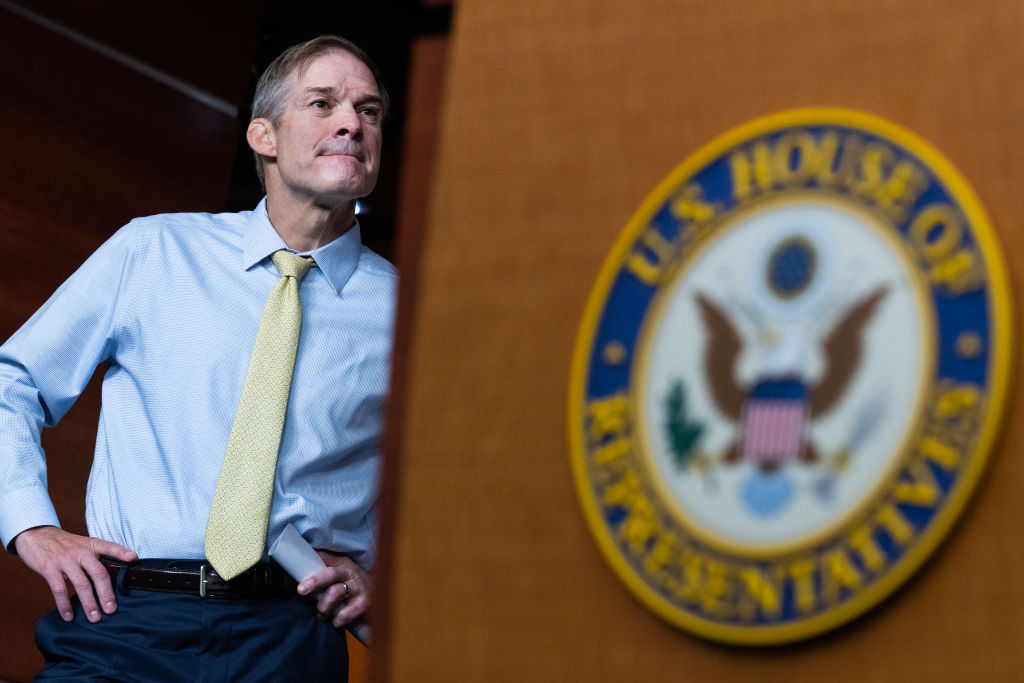
Every brand eventually faces a stress test—a moment where its core promise is put to the ultimate trial. For Jim Jordan, this was the quest for the Speakership in late 2023. This period provides a fascinating case study in brand overextension.
The Speakership Bid: A Case of Brand Dilution?
The Speaker of the House role requires a brand centered on “Unity,” “Management,” and “Coalition Building.” These qualities were inherently at odds with Jordan’s established brand of “The Disrupter.” When Jordan attempted to pivot toward the Speakership, his brand encountered a “fit” problem. The very traits that made him a hero to his base—his refusal to compromise and his combative style—became liabilities when trying to market himself to a broader, more moderate corporate audience of fellow legislators.
The failure to secure the Speakership revealed a critical branding lesson: you cannot easily pivot a “polarized brand” into a “unifying brand” overnight. The market (in this case, his colleagues) did not buy the transition. The Jordan brand had been so successful at being an “Anti-Establishment” force that it was viewed as fundamentally incompatible with the “Ultimate Establishment” role.
Resilience Through Niche Loyalty
Despite the failure to secure the Speakership, the Jordan brand did not collapse. In fact, it arguably emerged stronger within its core demographic. This is a phenomenon known as “Brand Resilience.” Because his brand was built on “the fight,” losing a contest to the “uniparty” or “establishment” actually reinforced his core brand narrative. For a brand like Jordan’s, a loss can be reframed as a “betrayal by the elites,” which only increases the loyalty of his most fervent supporters.
The Digital Architecture: Content is the Product
One cannot analyze what happened to Jim Jordan without looking at the sophisticated digital marketing machine behind the name. Jordan is not just a politician; he is a content creator. His staff understands the mechanics of the “Viral Loop” better than almost any other office on Capitol Hill.
Soundbites as Micro-Products
If you watch a Jim Jordan hearing, you are witnessing the production of “Micro-Content.” The rapid-fire questioning style, the dramatic pauses, and the high-decibel delivery are all optimized for 60-second clips on X (formerly Twitter), TikTok, and Facebook. This is intentional brand engineering. The goal is to create shareable assets that trigger emotional responses. In the attention economy, engagement is the currency, and the Jordan brand has a high “Exchange Rate.”
Direct-to-Consumer Communication
By bypassing traditional media filters and speaking directly to his audience through social platforms and podcast appearances, Jordan has maintained “Brand Sovereignty.” He does not rely on the New York Times or CNN to define who he is; he controls the narrative through a direct-to-consumer model. This is the same strategy used by brands like Peloton or Tesla—building a community so strong that the brand becomes immune to external media criticism.

Lessons for the Modern Personal Brand
The trajectory of Jim Jordan offers several vital takeaways for brand strategists, marketers, and personal branding experts.
- Consistency is King: Jordan has never “broken character.” Whether you agree with his politics or not, his brand identity is remarkably consistent. Consumers (voters) value predictability. They know exactly what they are getting when they “buy” the Jordan brand.
- The Power of the Aesthetic: Never underestimate the value of a visual hook. The “no jacket” look is a cost-free marketing tool that generates millions of dollars in earned media and instant brand recognition.
- Know Your Market: Jordan does not try to appeal to everyone. He understands that a “split-the-difference” brand is often a weak brand. By leaning into his niche, he created a high-intensity loyalty that is far more valuable than broad, shallow approval.
- The Platform is the Message: The shift from being a member of a caucus to a chairman of a committee illustrates how brand power increases when it is coupled with institutional authority. However, the Speakership bid shows that there is a “ceiling” for brands built exclusively on disruption.
In the final analysis, “what happened” to Jim Jordan is the story of a highly disciplined brand reaching its peak market saturation. He has successfully navigated the transition from a local Ohio representative to a national brand icon. While he may have hit the limits of his expansion into the “C-suite” of political leadership, his brand remains one of the most potent and resilient “Consumer Brands” in the American political marketplace. He is a reminder that in the modern era, being “liked” is optional, but being “unforgettable” is mandatory.
aViewFromTheCave is a participant in the Amazon Services LLC Associates Program, an affiliate advertising program designed to provide a means for sites to earn advertising fees by advertising and linking to Amazon.com. Amazon, the Amazon logo, AmazonSupply, and the AmazonSupply logo are trademarks of Amazon.com, Inc. or its affiliates. As an Amazon Associate we earn affiliate commissions from qualifying purchases.