
For decades, the distinctive green and white signage of Hess gas stations was a comforting constant along the highways of the Eastern United States. From Florida to Massachusetts, the brand represented more than just a place to refuel; it was a symbol of reliability, cleanliness, and a specific type of American corporate pride. However, in the mid-2010s, these familiar landmarks began to vanish, replaced by the red and white branding of Speedway.
The disappearance of Hess gas stations provides a fascinating case study in brand strategy, corporate identity, and the ruthless logic of market positioning. It is a story of how a company transitioned from a consumer-facing retail icon to a specialized energy powerhouse, and how it managed to keep its brand soul alive through a single, seasonal product: the Hess Toy Truck.

The Anatomy of the Hess Brand Identity
To understand what happened to Hess, one must first understand what the brand represented in the mind of the consumer. Unlike many of its competitors who focused on price wars or convenience store variety, Hess built its corporate identity on two specific pillars: aesthetic consistency and superior service standards.
The Visual Language of Green and White
The Hess visual identity was unmistakable. In an industry often cluttered with garish colors and chaotic signage, Hess maintained a crisp, minimalist palette of forest green and bright white. This wasn’t just a design choice; it was a psychological one. The colors evoked a sense of “clean” energy long before the green movement became mainstream. The stations were known for being exceptionally well-lit, providing a sense of safety and premium quality that distinguished them from the grit often associated with independent fuel stops.
Cleanliness and Service as Brand Values
In the world of brand strategy, “differentiation” is the holy grail. Hess achieved this by institutionalizing cleanliness. Legendarily, the company’s founder, Leon Hess, was known to personally visit stations to ensure the restrooms were spotless and the pumps were polished. This obsession with detail became a core brand promise. For families on road trips, a Hess station was a “safe bet.” By focusing on the customer experience—specifically the perception of hygiene and order—Hess transformed a commodity product (gasoline) into a branded experience.
Strategic Pivot: Why Hess Left the Retail Market
The decision to sell the retail arm of the business was not a sign of failure, but rather a calculated strategic pivot. By 2014, the global energy landscape was shifting, and the corporate identity of Hess Corporation was undergoing a fundamental transformation.
The Shift from Downstream to Upstream
In the oil and gas industry, “downstream” refers to the refining and retail sale of products, while “upstream” refers to exploration and production. For years, Hess was an integrated oil company, handling everything from the oil well to the gas pump. However, the Board of Directors, pressured by activist investors, realized that the company’s greatest growth potential lay in exploration—specifically in massive offshore projects in Guyana and shale plays in North Dakota.
The retail division, while profitable and beloved by the public, was a distraction from this high-stakes energy exploration. From a brand strategy perspective, the company decided to move away from being a “B2C” (Business to Consumer) brand to a “B2B” (Business to Business) and industrial energy player.
The $2.8 Billion Sale to Marathon Petroleum
In 2014, Hess Corporation finalized the sale of its retail business to Marathon Petroleum Corporation for $2.87 billion. This deal included over 1,300 gas stations. For Marathon, the acquisition was an opportunity to instantly expand its “Speedway” brand across the East Coast. For Hess, the sale provided the capital necessary to reinvent itself as a lean, exploration-focused entity. This move signaled the end of the Hess gas station era, as the rebranding process began almost immediately, stripping the green and white from the landscape in favor of Speedway’s aesthetic.
The Legacy of the Hess Toy Truck: A Masterclass in Niche Marketing
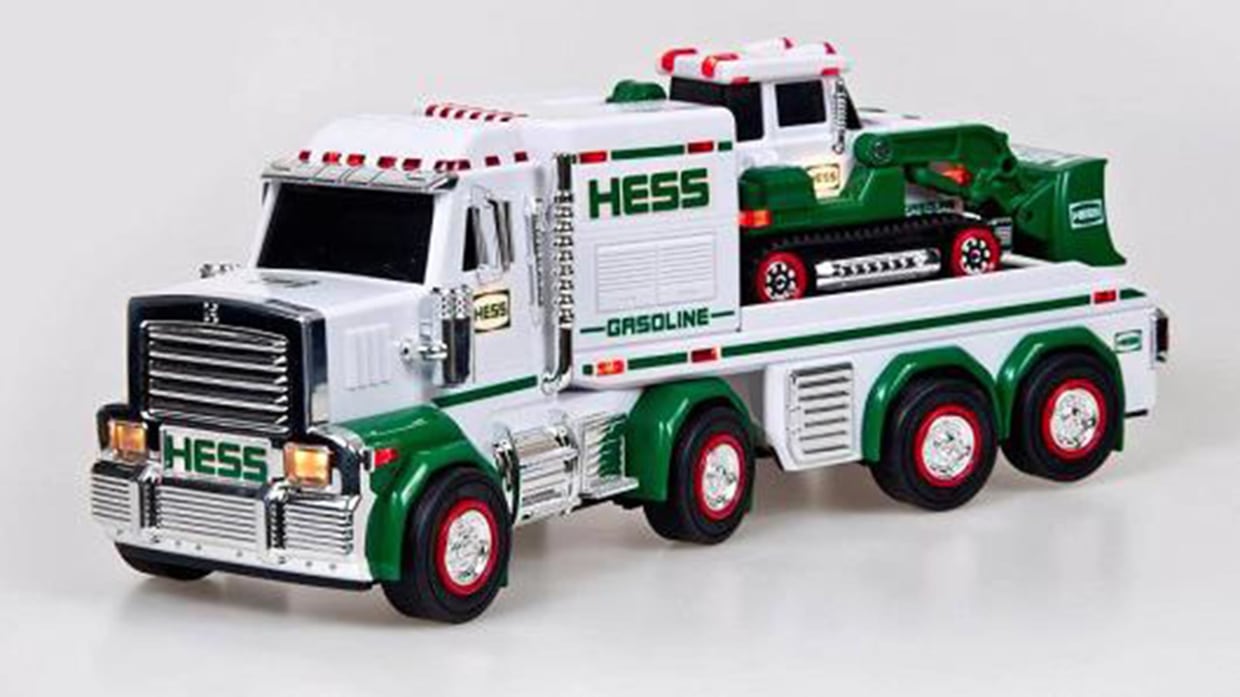
Perhaps the most unique aspect of the Hess brand story is that the brand name did not die with the gas stations. In a brilliant move of brand preservation, the company retained the rights to its most iconic marketing tool: the Hess Toy Truck.

Building Long-Term Brand Loyalty through Tradition
First launched in 1964, the Hess Toy Truck started as an affordable, high-quality holiday gift for loyal customers. Over the decades, it evolved into a massive cultural phenomenon and a coveted collector’s item. When the physical gas stations were sold, many marketing experts predicted the toy’s demise. Instead, Hess leaned into the “tradition” aspect of its brand.
By separating the toy from the gas station, they transformed it from a “promotional item” into a “stand-alone brand.” This allowed Hess to maintain a positive emotional connection with millions of families even though those families could no longer buy fuel from them. It is a rare example of a brand’s marketing vehicle outliving the actual business it was designed to promote.
Transitioning a Physical Presence into a Digital Model
Without physical storefronts to sell the trucks, Hess had to reinvent its distribution strategy. They pivoted to a purely digital, direct-to-consumer (DTC) model. Today, the Hess Toy Truck is sold exclusively online and through select kiosks. This transition served as a modern masterclass in digital brand adaptation. By utilizing social media and email marketing to target nostalgic “legacy” customers, Hess ensured that their brand remains relevant to a new generation of children who have never even seen a Hess gas station.
Brand Transformation: The Speedway Takeover
The disappearance of Hess was also a significant event for the Speedway brand, which faced the monumental task of converting a loyal customer base to a new identity.
The Challenges of Rebranding a Cultural Icon
Rebranding a beloved institution is fraught with risk. When Marathon began converting Hess stations to Speedway, they didn’t just change the signs; they changed the “feel” of the locations. Speedway brought its own loyalty programs (Speedy Rewards) and a different convenience store layout.
The challenge was that Hess customers were fiercely loyal to the “Hess way” of doing things. While the physical locations remained the same, the brand equity—the intangible value and trust associated with the Hess name—could not be easily transferred. This transition period serves as a reminder that a brand is more than a location; it is a set of expectations and emotional cues.
Market Consolidation in the Energy Sector
The Hess-to-Speedway transition was a precursor to even larger shifts in the industry. Eventually, Speedway itself was sold to 7-Eleven in a massive $21 billion deal in 2021. This cycle of consolidation highlights the volatility of the retail fuel market. In this environment, the Hess family’s decision to exit the retail space and focus on “upstream” energy appears increasingly prescient. They exited at a peak valuation, preserving their corporate capital while protecting their brand legacy through the toy trucks.
Conclusion: Lessons from the Green and White
The story of what happened to Hess gas stations is not a story of a brand that went out of business; it is the story of a brand that knew when to change its identity. From a branding perspective, Hess teaches us three vital lessons:
First, differentiation matters. By focusing on cleanliness and a premium aesthetic, Hess created a loyal following in a commodity-driven market.
Second, strategic focus is essential. A brand must be willing to shed even its most iconic divisions if they no longer align with the company’s long-term financial and operational goals.
Finally, tradition is a powerful asset. By maintaining the Hess Toy Truck, the company ensured that its name would continue to be spoken with affection in American households for decades to come, regardless of where those families stop to fill up their tanks.
Hess gas stations may be gone from our street corners, but as a case study in brand evolution, they remain a permanent fixture in the history of American marketing. The green and white signs have been replaced, but the strategy behind their rise and calculated departure remains a blueprint for how a corporation can navigate the complex intersection of heritage, profit, and identity.
aViewFromTheCave is a participant in the Amazon Services LLC Associates Program, an affiliate advertising program designed to provide a means for sites to earn advertising fees by advertising and linking to Amazon.com. Amazon, the Amazon logo, AmazonSupply, and the AmazonSupply logo are trademarks of Amazon.com, Inc. or its affiliates. As an Amazon Associate we earn affiliate commissions from qualifying purchases.