
To understand what happened to Egyptian civilization, one must look past the stone monuments and hieroglyphic records and examine the underlying economic architecture that supported the Nile Valley for three millennia. While popular history often focuses on the drama of pharaohs and the mysticism of their religion, the rise and fall of Ancient Egypt offer a profound case study in wealth management, resource monopolization, and fiscal overextension. The story of Egypt’s “disappearance” as a sovereign power is not a mystery of vanished people; it is a narrative of a long-term economic entity that failed to adapt to a changing global marketplace.
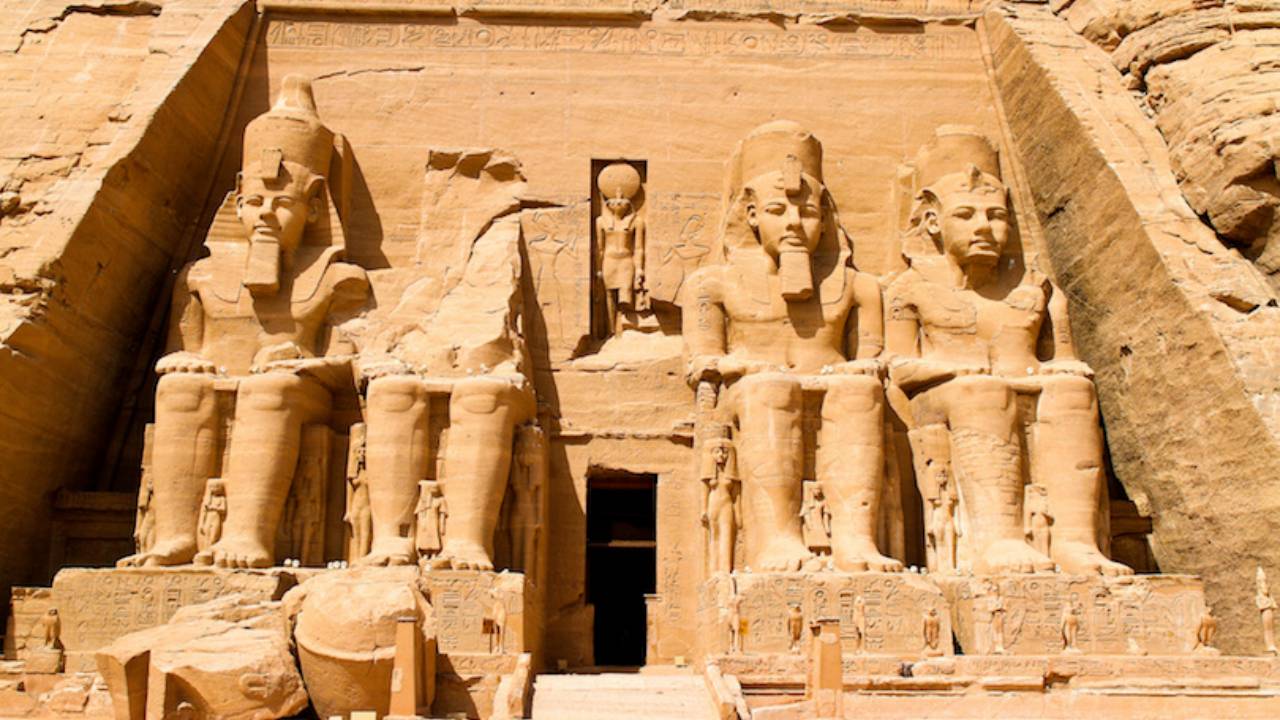
From a financial perspective, the Egyptian civilization was the world’s first successful conglomerate. It managed a complex supply chain, controlled a vital resource (grain), and maintained a labor-based tax system that allowed for massive capital expenditures. However, like any over-leveraged corporation, it eventually succumbed to high overhead, resource depletion, and a series of “market disruptions” that it could no longer survive.
The Economic Engine of the Nile: Managing the Original Monopoly
The longevity of Egyptian civilization was predicated on its mastery of the Nile’s annual flood cycle, which provided a reliable “return on investment” that was unparalleled in the ancient world. This was not merely agriculture; it was a centralized command economy where the state acted as the primary shareholder and distributor of wealth.
Centralized Resource Control and the Breadbasket of the Mediterranean
At its peak, the Egyptian economy was built on a grain-based standard. In a world before standardized coinage, the storage and distribution of grain acted as a central bank. The state managed massive granaries that served as a hedge against inflation and famine. By controlling the surplus, the Pharaonic administration could fund large-scale projects and maintain a professional bureaucracy.
This centralized control allowed Egypt to become the “breadbasket” of the Mediterranean. This export potential created a trade surplus that brought in gold, silver, and exotic goods from the Levant, Punt, and Nubia. However, this reliance on a single commodity—grain—created a systemic risk. The economy was entirely dependent on the “volatility” of the Nile’s flood levels. If the floods were too low, the tax revenue plummeted; if they were too high, the infrastructure was destroyed. This lack of economic diversification would eventually become a primary vulnerability.
Infrastructure as an Investment: The Real Cost of the Pyramids
From a modern business finance perspective, the construction of the pyramids and temples represents a massive Capital Expenditure (CAPEX). Critics often view these projects as a waste of resources, but at the time, they served as a vital mechanism for wealth redistribution and social stability.
During the inundation season, when the fields were underwater and the labor force was idle, the state “employed” the citizenry through a system known as corvée labor. This was effectively a labor tax. By providing food and housing in exchange for work on state monuments, the government prevented mass unemployment and civil unrest. Furthermore, these structures were powerful brand assets. They signaled the absolute stability and wealth of the Egyptian state to foreign trade partners and potential invaders, acting as a deterrent and a marketing tool for Egyptian hegemony.
Fiscal Fragility: How Debt and Inflation Eroded Sovereignty
The decline of Egyptian civilization was not an overnight event but a centuries-long erosion of its financial foundations. As the administrative costs of maintaining a sprawling empire grew, the state’s ability to generate a surplus diminished, leading to a slow-motion fiscal collapse.
The Cost of Perpetual Warfare and Bureaucratic Bloat
During the New Kingdom, Egypt expanded its borders significantly, reaching into the Near East. While this brought in new resources, it also created an unsustainable “burn rate.” Maintaining standing armies and garrisons across distant territories required constant infusions of capital.
Simultaneously, the Egyptian bureaucracy became increasingly bloated. The priesthood, particularly the cult of Amun, became so wealthy that they eventually rivaled the Pharaoh in economic power. By the end of the New Kingdom, the temples owned roughly one-third of the arable land in Egypt and were exempt from many taxes. This created a massive tax leak. The central government was forced to demand more from a shrinking pool of taxable land, leading to the first recorded labor strikes in history under Ramses III—a clear indicator of a failing payroll system.
Currency Devaluation and the Shift from Grain to Coinage
For millennia, the Egyptian economy operated without money in the modern sense. However, as trade became more globalized, the lack of a standardized currency became a competitive disadvantage. While the Greeks and Phoenicians were moving toward silver coinage, Egypt remained tethered to its grain and barter systems.

When the state finally attempted to integrate into the Mediterranean monetary system, it lacked the silver and gold reserves to maintain a stable currency. The transition was rocky, characterized by significant price fluctuations. As foreign powers like the Persians and eventually the Greeks (under the Ptolemies) took control, they introduced sophisticated banking and tax-farming systems that further marginalized the traditional Egyptian structures. The indigenous economic model was essentially “disrupted” by more agile, market-driven financial systems from the North.
Supply Chain Disruption: The External Shocks of Global Trade
No economy exists in a vacuum, and Egyptian civilization was no exception. Its eventual absorption into the Roman Empire was the culmination of a series of external shocks that broke its supply chains and depleted its strategic reserves.
The Bronze Age Collapse and the Interdependence of Ancient Markets
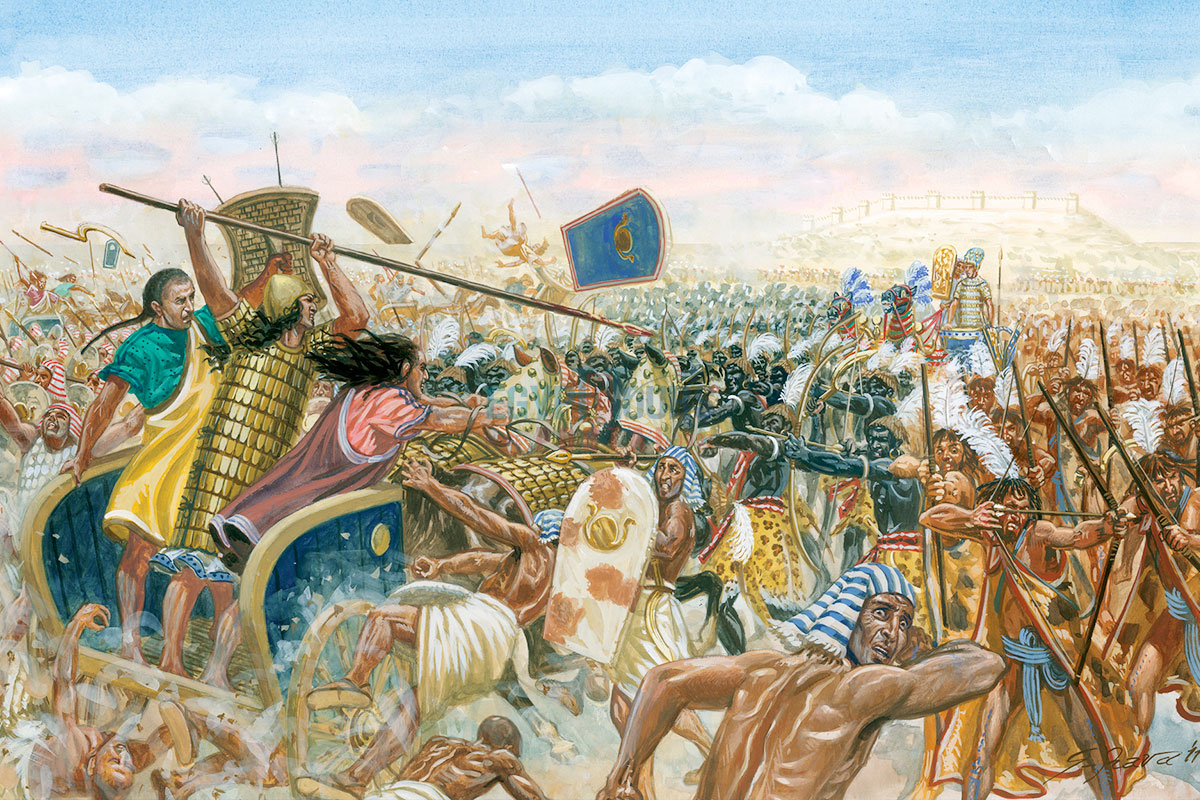
Around 1200 BCE, the eastern Mediterranean experienced what historians call the Bronze Age Collapse. Major civilizations—the Hittites, the Mycenaeans, and the Canaanite city-states—collapsed almost simultaneously. While Egypt survived this period, it emerged severely weakened.
The collapse disrupted the “global” trade networks of the era. Egypt relied on these networks for tin (necessary for bronze) and timber (essential for shipping). As trade routes were severed by the “Sea Peoples” and internal unrest in neighboring states, the cost of doing business skyrocketed. Egypt was forced to transition to iron, a resource it did not possess in abundance, leading to a long-term trade deficit and a reliance on imported technology.
Resource Scarcity: The Timber and Tin Deficit
Egypt was a resource-rich nation in many ways, but it lacked two critical “industrial” materials: high-quality timber and strategic metals. To maintain its fleet and its military edge, it had to import cedar from Lebanon and metals from the Aegean and the Caucasus.
As the geopolitical landscape shifted, these “vendor contracts” became increasingly expensive. When Egypt lost control over the Levantine coast, it lost its preferential pricing and access to these resources. This is a classic example of a failure to secure a supply chain. Without the raw materials necessary for defense and trade infrastructure, the civilization’s ability to compete on the world stage evaporated.
Lessons for Modern Business: Building Resilient Economic Foundations
The “disappearance” of Egypt as a global power serves as a cautionary tale for modern financial planning and brand management. The civilization didn’t just end; it was out-competed and fiscally hollowed out.
Diversification vs. Over-Specialization
Egypt’s greatest strength—its reliance on the Nile—was also its greatest weakness. By over-specializing in grain production and centralized control, it failed to develop the merchant class and diversified industries that allowed other civilizations to adapt to change. In modern terms, Egypt was a “one-product company” that failed to innovate as the market moved toward a more complex, multi-currency trade environment.
To build a resilient business or financial portfolio today, one must learn from Egypt’s lack of agility. Over-reliance on a single revenue stream or a single market condition is a recipe for long-term failure, regardless of how profitable that stream may be in the short term.
The Importance of Adapting to Market Shifts
Perhaps the most important lesson is the necessity of institutional evolution. The Egyptian state remained remarkably consistent for 3,000 years, which provided incredible stability. However, that same rigidity prevented it from adopting the financial innovations (like coinage, banking, and private enterprise) that were emerging elsewhere.
In the world of finance and branding, “tradition” can often become a liability if it prevents a pivot to new realities. The Egyptian civilization eventually became a “legacy brand”—revered and respected, but no longer a dominant market force. It was eventually “acquired” by the Roman Empire, which treated Egypt not as a partner, but as a resource-rich asset to be liquidated to fund its own expansion.
What happened to Egyptian civilization was not a supernatural event or a sudden catastrophe. It was the natural result of an aging economic model failing to meet the demands of a new global era. By analyzing the fall of the Pharaohs through a financial lens, we gain a clearer understanding of how wealth is built, how it is lost, and the vital importance of economic adaptability in the face of change.
aViewFromTheCave is a participant in the Amazon Services LLC Associates Program, an affiliate advertising program designed to provide a means for sites to earn advertising fees by advertising and linking to Amazon.com. Amazon, the Amazon logo, AmazonSupply, and the AmazonSupply logo are trademarks of Amazon.com, Inc. or its affiliates. As an Amazon Associate we earn affiliate commissions from qualifying purchases.