
In the high-stakes world of professional sports, an athlete is more than just a player on a roster; they are a walking, breathing brand. When fans ask “what happened to Diamond DeShields,” they are not merely inquiring about her points per game or her field goal percentage. They are asking about the trajectory of a brand that was once touted as the future of the WNBA. The story of Diamond DeShields is a masterclass in personal brand management, illustrating how elite figures navigate the peaks of superstardom, the valleys of unforeseen health crises, and the arduous process of strategic reinvention.

The Foundation of a Powerhouse Brand: Heritage and Hype
To understand the Diamond DeShields brand, one must first understand its origins. Brand identity is often built on a foundation of “heritage,” and DeShields entered the professional sphere with a pedigree that few could match. As the daughter of former MLB star Delino DeShields and the sister of Delino DeShields Jr., the “DeShields” name already carried significant brand equity in the sporting world.
The Legacy Element: Building on Athletic Pedigree
From a brand strategy perspective, Diamond didn’t have to build her name from scratch; she had to optimize an existing legacy. This “legacy branding” provided her with immediate marketability. In her early years at Tennessee and her initial entry into the WNBA with the Chicago Sky, her brand was defined by explosive athleticism and an “it factor” that attracted sponsors and fans alike. She represented the “Next Generation” archetype—a blend of high-fashion sensibility and raw, unmatched physical dominance.
Early Endorsements and the “Next Big Thing” Narrative
In the early stages of her career, the DeShields brand was synonymous with upward mobility. She secured key partnerships and became a focal point for the Chicago Sky’s marketing efforts. Her brand was built on the promise of a championship—a promise she fulfilled in 2021. However, in the world of personal branding, achieving the pinnacle can often lead to a “narrative plateau.” For DeShields, the challenge was how to evolve the brand after reaching the top, especially when internal factors began to shift.
Navigating the Brand Crisis: The Impact of Health and Absence
What happens to a brand when the “product”—the athlete’s performance—is forced into a hiatus? In 2020, Diamond DeShields faced a profound brand crisis that was hidden from the public eye: a spinal tumor that required high-stakes surgery and a grueling recovery. The way she managed this period is a textbook example of how vulnerability can be leveraged to deepen brand loyalty.
Vulnerability as a Brand Strength
For a long time, the public only saw the decline in her stats and her eventual absence from the floor. In the absence of information, the public creates its own narrative, which is often detrimental to a brand’s value. When DeShields finally chose to share the story of her tremors, the surgery, and the risk of paralysis, she executed a “brand pivot.” She moved from being an “Untouchable Athlete” to a “Resilient Human.” This shift humanized her brand, making her relatable to a wider audience beyond just basketball fans. It transformed her from a sports star into a symbol of perseverance.
Managing the Narrative During a Performance Dip
The “What Happened” phase of her career was characterized by a visible struggle on the court as she regained her neurological functions. From a strategic standpoint, this was a period of “Narrative Friction.” Her brand was being tested by the disparity between her past excellence and her present physical limitations. By being transparent about her recovery, she successfully reframed her lower statistics not as a “decline,” but as a “recovery arc.” This preserved her market value by ensuring that teams and sponsors viewed her current output as a transition rather than a permanent state.
Strategic Reinvention: The Shift from Chicago to Phoenix and Beyond
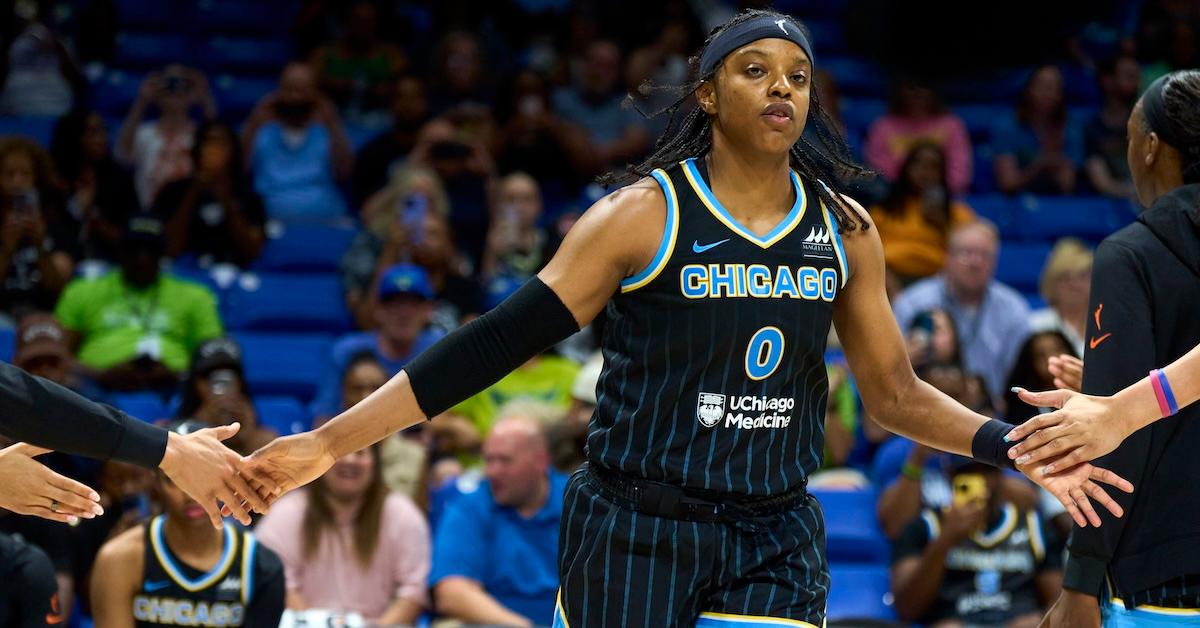
In personal branding, a change of scenery is often a strategic “rebrand.” When DeShields moved from the Chicago Sky to the Phoenix Mercury, and later navigated further transitions, it represented a shift in market placement. Every time a high-profile athlete changes teams, they are essentially entering a new market with a new demographic and a different set of brand synergies.
Market Placement: Aligning with Big Market Synergies
Joining the Phoenix Mercury allowed DeShields to align her brand with other “Super-Brands” like Diana Taurasi and Brittney Griner. This move was a strategic play to stay relevant in the national conversation while she continued her physical rehabilitation. In Phoenix, her brand was positioned as the “X-Factor”—the piece that could elevate a championship-contending team. This positioning helped maintain her status as a high-value asset in the WNBA ecosystem, even as she navigated the ups and downs of her post-surgery performance.
Social Media and Direct-to-Fan Engagement
During her periods of recovery and transition, DeShields utilized digital platforms to maintain brand “top-of-mind” awareness. Through curated content that blended basketball training, high fashion, and personal reflections, she maintained a direct line of communication with her audience. This bypassed traditional media gatekeepers and allowed her to control the “Diamond DeShields” story. For an athlete, social media is the primary tool for brand maintenance during the off-season or injury layoffs, and DeShields used it to signal that her “brand” was still active, vibrant, and evolving.
The Business of Being Diamond: Future-Proofing the Brand
As Diamond DeShields moves into the next phase of her career, the focus of her brand strategy has shifted toward longevity and diversification. The question of “what happened” is now being answered by “what is next.” Elite athletes are increasingly looking at their careers through the lens of a “Brand Lifecycle,” planning for influence that extends far beyond their playing days.
Philanthropy and Community Alignment
A key component of a mature personal brand is “Values Alignment.” DeShields has increasingly focused on community engagement and using her platform to inspire those facing medical hardships. By aligning her brand with resilience and health advocacy, she is building a foundation for a post-career brand that could involve coaching, broadcasting, or motivational speaking. This diversification makes her brand more resilient to the fluctuations of professional sports.
The “Comeback” Archetype in Personal Branding
The “Comeback” is one of the most powerful narratives in branding. It evokes emotional investment from the consumer (the fan). By returning to the court and continuing to compete at the highest level after a life-altering medical event, DeShields has solidified her brand as one of the most inspiring in the league. This “Resilience Equity” is something that cannot be bought; it must be earned. It makes her an attractive partner for brands that want to associate themselves with words like “strength,” “determination,” and “grit.”

Lessons in Athlete Branding from the DeShields Story
The trajectory of Diamond DeShields offers several vital lessons for anyone interested in personal branding, whether in sports, tech, or corporate leadership.
First, the importance of Narrative Ownership. If you don’t tell your story, the public will invent one for you. DeShields’ decision to open up about her health struggles allowed her to reclaim her brand’s identity.
Second, the power of Authentic Vulnerability. In an era of overly polished corporate images, authenticity is a premium currency. By showing the struggle, DeShields built a deeper, more emotional connection with her audience.
Third, the necessity of Agility. A brand must be able to pivot when external circumstances change. DeShields’ ability to transition from a pure “athletic powerhouse” to a “resilient veteran” has allowed her to maintain her relevance and marketability despite significant setbacks.
In conclusion, “what happened to Diamond DeShields” is not a story of a career interrupted, but a brand evolved. She has successfully navigated the most difficult challenge any brand can face—a fundamental threat to the “product” itself—and emerged with a narrative that is richer, more complex, and ultimately more valuable than when she began. As she continues her journey, the Diamond DeShields brand stands as a testament to the power of resilience in the modern age of celebrity and sport.
aViewFromTheCave is a participant in the Amazon Services LLC Associates Program, an affiliate advertising program designed to provide a means for sites to earn advertising fees by advertising and linking to Amazon.com. Amazon, the Amazon logo, AmazonSupply, and the AmazonSupply logo are trademarks of Amazon.com, Inc. or its affiliates. As an Amazon Associate we earn affiliate commissions from qualifying purchases.