
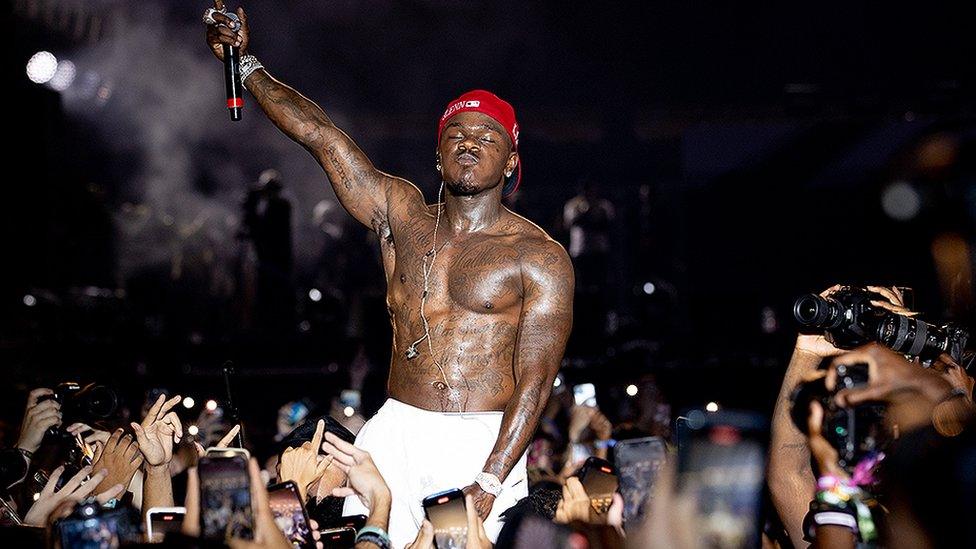
In the hyper-accelerated world of the modern music industry, few trajectories have been as meteoric—or as cautionary—as that of Jonathan Lyndale Kirk, known globally as DaBaby. In 2019 and 2020, Kirk wasn’t just a rapper; he was a blue-chip brand asset. He was the most featured artist in the world, a chart-topping powerhouse, and a charismatic figure whose presence on a track almost guaranteed a top-ten hit. However, by 2022, the narrative shifted from “how far can he go?” to “what happened to DaBaby?”
From a brand strategy perspective, the story of DaBaby is not merely a tale of celebrity controversy. It is a sophisticated case study in the construction of personal brand equity, the fragility of market positioning, and the devastating consequences of a failed crisis management strategy in the era of corporate social responsibility.
Building the “Unstoppable” Personal Brand (2018–2020)
Before analyzing the decline, it is essential to understand the sheer strength of the brand DaBaby built. Between 2018 and 2020, Kirk executed a masterclass in personal branding that focused on three core pillars: consistency, high-frequency output, and a distinct visual identity.
The Power of Visual Consistency and Sonic Branding
In branding, recognition is the first step toward loyalty. DaBaby achieved this through a highly disciplined “sonic brand.” His flow was rhythmic, staccato, and immediately identifiable—so much so that it became a meme, which only served to increase his brand awareness.
Visually, his team at Billion Dollar Baby Entertainment leaned into high-budget, comedic, and narrative-driven music videos. By consistently delivering a product that felt high-energy and “unfiltered,” he carved out a niche as the industry’s most reliable entertainer. He wasn’t just selling music; he was selling an archetype of the “invincible underdog” who had finally made it.
High-Frequency Content Strategy
A key component of modern brand scaling is the “omnipresence” strategy. During his peak, DaBaby was inescapable. He appeared on remixes with pop stars like Dua Lipa and Jack Harlow, bridging the gap between hardcore hip-hop and mainstream Top 40. This cross-pollination expanded his brand’s “Total Addressable Market” (TAM). By diversifying his collaborations, he transitioned from a regional rapper to a global brand capable of anchoring multi-million dollar festival lineups.
The Point of No Return: Brand Misalignment and Public Relations Failure
The decline of the DaBaby brand can be traced back to a specific moment of brand misalignment. In July 2021, during a performance at the Rolling Loud festival in Miami, Kirk made disparaging remarks regarding the LGBTQ+ community and individuals living with HIV/AIDS. While celebrities often face backlash for “cancel culture,” the DaBaby situation was a fundamental breakdown in brand-to-consumer trust.
The 2021 Rolling Loud Incident: A Conflict of Values
In the modern marketplace, a personal brand is no longer an isolated entity. It exists within an ecosystem of corporate partnerships and consumer values. When DaBaby made his comments, he didn’t just offend a demographic; he created a “brand conflict” for his partners.
Major corporations like BoohooMAN, which had a clothing line with him, and festivals like Lollapalooza and Governor’s Ball, position themselves as inclusive and progressive. When Kirk’s brand identity shifted from “charismatic entertainer” to “polarizing liability,” his B2B (business-to-business) value evaporated overnight. The brand alignment that allowed him to work with Dua Lipa was severed, as she and other collaborators publicly distanced themselves to protect their own brand equity.
The “Double Down” Strategy: When Authenticity Becomes a Liability
One of the most critical errors in Kirk’s crisis management was his initial refusal to offer a sincere apology. In branding, “authenticity” is usually a gold mine, but when that authenticity conflicts with the ethical standards of the broader market, it becomes a liability.
Instead of an immediate, professionally handled PR pivot, Kirk “doubled down” on social media, accusing his critics of being “sensitive.” From a brand strategy lens, this was a failure to read the room. By the time a formal apology was issued, it was perceived as a forced corporate maneuver rather than a genuine shift in brand values. This delay allowed the “negative brand sentiment” to solidify, making it nearly impossible for him to regain his previous standing with mainstream advertisers.
Market Repercussions and the Erosion of Brand Equity
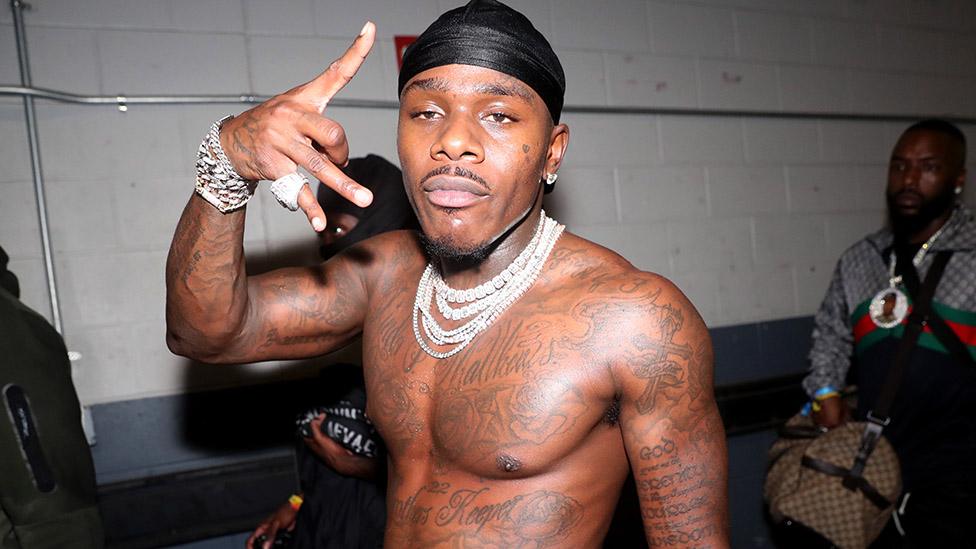
The financial and professional fallout of the Rolling Loud incident serves as a stark reminder of how quickly brand equity can erode. In the year following the controversy, the data reflected a significant decline in Kirk’s marketability.
Institutional De-platforming and the Loss of B2B Partnerships
The most immediate impact was the “institutional” response. In the digital age, visibility is controlled by gatekeepers like Spotify, Apple Music, and major radio syndicates. While DaBaby was not “banned,” his brand lost its “priority status.” He was no longer the face of major playlists like RapCaviar, and his radio promotion slowed significantly.
In personal branding, when you lose the support of your distribution partners, your organic reach must be incredibly high to compensate. Unfortunately for Kirk, his brand was heavily reliant on the “hype cycle” generated by these mainstream institutions. Without the corporate machine behind him, his brand’s “velocity” slowed.
The Diminishing Returns of the “Villain” Archetype
Following the loss of mainstream support, Kirk attempted to lean into a “villain” persona—a common pivot for brands that have been ostracized by the mainstream. However, this strategy is difficult to monetize at scale.
While the “outlaw” brand works for niche artists, DaBaby’s business model was built on volume. He needed the stadium tours and the multi-platinum pop crossovers to sustain his previous lifestyle and business overhead. When he released his 2022 album Baby on Baby 2, the sales figures—roughly 17,000 units in the first week compared to over 124,000 for his previous effort—showed that his “brand reach” had shrunk to only his most loyal core audience, losing the casual consumer who drives massive commercial success.
Lessons in Brand Longevity: Can a Damaged Personal Brand Be Rebuilt?
What happened to DaBaby is a lesson in the fragility of influence. For any brand—personal or corporate—longevity depends on the ability to evolve alongside the audience.
Pivoting Content vs. Pivoting Character
For a brand to recover from a crisis of this magnitude, it requires a structural pivot. We have seen artists like Kanye West or Travis Scott navigate controversies, but their “brand recovery” was often rooted in the undeniable quality of their product or a strategic period of silence and rebranding.
In DaBaby’s case, he continued to release music that sounded remarkably similar to his 2019 output. In the world of marketing, if your “product” remains stagnant while your “brand reputation” is declining, the consumer has no incentive to return. To rebuild, a brand must offer something new—a “Version 2.0” that addresses the previous flaws and offers a fresh value proposition.
The Necessity of Emotional Intelligence in Modern Branding
The ultimate takeaway from the DaBaby case study is the necessity of “Brand EQ” (Emotional Intelligence). In the 2020s, a brand is a conversation, not a monologue. The audience expects their favorite personalities to reflect a certain level of social awareness, especially when those personalities are integrated into the global pop culture fabric.
Kirk’s inability to navigate the nuances of public discourse turned a PR “hiccup” into a “brand execution.” It highlights a shift in the power dynamics of the industry: the labels and the artists no longer dictate what is acceptable; the collective sentiment of the consumer market does.
Conclusion: The New Reality of Personal Branding
What happened to DaBaby was not a single event, but a series of brand management failures. He built a brand on the idea of being “unstoppable,” but in a globalized, socially conscious market, no brand is too big to fail if it loses its alignment with its distribution partners and the values of its broader audience.
For entrepreneurs, influencers, and brand managers, the DaBaby story serves as a reminder that your brand is your most valuable asset. It takes years to build and only moments to tarnish. In an age where “reputation” is currency, the ability to manage a crisis with humility, agility, and strategic foresight is just as important as the talent that built the brand in the first place. DaBaby remains an active artist with a dedicated fan base, but his days as a “brand titan” serve as a finished chapter in the history of 21st-century marketing.
aViewFromTheCave is a participant in the Amazon Services LLC Associates Program, an affiliate advertising program designed to provide a means for sites to earn advertising fees by advertising and linking to Amazon.com. Amazon, the Amazon logo, AmazonSupply, and the AmazonSupply logo are trademarks of Amazon.com, Inc. or its affiliates. As an Amazon Associate we earn affiliate commissions from qualifying purchases.